The WordPress.com stats helper monkeys prepared a 2013 annual report for this blog.
Here’s an excerpt:
The concert hall at the Sydney Opera House holds 2,700 people. This blog was viewed about 18,000 times in 2013. If it were a concert at Sydney Opera House, it would take about 7 sold-out performances for that many people to see it.
Lt. Humphrey Bogart tells his men, “Boys, by my calculations the New Year should arrive at about midnight.” CHINA CLIPPER (1936)
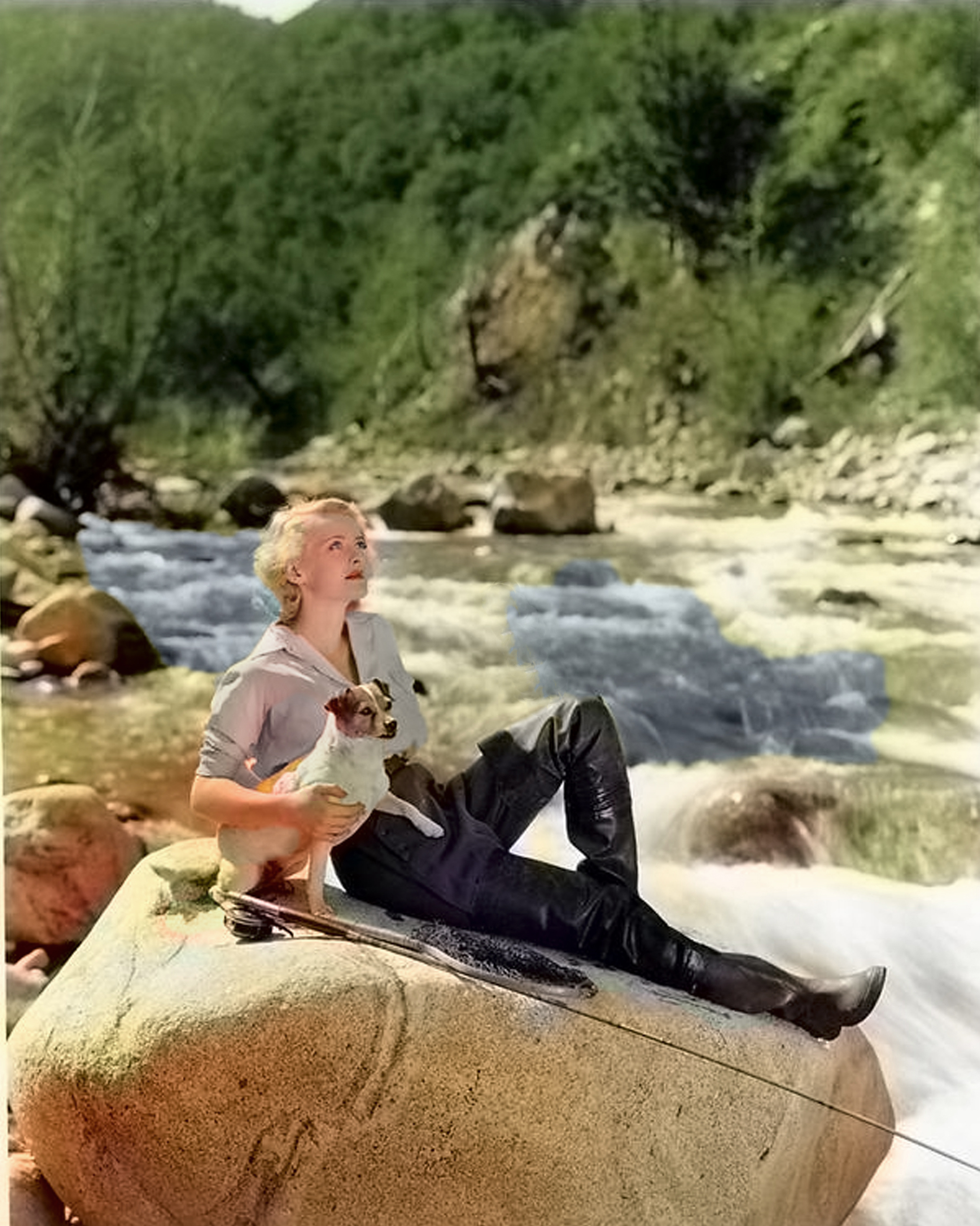
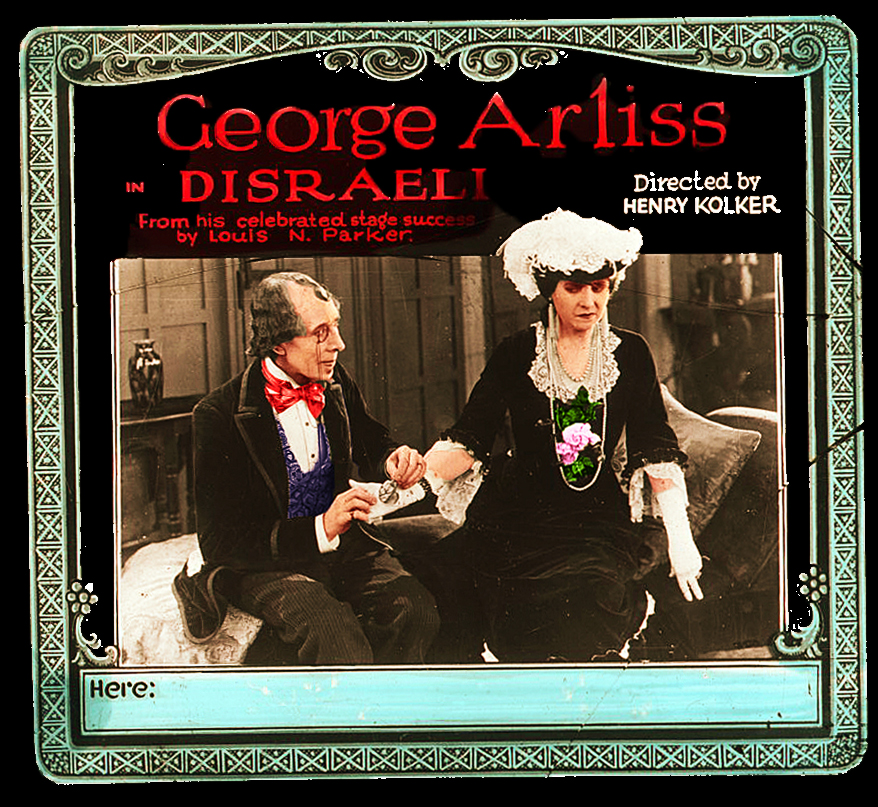
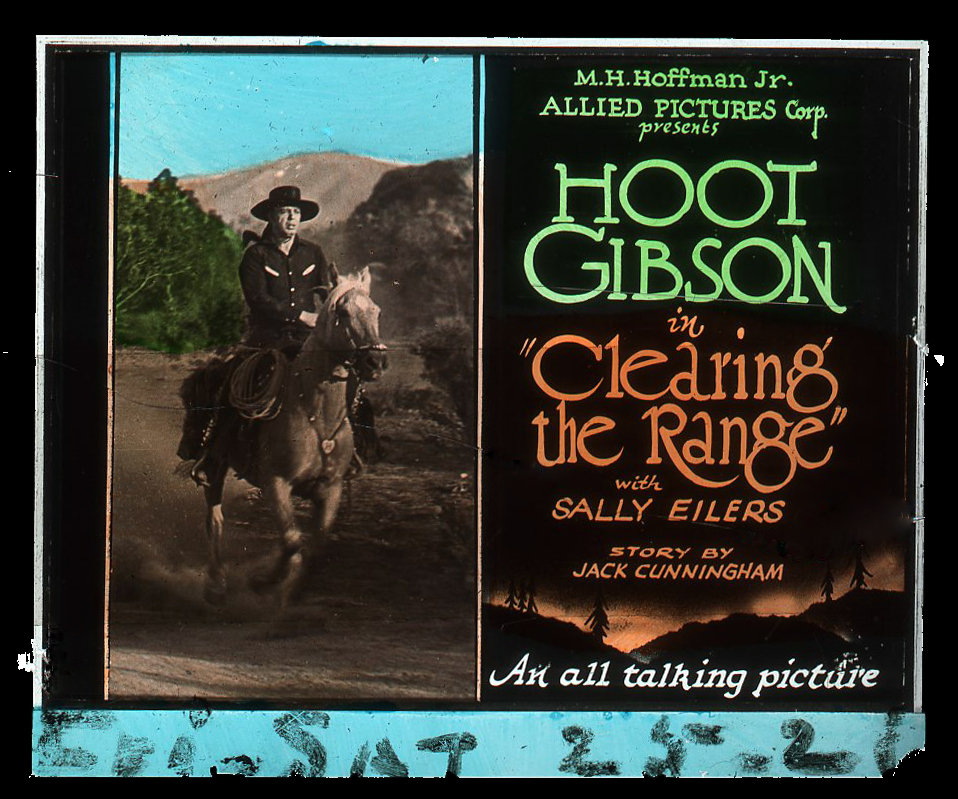
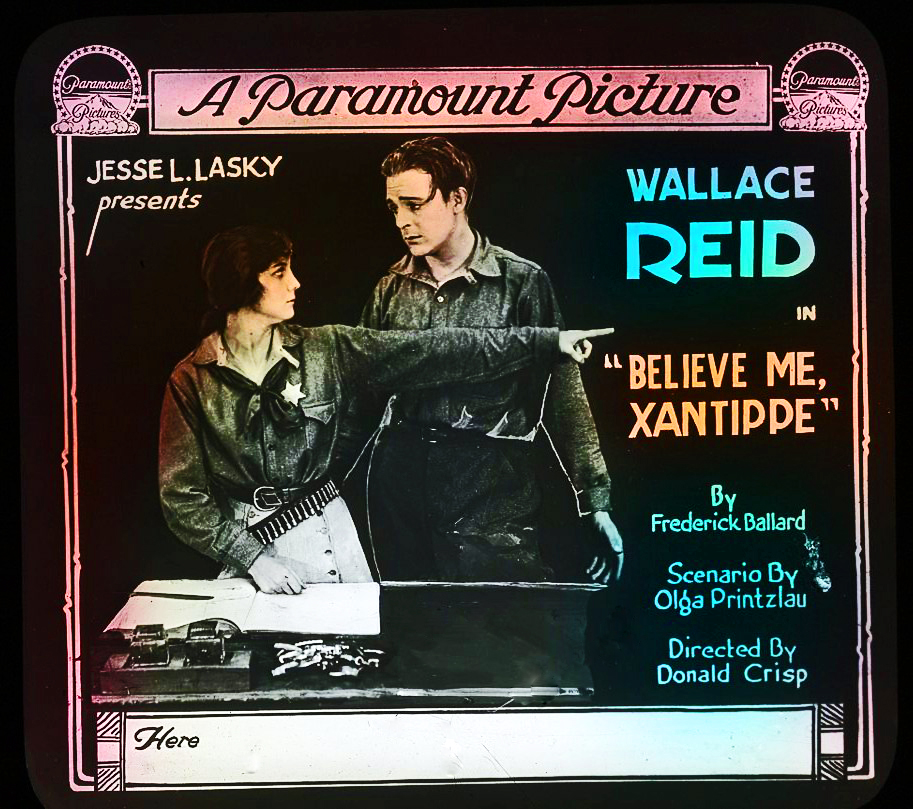
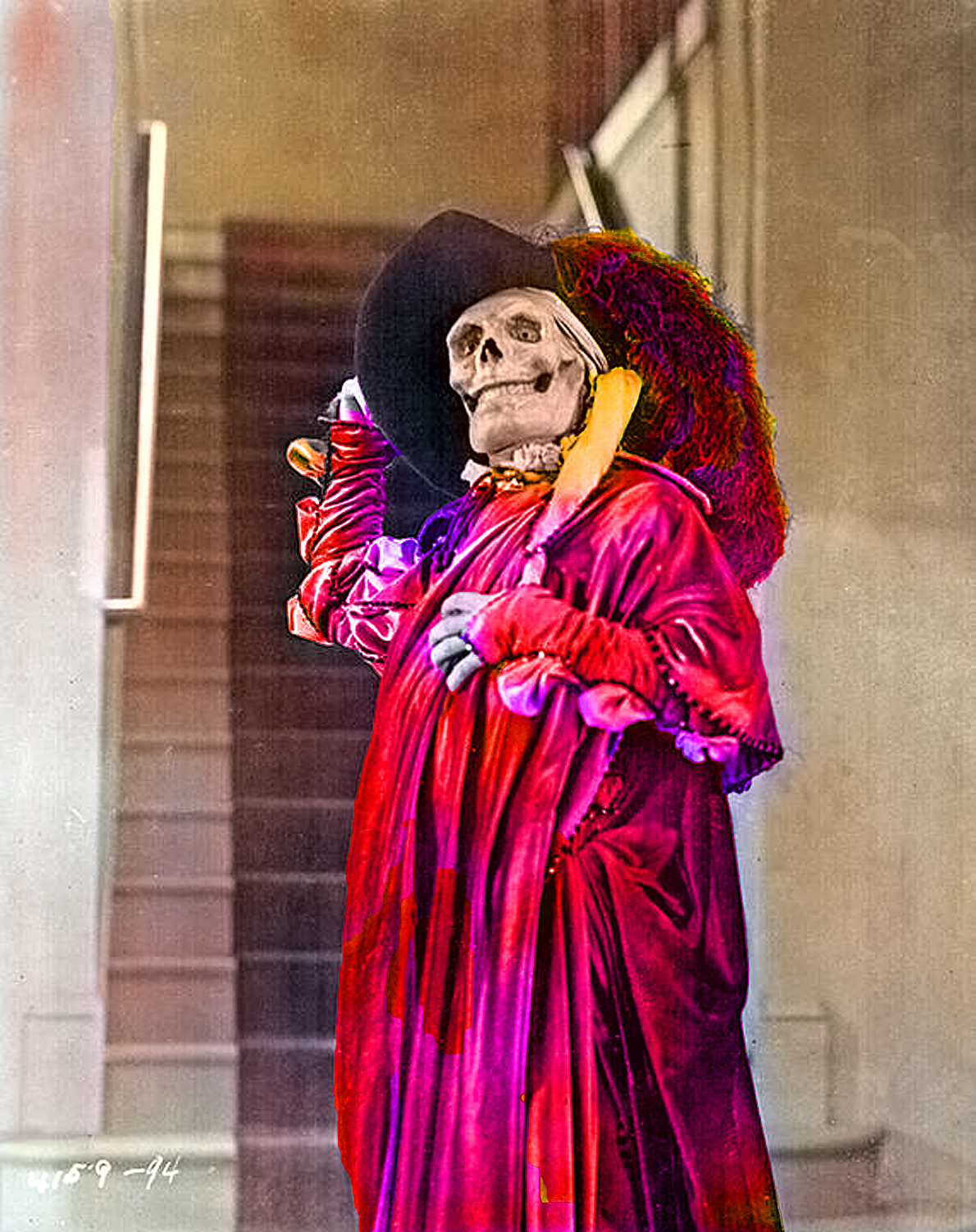
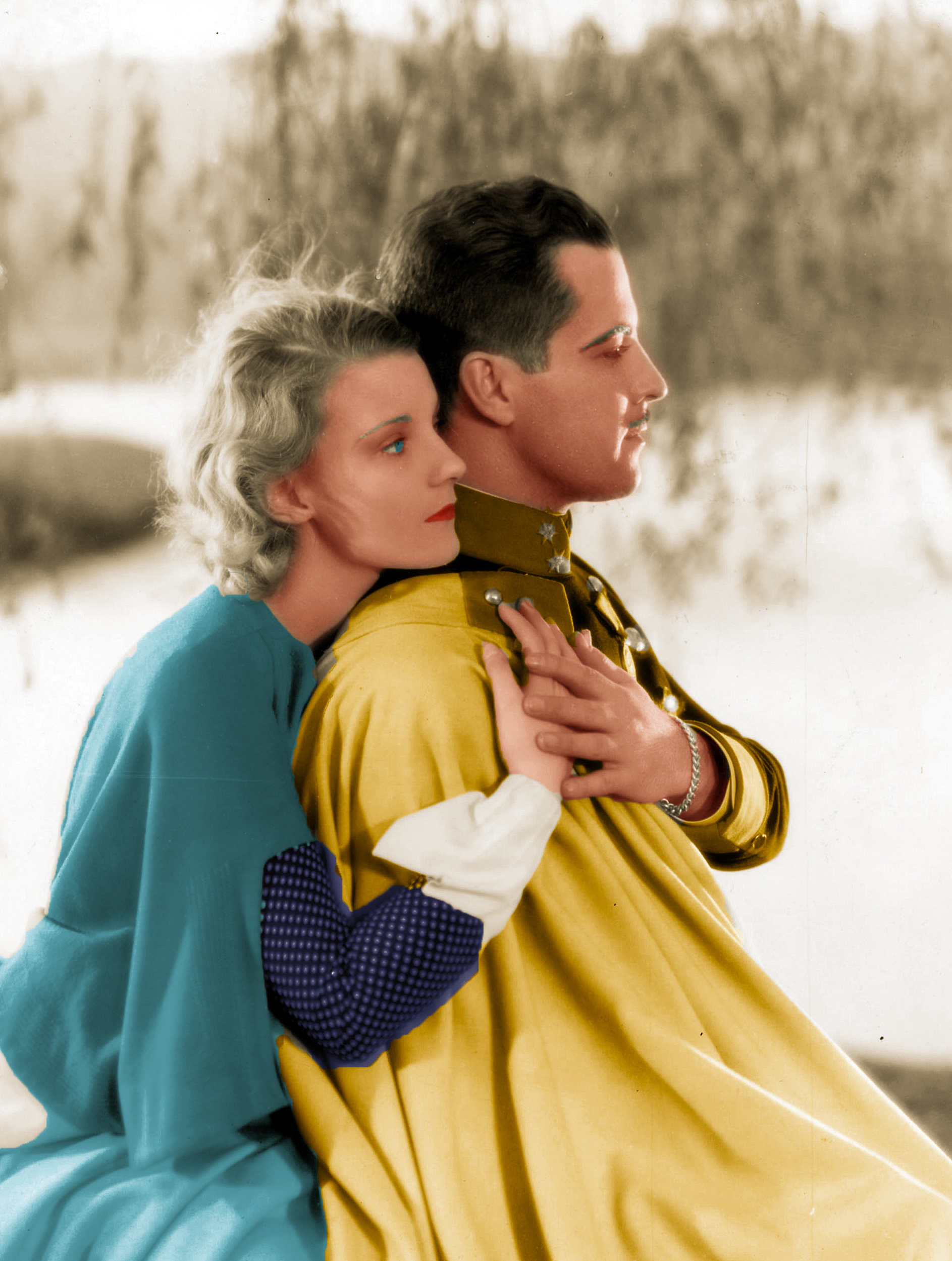
Start the New Year off right with a gift from OLD HOLLYWOOD IN COLOR. Take your pick from any of these – or all of ’em. Simply download and print out just as you would do with a photo. If you prefer a larger size or higher quality than home printers can provide, let me suggest that you copy the image to a thumb drive and take it to you local digital print retailer such as Kinko’s. With this in mind, let’s tour the 2014 collection.
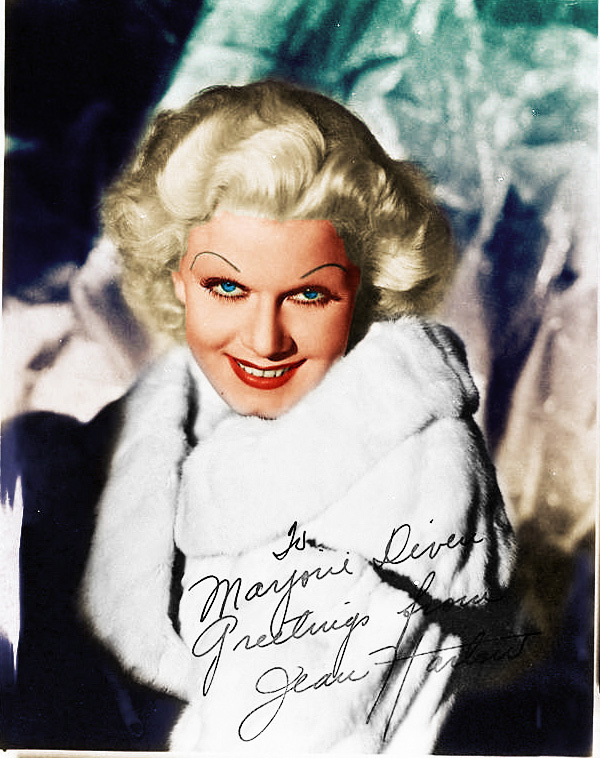
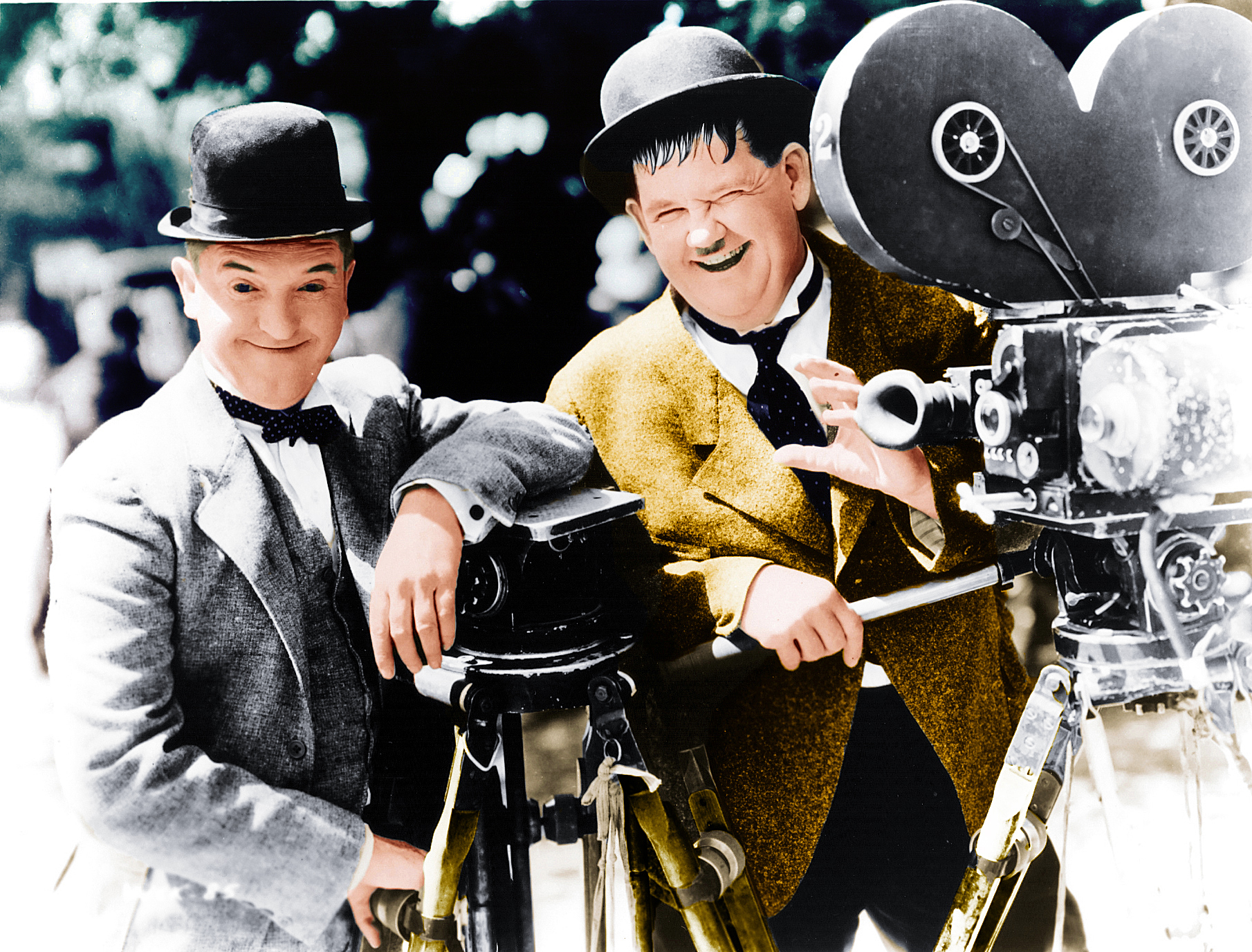
Stan Laurel and Oliver Hardy, with Jean Harlow, in one of their last silent films LIBERTY (1929):
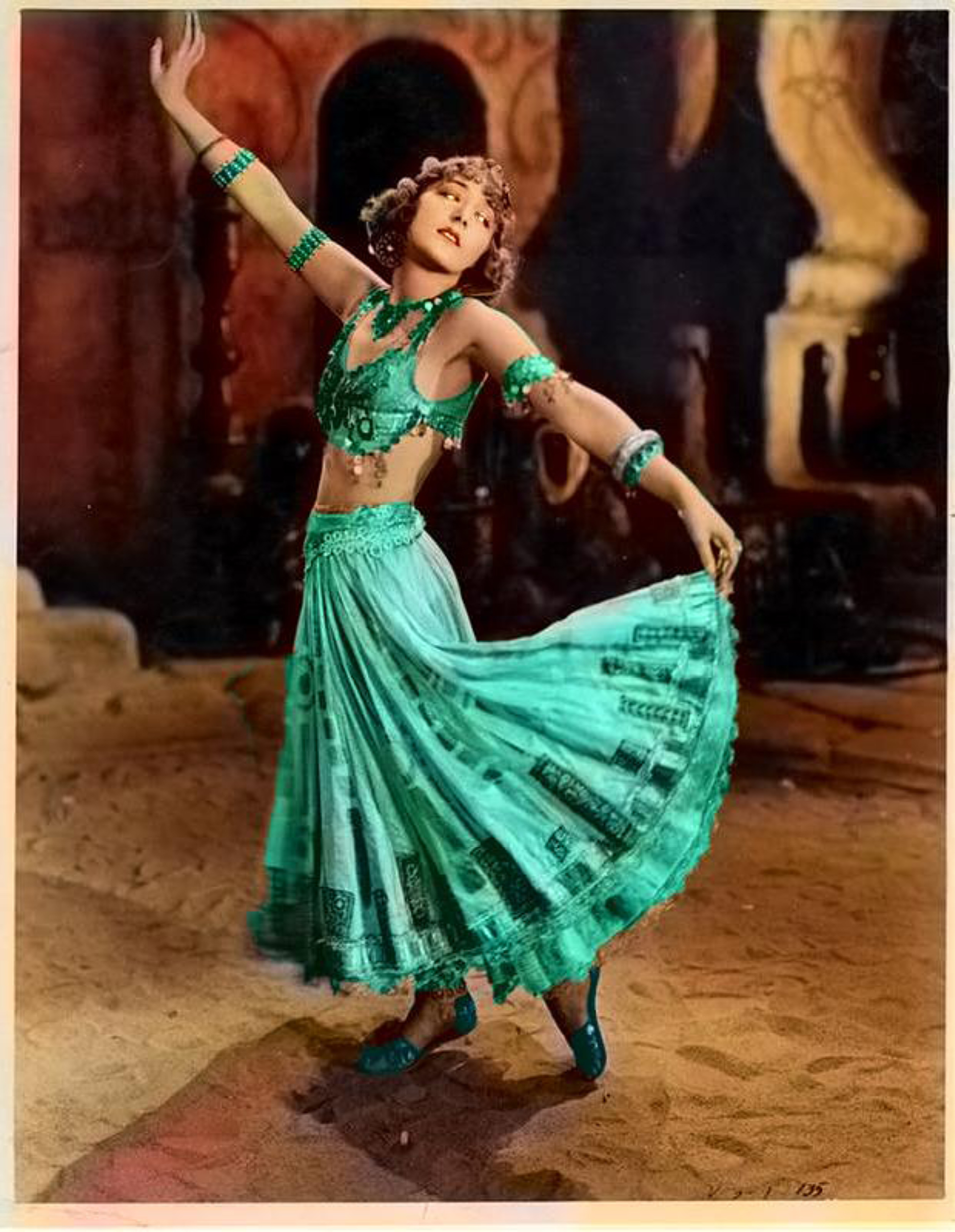
La Swanson, Gloria that is, in ZAZA (1923):
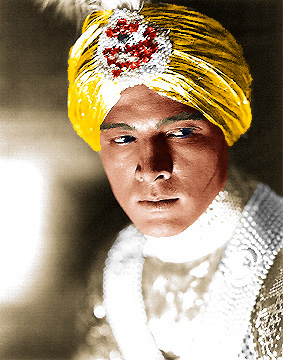
Ronald Colman in a fan photo circa 1929:
Buster Keaton circa 1930:
Clara Bow, who was dubbed “The It Girl,” meaning that she had “it.” Circa 1928:
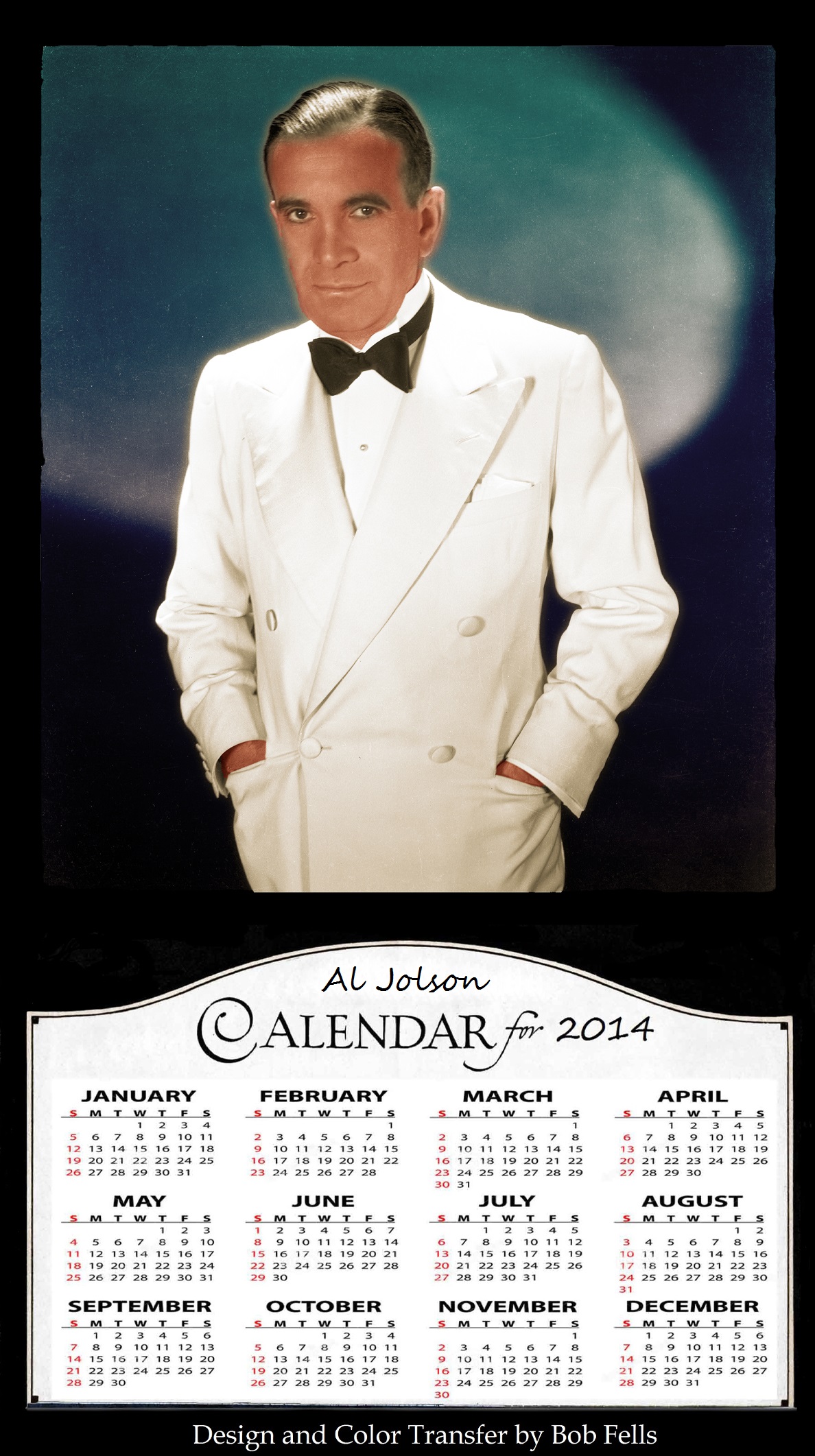
A debonair-looking Al Jolson in 1935:
Greta Garbo with Nils Asther in WILD ORCHIDS (1929), one of her last silents:
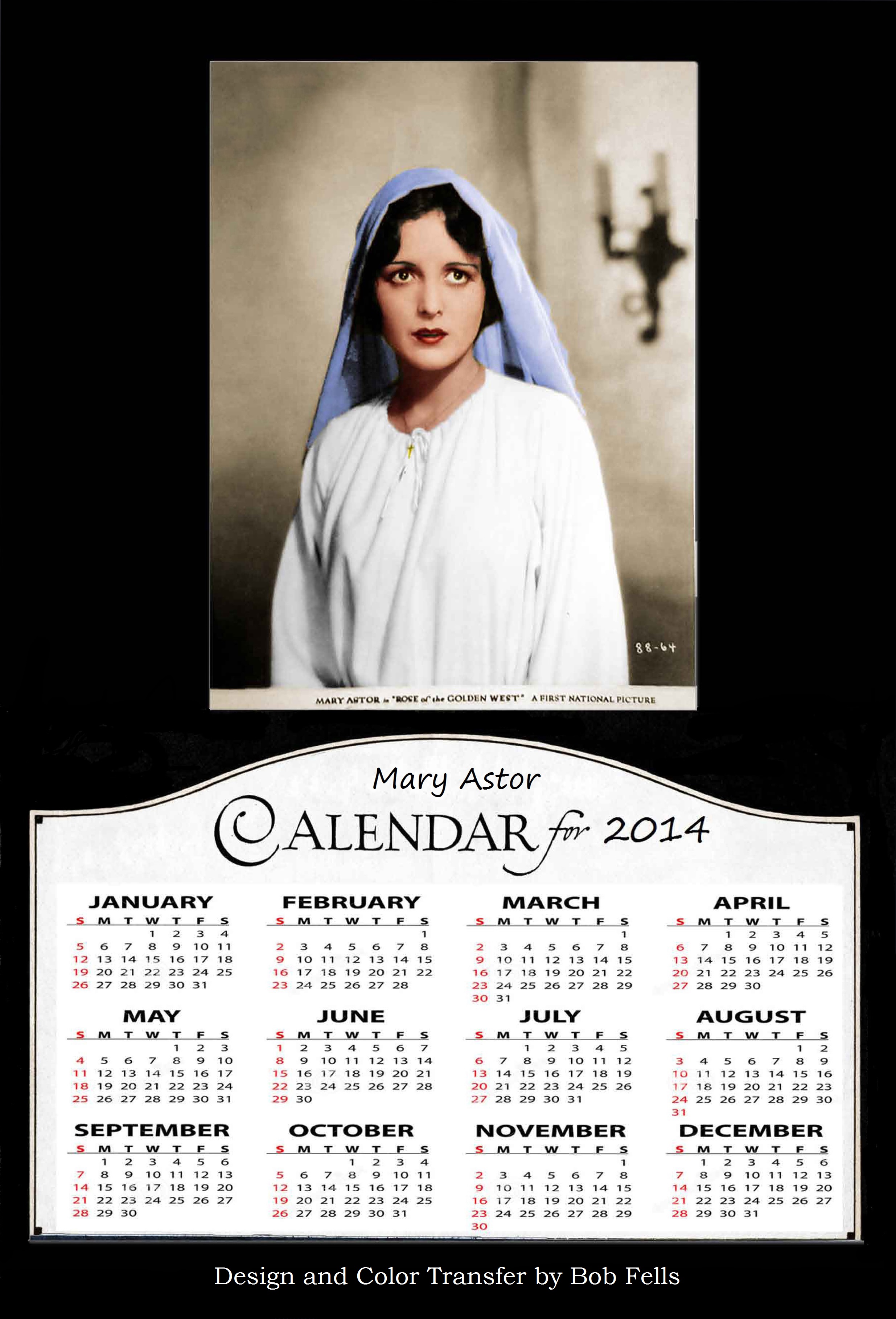
Mary Astor in ROSE OF THE GOLDEN WEST (1927):
A calendar from a 1934 UK movie magazine highlighting Conrad Veidt:
Jean Harlow with Clark Gable in RED DUST (1932):
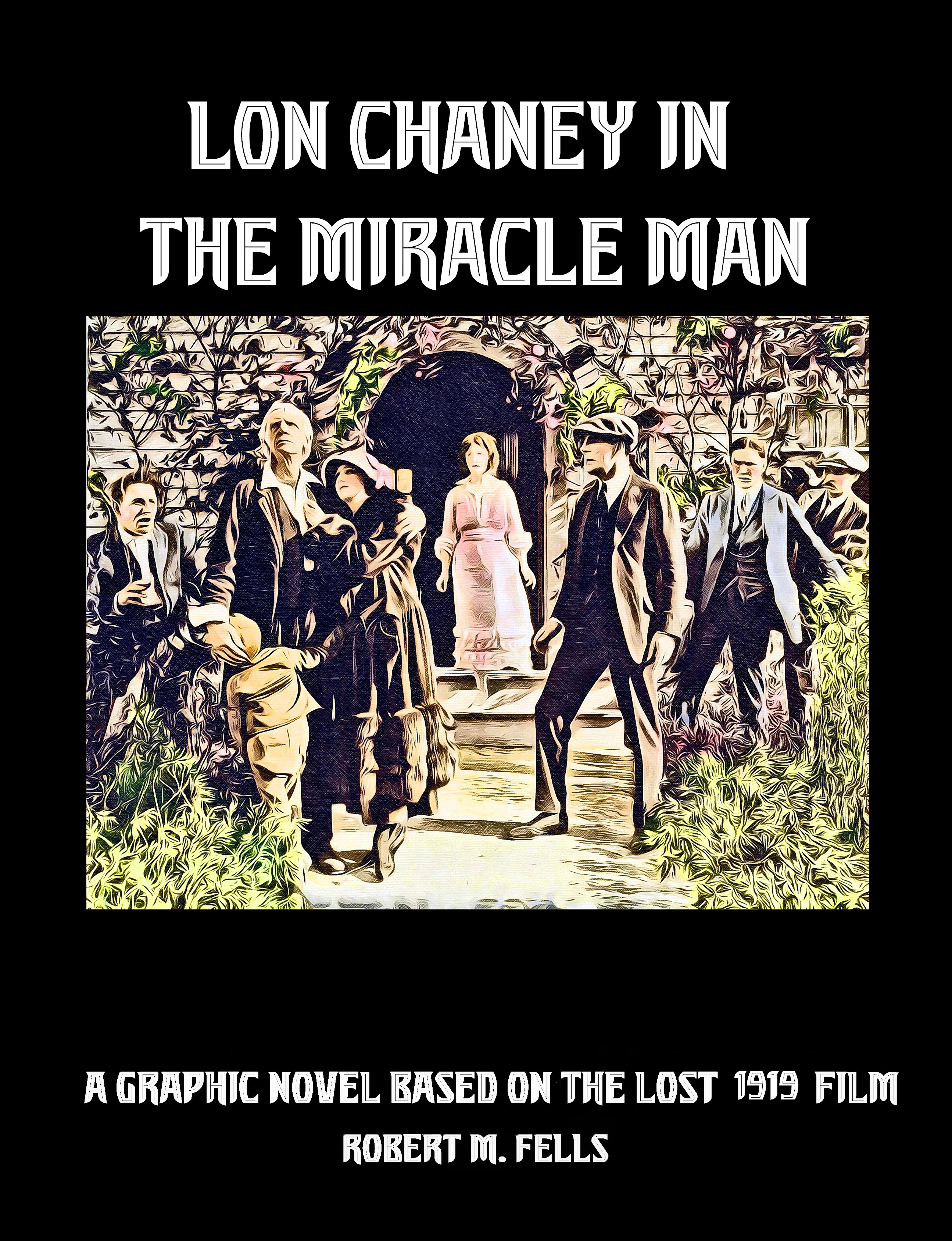
Lon Chaney Sr. as himself and as his character in THE MIRACLE MAN (1919), a lost film:
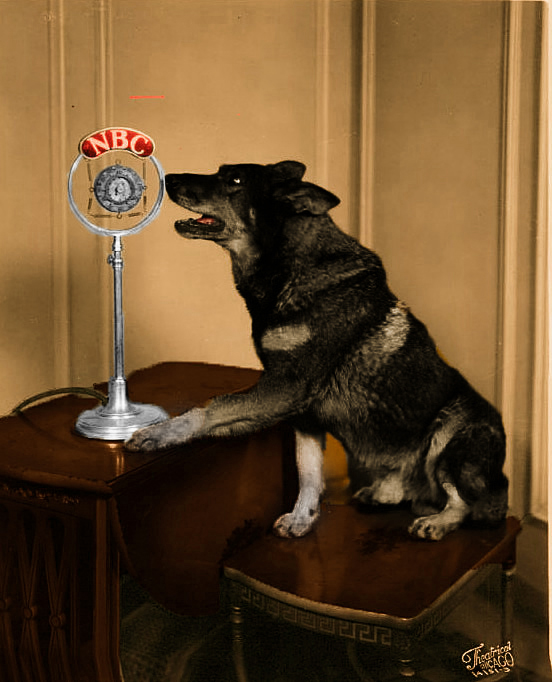
Rin Tin Tin and his mate Nanette in HERO OF THE BIG SNOWS (1926), another lost film:
It isn’t often that we have the opportunity to rediscover an old Christmas story that somehow has become forgotten in recent times. For many years during the 1940s, there was an annual Christmas radio broadcast of THE JUGGLER OF OUR LADY, adapted from a story by Anatole France. Ronald Colman narrated this tale in his rich “velvet voice,” while Nelson Eddy sang the role of a monk. This story was once as popular as “The Night Before Christmas” and I think you’ll agree that it’s a wonderful tale.
So let’s go back in time to December 21, 1942, to hear Ronald Colman and Nelson Eddy team up for this classic Christmas story on the Screen Guild Theater. The stars on this show donated their salaries to the Motion Picture Relief Fund:
Ronald Colman excelled in radio as well as motion pictures such as A TALE OF TWO CITIES and LOST HORIZON. You can see and hear why he was so popular:
Nelson Eddy was a popular singer, radio and movie star. He is perhaps best remembered for his series of musicals with Jeanette MacDonald such as ROSE-MARIE and MAYTIME:
New Book: We’re proud to announce the first-ever pictorial review of the classic John Barrymore swashbucklers. These productions energetically displayed the talents of “America’s Finest Actor” and remain among the most captivating adventure films ever made:
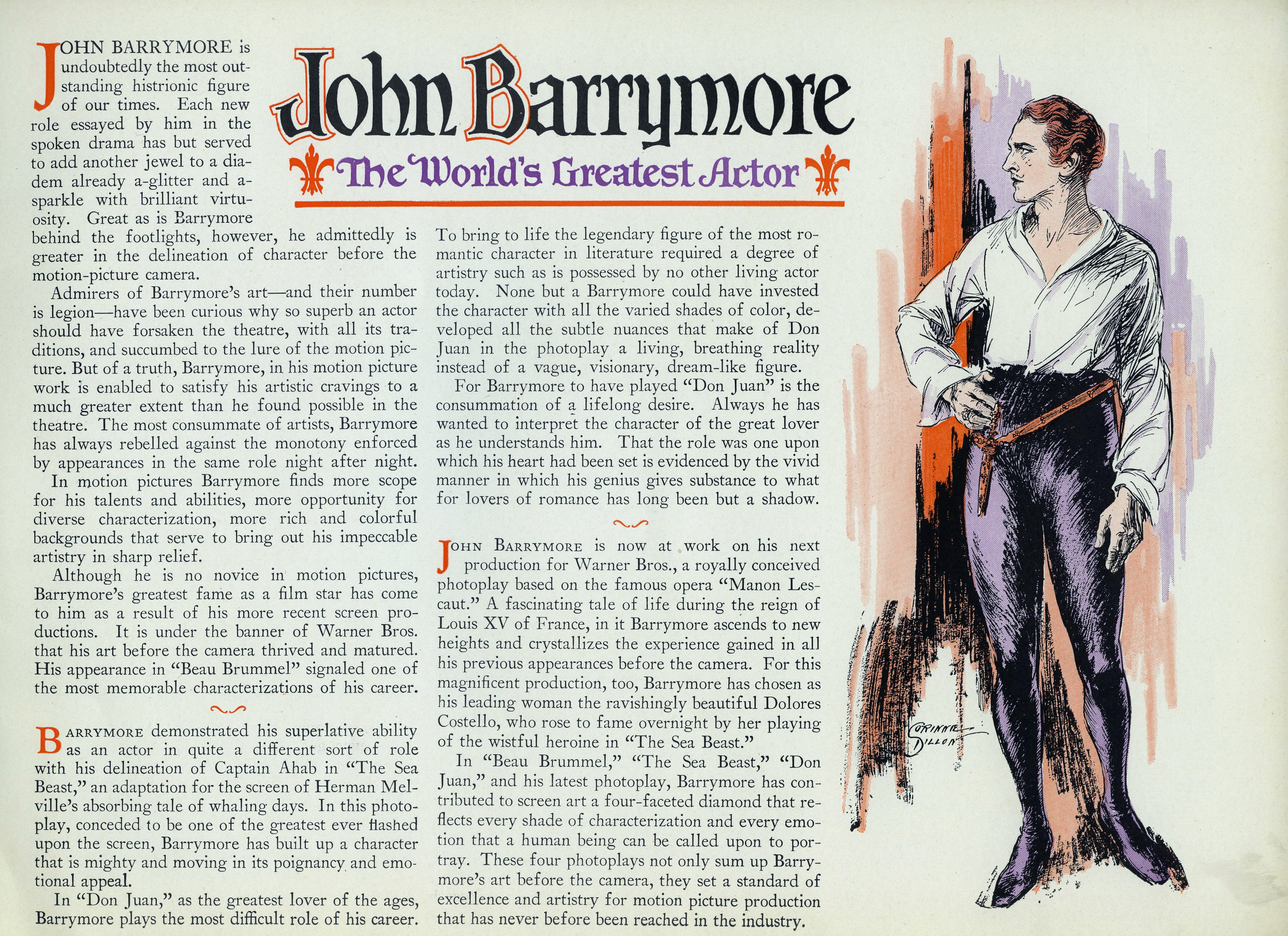
This large 8.5×11 inch volume displays rare posters, photos, programs, and even paintings by Barrymore himself, in full color:
Before the Academy Awards were instituted, top films of the year were recognized by other organizations. Here Rudolph Valentino presented his own Valentino Award to John Barrymore for BEAU BRUMMEL (1924):
Rare lobby cards restored to their original colors are among the highlights of the book such as this one from THE SEA BEAST (1926), Barrymore’s first version of MOBY DICK:
Our book features vintage souvenir programs such as this from DON JUAN (1926):
Lost and Found: THE BELOVED ROGUE (1927), one of the most imaginative films made by Hollywood during the 1920s was considered lost for decades but is now on DVD and streaming video:
John Barrymore would not be the only star of swashbucklers – think Douglas Fairbanks, Errol Flynn, Tyrone Power, among others – but Barrymore was the only star whose films spanned both the silent and sound film eras. Here is his first talkie, GENERAL CRACK (1930):
Jack reprised his role of Captain Ahab in THE SEA BEAST talkie remake, MOBY DICK (1930) with Joan Bennett:
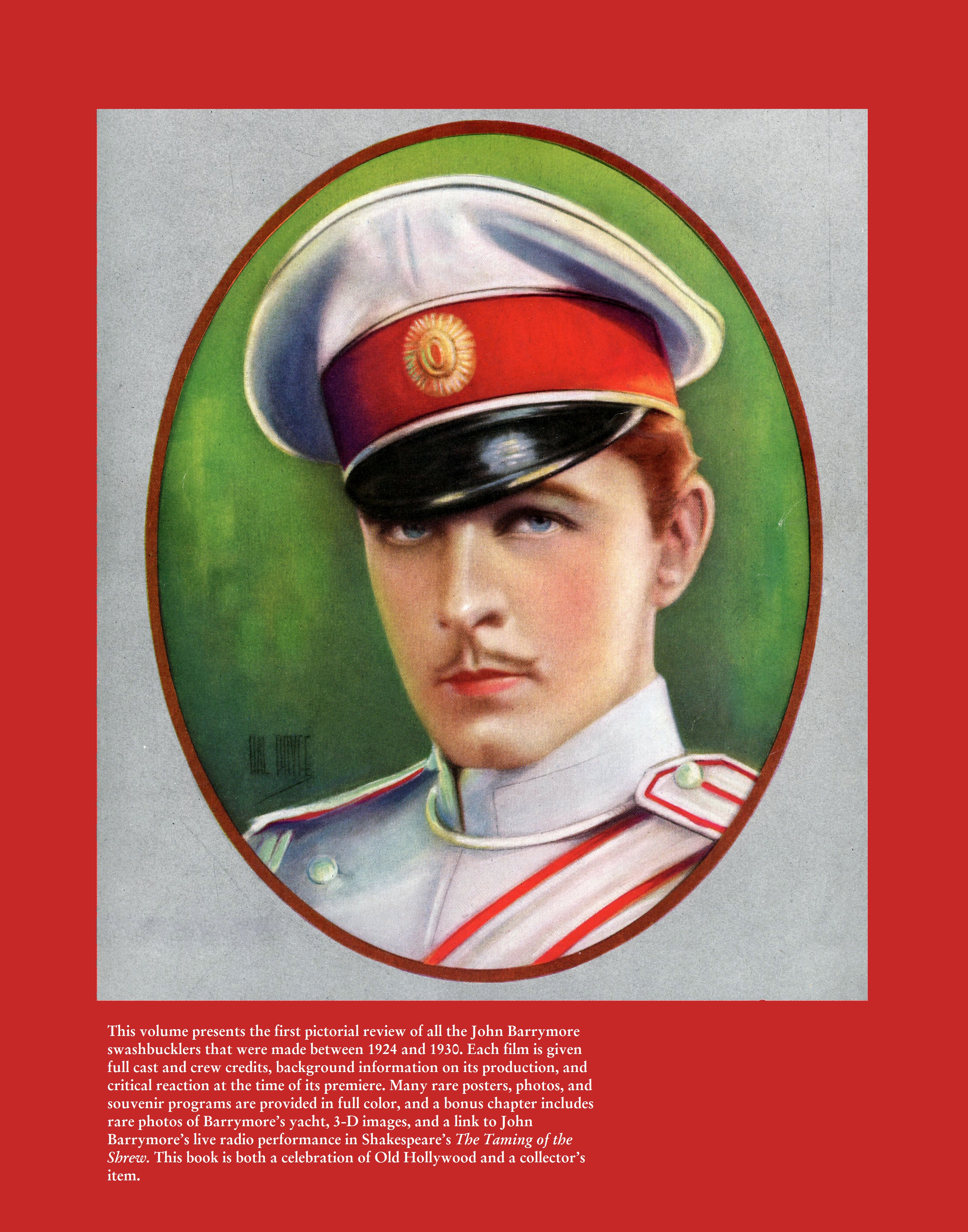
The back cover of our book with a painting of John Barrymore from TEMPEST (1928), a story of the Russian Revolution:
Bonus material includes 3-D photos and a link to Barrymore’s 1937 radio broadcast of THE TAMING OF THE SHREW. Our book is available exclusively from Amazon in both paperback and Kindle ebook editions:
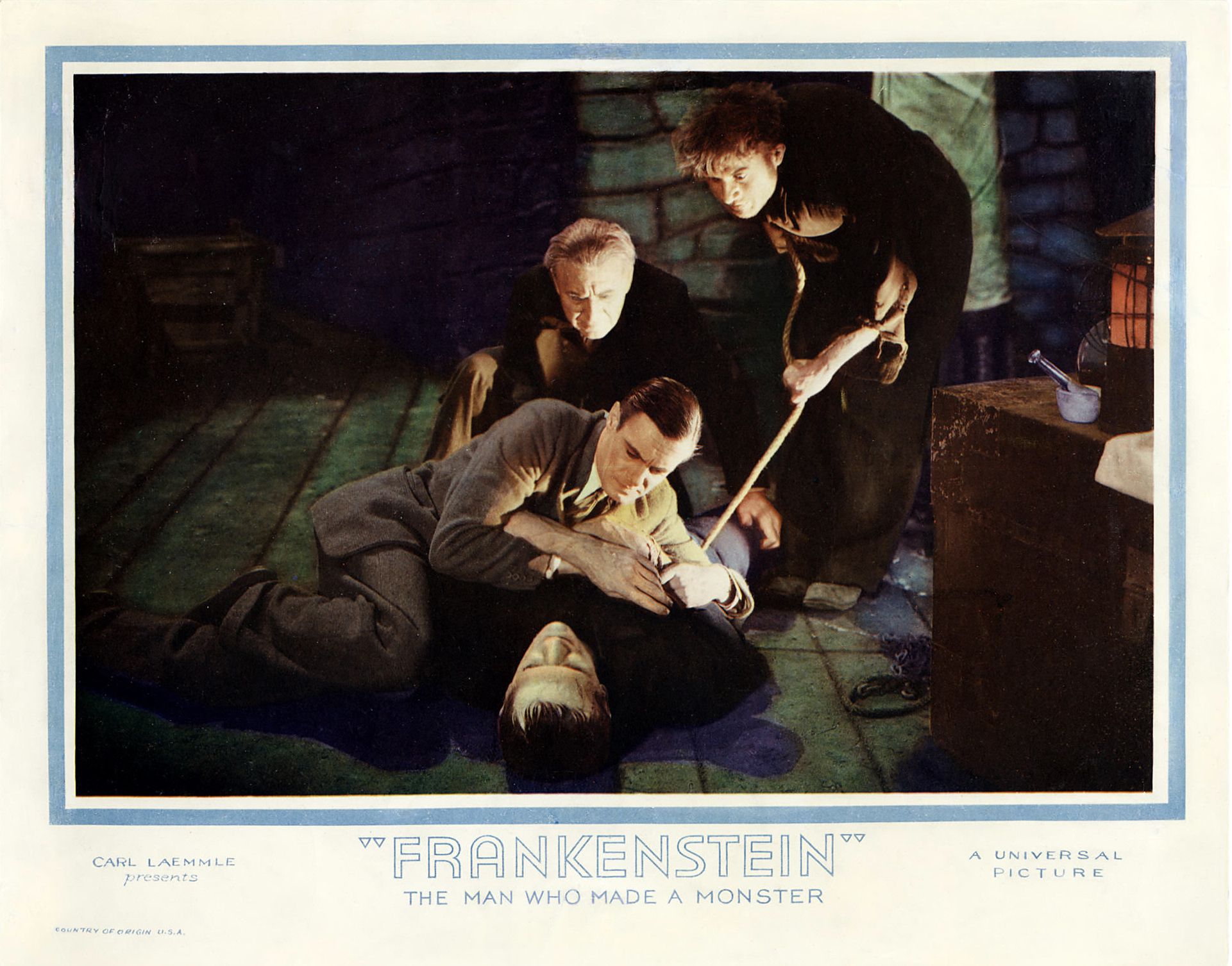
Colin Clive (1900-1937) is forever immortalized as Henry Frankenstein in the first two Universal FRANKENSTEIN films. His real forte as an actor was playing angst-ridden neurotics – meaning that he was perfectly cast as Henry Frankenstein – and when portraying a driven nervous energy character he didn’t seem to be acting. Much has been written about Colin’s health issues including a tubercular condition and alcoholism that eventually brought him to an early death. But here we’d like to celebrate his unique persona and compelling voice that made him so unforgettable even though his career was relatively brief. As you scroll down to the images, listen to his rare “lost” radio performance of November 14, 1935. Colin is introduced by host Rudy Vallee:
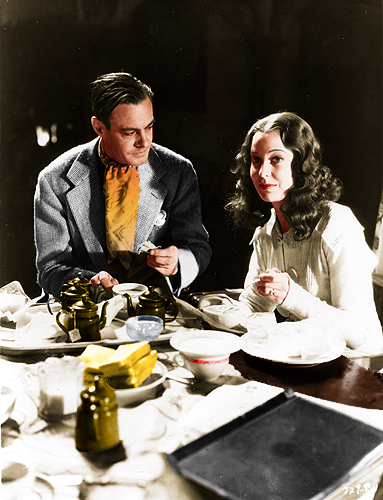
Colin takes a tea break with co-star Valerie Hobson on the set of BRIDE OF FRANKENSTEIN (1935). They seem to be in the middle of filming their first scene when Henry Frankenstein is brought back home on a stretcher and his fiance Elizabeth believes that he is dead:
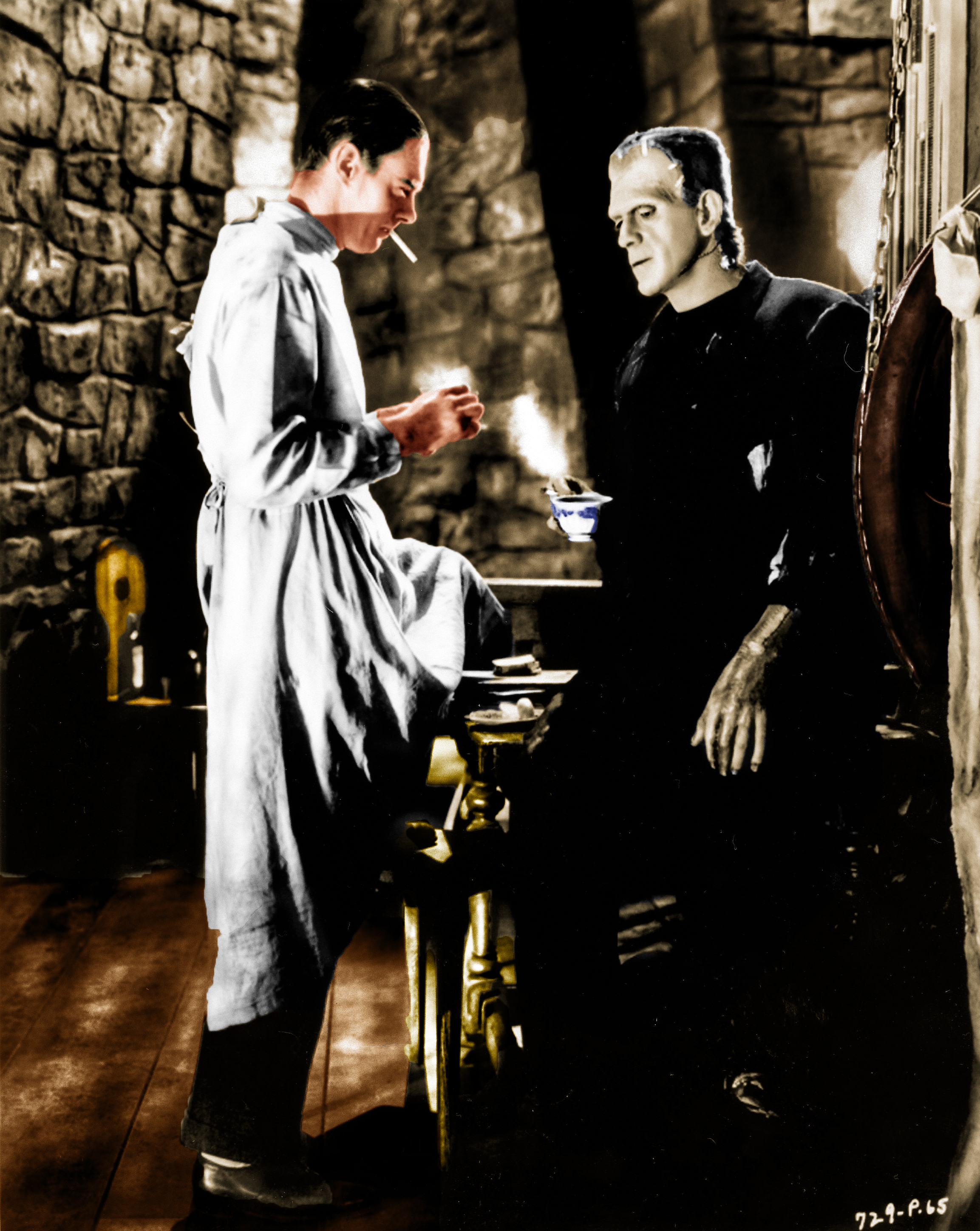
Universal publicists were eager to take a number of photos of Colin and Boris Karloff taking breaks on the BRIDE set:
A playful Colin hugs Valerie Hobson somewhere on the backlot of Universal during the making of BRIDE during January-February 1935:
Another BRIDE publicity shot – the Monster is supposed to hate fire but perhaps that doesn’t apply to lighting his cigarettes:
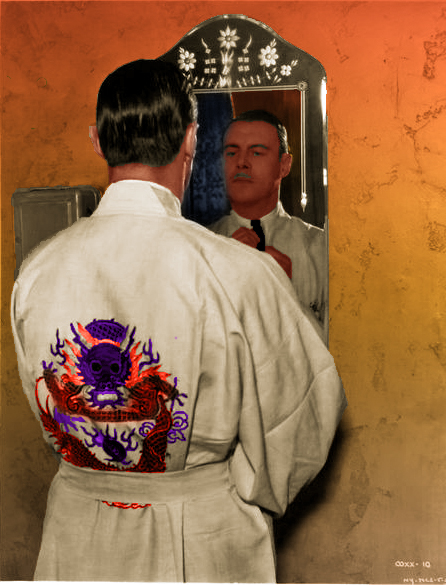
When Colin worked for 20th Century Pictures in late 1934, the studio did a publicity shoot at his apartment at the Hollywood Tower located on Franklin Avenue in Los Angeles:
At Warner Bros. filming THE KEY (1934), a story of the Irish Rebellion. To Colin’s right are director Michael Curtiz and the film’s star William Powell:
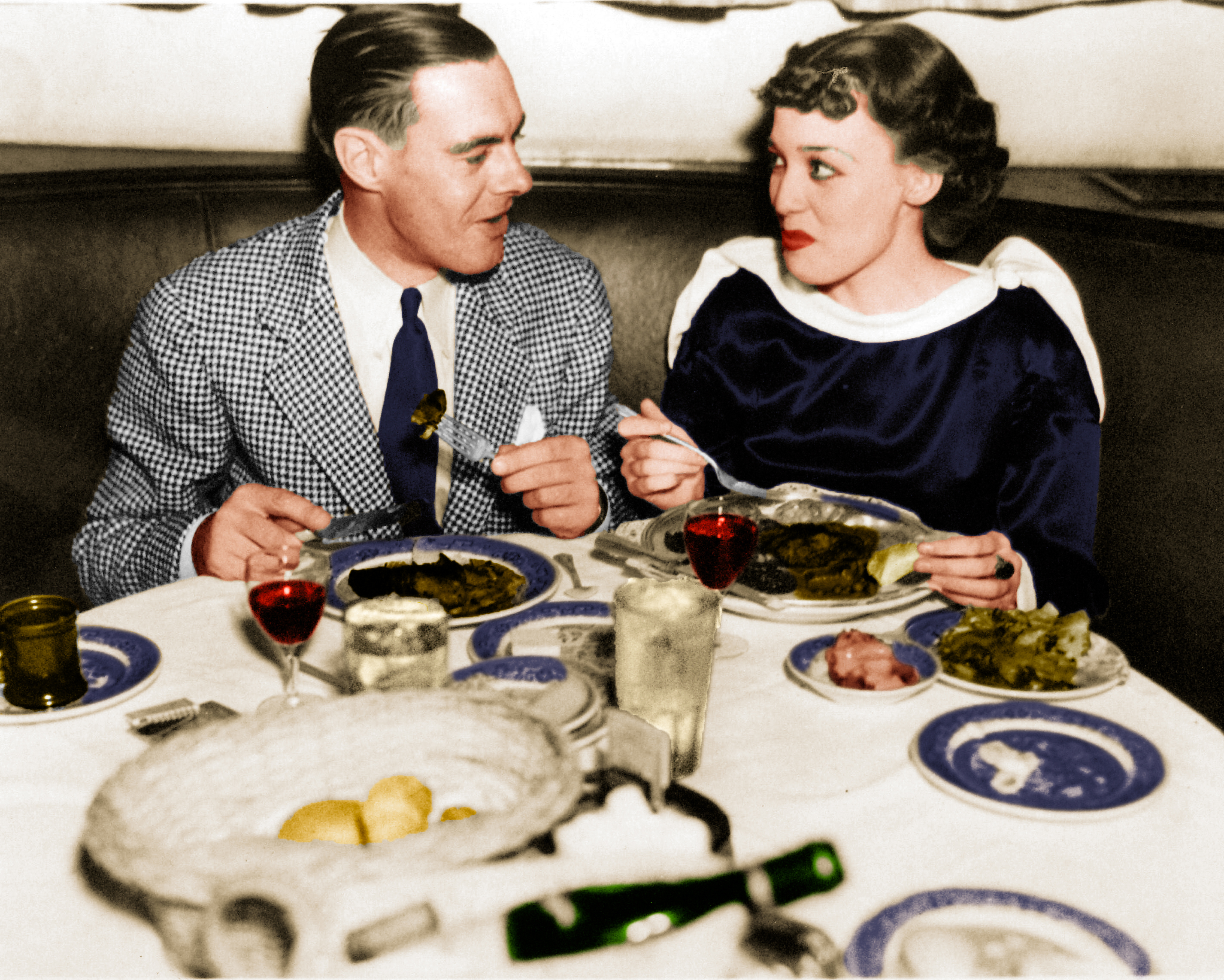
Colin and girlfriend Iris Lancaster out on the town circa 1935. It is believed that Iris paid the expenses of his funeral. She worked as an actress in films until 1944 and thereafter vanished from public life:
On the roof of the Hollywood Tower (still in operation today offering luxury apartments), Colin looks out over the LA landscape towards the “Hollywood” sign in the distance:
If you are only familiar with Colin’s work in the FRANKENSTEIN films, you definitely will want to check out his performances in CHRISTOPHER STRONG (1933) with Katharine Hepburn, MAD LOVE (1935) with Peter Lorre and Frances Drake, and HISTORY IS MADE AT NIGHT (1937). with Jean Arthur and Charles Boyer.
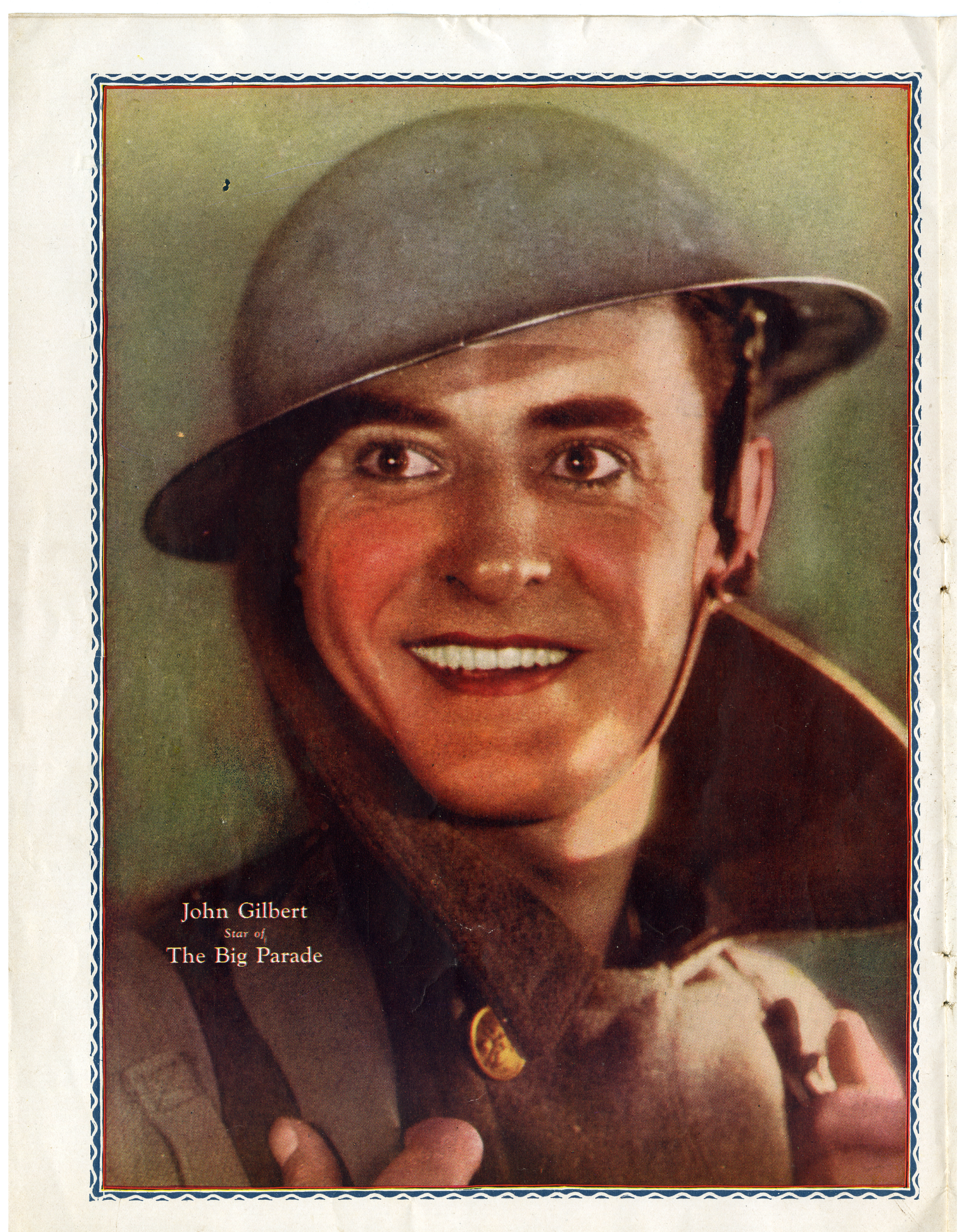
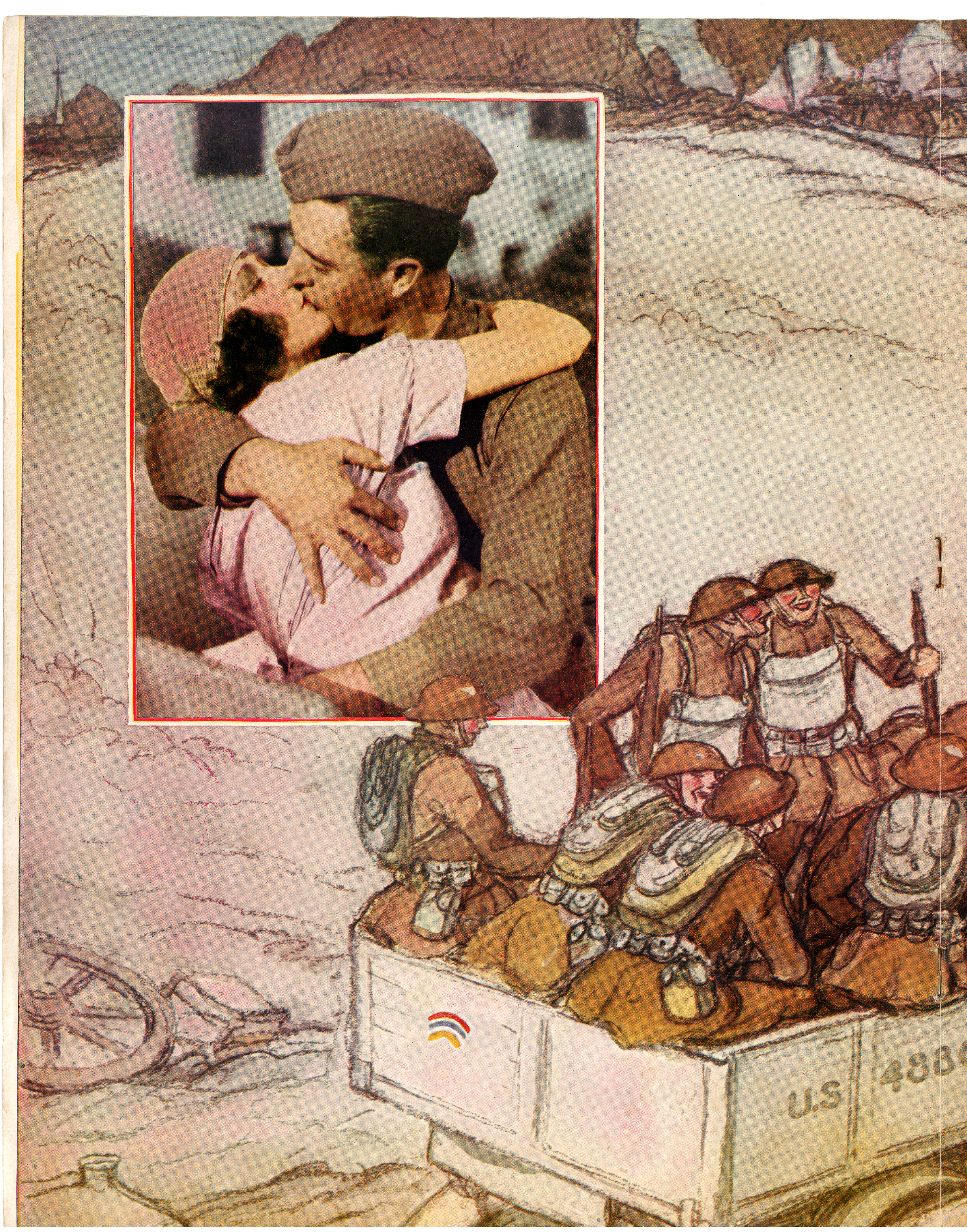
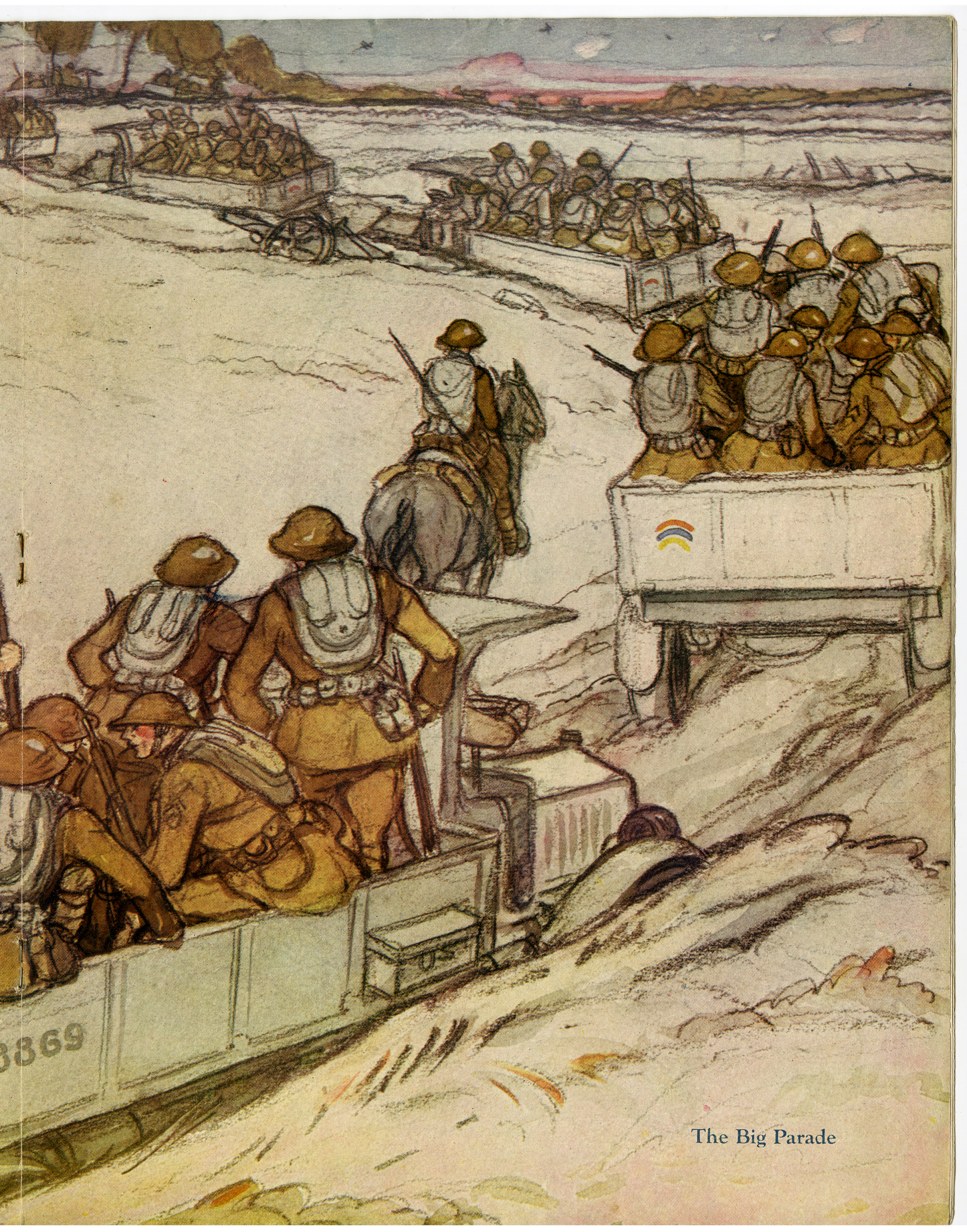
When the First World War ended in November 1918, the public was not only sick of war, they were sick of movies about the war. It’s no exaggeration to say that the last few war movies released at the end of 1918 and early 1919 died the proverbial death of a dog at the box office. For many years thereafter Hollywood wouldn’t touch a war story. But the public’s mood was changing by the mid-1920s and the world war was beginning to be placed in an historic perspective as folks moved on with their lives – or tried to. The newly-formed Metro-Goldwyn-Mayer decided the time had arrived to produce a new film every bit as epic as its subject:
Perhaps due to the recent Academy Award-winning film, THE ARTIST (2012) – which is only the second SILENT film to ever win the Best Picture Oscar – a new gold standard has been established for the home video release of silent films with the release a few weeks ago of THE BIG PARADE on both DVD and Blu-ray in HD. To set the film’s mood, click below to hear the 1926 recording, “My Dream of the Big Parade.”
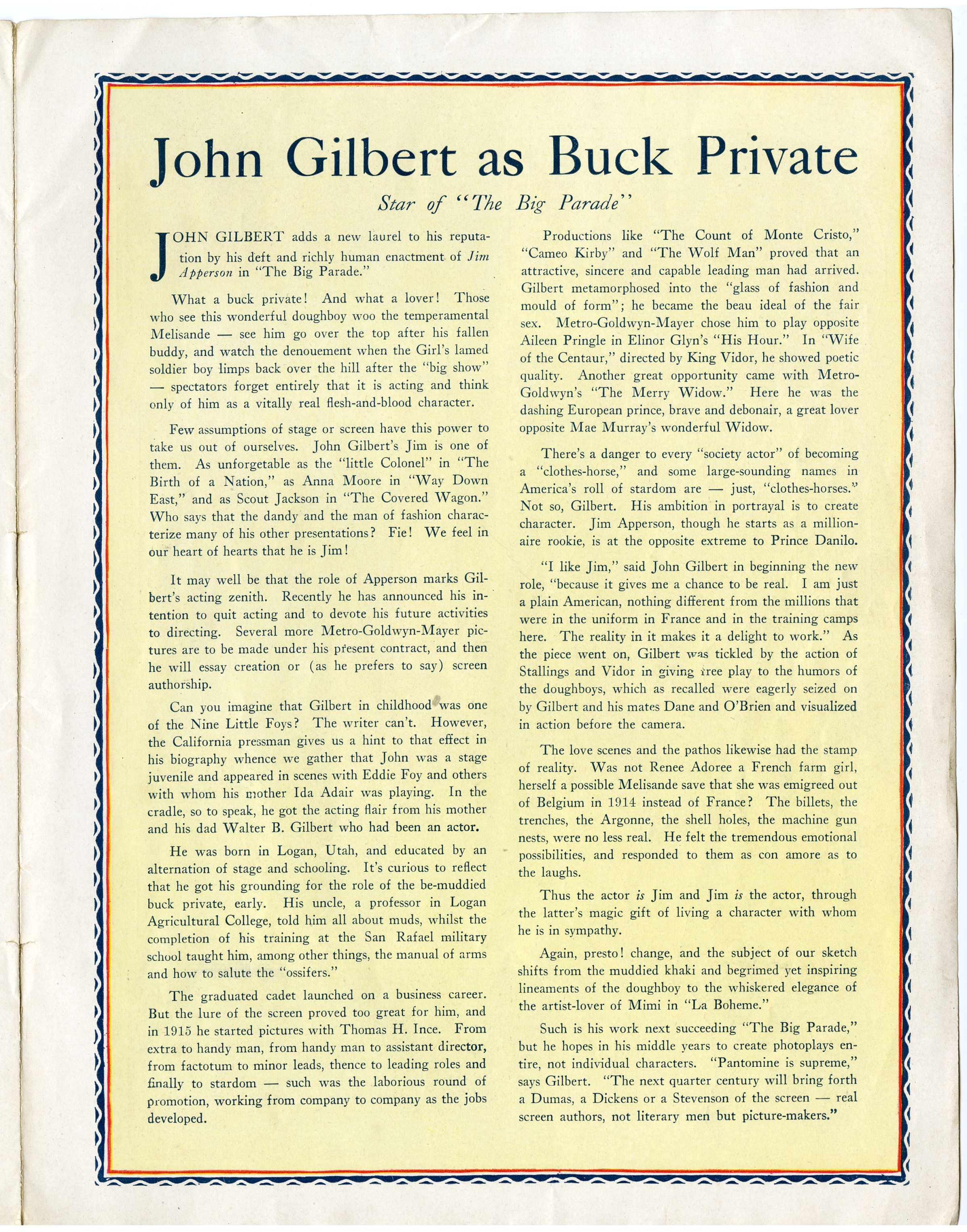
The sixteen pages that follow comprise the complete original souvenir program of THE BIG PARADE when it premiered in 1925. Click on each image to enlarge:
Hopefully, support for the Blu-ray release of THE BIG PARADE will encourage more state-of-the-art releases on home video of landmark silent films. I bought my copy from Amazon (below) but this film is widely available from many retailers both online and brick-and-mortar:
Mary Pickford (1892-1979) was a multi-talented film star and producer, a founding partner of United Artists in 1919, and a co-founder of the Academy of Motion Picture Arts and Sciences in 1927. For all of that, she was a wonderfully unassuming person and everyone who ever met her instantly liked her. On May 25, 1959, Mary gave this wide-ranging interview at her legendary home, Pickfair, located near Los Angeles. She discussed her early life and family in Toronto, her start in films, and her impressions of many of the greats she worked with including D.W. Griffith, Cecil B. DeMille, Ernst Lubitsch, Douglas Fairbanks Sr., and others. Click below to spend 45 minutes with one of the most accomplished women of the 20th century:
Mary began appearing in films in 1909 and quite a number of her early films survive. Below, a still from ESMERALDA (1915), one of the lost ones:
Mary’s younger brother Jack became a silent screen star in his own right but his troubled private life was riddled with substance abuse and he would not fulfill his early potential. Mary helped Jack in every way she could:
Pickford was tireless in her fundraising efforts to sell war bonds during America’s involvement in the First World War. This extended to her making propaganda films to support the war effort such as this 1918 release:
Mary speaks about director Cecil B. DeMille in our interview. She made two films for him, THE LITTLE AMERICAN and A ROMANCE OF THE REDWOODS (both 1917), but the collaboration was not a happy one:
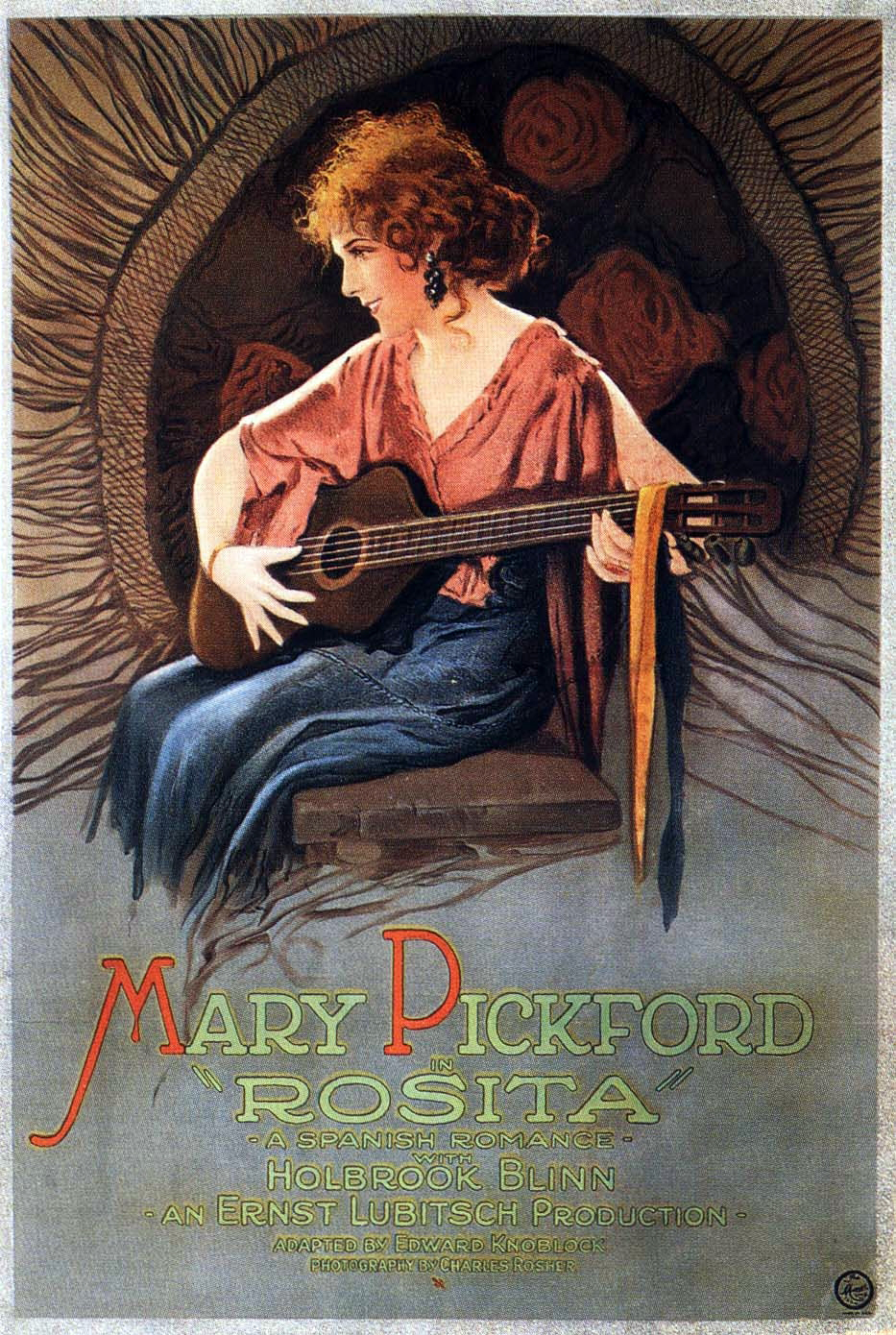
Despite widespread resentment against Germany and Germans after the First World War, Mary brought famed German director Ernst Lubitsch to Hollywood to direct her in his first American film. But Mary was used to directing her director by then and the film, ROSITA (1923), was an unhappy experience as she observes in the interview:
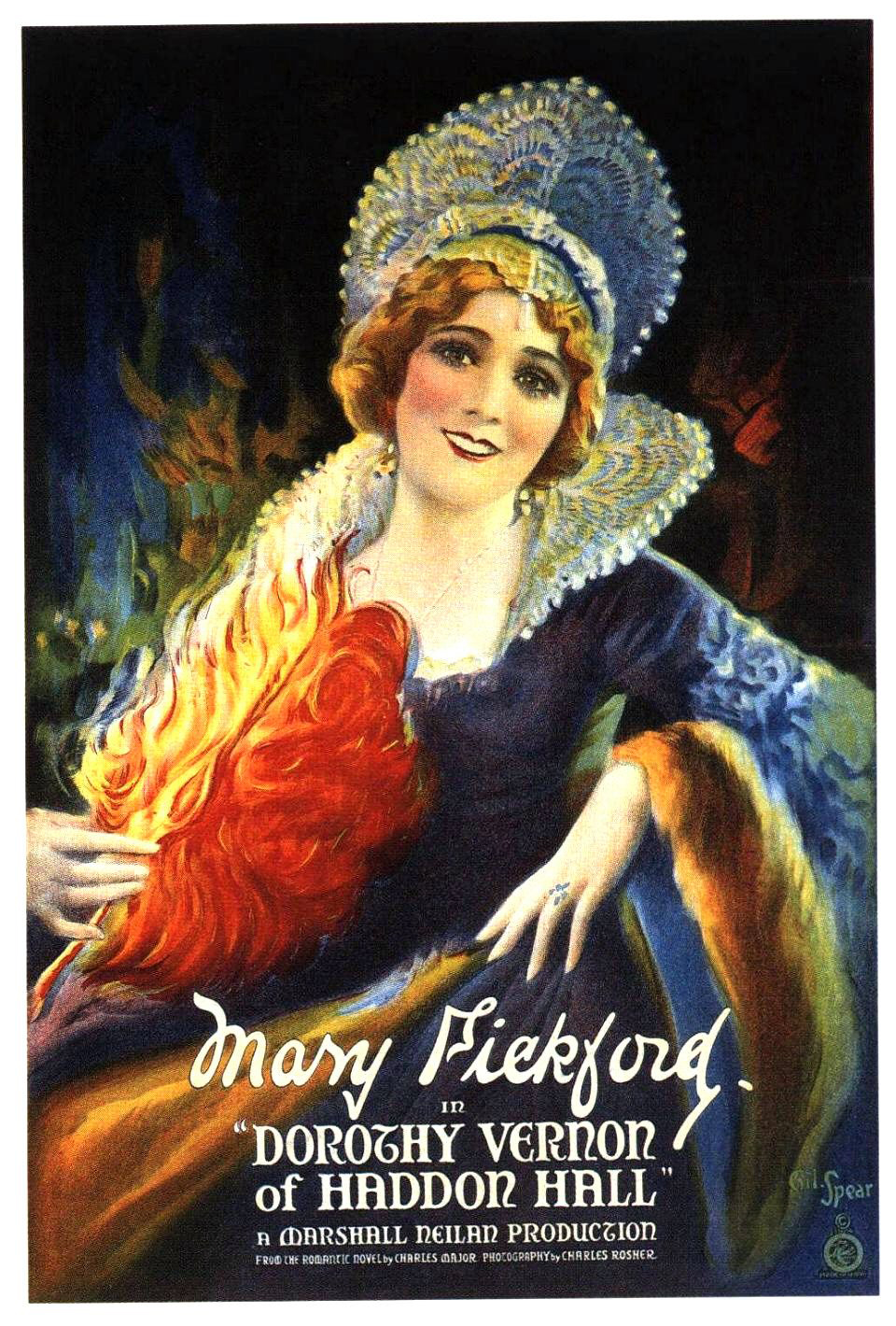
ROSITA was a departure from Mary’s screen character and she went further in the plush costume drama, DOROTHY VERNON OF HADDON HALL (1924), based on a popular novel of the time:
The arrival of sound films in the late 1920s shook the status quo of the studios but Mary won the Best Actress Academy Award for her first talkie and most financially successful film, COQUETTE (1929):
Mary co-starred with her husband Doug Fairbanks Sr. for his talkie debut in THE TAMING OF THE SHREW (1929):
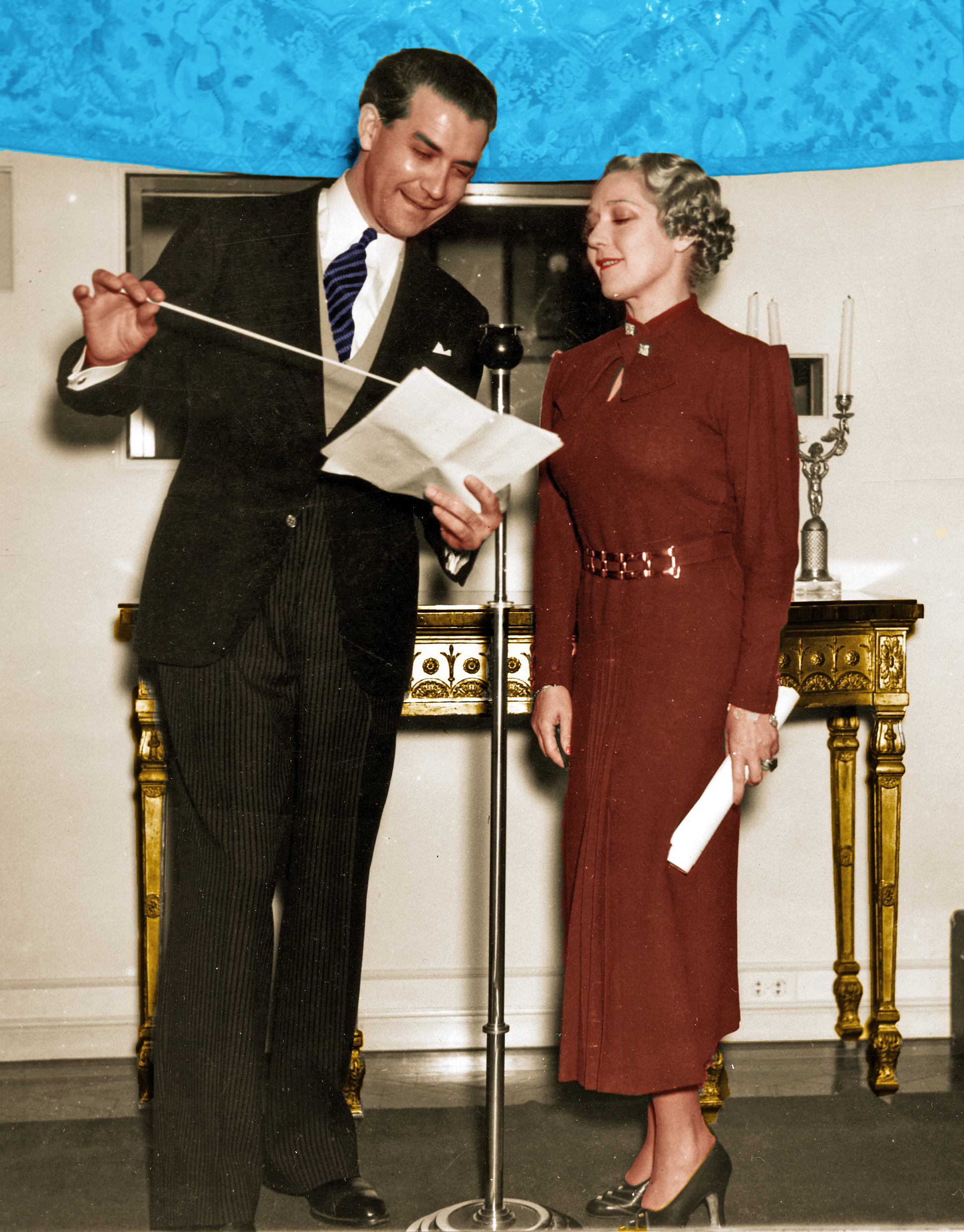
Mary pursued numerous projects during the 1930s including radio broadcasting. Here she runs through the script with bandleader Al Lyon, director of the Coconut Grove Orchestra, for the debut of Mary’s show, Parties At Pickfair, on February 9, 1936:
Mary was able to obtain top film stars for her show including Errol Flynn:
Mary Pickford received a second, special Academy Award in 1976, which was presented to her at Pickfair. She passed away in 1979 and was survived by her third husband, actor and bandleader Charles “Buddy” Rogers, whom she married in 1937 following her divorce from Fairbanks. Despite her plans for turning Pickfair into a museum as she discusses in the interview, after her death it was eventually sold to Pia Zadora in 1988, who had it torn down claiming termite infestation. Years later, Zadora stated that Pickfair wasn’t razed due to termites, but because of ghosts.
(Pickford Interview courtesy of the Internet Archives at https://archive.org)
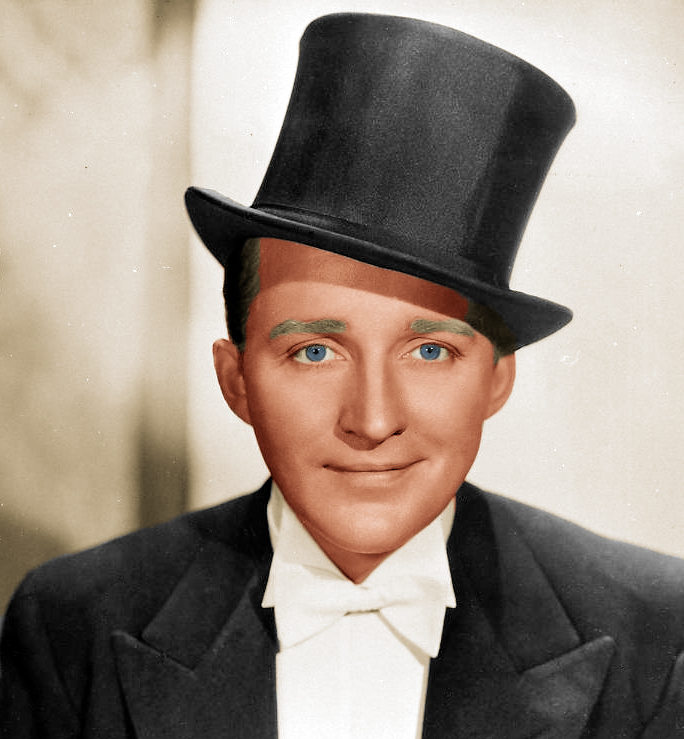
Can this smiling lad really be Bing Crosby? This Bing is a far cry from the elderly gent who sang “The Little Drummer Boy” with David Bowie, not to mention “White Christmas.” The older Bing looked like a man who disapproved of parties, while the young Bing looked like a guy who loved parties. Bing Crosby (1903-1977) would emerge as an iconic figure in the entertainment world during the 1940s through the 1970s. He wore his icon status pretty well, but I think it also wore him out. That’s a whole different story. Instead, let’s travel back in time to the 1930s when Bing just wanted to be a popular singer, not an icon.
Devoted Crosby fans will let you in on a little secret: Bing sang his best during the 1930s and, not only that, but he sang in a higher key and took chances. His singing style became “branded” in the 1940s when he adopted a lower register. For example, if you’ve heard “White Christmas,” you can almost guess his approach to most other songs from the 40s on. The public of that day loved it and loved him too but remember, all those people became fans of Bing Crosby during the 1930s and never stopped. Picking up the Crosby story in his later years, which is how most folks know of him today, is like starting a novel in the middle of the book. So what was all the excitement about? Your blogmeister is happy to show you.
Let’s hear Bing’s very first radio broadcast from September 2, 1931. Bing sings but never speaks and the announcer (Harry von Zell) mentions that Bing’s radio debut had been postponed because of laryngitis. But the truth is that he was scared to death to go on the air. It was a monumental case of “mike fright” but he eventually conquered it – Bing would broadcast every week from 1931 to 1962!
Just click on the link below to hear a 28 year-old Bing Crosby sing three of his biggest hits of 1931. His first song nicely sums up the theme of this post: “Just One More Chance.”
Bing made his first recording in 1926 with a pal from his native Washington State, Al Rinker. The following year the great Paul Whiteman, the proverbial “King of Jazz,” hired Bing and Al for his big band and dubbed them “The Rhythm Boys.” Adding pianist-singer-songwriter Harry Barris to the group, the Rhythm Boys became popular recording artists with Bing clearly spotlighted as the star. When the Boys went their separate ways in 1931, Bing signed on with Gus Arnheim’s Coconut Grove Orchestra at the Ambassador Hotel in Los Angeles and became a west coast sensation. Here is one of the most popular sides that Bing made with Arnheim, with quick tempo changes that are still remarkable. Incidentally, future film star Fred MacMurray is playing the sax, and Bing’s ill-fated rival, Russ Columbo, is violinist.
“I Surrender Dear” Victor 22618, recorded January 19, 1931:
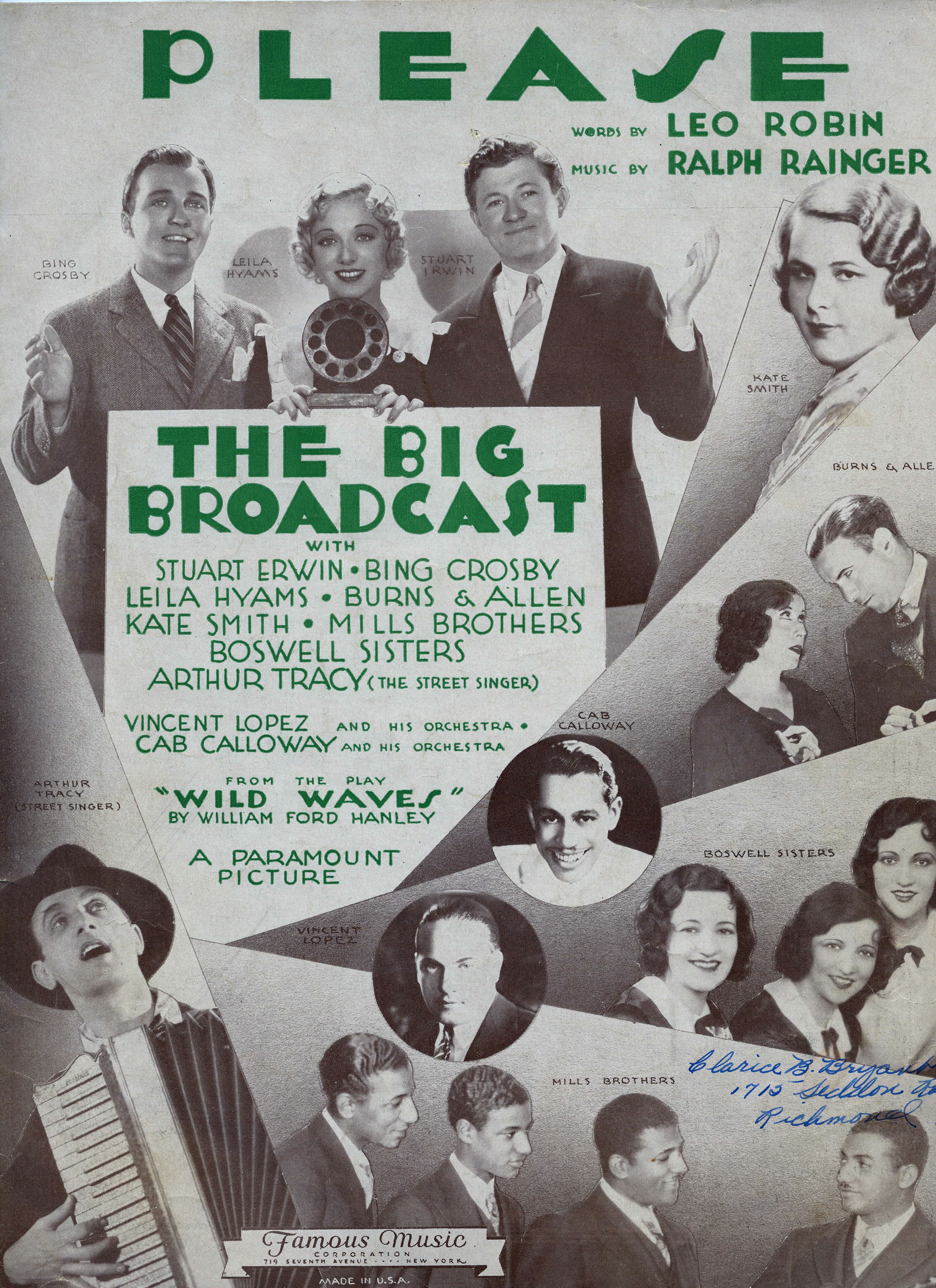
By 1932, Bing was being starred in feature-length films but with plenty of other talent onboard as box office insurance. In fact, Bing would thereafter add one, two or even three co-stars to his films. His first film also started a two-decades long relationship with Paramount Pictures: THE BIG BROADCAST highlighted Bing’s established hit recording of “Please.” Here is that record with Bing backed by Anson Weeks’ Orchestra, with future band leader Xavier Cugat on the violin.
“Please” Brunswick 6226, recorded September 16, 1932:
The Great Depression had a devastating effect on record sales. Many big name recording artists could no longer command the big salaries they had earned just a couple of years earlier. Bing was one of a handful of reliably profitable recording stars in the early 1930s but just as he enhanced his films with popular co-stars, he did the same thing with records by cutting sides with Duke Ellington, the Boswell Sisters, Guy Lombardo, the Mills Brothers, and others who were best-selling recording artists in their own right. Perhaps as a sign of his status, sheet music offered Bing in expensive color covers:
Bing’s weekly radio program was heard by as many as 50 million people and helped promote his new records and his new movies. He became a much more confident broadcaster especially when it is remembered that everything he did on the air went out live. This photo circa 1937 shows Bing when he was hosting the Kraft Music Hall:
Finally, let’s listen to a full-length 30-minute show that kicked off Bing’s 1934-35 season on the air. Although he played a romantic eligible bachelor in his movies, Bing is very proud to discuss his twins that were born over that summer:
Woodbury Broadcast September 18, 1934
For more info on Bing, your blogmeister has three recommendations. First, you should visit Bing’s official website http://www.BingCrosby.com that is authorized by the Crosby family. Bing also has a Facebook page with over 94,000 members.
Second, I can highly recommend Gary Giddins’ thoroughly researched and beautifully written biography, BING CROSBY, A POCKETFUL OF DREAMS: THE EARLY YEARS 1903-1940, published by Little, Brown.
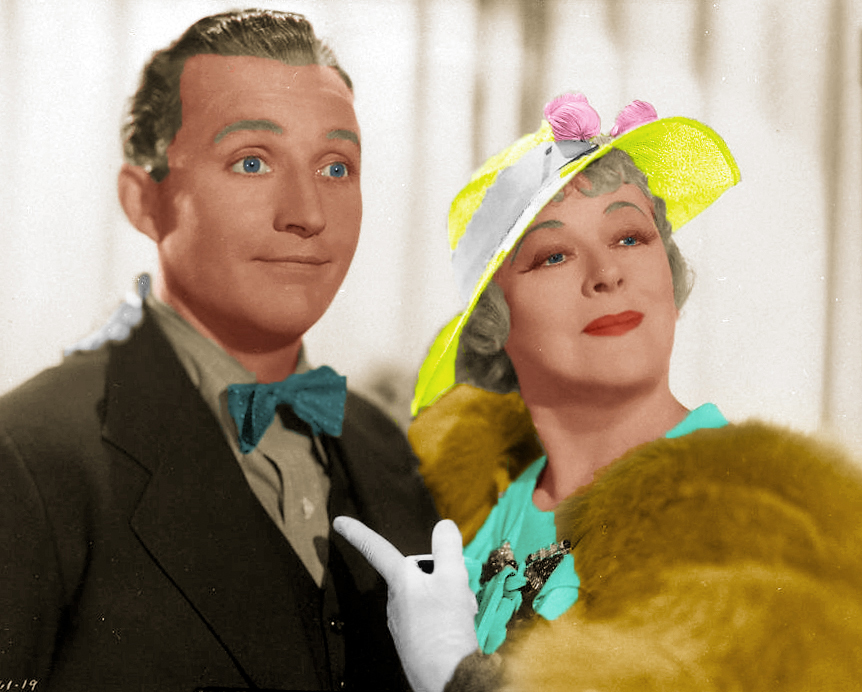
Third, and this just in, a few days ago the Warners Archive released Bing’s 1933 hit film, GOING HOLLYWOOD (1933), co-starring Marion Davies. This MGM musical shows the Crosby persona long before he played Father O’Malley in GOING MY WAY!
Last year we paid tribute to those Yankee Doodle Boys James Cagney and George M. Cohan (it’s still available on this blog if you missed it). This year we recognize another Red, White, and Blue American – Will Rogers (1879-1935). Born and raised in Oklahoma before it became a state, Will was part Native American and would quip to the Blue Book 400, “Your ancestors might have come over on the “Mayflower,” but mine were standing on the shore waiting to greet them.” You just gotta love a guy like that!
Will Rogers became famous in the Ziegfeld Follies during the 1910s, along with Fanny Brice, W.C. Fields, Marion Davies, and Eddie Cantor, among others. Before that he traveled the world exhibiting his cowboy riding and roping tricks, first touring in South Africa around 1902. As the new century progressed, Rogers adapted his laconic style successfully to every new media: silent films, radio, and talkies. He eventually left off his cowboy routine and focused on his folksy wit and wisdom.
Even FDR cracked up when Will Rogers observed, “I am not a member of any organized political party. I’m a Democrat.”
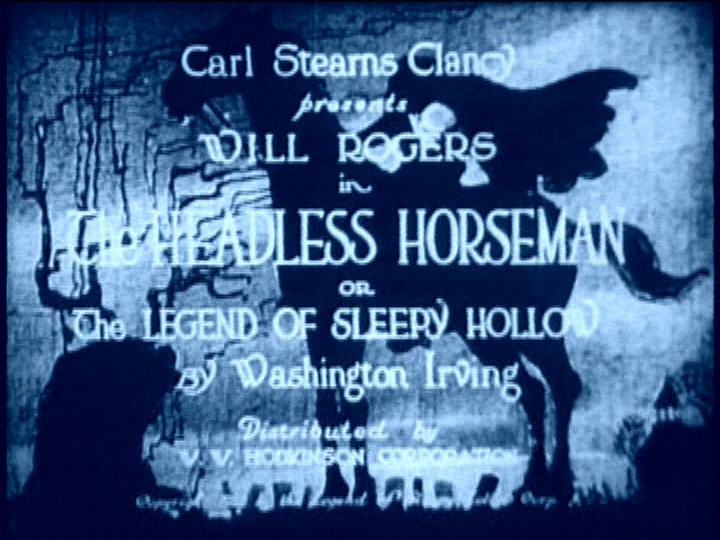
One of Will’s earliest silent films was based on Washington Irving’s famous tale, “The Legend of Sleepy Hollow.” Retitled, THE HEADLESS HORSEMAN, this 1922 silent film was a good vehicle to showcase Will’s personality and is available today on DVD:
Playing Ichabod Crane, Will had to submerge his ingratiating personality to be faithful to the prig character created by author Irving. Still, his winning ways came through as the this frame grab suggests:
The role of Katrina Van Tassel was charmingly played by Lois Meredith, a New York-based actress:
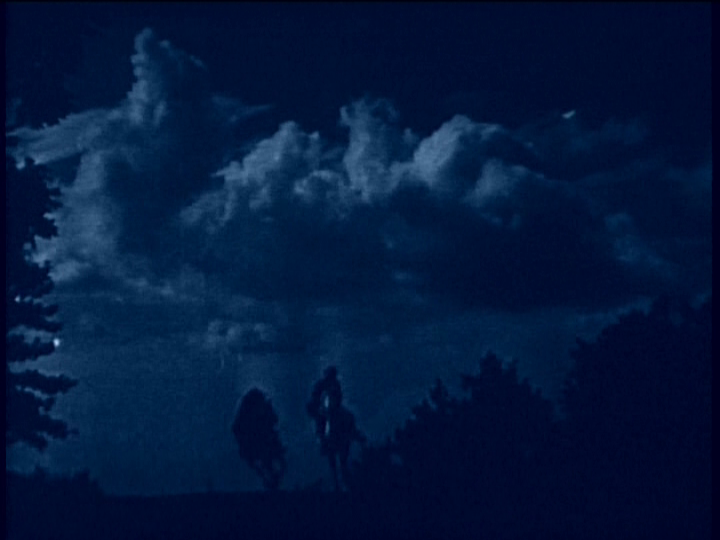
This well-known story of Americana was filmed on location in the Hudson River Valley, New York, near where Irving had lived and wrote in Tarrytown. THE HEADLESS HORSEMAN is historically important as the first feature film to use the new panchromatic film stock. Unlike the old orthochromatic film stock that did not photograph certain colors such as blue, and missed clouds entirely (with clear skies looking gray), panchromatic film brought out all the details as these frame grabs indicate:
The story’s climax where Ichabod meets up with the title character is well-handled in an early Halloween frightful style. Faithful to the Irving original, Crane vanishes from Sleepy Hollow thereafter, but word would come that he had established himself quite well elsewhere.
Will Rogers made many silent films although most of his earliest ones, such as LAUGHING BILL HYDE (1918), are lost. During the 1920s, he decided to finance his own series of two-reel comedies but went broke doing it. Happily, when sound films came along in 1929, Will became a huge film star thereafter.
Now let’s hear Will Rogers speak for himself in this April 21, 1935 radio broadcast that sounds very much like our own political situation today – our Government is spending money faster than it can take it in and everybody has a plan to fix it. Although we have restored the sound somewhat, it’s a bit rough to our 21st century ears but Will’s insights are right up to date. Will talks extemporaneously with only a few speaking points to guide him so his style of speaking may take a minute or so to get use to. Enjoy the full ten minutes!
This time we turn the spotlight on Al Jolson (1886-1950) who by sheer force of his personality became known as “The World’s Greatest Entertainer.” It’s said that he bestowed the title on himself but the point is that nobody disputed it.
There were four great male pop singers during the 20th century and in chronological order they were Al Jolson, Bing Crosby, Frank Sinatra, and Elvis Presley. They all excelled in singing love songs but two of them were gentlemen – Crosby and Presley – and two of them were tough guys – Jolson and Sinatra:
Al isn’t glaring at the camera in this production shot from WONDER BAR (1934). His scorn is directed towards an off-camera Ricardo Cortez who plays a gigolo in the story:
The New York premiere of THE SINGING KID in April 1936. Al is partially hidden behind the microphone while Mrs. Jack Oakie speaks into it as her husband looks on. On the left is none other than Ruth Roland, the serial queen of the silent screen. After retiring from films, Ruth made a fortune in real estate. No wonder she’s smiling!
Jolson played only one historical role in films – other than himself, that is. Al’s characterization of E.P. Christy, the minstrel man of the 19th century, won critical praises and stole the show. That’s Don Ameche as Stephen Foster and Andrea Leeds as his long-suffering wife in the Technicolor production, SWANEE RIVER (1939):
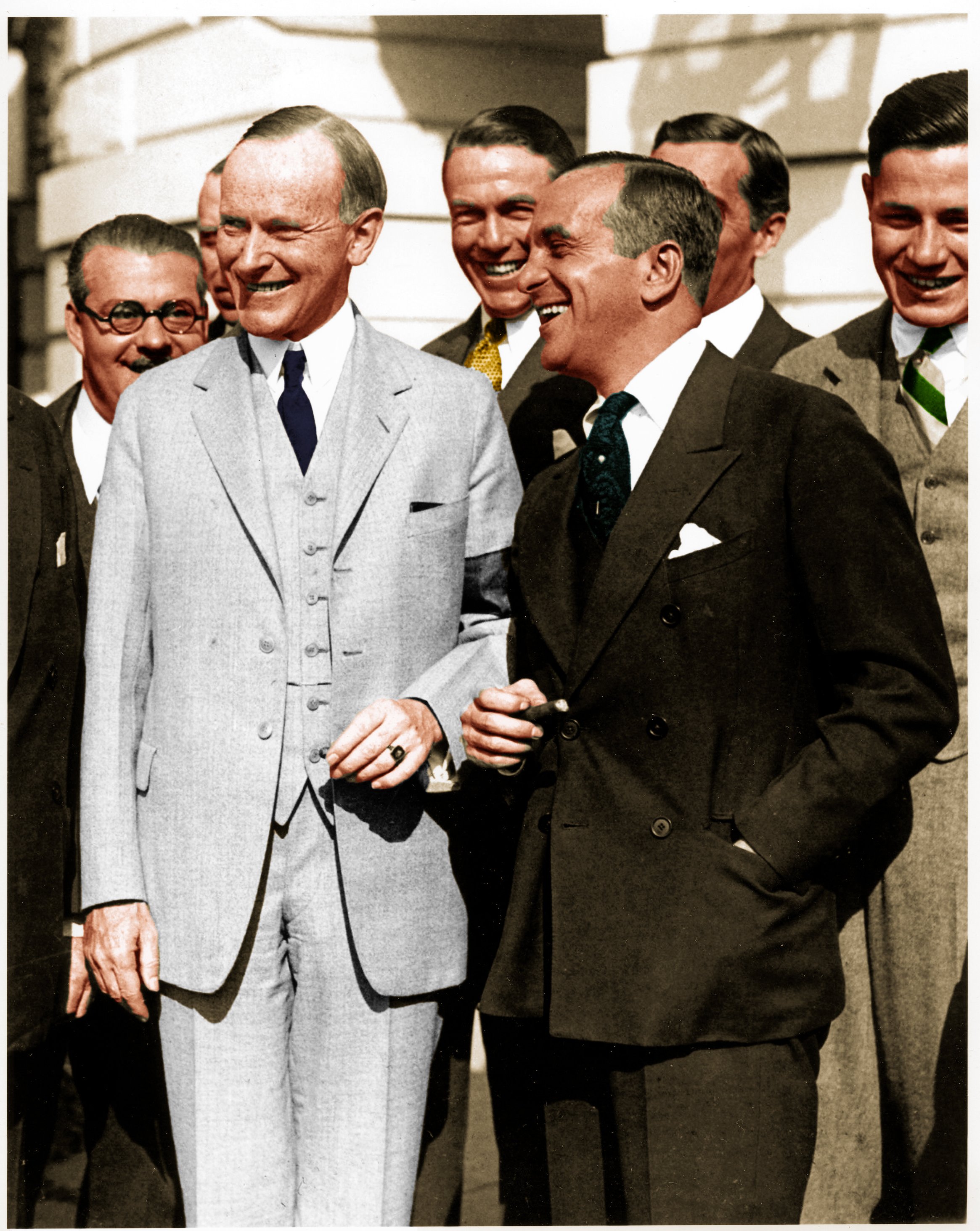
Jolson was active in the Republican Party during the 1920s, campaigning for Warren Harding and even writing a song for him. Here Al visits President Calvin Coolidge at the White House in October 1924:
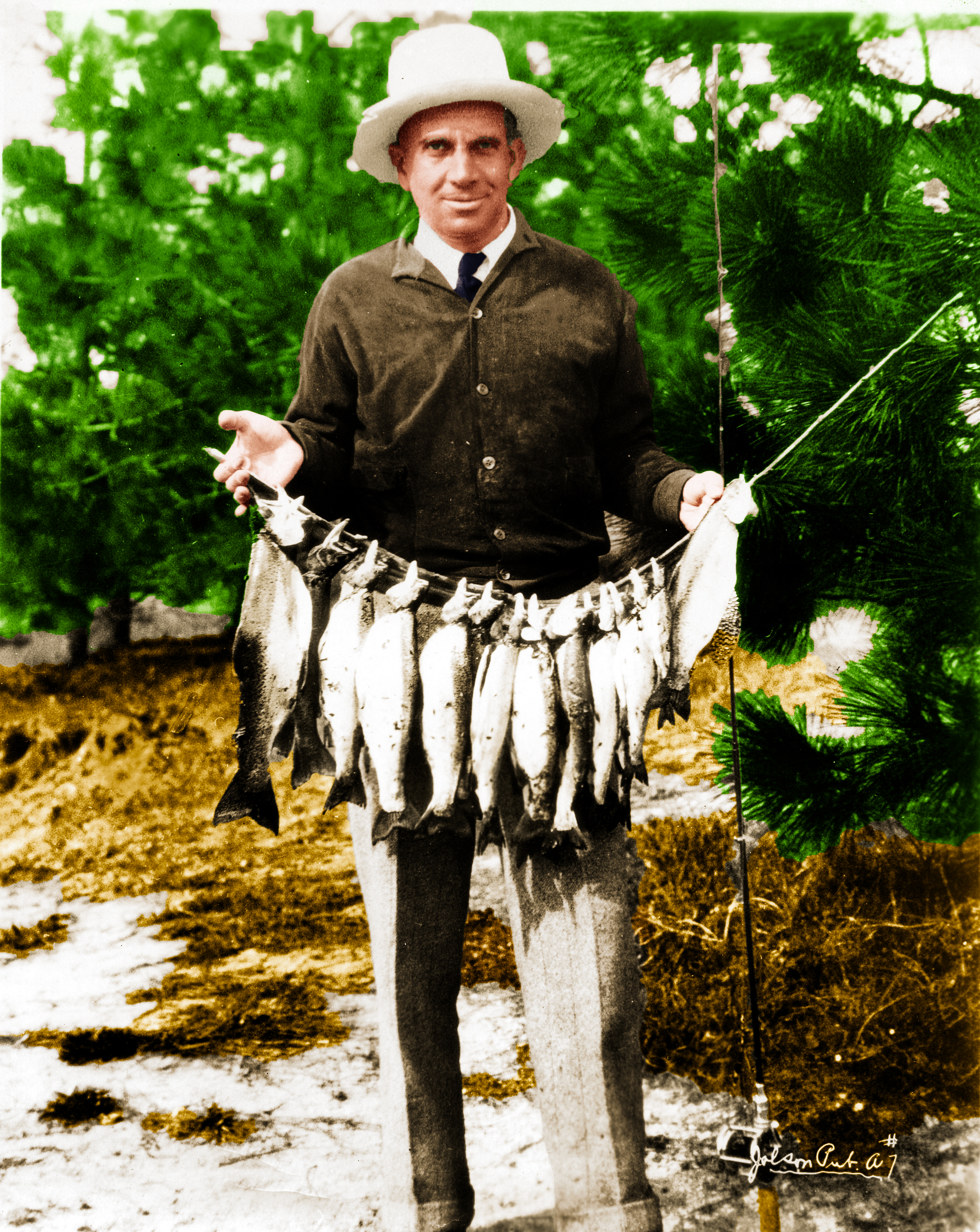
Al was a sportsman and proudly displays his day’s catch:
A deleted scene from ROSE OF WASHINGTON SQUARE (1939), a nostalgic musical of the 1920s, which even in 1939 seemed like a long time ago:
Al and his third wife Ruby Keeler in 1929, singing songs over the air to promote his new film, SAY IT WITH SONGS:
After Broadway and Hollywood, Jolson became a major radio star during the 1930s and thereafter. But what’s the point in talking about Al – let’s listen to him. Click below to hear the Colgate Tooth Powder Show of January 5, 1943. Right smack in the middle of the Second World War, this show has plenty of jokes to keep up morale in dealing with the wartime challenges of rationing and shortages. Broadcast live from New York City, Al’s guest, Monty Woolley (The Man Who Came To Dinner) was such a hit that he became a regular on the show. Al performs a terrific medley of George Gershwin songs at the end:
All of the Jolson movies mentioned in this post are now available on DVD. Of course, the film that Al is primarily remembered for, THE JAZZ SINGER (1927), is also out on Blu-ray. Check ’em out!
























































 OLD HOLLYWOOD IN COLOR