The “voice” is created by AI by cloning a voice filing of the Actual Voice of Mr. Veidt.
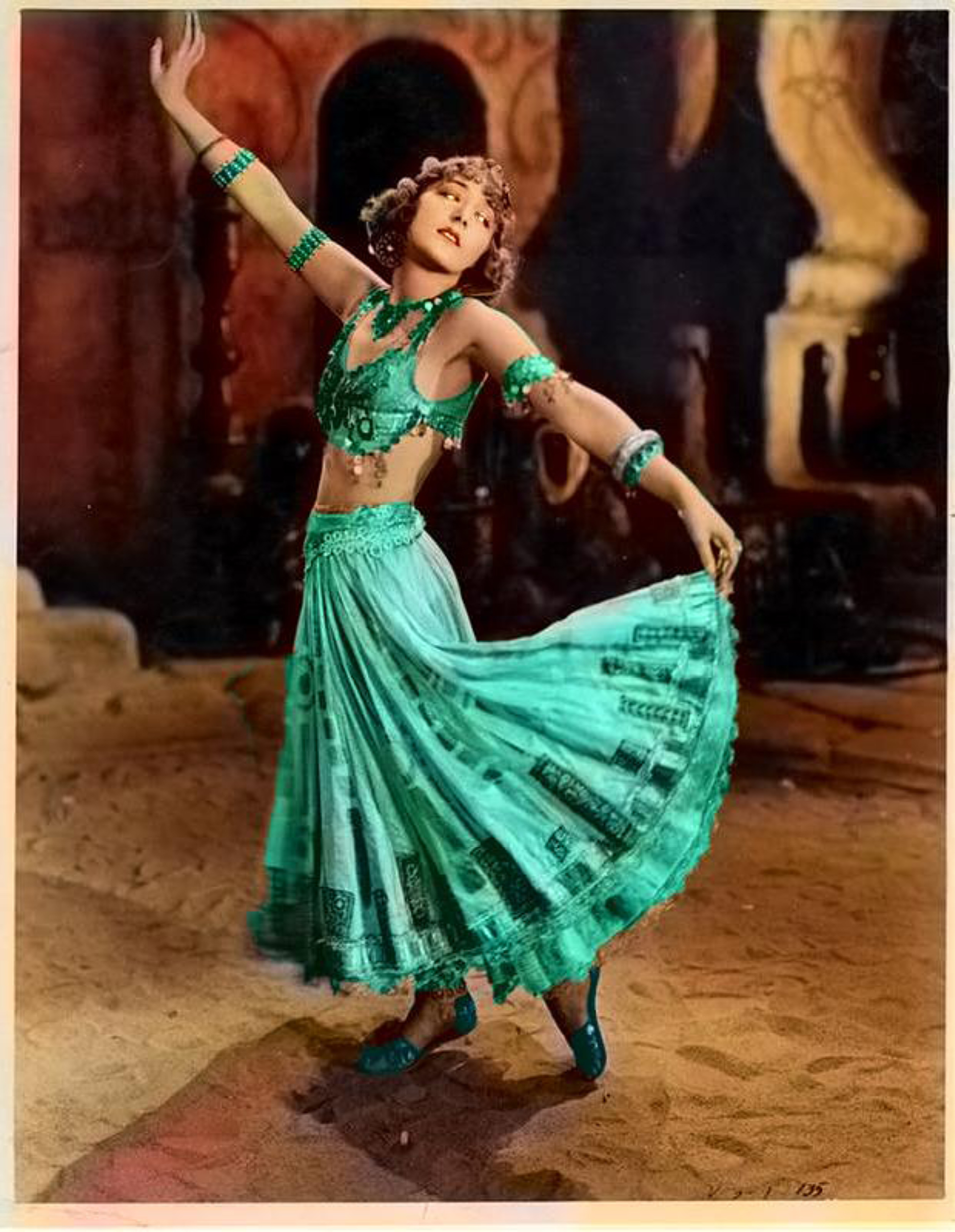
Welcome in 2024 with Calendars of the Stars from the Golden Age of Hollywood
A tradition for many years on this blog is to create some unique calendars featuring some of the unique stars from Hollywood’s Golden Age. That used to mean celebrities from the 1920s into the 30s. But in recent years the pool has expanded and now we hear that the “Golden Age” extends well into the 70s, the 80s, and most recently, even the 90s. But here we go back to First Principles and so we celebrate the Golden Age of Great Stars who defined the medium before there was anybody else there.
When we first began this annual celebration, many of the honorees had few films in circulation. And many of those were in poor shape. Today in only about a decade many films have been restored, and can be seen in sparkling Blu-ray quality on big screens. We have much to celebrate so let’s begin our gallery of Great Stars for 2024.
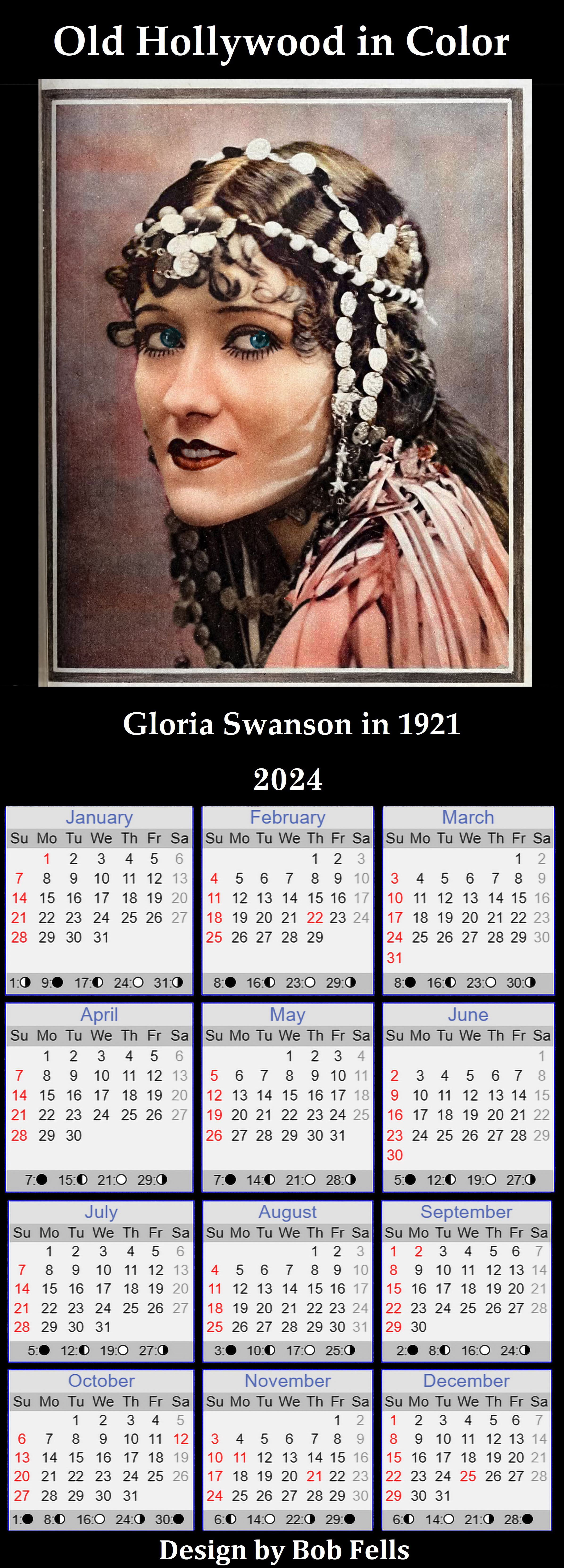


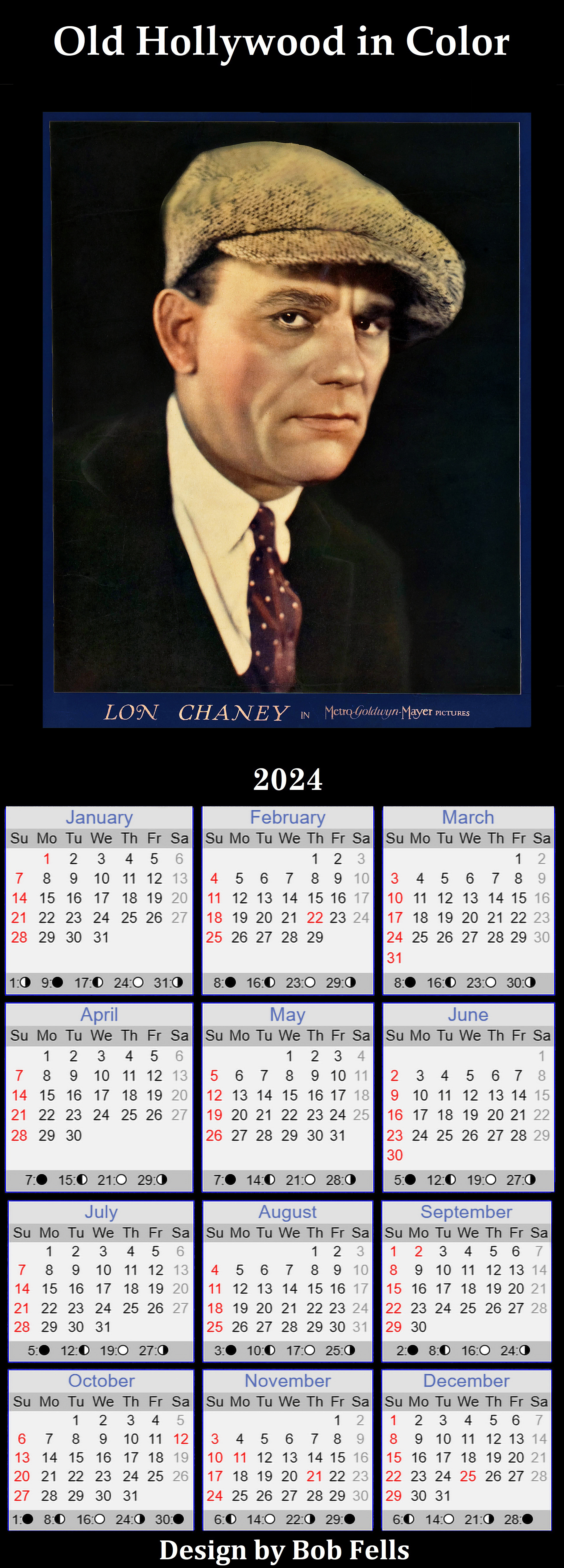


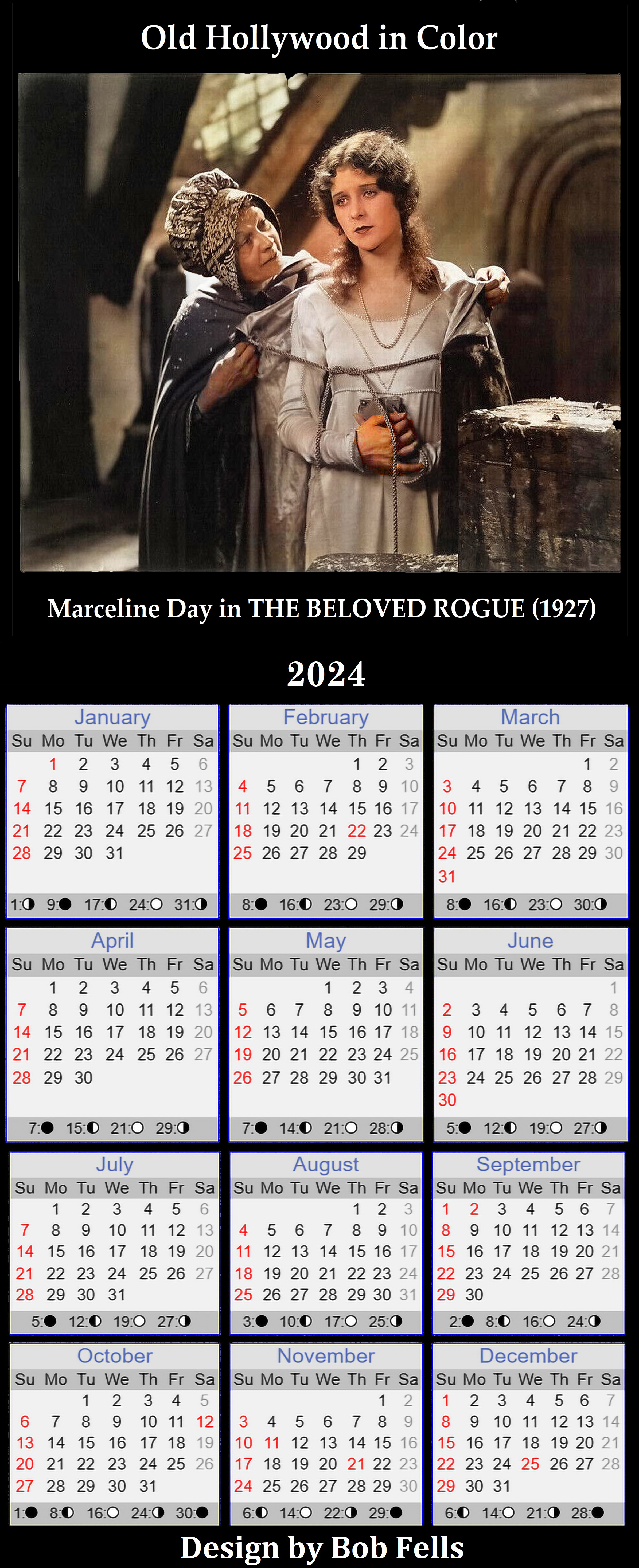


Best Wishes for a Happy and Healthy 2024!

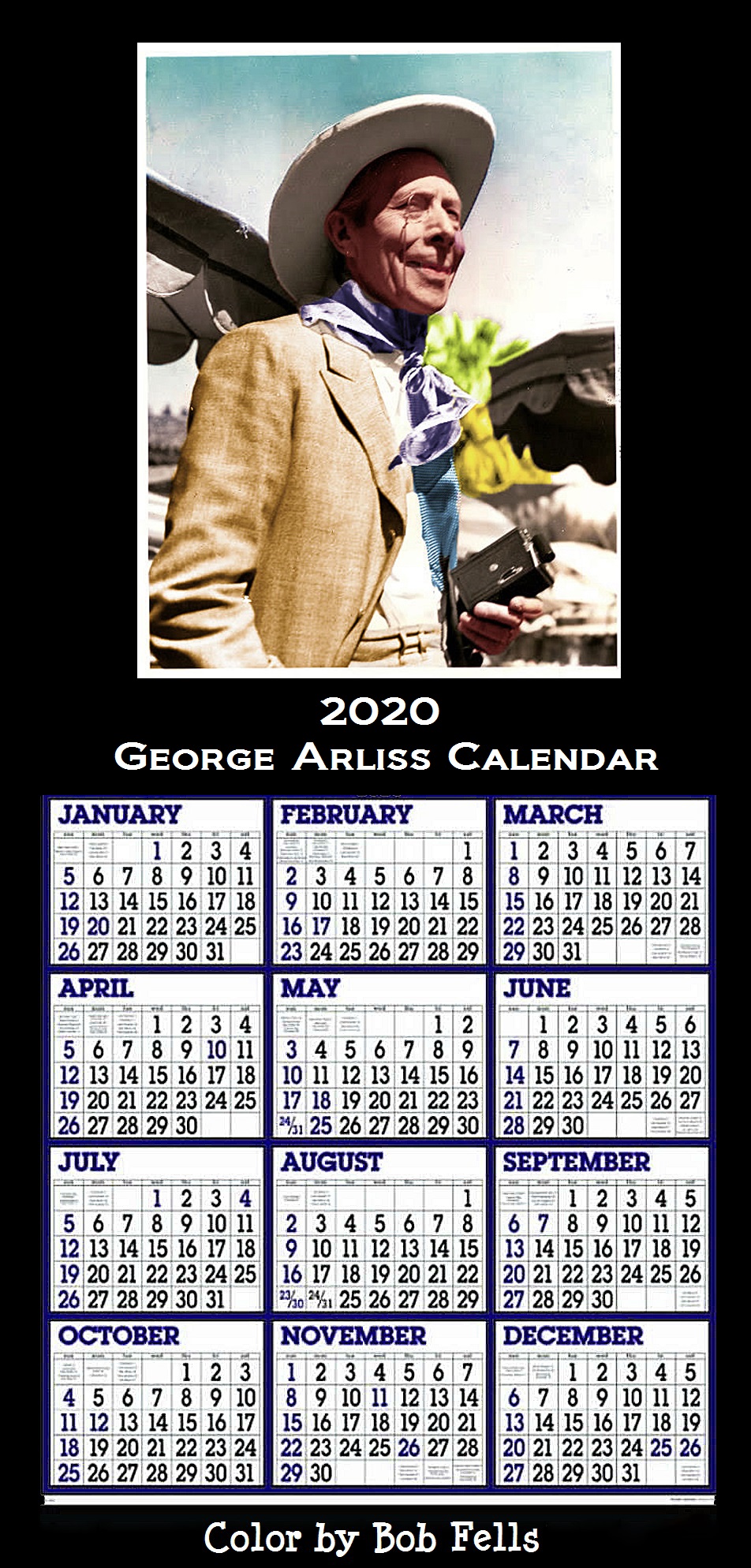
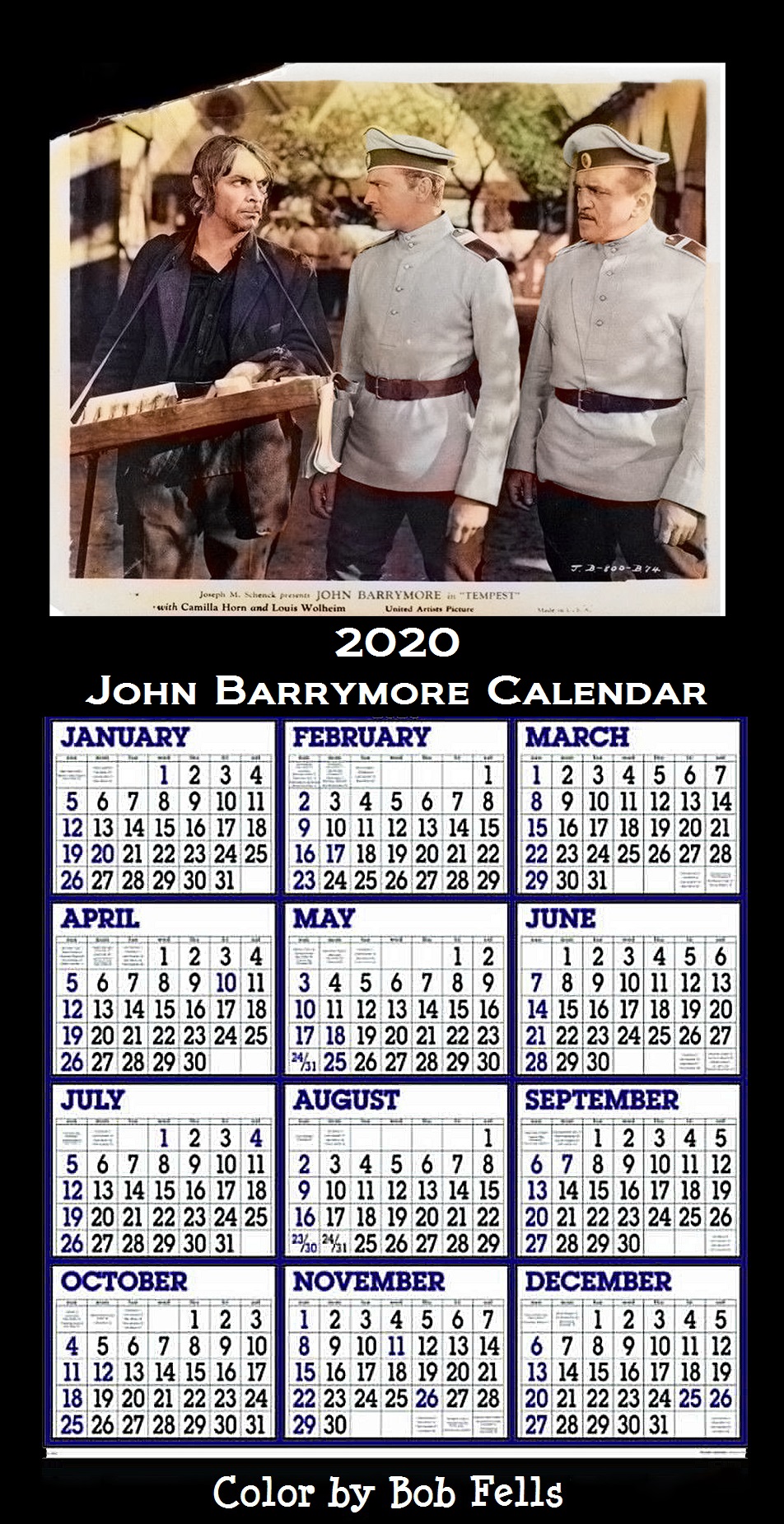
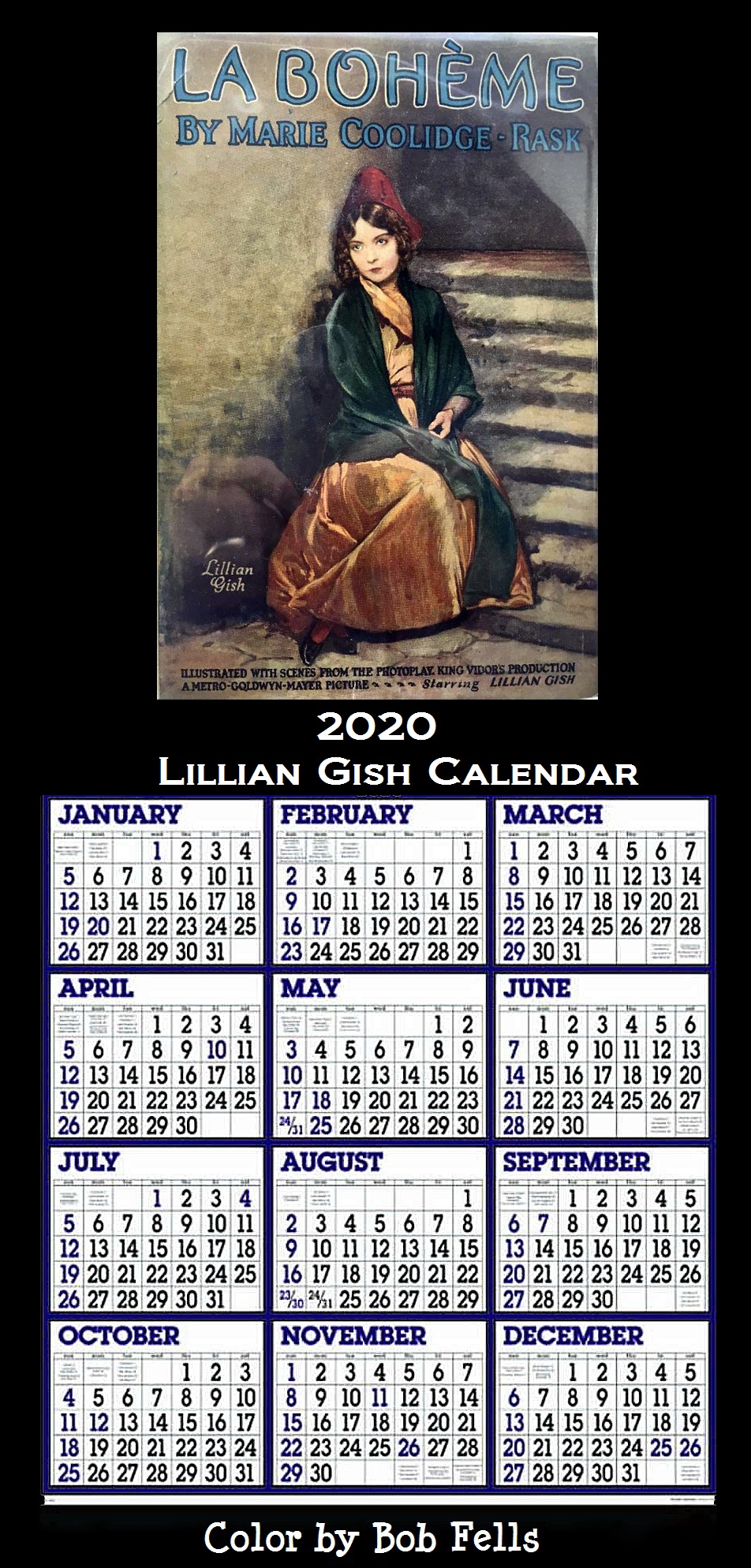
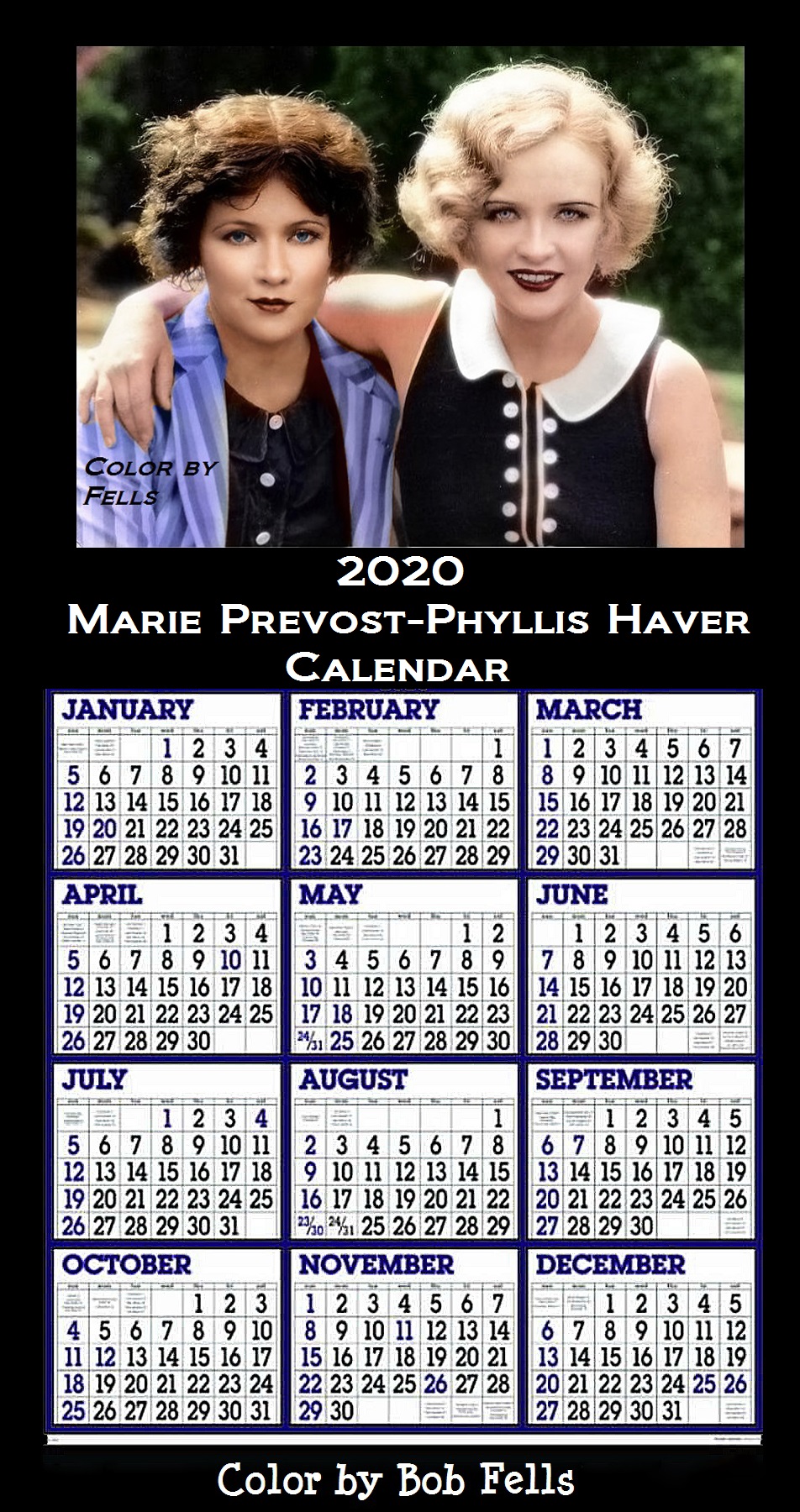
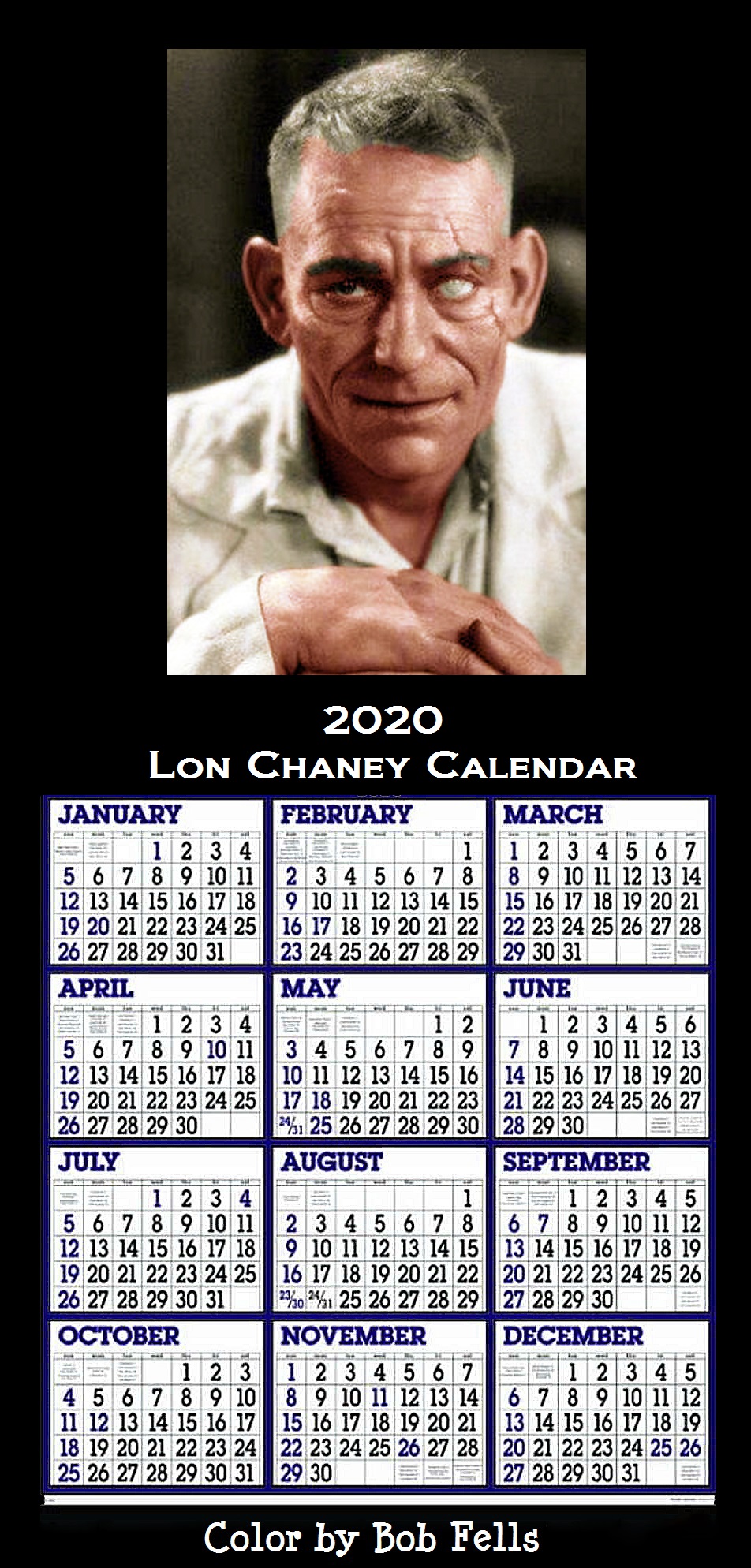
2020 Old Hollywood in Color Calendars
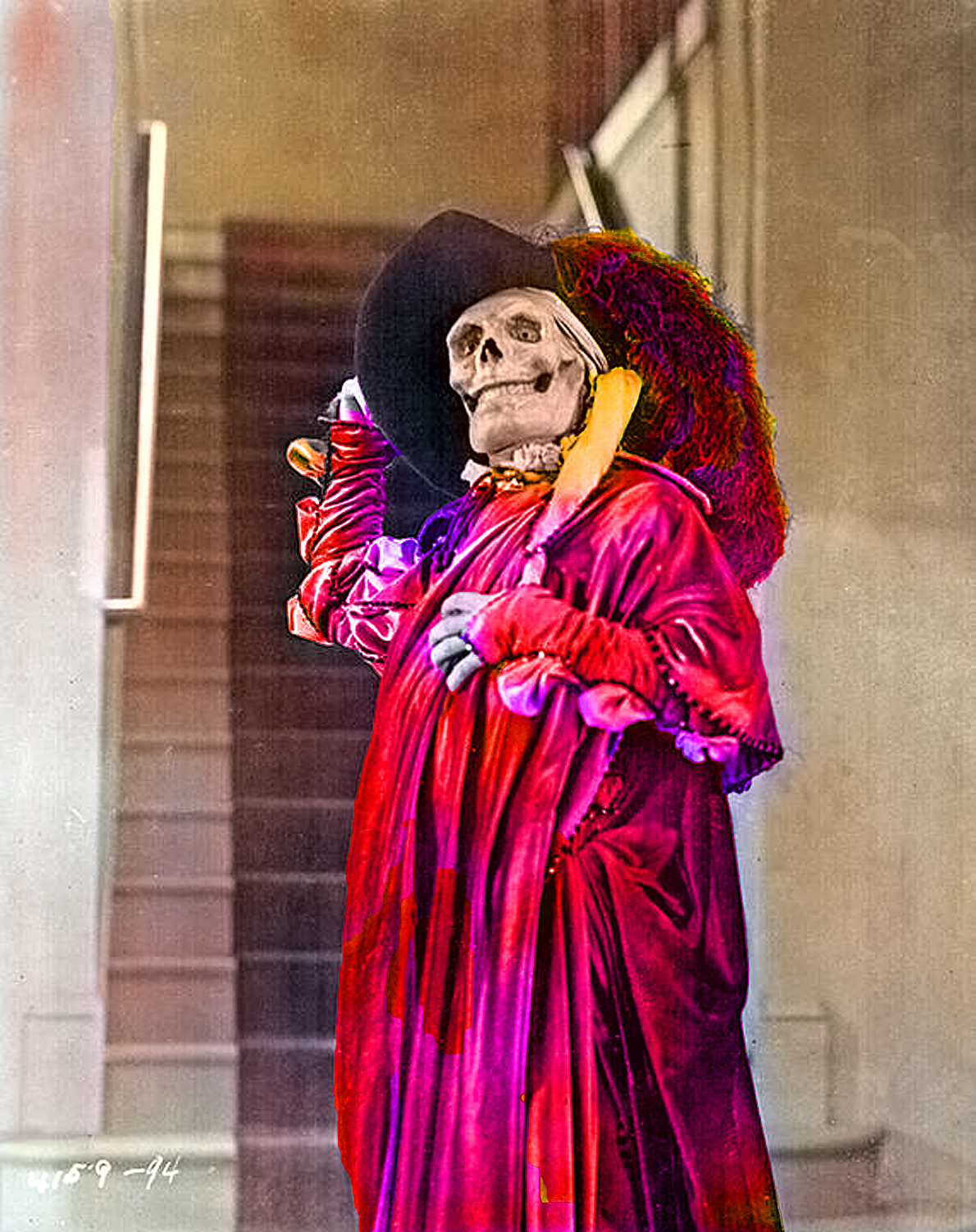
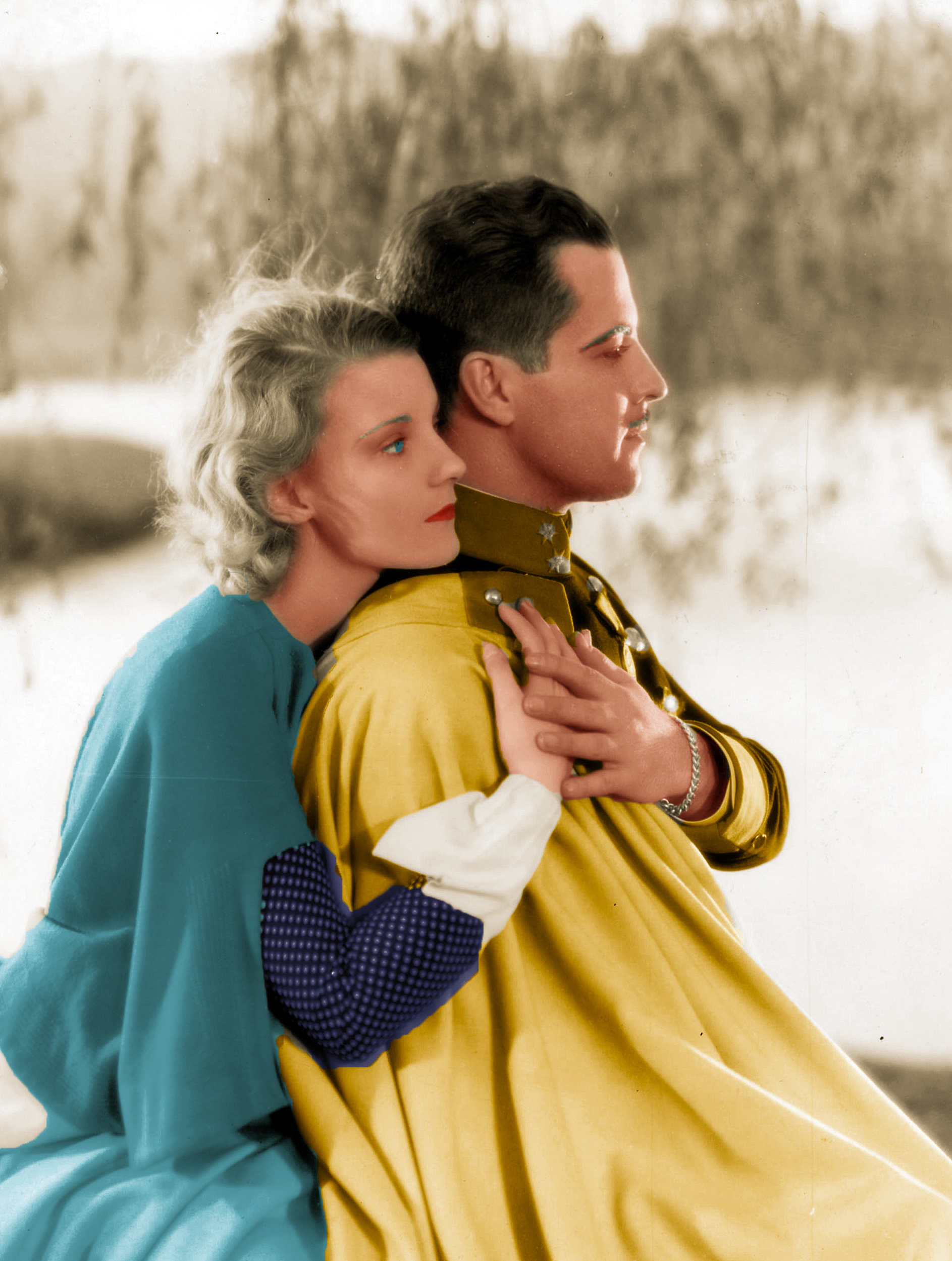
Here they are – this year’s selection of wall calendars with my colorized photos that I created during this past year. Obtaining your copy is easy, just print them out. They look great in 8×10!






DON JUAN (1926) – A Video Tour of Two Original Souvenir Programs

Souvenir movie programs have always been highly collectible items. In fact, the more vintage the program, the more expensive they tend to be, especially if the item is in top condition. Among my personal collection I have two souvenir programs from DON JUAN (1926), the first feature film to have a synchronized music score (with a few sound effects).

Here is the cover of the deluxe American program that was sold at the special “road show” engagements of the film.

This is the cover of the German program that was printed on such thin paper that I immediately digitized the pages before they crumbled.
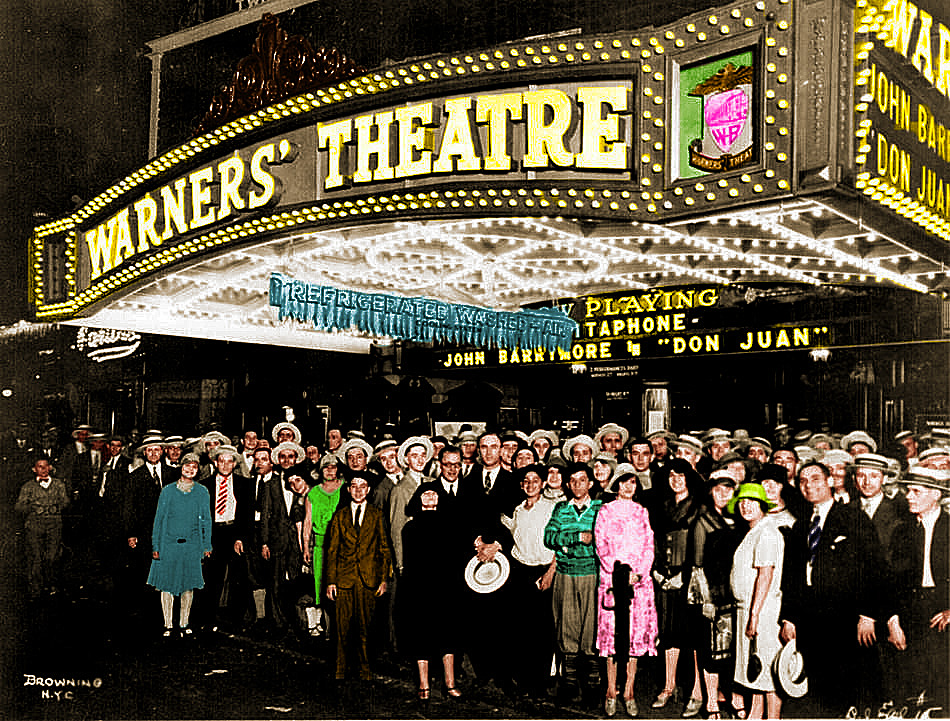
And now, please take a video tour of both programs accompanied by musical excerpts from the film’s original score.

On the Set with….the 2017 Edition!
Among our most popular posts here are the “On the Set” series showing legendary figures of Old Hollywood at work on the set of their films. It’s high time we posted a new round of photos – all in living color of course!
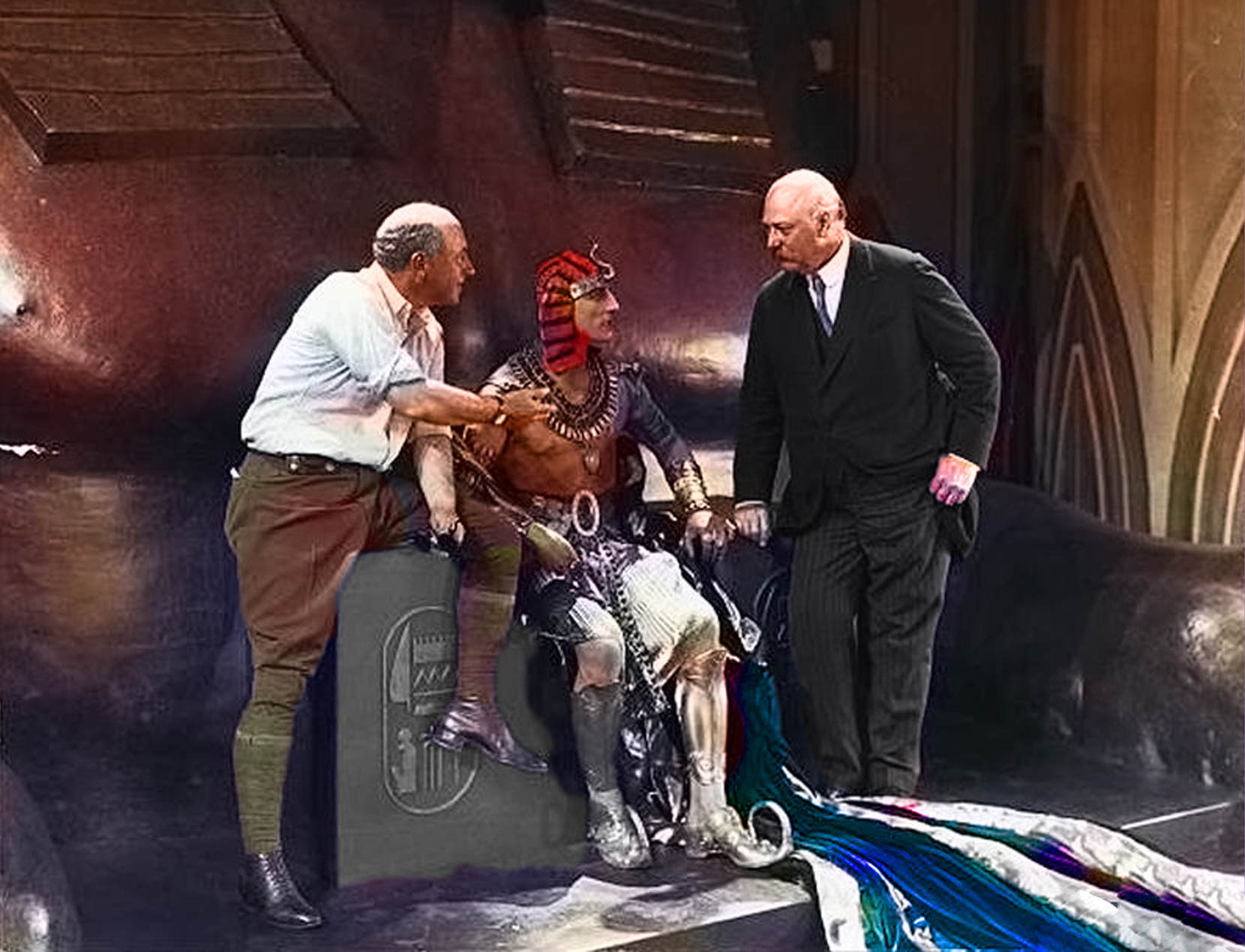
On the set of THE TEN COMMANDMENTS (1923) director/producer Cecil B. De Mille (on the left) introduces the U.S. Secretary of War John Weeks to the Pharoah Rameses aka Charles De Roche:
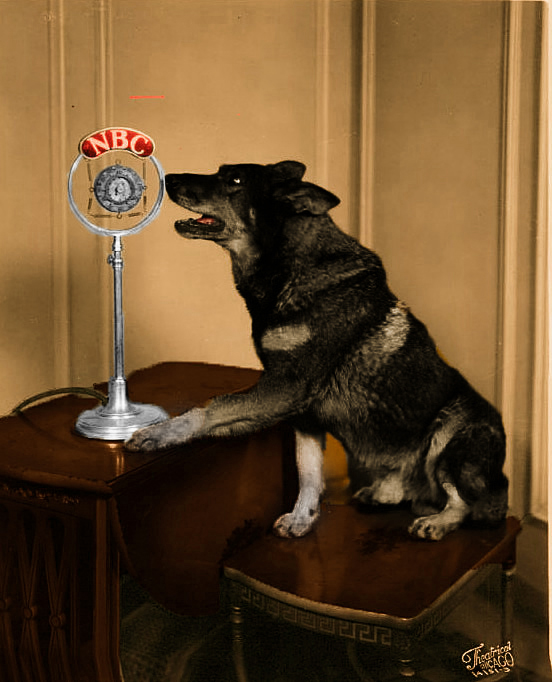
The original Rin-Tin-Tin (1918-1932) and his owner Lee Duncan enjoy sunset on the beach in 1929:

John Barrymore at his magnificent Tower Road home in the Hollywood Hills circa 1930:

Clara Bow gives some swimming suggestions to her niece and nephew circa 1928:

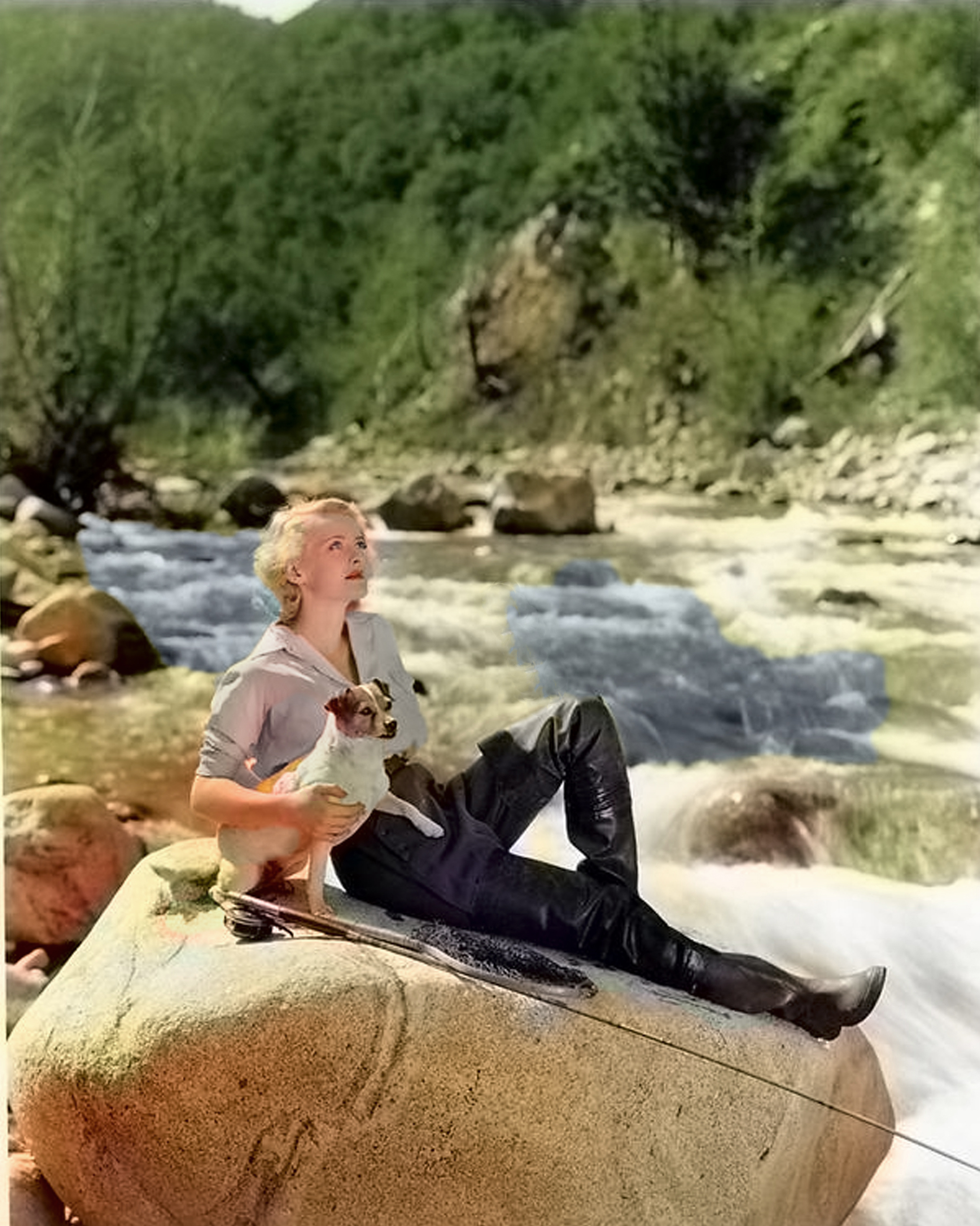
Bette Davis and her dog do a bit of fishing on the San Clemente River in 1933:
Greta Garbo and John Gilbert join director Edmund Goulding and crew for a picnic lunch during outdoor filming on LOVE (1927):

Marion Davies is directed by Sam Wood on the set of THE FAIR CO-ED (1927):

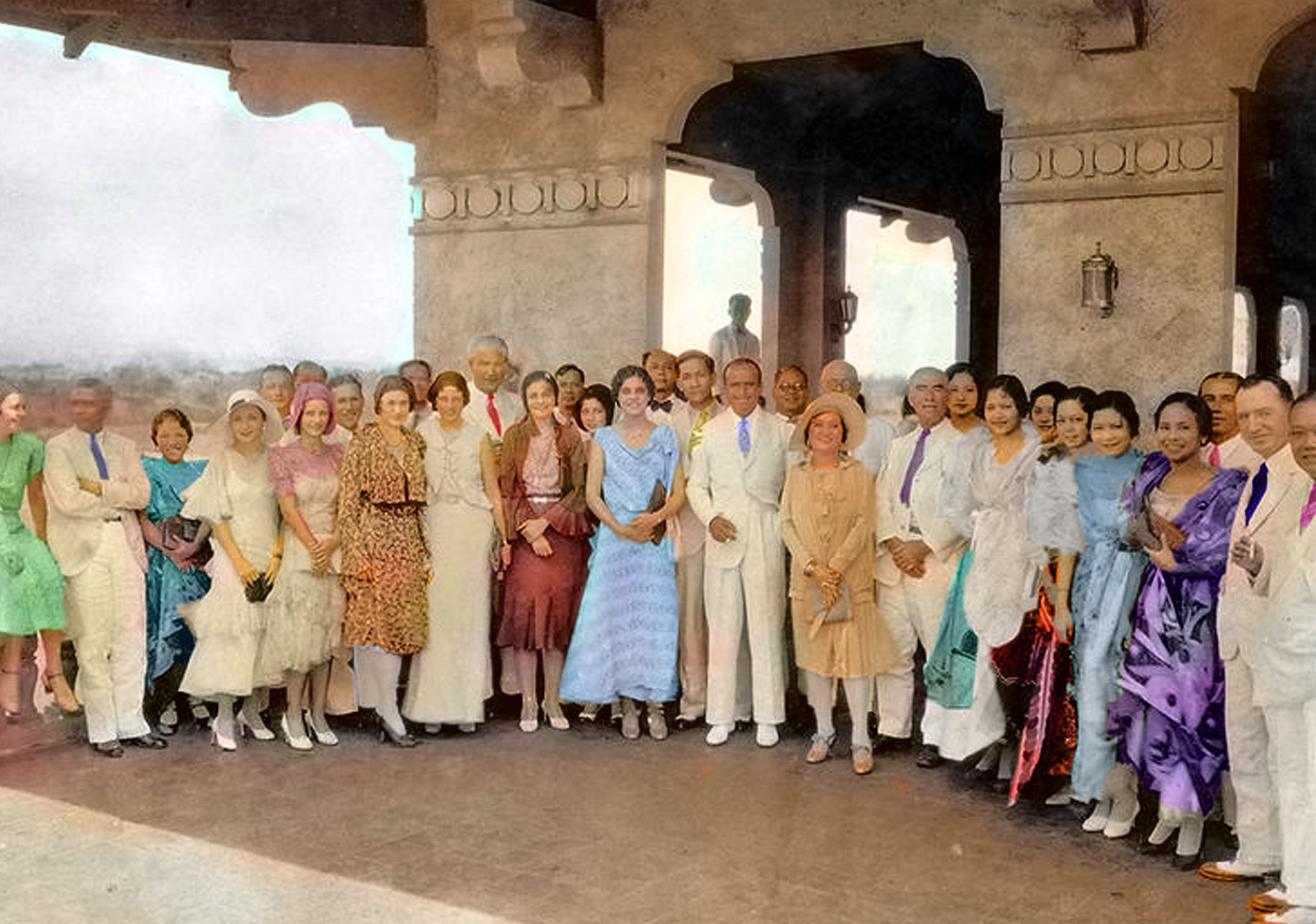
Douglas Fairbanks Sr. is the center of attention at the Hotel Manila in the Philippines during the filming of AROUND THE WORLD IN EIGHTY MINUTES (1931):
Joan Crawford takes some movies of her own during filming for THE UNDERSTANDING HEART (1927):

Frank Borzage directs Spring Byington and Errol Flynn in THE GREEN LIGHT (1937):
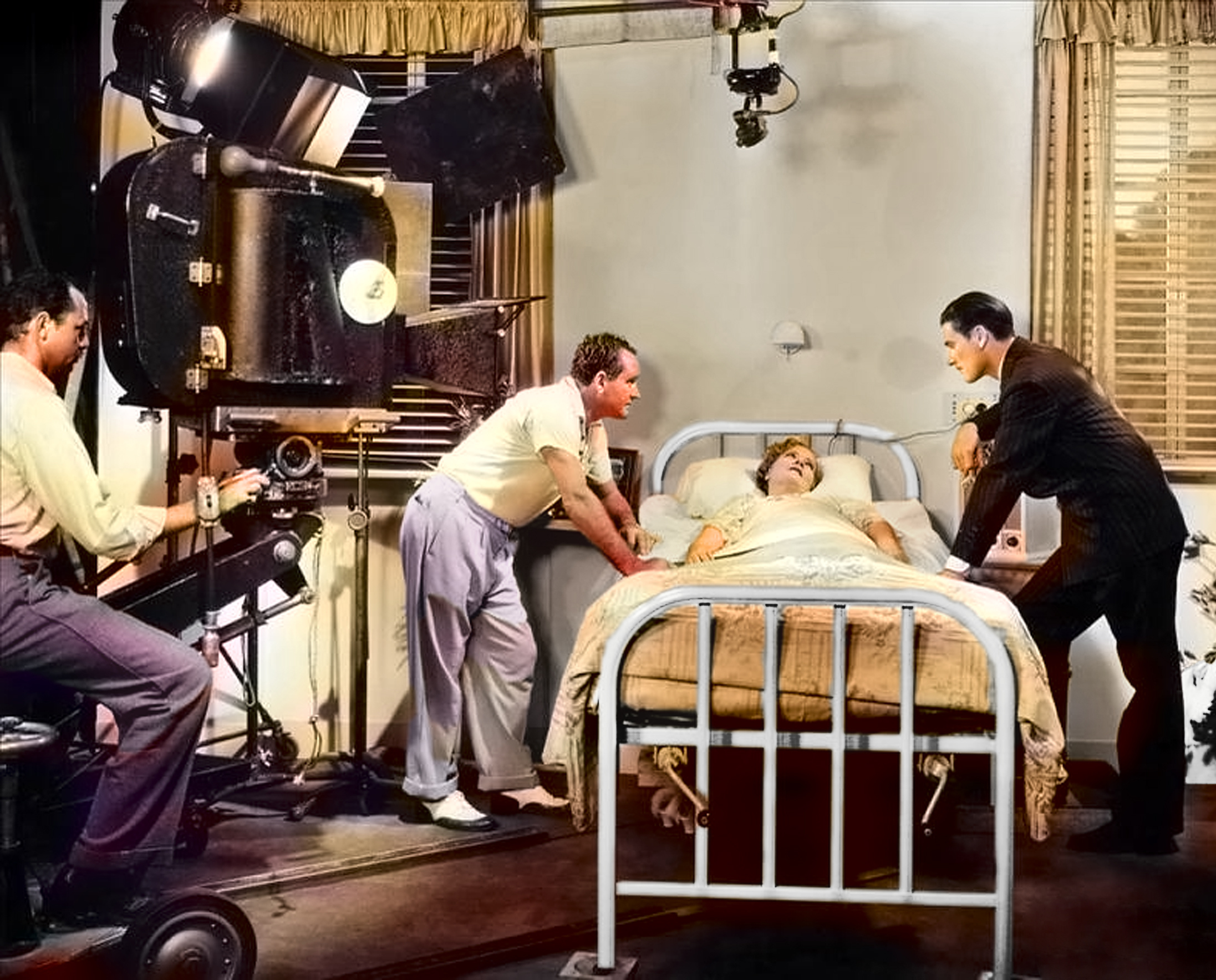
Lupe Velez enjoys the beach during filming for HELL’S HARBOR (1930):

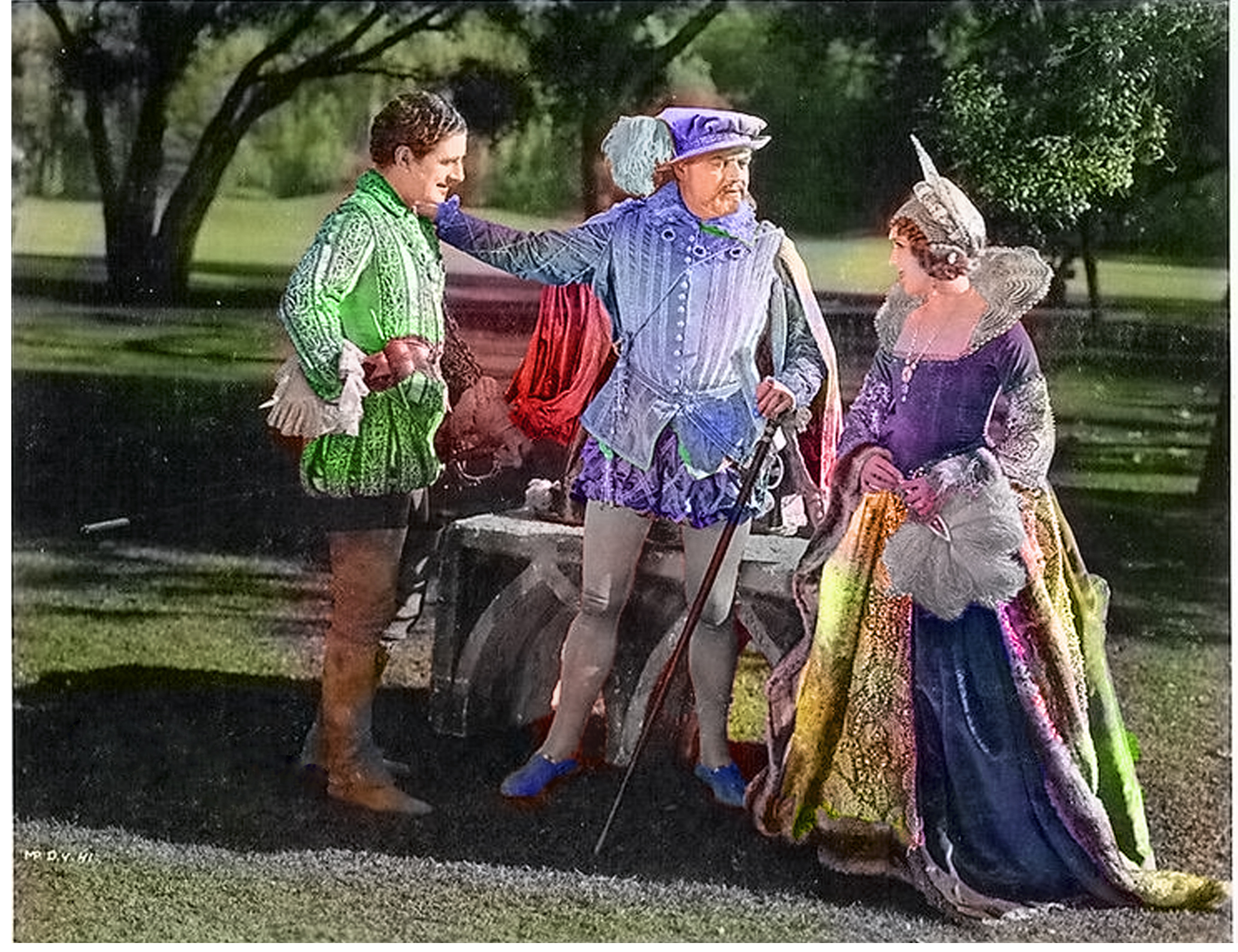
Producer/Star Mary Pickford with Allan Forest and Anders Randolf on DOROTHY VERNON OF HADDON HALL (1924):
Rootin’ tootin’ cowboy Humphrey Bogart (!) plays a Mexican bandit in VIRGINIA CITY (1940):

Glamorous Gloria Swanson is unglamorously washed ashore in MALE AND FEMALE (1919):

Director William Desmond Taylor, whose 1922 murder has never been solved, almost seems to be looking for his killer circa 1920:

Finally, Rin-Tin-Tin again in a stunning pose that feels almost 3-D:
Vintage Glass Slides Celebrate Classic Horror Films + An Interview with Colin Clive!
Halloween 2015 gives us a good reason to take a fresh look at some of the greatest horror film classics ever made. But not by viewing the familiar artwork found in vintage posters and lobby cards. Instead we have found several rarely-seen and extremely fragile glass slides that were projected onto movie screens over 80 and 90 years ago. Let’s begin the tour.
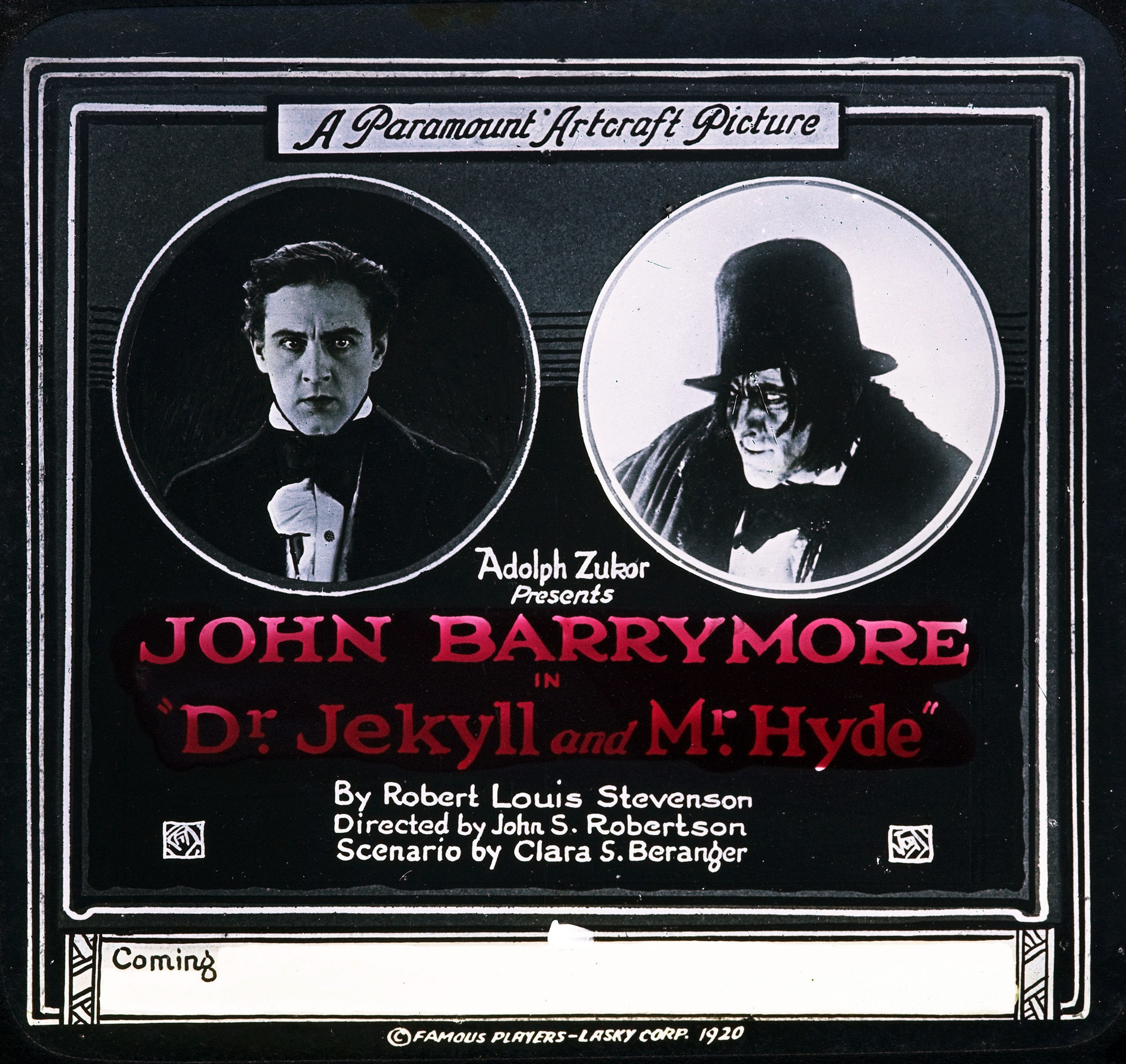
DR. JEKYLL AND MR. HYDE (1920) is often credited as the first American horror film. Although filmed many times beginning in 1911, this 1920 silent film version starring John Barrymore in his “breakthrough” movie performance is generally regarded as the best film version. This takes nothing away from at least two excellent sound film versions made in 1931 and 1941. The 1920 version is readily available today on Blu-ray, DVD, and streaming video:
Before Lon Chaney frightened audiences in THE HUNCHBACK OF NOTRE DAME (1923), the Man of 1,000 Faces created chills in this 1922 film, which alas, is lost:

Decades before JURASSIC PARK let loose an army of angry dinosaurs, movie audiences were awed by living prehistoric creatures in THE LOST WORLD (1925). Based on the popular novel by Sir Arthur Conan Doyle, this film is available on DVD:

Lon Chaney scored a huge hit with one of the most memorable films of all time. New generations today find THE PHANTOM OF THE OPERA (1925) is still a potent brew. The enduring popularity of the Chaney film has resulted in this PHANTOM being available on Blu-ray as well as DVD. We are also lucky to have TWO glass slides for this classic:


Chaney Sr. did not rest on his laurels with PHANTOM, but followed it up with edgy dramas such as THE ROAD TO MANDALAY (1926), which only partially exists today:

American horror films didn’t become established until the talkie era with DRACULA and FRANKENSTEIN, both released in 1931. A lesser-known film released in 1932 is THE WHITE ZOMBIE starring Count Dracula himself, Bela Lugosi. This low-budget film has grown in stature through the years and today is considered a classic. As a sign of its stature, ZOMBIE is available on DVD and even Blu-ray:

One of the best of the early 1930s horror classics is THE INVISIBLE MAN (1933), based on a novel by H.G. Wells, and starring Claude Rains in his first film. The romantic lead was Gloria Stuart who 60 years later appeared in TITANIC (1997):

1933 was a banner years for classic films and horror movies were no exception. In addition to THE INVISIBLE MAN, the public was treated to KING KONG:

The public barely had time to catch its collective breath when later in 1933 the sequel to KONG was released. While not as good as the original, SON OF KONG is enjoyable on its own terms:

Another early horror talkie that has grown in stature is THE BLACK ROOM (1935) starring the Frankenstein monster himself, Boris Karloff. And yes, it’s available on DVD:

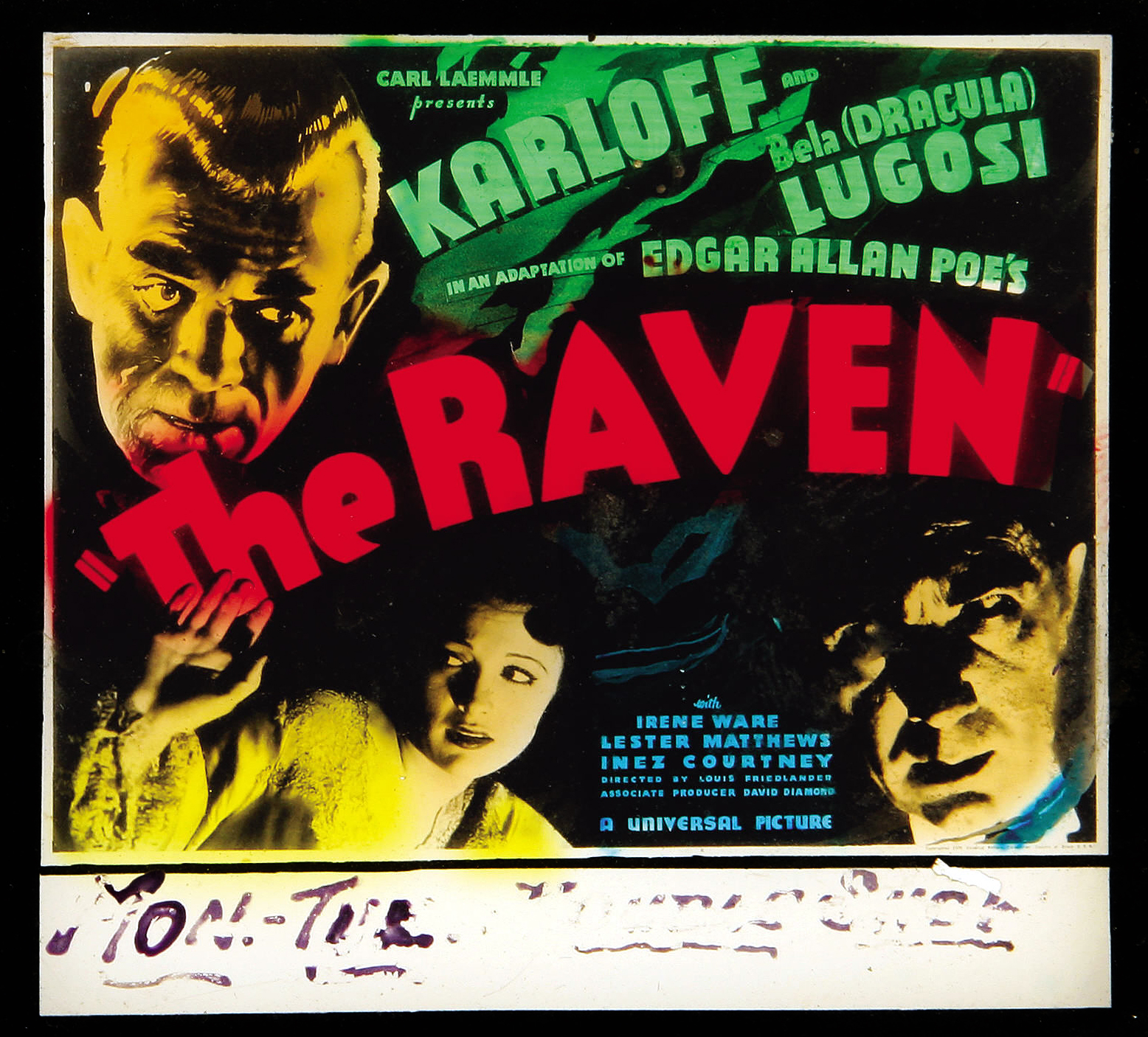
It was only a matter of time before those Twin Princes of Horror Films, Boris Karloff and Bela Lugosi, were co-starred. THE RAVEN (1935) is the second of several successful films from the Karloff-Lugosi team and, yes, is on DVD:
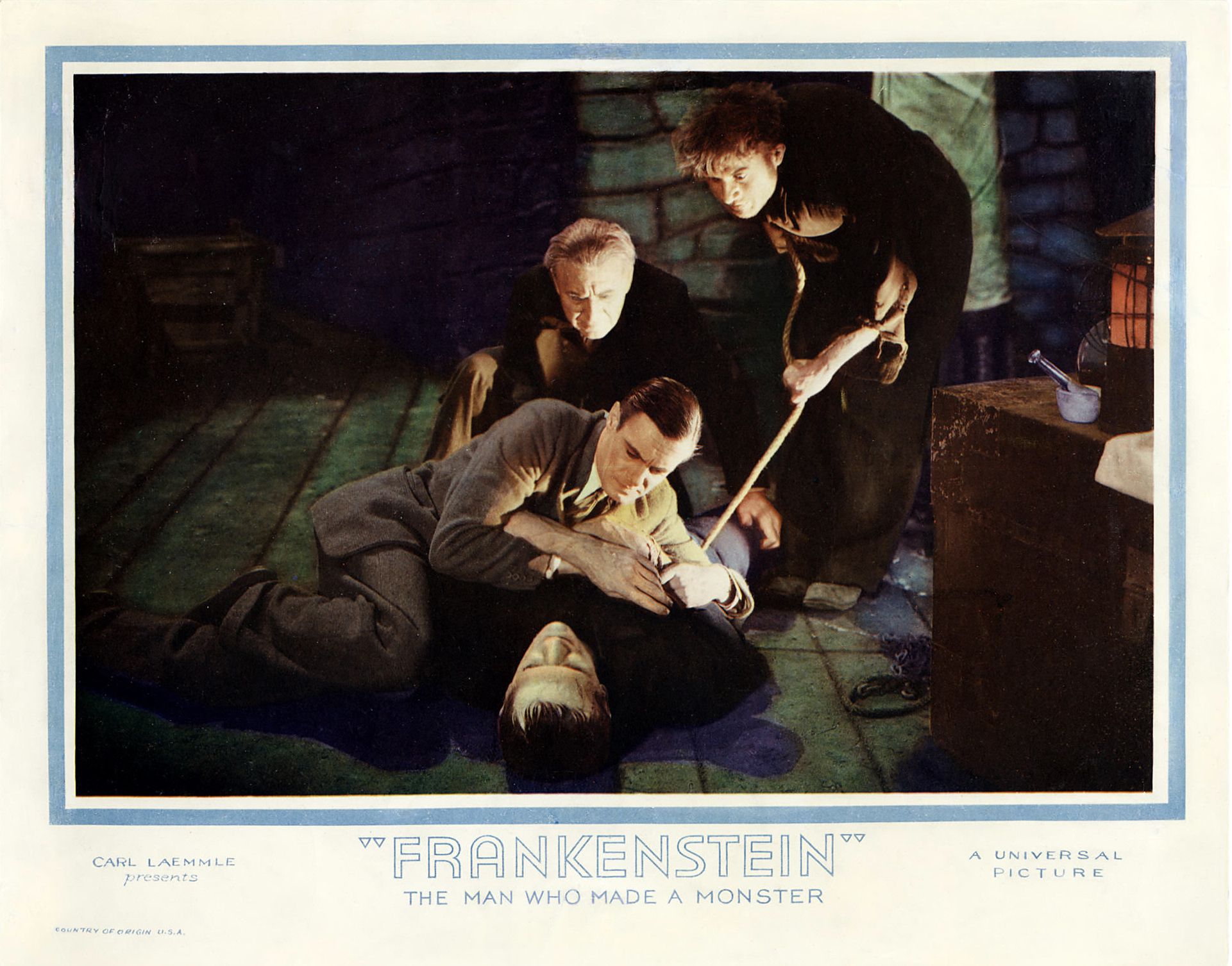
Is there a consensus on one classic horror film that is considered the best ever made? Well, if there is, that film would be the sequel to FRANKENSTEIN (1931). Filmed under the working title of THE RETURN OF FRANKENSTEIN, this stunning film would be known to the world as THE BRIDE OF FRANKENSTEIN (1935). Of course, this one is available on Blu-ray and DVD:

British actor Colin Clive played Dr. Henry Frankenstein in those first two films of the series, FRANKENSTEIN (1931) and THE BRIDE OF FRANKENSTEIN (1935). Here is a candid of Colin Clive and Valerie Hobson on the Universal backlot in January 1935 during the filming of BRIDE:

Colin Clive was regarded as a gifted actor but a troubled individual. He passed away in 1937 following years of alcohol abuse complicated by tuberculosis. Typical of many actors of that time, Mr. Clive was unhappy with his being cast in these so-called “horror films.” But unlike other actors, he had no hesitation to go public with his concerns. Here is a rare interview with the man that many consider to be the definitive Dr. Frankenstein:

HAPPY HALLOWEEN!
Golden Age Stars and Their Dogs
Film stars with their pets have always attracted attention and it’s rare that a major celebrity of the screen would decline an opportunity to pose with a four-legged friend. Sometimes the pet was as famous as the pet parent. Here are a galaxy of vintage stars from the Golden Age of Hollywood who seem only too happy to be upstaged.
First, Anna May Wong shows off her dachshund circa 1938:

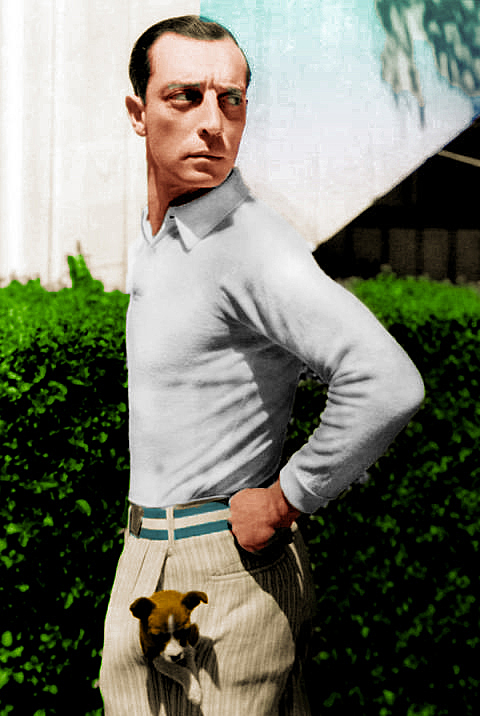
Buster Keaton wants to be sure he can always find his canine pal circa 1930:
John Barrymore shared some inspired comic moments with this St. Bernard at the beginning of MOBY DICK (1930):

Bette Davis seems entranced by this dog as she waits between filming scenes circa 1937:

Douglas Fairbanks Sr.evidently considers this German Shepherd his equal, circa 1920:

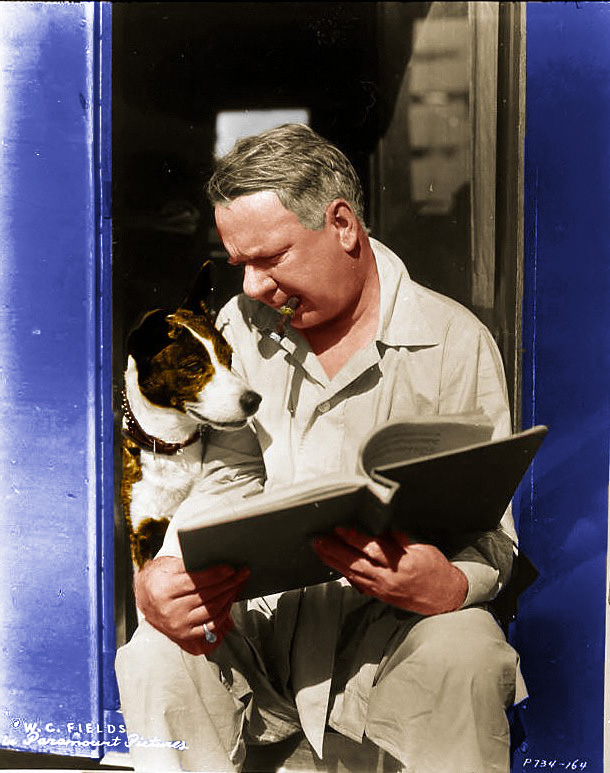
W.C. Fields famously observed that “any man who hates kids and dogs can’t be all bad” but he got along nicely with his co-star in IT’S A GIFT (1934):
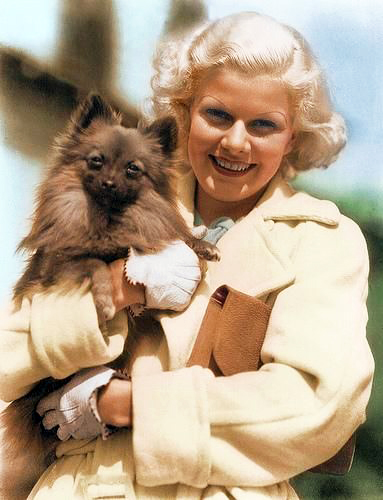
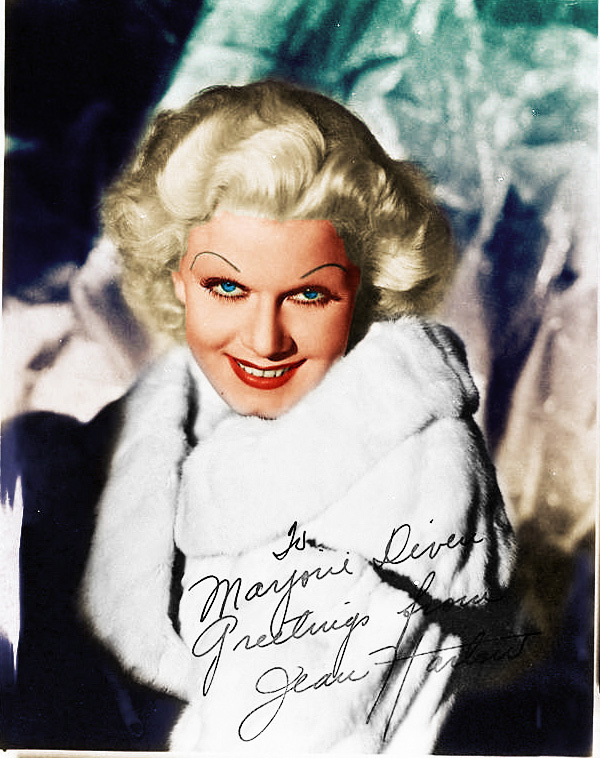
Jean Harlow with one of her many dogs, circa 1935:
Rudolph Valentino inspired much grieving with his untimely death in August 1926. But none grieved more than his dog who was adopted by Rudy’s brother, Alberto. Regardless, the dog pined away for his master until his own passing some years later:

Warner Oland, famous as Charlie Chan, doted on his schnauzer Raggedy Ann and was a proud papa when she had this litter:

Star meets Star: Al Jolson meets Rin Tin Tin on the Warner Bros. lot in 1928:

Carole Lombard and friend in 1932:

Soviet director Sergei Eisenstein wants to chat with Rin Tin Tin during his 1929 visit to the United States:

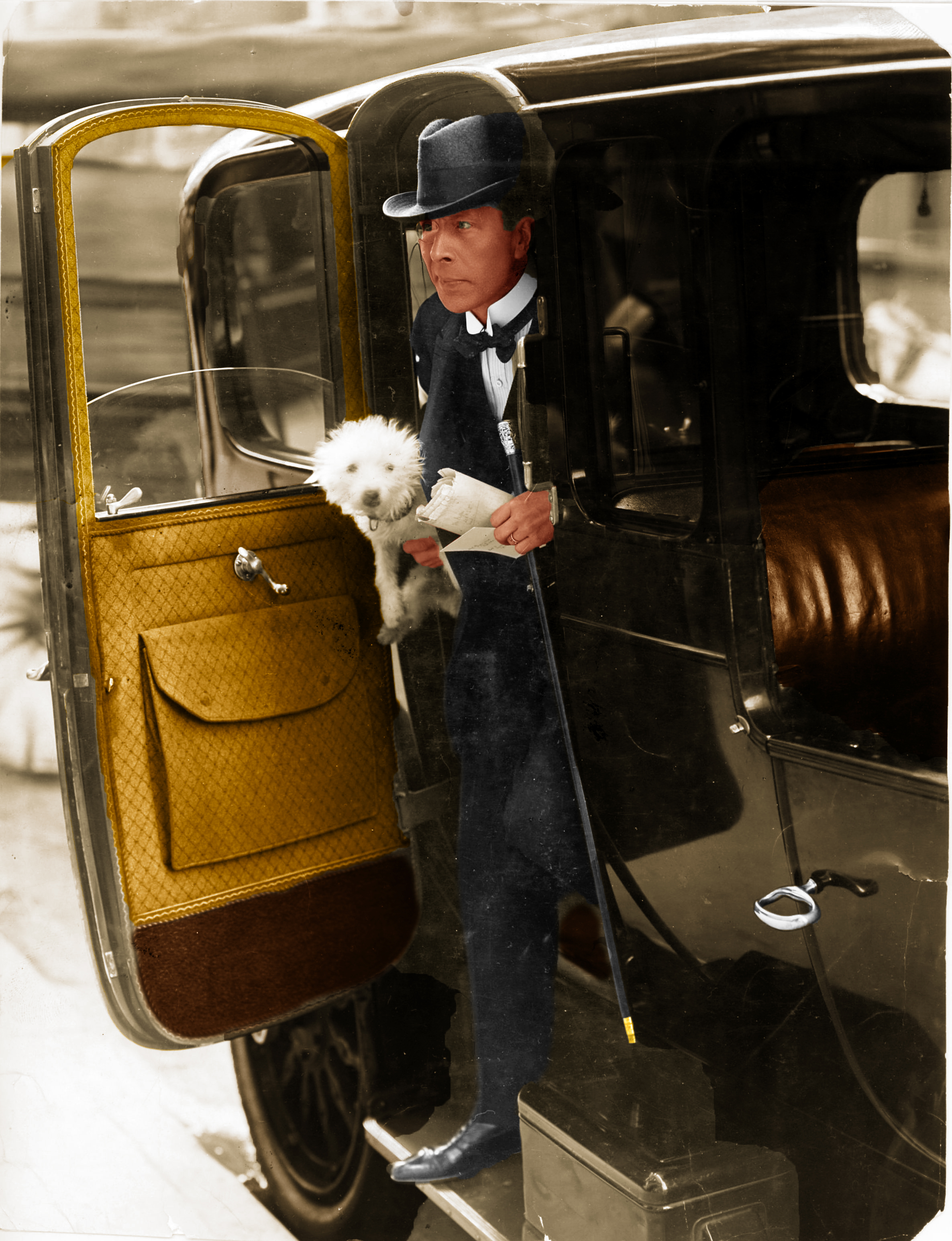
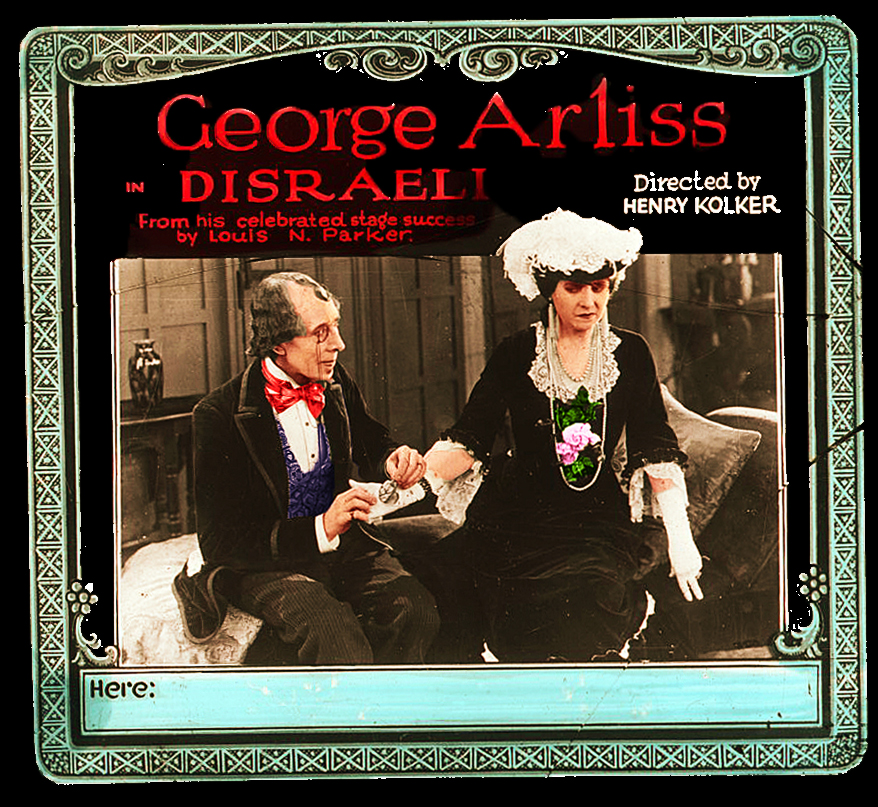
George Arliss seems perplexed as he juggles his wife’s dog and business papers, circa 1925:
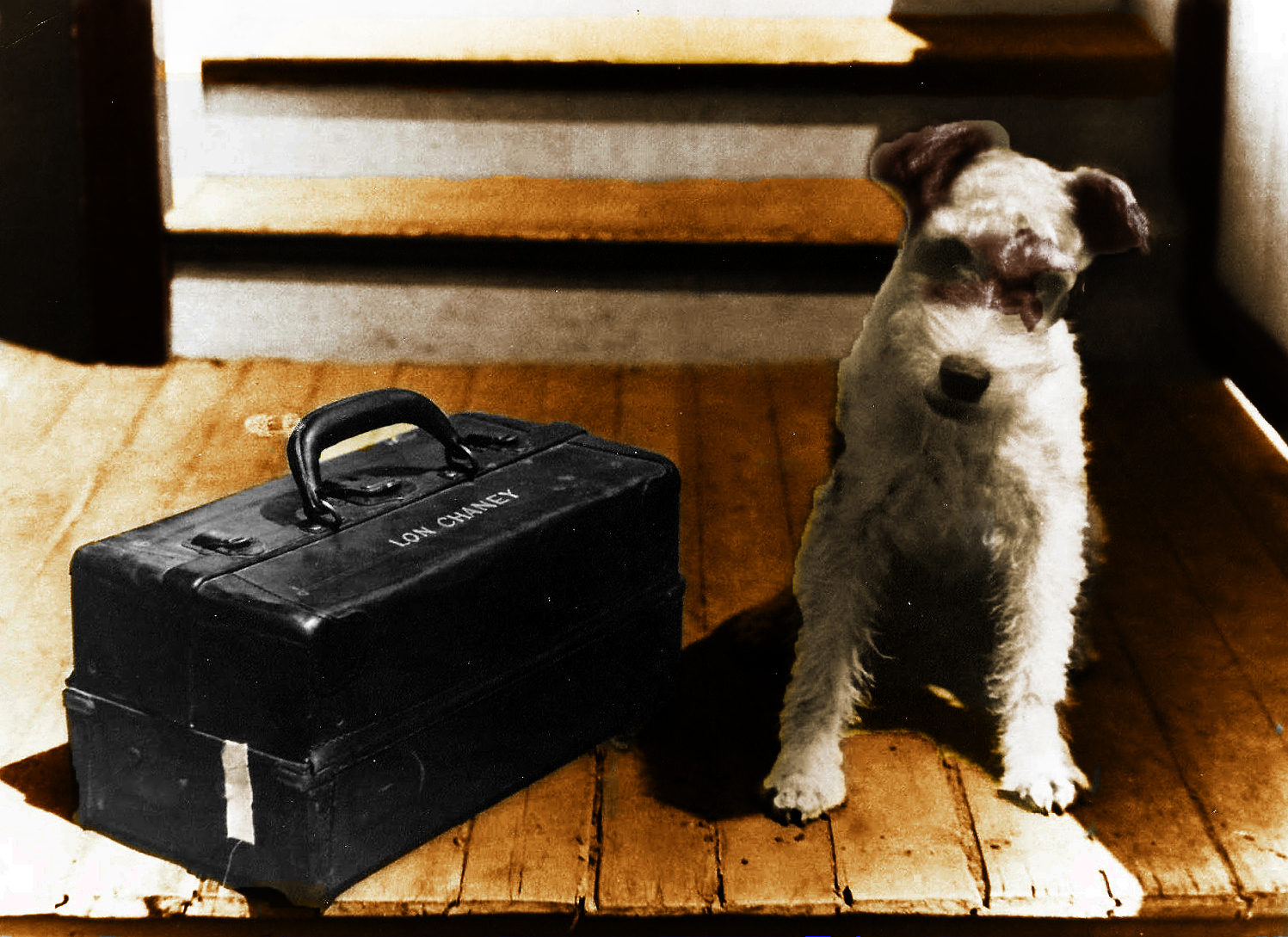
Finally, a poignant photo commemorating the passing of Lon Chaney, the Man of 1,000 Faces, who left us much too soon in 1930 at the age of 47. The photo shows two of Lon’s most precious possessions – his makeup case and his dog:
The Classic John Barrymore Swashbucklers of the 1920s
New Book: We’re proud to announce the first-ever pictorial review of the classic John Barrymore swashbucklers. These productions energetically displayed the talents of “America’s Finest Actor” and remain among the most captivating adventure films ever made:

This large 8.5×11 inch volume displays rare posters, photos, programs, and even paintings by Barrymore himself, in full color:

Before the Academy Awards were instituted, top films of the year were recognized by other organizations. Here Rudolph Valentino presented his own Valentino Award to John Barrymore for BEAU BRUMMEL (1924):

Rare lobby cards restored to their original colors are among the highlights of the book such as this one from THE SEA BEAST (1926), Barrymore’s first version of MOBY DICK:

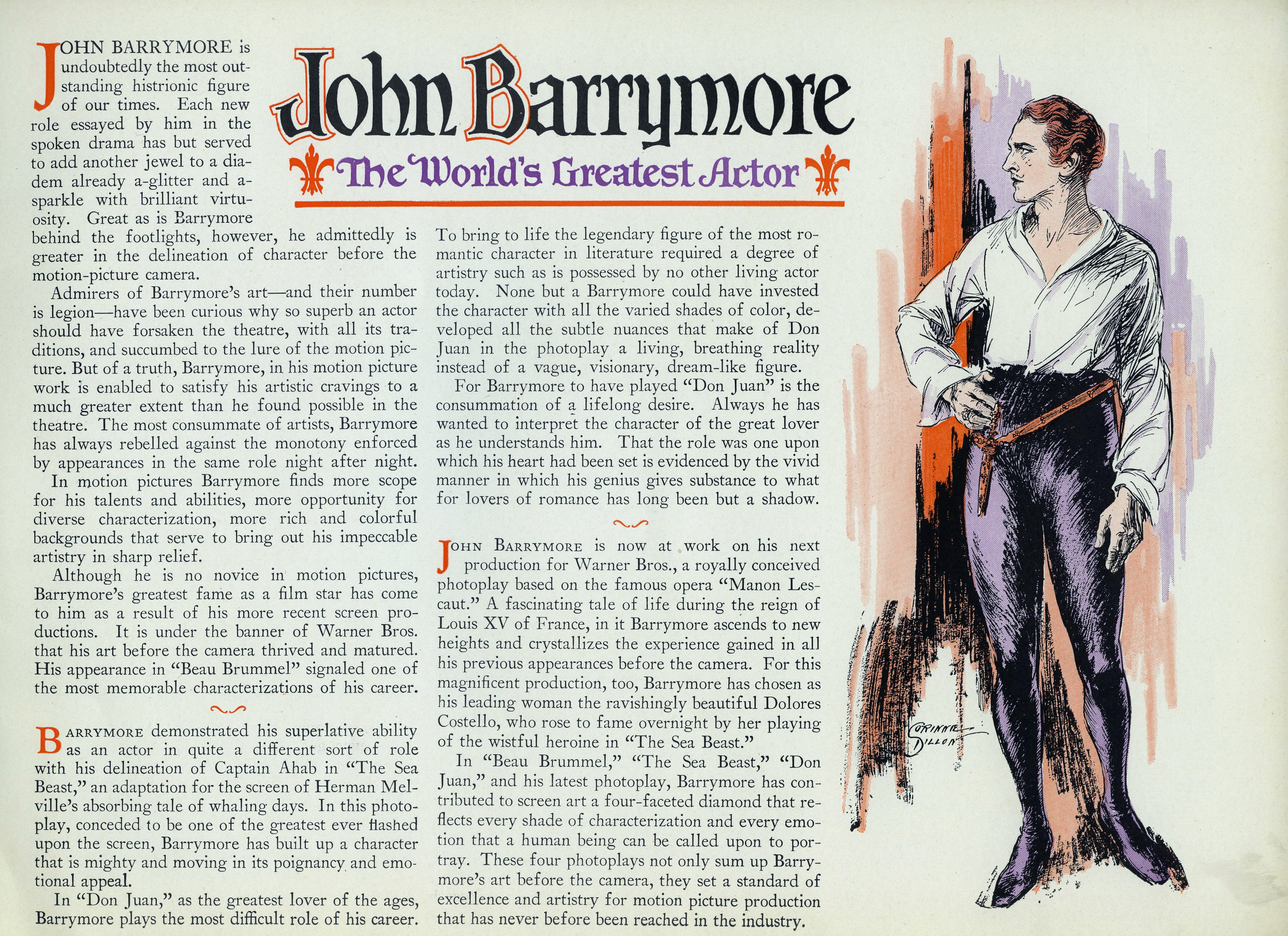
Our book features vintage souvenir programs such as this from DON JUAN (1926):
Lost and Found: THE BELOVED ROGUE (1927), one of the most imaginative films made by Hollywood during the 1920s was considered lost for decades but is now on DVD and streaming video:

John Barrymore would not be the only star of swashbucklers – think Douglas Fairbanks, Errol Flynn, Tyrone Power, among others – but Barrymore was the only star whose films spanned both the silent and sound film eras. Here is his first talkie, GENERAL CRACK (1930):

Jack reprised his role of Captain Ahab in THE SEA BEAST talkie remake, MOBY DICK (1930) with Joan Bennett:

The back cover of our book with a painting of John Barrymore from TEMPEST (1928), a story of the Russian Revolution:
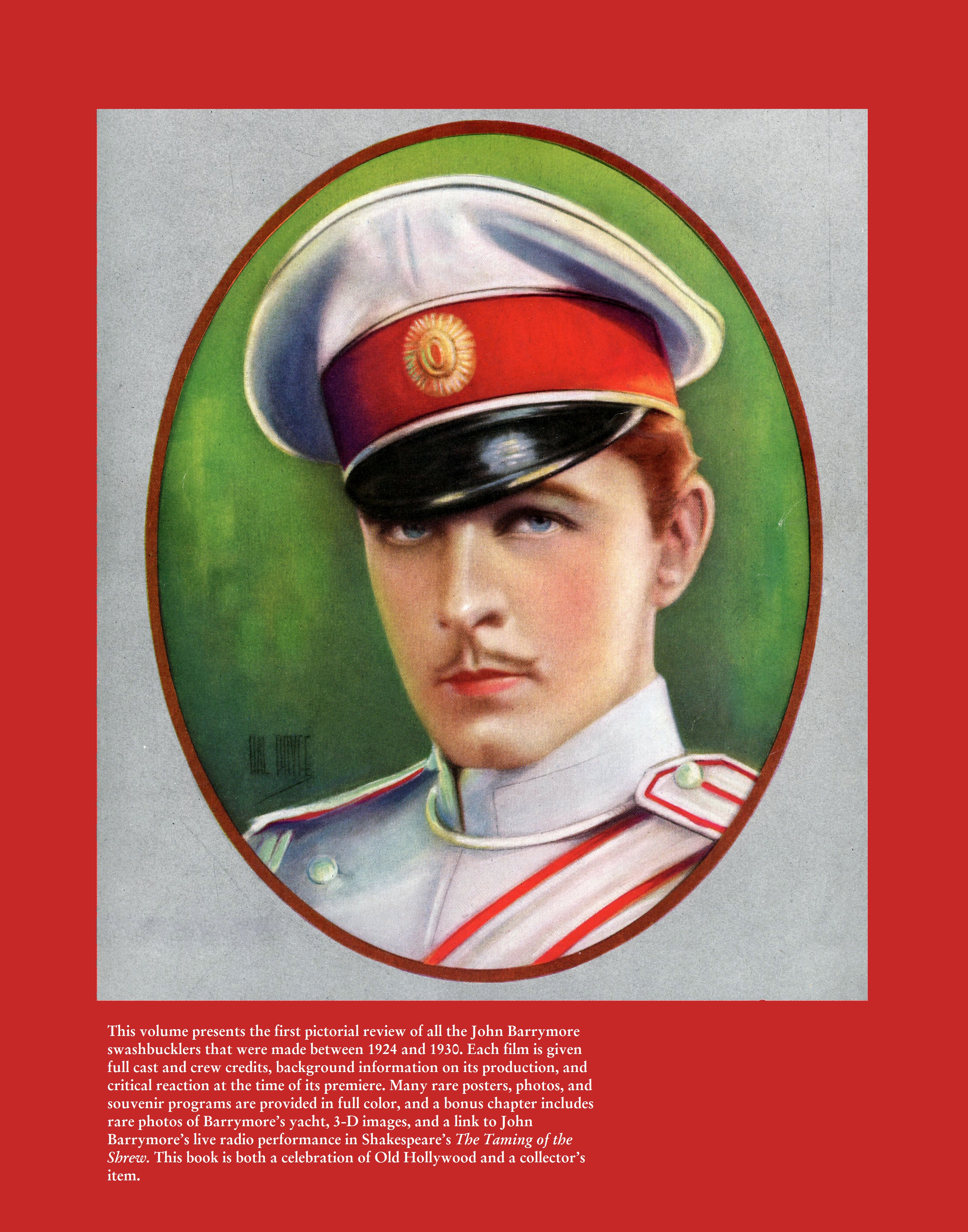
Bonus material includes 3-D photos and a link to Barrymore’s 1937 radio broadcast of THE TAMING OF THE SHREW. Our book is available exclusively from Amazon in both paperback and Kindle ebook editions:
Old Hollywood in 3D Color
This site was established almost two years ago and dedicated to transforming old b/w photos of Old Hollywood into color by using modern software. Now we’re ready to take the next step by adding computer-generated 3D to our color transfers. Last month we inaugurated this process on our sister site, ArlissArchives.com by unveiling the first-ever 3D images of George Arliss. Similar to the extremely limited use of color photography in Old Hollywood, unfortunately the studios of that era also did not participate in the popularity of 3D or stereoscopic photography. That task is bequeathed to us in the 21st century. Today there are several different 3D processes but here we are using an original low-tech version that dates back to the 19th century. It is based on an optical illusion to trick our brain into believing it is seeing an object from two slightly different perspectives, hence the illusion of depth perception. Let’s start off with a very chic Myrna Loy circa 1935:

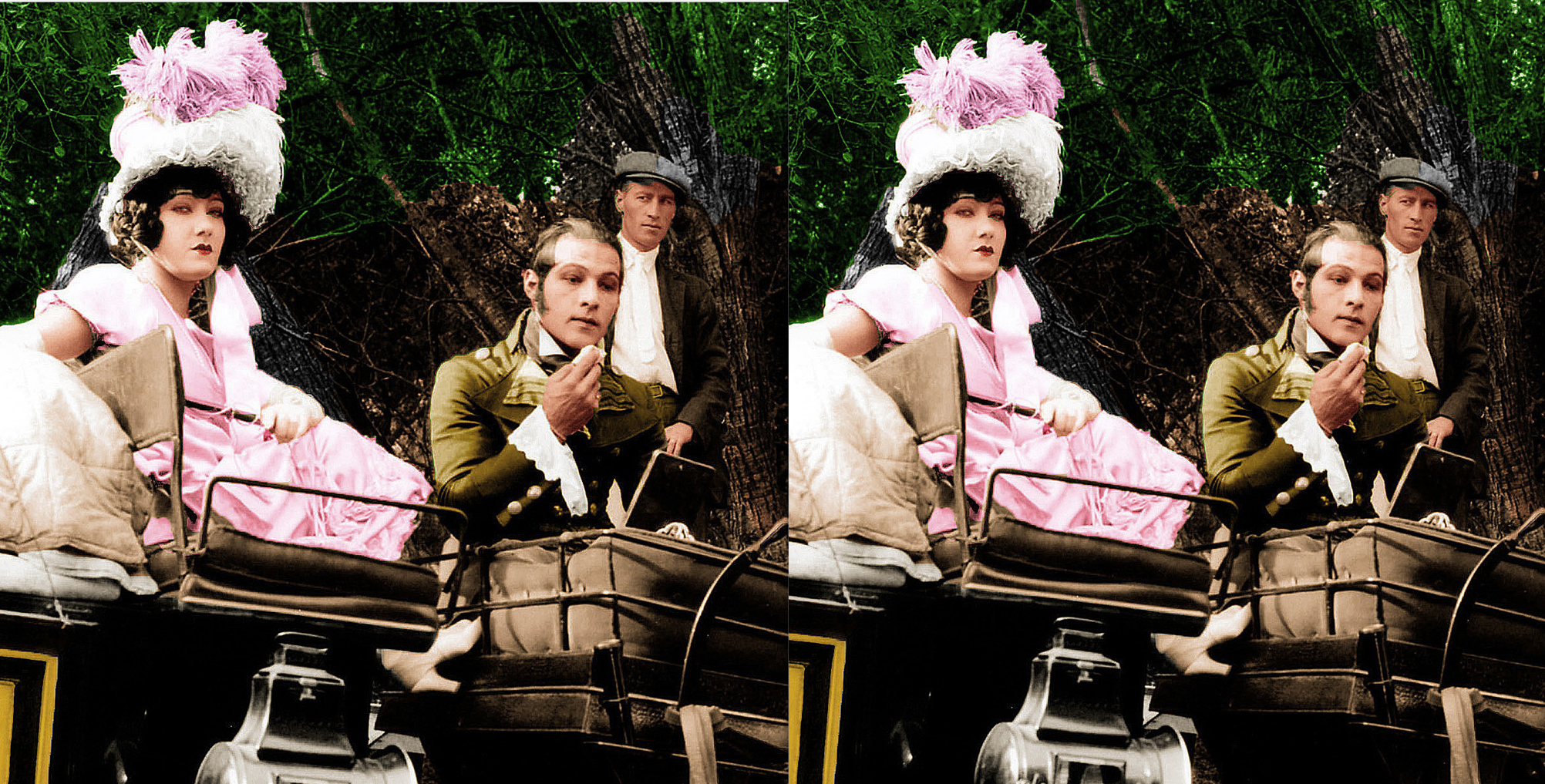
If you see only two identical images of Myrna and no 3D effect, then you either need to use a viewer device or learn the simple knack of “free viewing.” The easiest way to obtain a viewer is to find one of the many books on old stereoscopic slides because these volumes include a simple fold-up plastic or cardboard viewer. Check your public library. Your blogmeister dispenses with using viewers (the “training wheels” of 3D) and relies on the technique of free viewing using only, pardon the expression, my naked eyes. Let’s give the 3D treatment to Rudolph Valentino in MONSIEUR BEAUCAIRE (1924):

To try free viewing, you need to guide each eye to focus on only one of the two images: the right eye on the right image, the left eye on the left image. At first your eyes won’t cooperate so by using the edge of your hand extended from your forehead to the tip of your nose, your hand will block the right eye from seeing the left image and vice versa with the left eye. A piece of cardboard or a business envelope will work as well as your hand. The next step is to relax and look “through” the images and you will notice (with a little patience) that the images start moving together to form one image. Once they fully merge you’re in 3D. Try it with Myrna and Rudy (each should line up easily) or give Strongheart and Lady Julie below (circa 1925) a try:

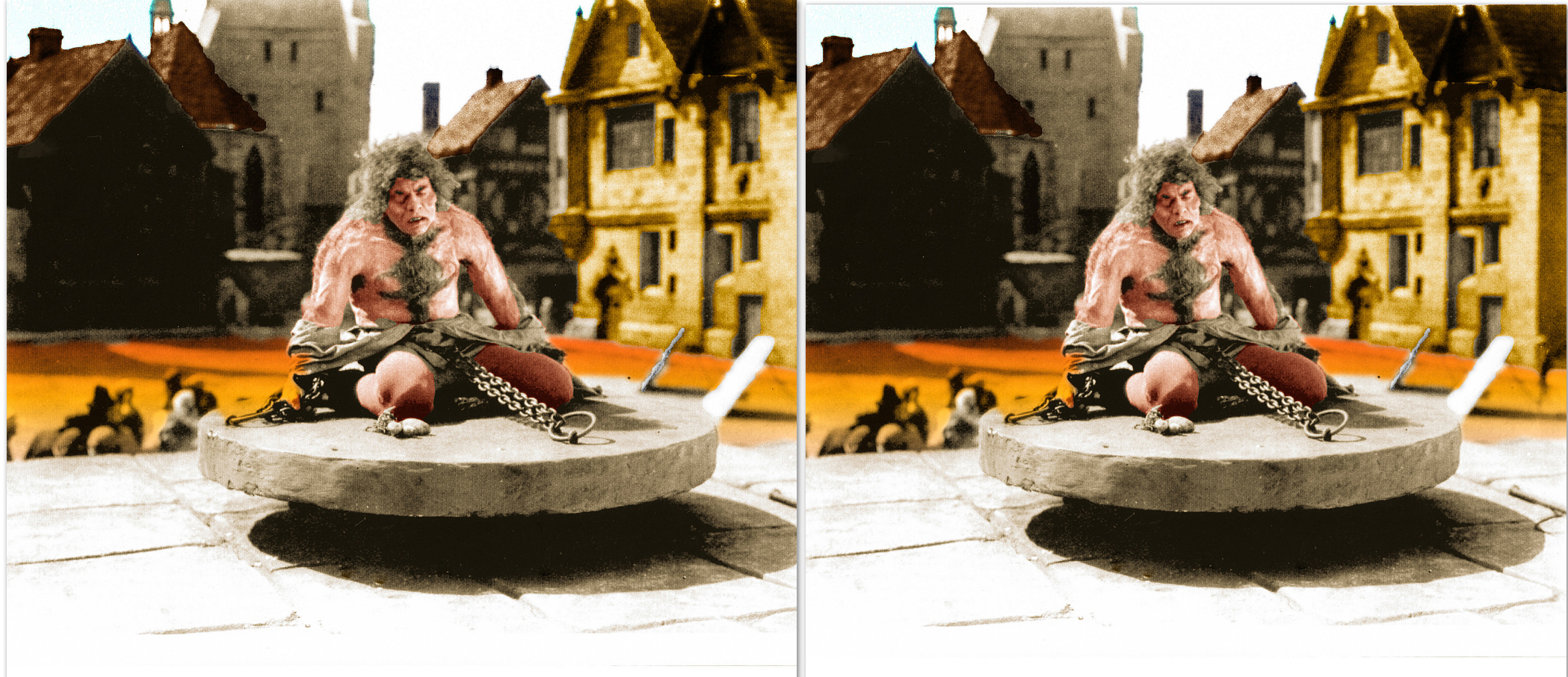
You’ll want to experiment with moving the images, i.e., the screen, anywhere from 9 to 13 inches from your eyes until the images start moving together. Also, smaller image size works easier than larger sizes so you if the images are not fully merging together, adjust your screen to make the images smaller. After a little trial and error, you’ll find a size and a focal length that works for you. Here is a photo that begged for 3D – Lon Chaney Sr. as Quasimodo in THE HUNCHBACK OF NOTRE DAME (1923):
Once you’ve experienced the 3D effect of free viewing, you’ll know what to look for and subsequent 3D images will come through faster. Here, the Russian Revolution is about the break out in TEMPEST (1928) but Louis Wolheim (top) and John Barrymore find time to horse around in this photo that seems designed for 3D:

This photo has a lovely scenic perspective that enhances a 3D view – June Collyer and George Arliss on the set of ALEXANDER HAMILTON (1931) wait for nightfall to film an outdoor scene:

Since today (April 1st) is Lon Chaney’s birthday (1883), here he is again with Norma Shearer in HE WHO GETS SLAPPED (1924), the very first film produced by the then-newly organized Metro-Goldwyn-Mayer. Shearer and Chaney remained top stars at MGM, Norma until her retirement in 1942, and Lon until his death in 1930:

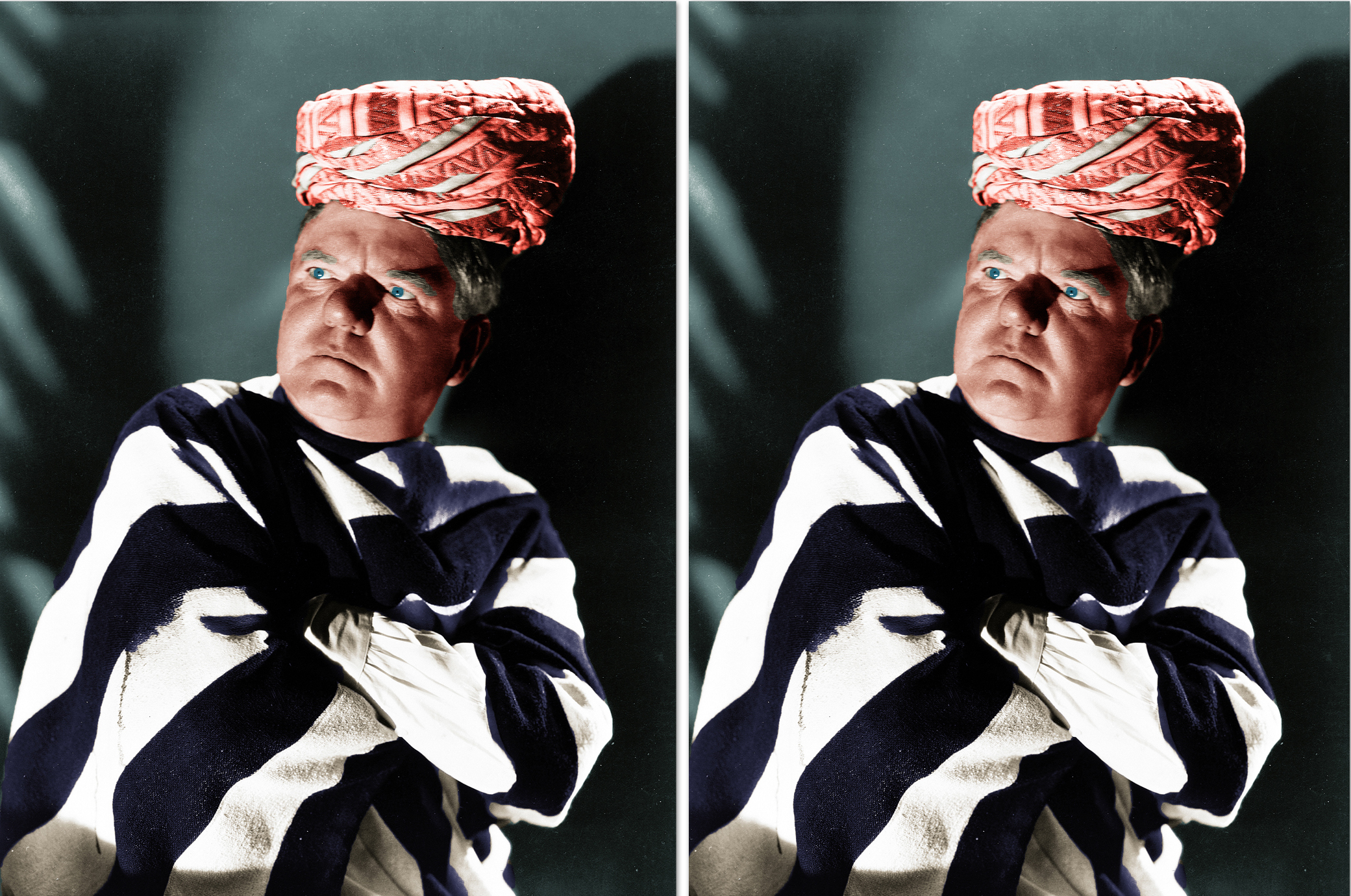
It may be unkind to note that W.C. Fields’ nose always seemed to be in 3D even in 2D photos. At any rate, here’s an unusual portrait of Mr. Fields sporting a middle eastern look:
Gloria Swanson and her co-star Rudolph Valentino pause in filming a scene for BEYOND THE ROCKS (1922). This film represents the only pairing of these two iconic stars and was considered a “lost” work for decades until a nearly-complete print turned up in the Netherlands just a few years ago and is now on DVD. Ironically, this scene below was among the missing footage in the rediscovered print:
This striking portrait of Lon Chaney in character for OUTSIDE THE LAW (1921) seems to anticipate 3D:

Clara Bow personified the “Roaring Twenties” perhaps more than anyone else. She was dubbed the “It Girl” and everybody under 90 knew what that referred to, and maybe people over 90 too. Some of her films were considered risque but her studio, Paramount, cancelled her contract in 1931 – even after her successful transition to talkies – when her private life was found to be racier than her films:

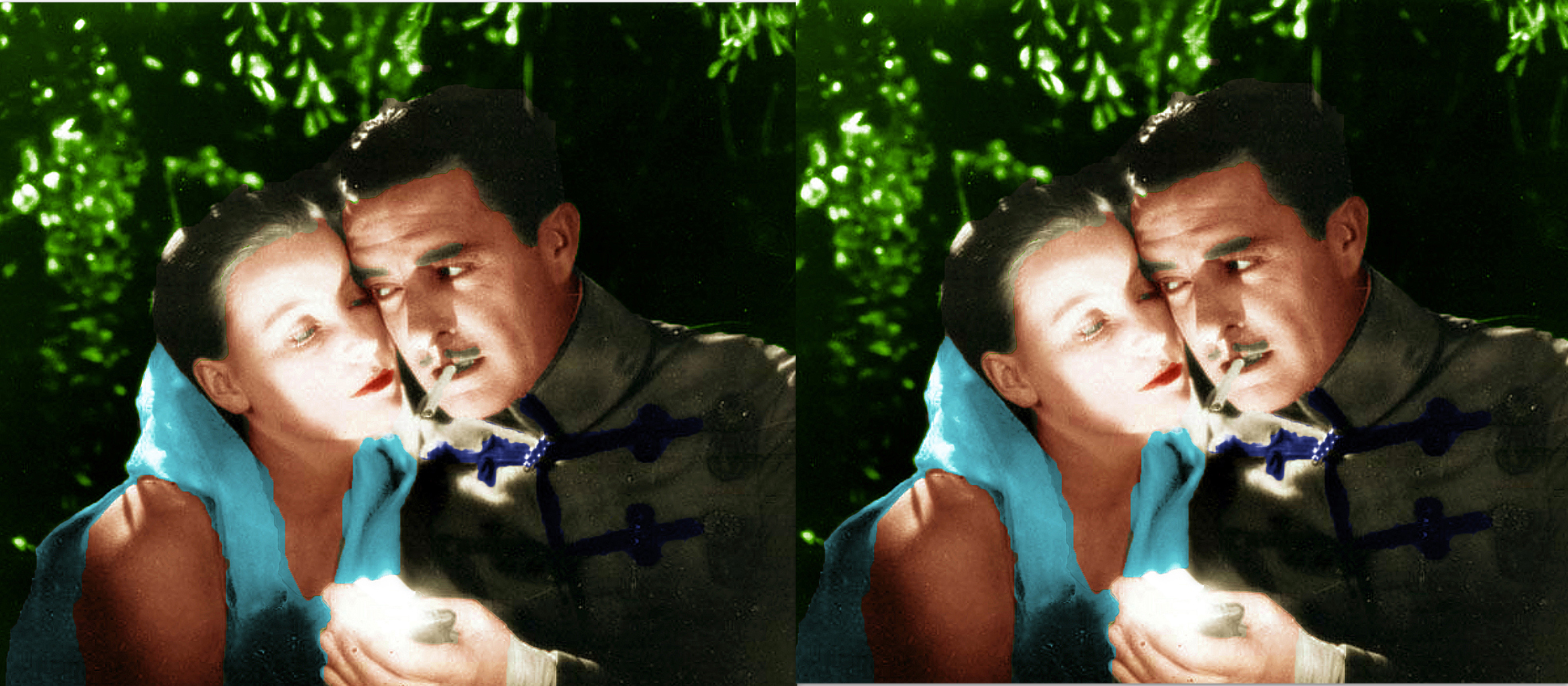
Finally, before Hepburn & Tracy, Lombard & Gable, or Rogers & Astaire, there was Garbo & Gilbert, that is Greta Garbo and John Gilbert. They ignited the screen in films such as FLESH AND THE DEVIL, LOVE (both 1927), A WOMAN OF AFFAIRS (1928), and the talkie QUEEN CHRISTINA (1933). Not surprisingly, they were lovers in real life, at least for a time in the late 1920s. Here is an iconic image of them from FLESH AND THE DEVIL given both the color and the 3D treatment:
Future posts here will continue to be in color (the raison d’etre for this site) but we’ll be more sparing in using 3D. The stereographic effect is more welcome as a novelty from time to time than as a constant component of photos, or movies for that matter. Perhaps those folks back in Old Hollywood knew this all along.
Silent Screen Stars on Radio: Part 2
Some months ago your blogmeister posted a thread called “Silent Screen Stars on Radio” that proved very popular. I promised a possible sequel so here it is. Radio during the 1930s became a veritable haven for silent screen stars, regardless of whether they were successful in talkies. Let’s start our tour with one the most popular stars of the silent screen, Norma Talmadge. Norma made only two talkies then decided to retire from the screen in 1930 with her wealth intact. Here is Norma in her final film, DUBARRY, WOMAN OF PASSION (1930):

She was married to George Jessel for several years during the ’30s and appeared with him on his weekly variety show, “Thirty Minutes in Hollywood.” Legend claims that Norma left sound films because of a pronounced Brooklyn accent but fortunately her radio work vindicates her vocally. Here Norma co-stars with Gilbert Roland in her first talkie, NEW YORK NIGHTS (1929):

Let’s listen to an excerpt from the March 6, 1938 broadcast with Jessel and a ten-year singing prodigy, Josephine, who asks Norma about her film career:
Gloria Swanson was one of the greatest stars of the 1920s and her transition to talkies was not only successful but revealed her excellent singing voice. However, times were changing quickly in the early 1930s and the fickle public shifted its attention to newer attractions. La Swanson produced her own films and by 1934 she realized it was time to move on to other pursuits. But she was never gone from the public scene for very long, which may explain her spectacular return to films in SUNSET BLVD. in 1950. Here is Gloria making a very early broadcast circa 1928:

Let’s join Gloria as guest on Eddie Cantor’s show on March 9, 1938. This being a live broadcast, the performers keep rolling, mistakes and all:
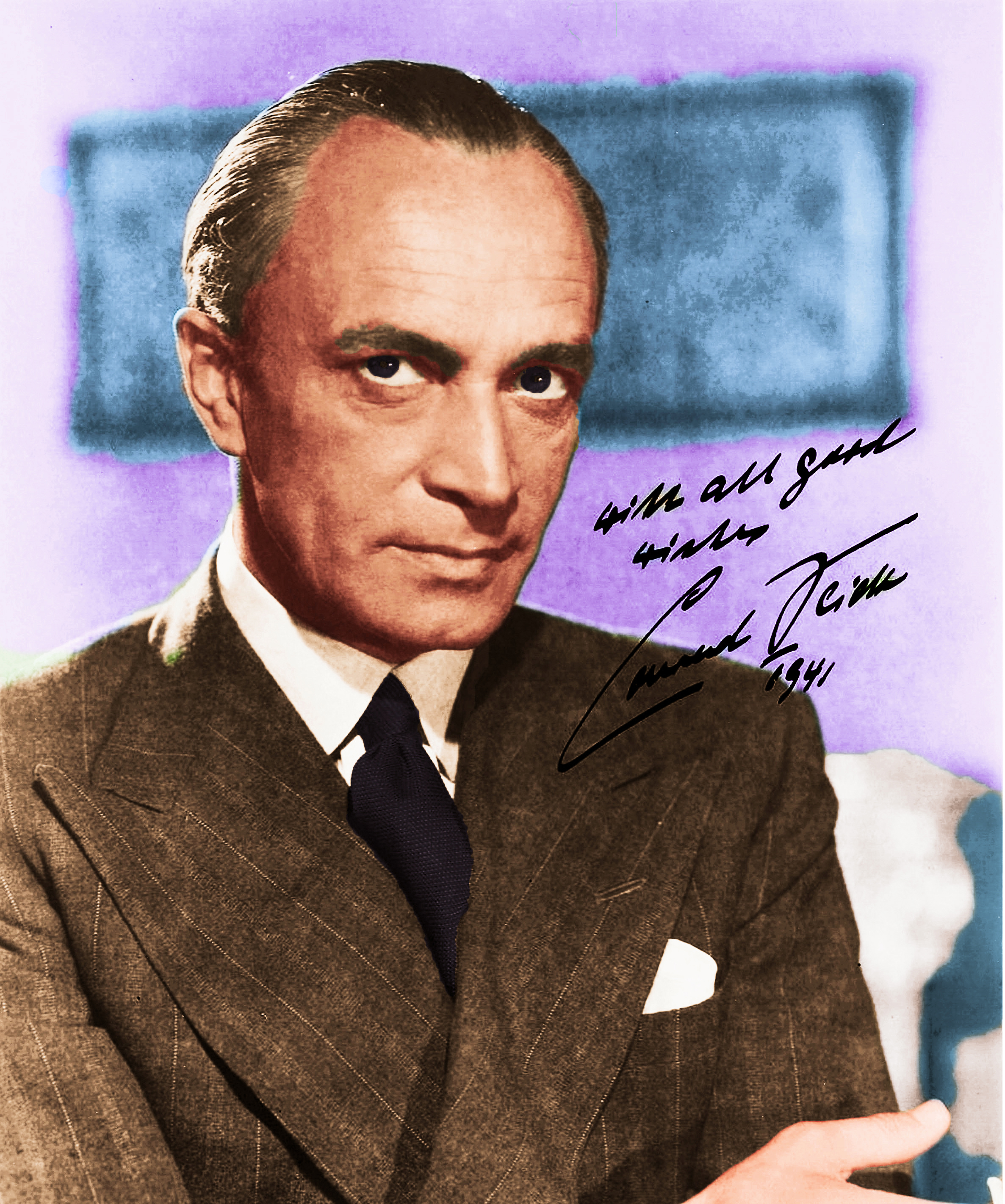
Now for something completely different. Conrad Veidt was one of the most popular international stars during the silent film era, first gaining notice in the groundbreaking THE CABINET OF DR. CALIGARI (1919). Connie, as he was called, traveled from Germany to Hollywood in 1926 at the request of John Barrymore, who wanted him to play the crafty King Louis XI in Barrymore’s new epic, THE BELOVED ROGUE (1927). Here is an original autographed portrait of Connie taken about the same time:

Veidt returned to his native Germany in 1929 where he continued his career, by then starring in sound films, until he fled his homeland in 1933 with the rise of Hitler. His career continued uninterrupted in Britain, though he struggled mightily to learn English, and eventually returned to Hollywood in 1940 where he donated most of his earnings to the American and British war effort. One of his most impressive films at that time was A WOMAN’S FACE (1941) with Joan Crawford in the title role:

Connie said that this film was his favorite, even more so than CALIGARI, and described his role as “Satan in a tuxedo.” The public agreed because he was asked to recreate his film role not once but twice on radio. Here is the first broadcast, a half-hour version from April 19, 1942, with Bette Davis playing the Joan Crawford role, and Bette’s old co-star from her early days at Warner Bros., Warren William. All three stars donated their salaries to the Motion Picture Relief Fund:
The great director D.W. Griffith was rarely heard on radio but made an exception when another great director, Cecil B. DeMille, asked him to appear on DeMille’s show, Lux Radio Theater. The 1930s were a difficult time for Griffith although he was regarded by the film industry as the most influential of the pioneer filmmakers. He was given a special Academy Award but would have much preferred to be given a film to direct instead. No doubt he would have been pleased with this commemorative stamp issued in his honor decades later:

Let’s join D.W. on June 29, 1936 as Cecil B. DeMille welcomes him:
Marion Davies is remembered today as the mistress of publishing tycoon William Randolph Hearst, and as the inspiration for the character of Susan Alexander, the untalented mistress of Orson Welles’ CITIZEN KANE (1941). Welles would spend his later years explaining that he felt Marion Davies was one of the most talented stars of Hollywood, in both silent and sound films, and he made the Susan Alexander character untalented so nobody could claim that she was suppose to be Marion, but alas, it didn’t work out that way.
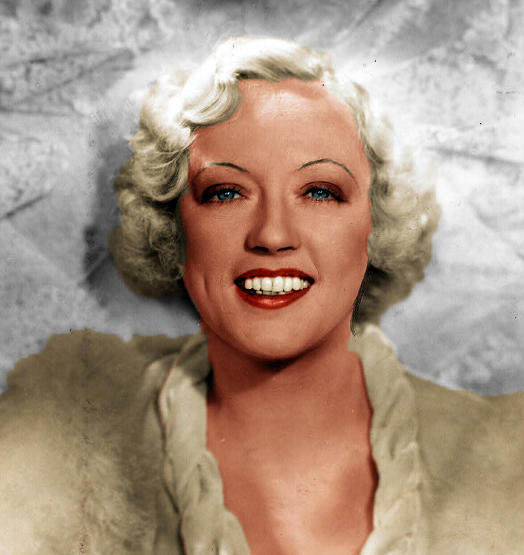
Let’s hear Cecil B. DeMille again as he converses with Marion Davies and Brian Aherne at the conclusion of the November 29, 1937 Lux broadcast of PEG O’ MY HEART that Marion had made as a film in 1931. I believe this broadcast turned out to be her last professional appearance, after having made what proved to be her final film earlier in the year. Also, it was said that Marion spoke with a stammer, something that was never heard in any of her sound films. However, you can hear that she is having some difficulty getting through her scripted remarks:
Finally, we have not one but two Barrymores, John and Lionel. The brothers started making films back in 1912 and possibly earlier, to supplement their theater earnings. By the 1920s, the Barrymore Brothers were starring on the New York stage and in big budget films too, although they worked separately during the silent era. Here is one of their joint stage appearances in 1919 in THE JEST, which F. Scott Fitzgerald immortalized in his first novel, This Side of Paradise.

John in one of his spectacular swashbucklers of the silent screen:

The talkies held no fear for either Lionel or John, in fact Lionel directed as well as starred in them. Alas, this talkie comedy from 1930, with John and a very young Loretta Young, is lost:

By the early 1940s each of the Barrymore Brothers had his own weekly radio show but Lionel also made guest appearances on John’s Sealtest Show, which headlined Rudy Vallee, who was responsible for hiring John for the show:
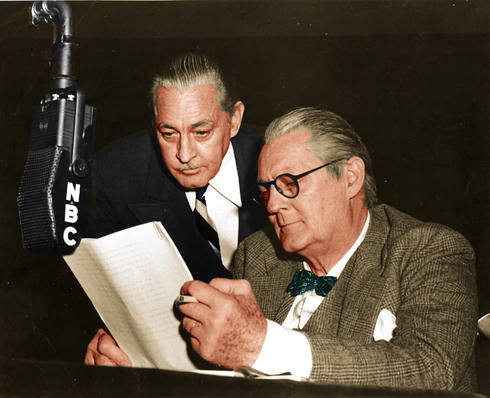
The Sealtest Show was a slapstick comedy series where the stars and guests were satirized. But just to let listeners know it was all in fun, John and Lionel took time out to perform a scene from Shakespeare’s RICHARD III. Here Rudy Vallee introduces the scene on the May 1, 1941 broadcast:
I passed over shows with all-but-forgotten silent screen stars such as Bert Lytell and Aileen Pringle but just let your ol’ blogmeister know of any requests. And thanks for stopping by.

















 OLD HOLLYWOOD IN COLOR