Theda Bara (1885-1955) was perhaps the first sex symbol of the movies, or at least of American films. But she became a sensation not merely in America, but around the world as well. Bara helped internationalize the popularity of American movies as much as any of the great directors of that day and, amazingly, her influence over time may have exceeded that of those directors. This presentation was created with Artificial Intelligence by animating a photograph of Ms. Bara and synchronizing its movements with a Text-to-Speech clone of her actual voice. The words are direct quotations that Ms. Bara spoke in a Photoplay magazine interview that was published in the June 1920 issue.
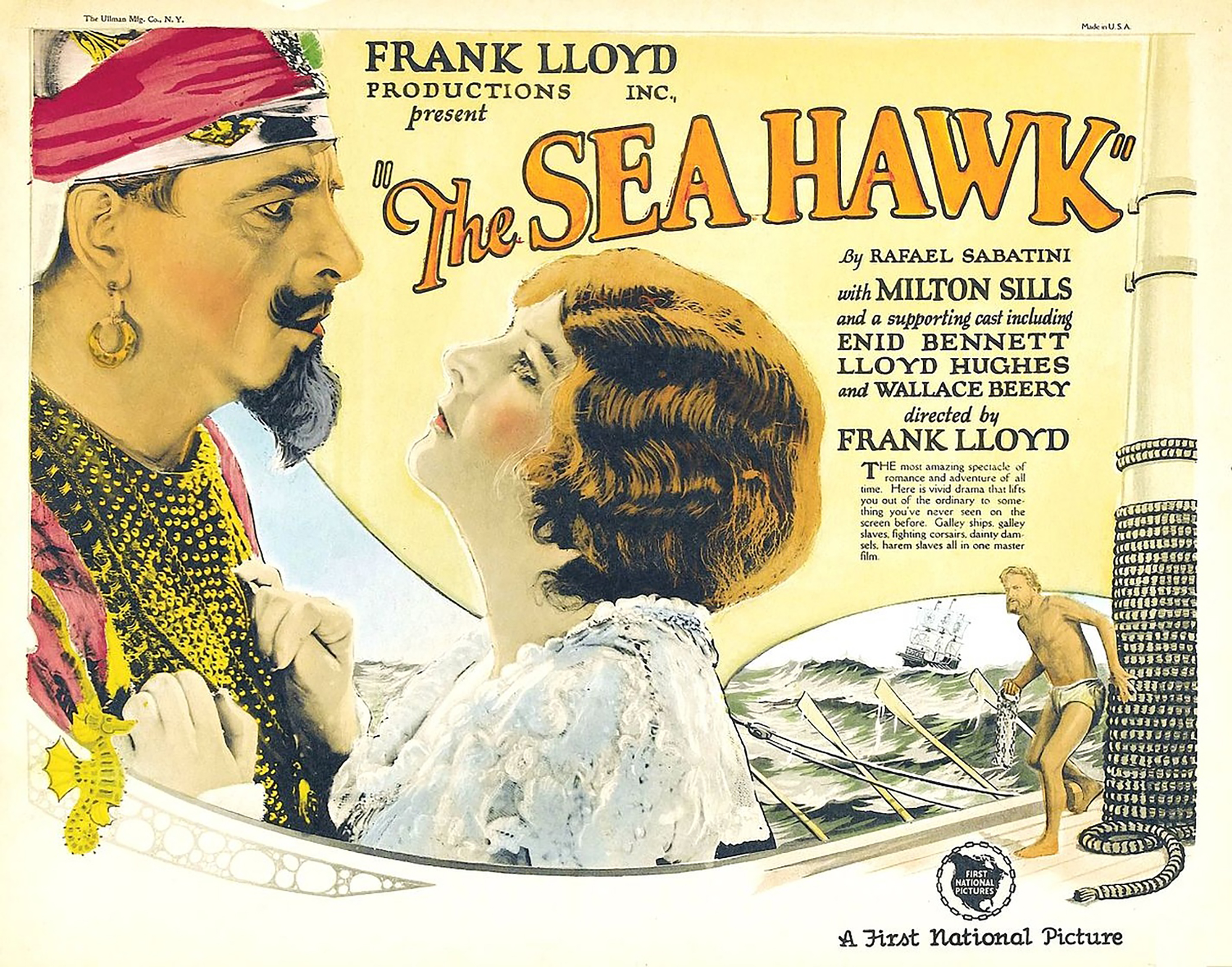
Milton Sills was a major star of the silent screen and made a successful transition to talkies. Sadly, he succumbed to a heart attack at the age of 48 in 1930. Long known only to film buffs, Milton’s films have resurfaced on home video in DVD, Blu-ray, and at many international film festivals where they can be seen on the big screen in sparkling pictorial quality.
Now thanks to AI, we can quote his various magazine interviews and for good measure clone his voice from soundtracks. Now Mr. Sills can tell you his life story directly.
One of the most popular actors in the History of American Films, John Gilbert was also a talented writer. He knew how to tell a good story and this autobiography that he wrote in 1928 is proof of it. Gilbert’s memoir follows his career from the hard scrabble days when he worked as an unknown “extra” in films beginning in 1915 to eventual stardom in the 1920s.
Here we not only learn the rocky path he took, but through AI we also hear John tell his story via voice cloning of his actual voice. This tale captures a unique time in American history when new occupations were created – not unlike today.
The famed actor wrote his biography in 1928 for Photoplay magazine in the June to September issues. We have resurrected these memoirs but also utilized 21st century technology by using AI to allow Mr. Gilbert to tell us his autobiography in his own words. We cloned his voice from the soundtrack of QUEEN CHRISTINA (1933). The words you hear him speak have been taken verbatim from his Photoplay biography series.
The “voice” is created by AI cloning using a sound file with the actual voice of Mr. Chaney. The text are direct quotations from published interviews that Lon Chaney gave at that time.
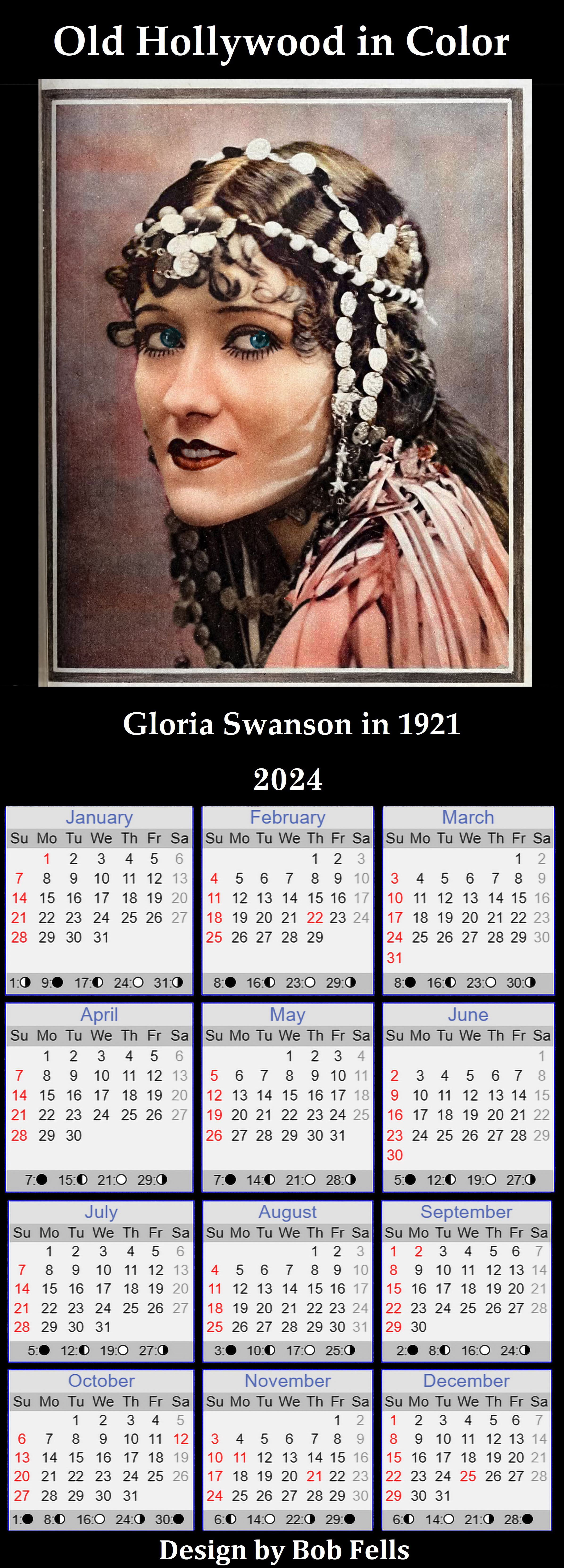
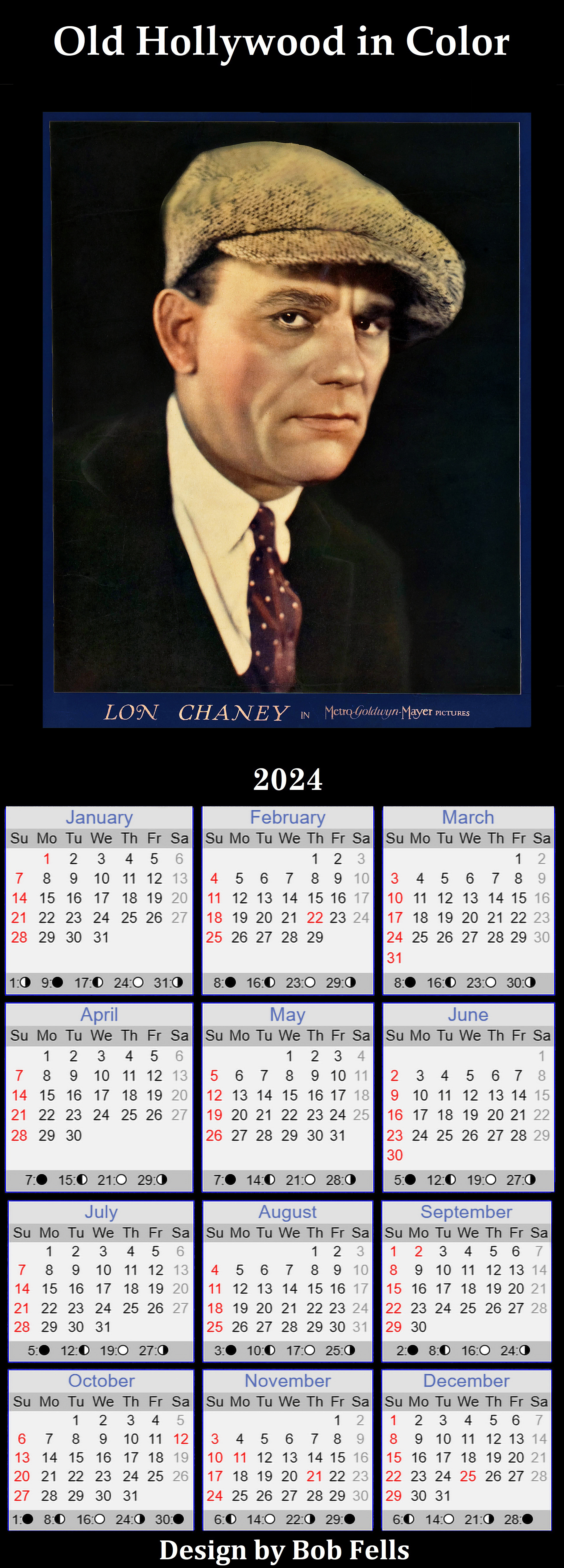
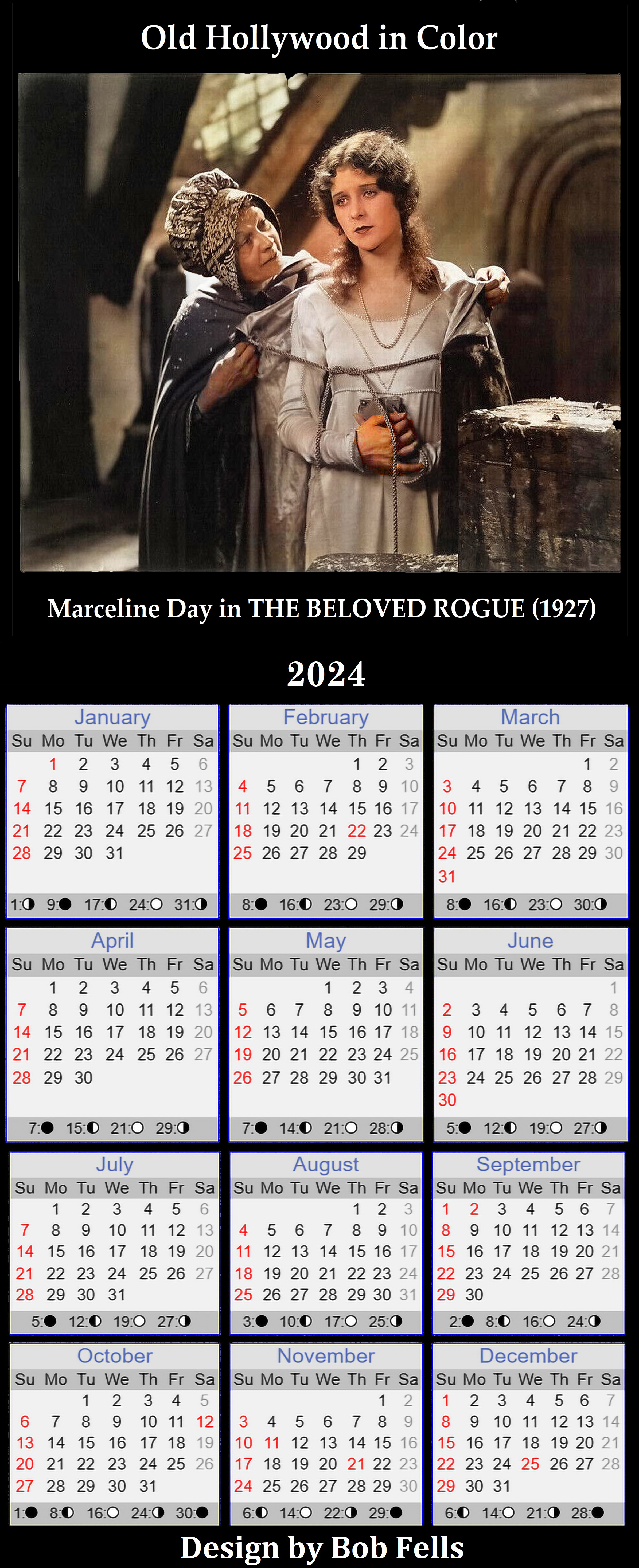
A tradition for many years on this blog is to create some unique calendars featuring some of the unique stars from Hollywood’s Golden Age. That used to mean celebrities from the 1920s into the 30s. But in recent years the pool has expanded and now we hear that the “Golden Age” extends well into the 70s, the 80s, and most recently, even the 90s. But here we go back to First Principles and so we celebrate the Golden Age of Great Stars who defined the medium before there was anybody else there.
When we first began this annual celebration, many of the honorees had few films in circulation. And many of those were in poor shape. Today in only about a decade many films have been restored, and can be seen in sparkling Blu-ray quality on big screens. We have much to celebrate so let’s begin our gallery of Great Stars for 2024.
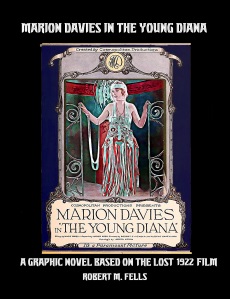
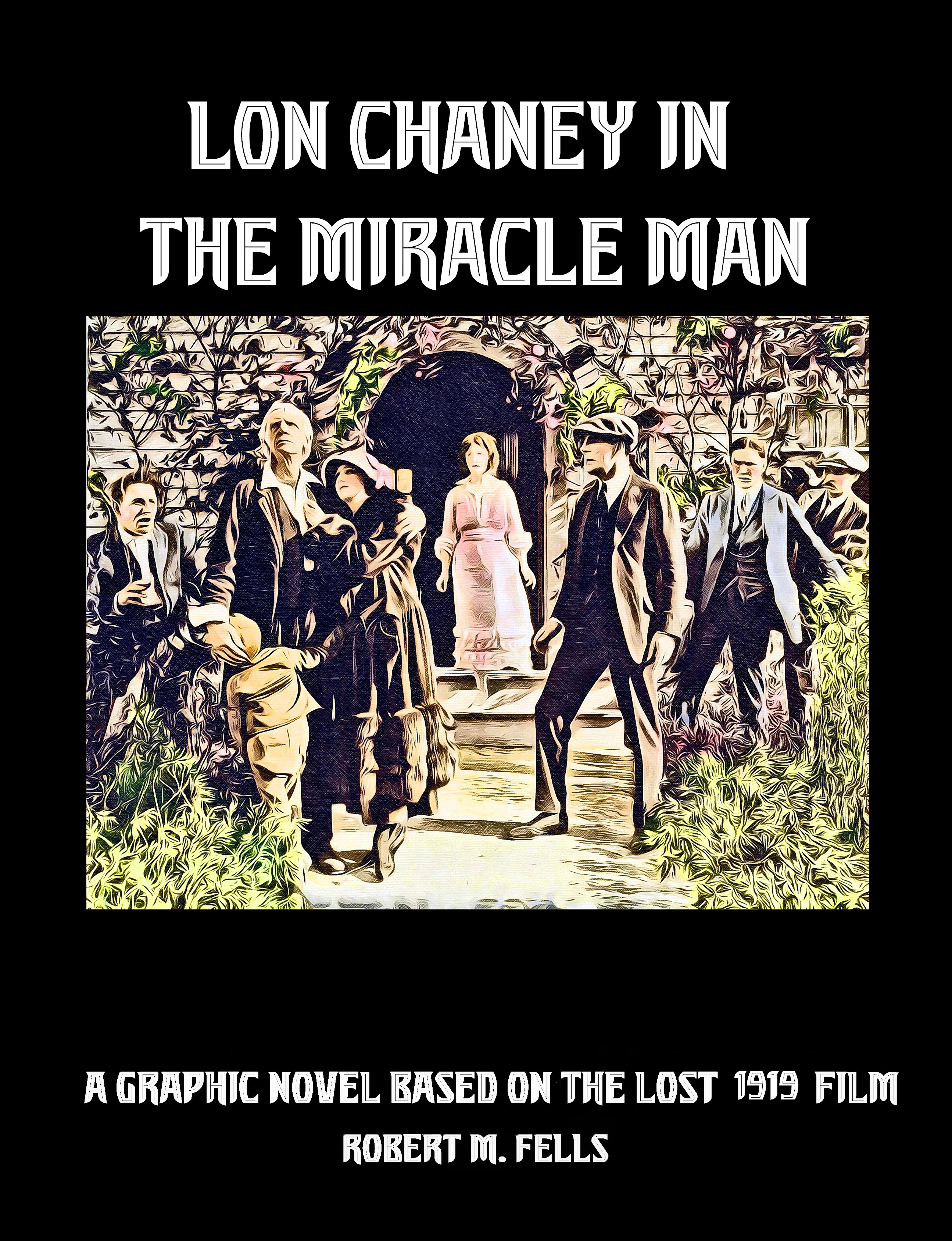
For those among us who would like to draw or paint, but just don’t have the ability even if our life depended on it – I’m raising my hand here – AI or Artificial Intelligence has come to our rescue, at least to some extent. I tried using software called BeFunky and found it very user friendly and basically intuitive. I worked with this software a couple of years ago to publish four graphic novels based on lost silent films. Then I just wanted to convert photos into comic book style art. The project turned out well, comparatively speaking.
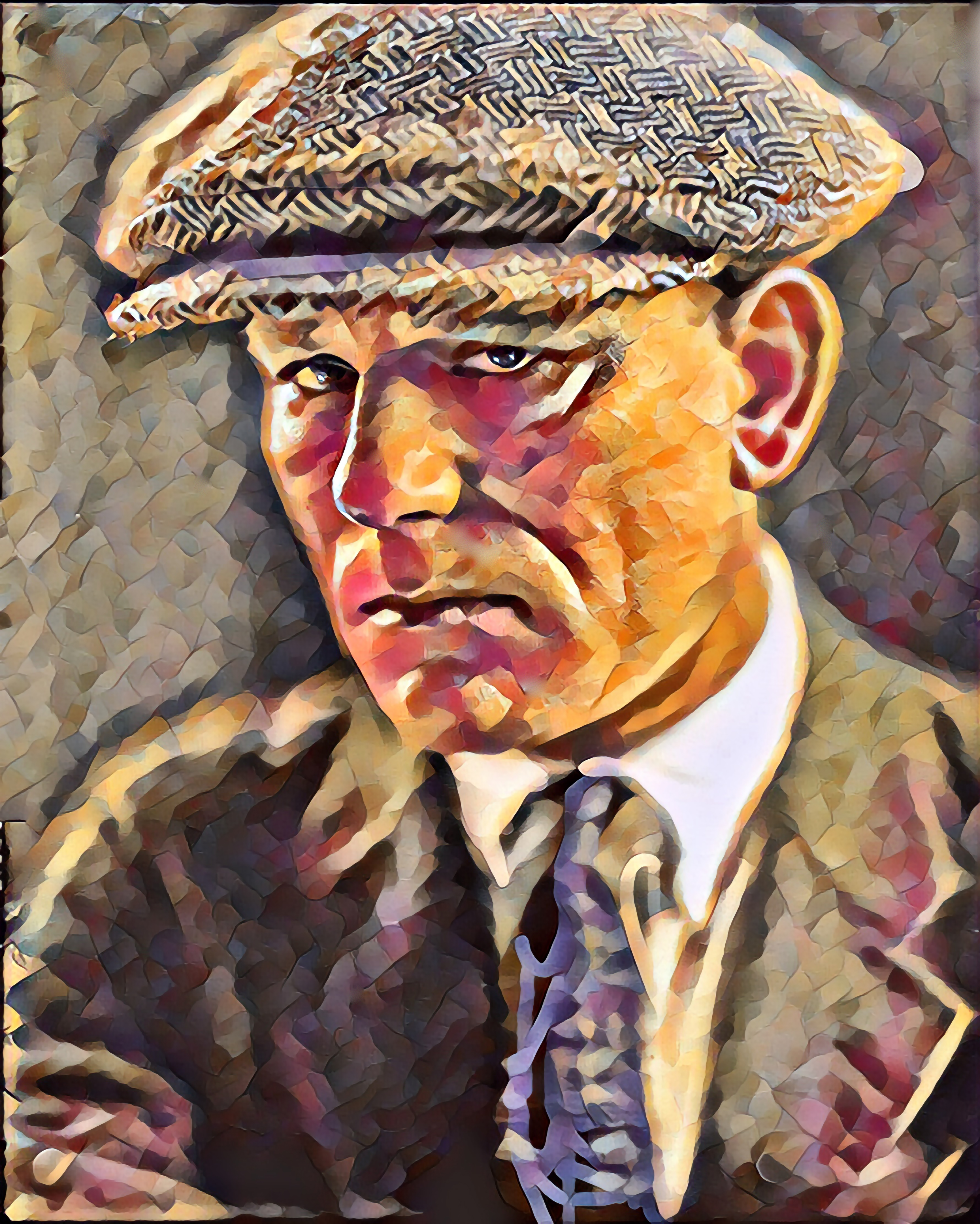
After a layoff from using AI software “art” I decided to revisit BeFunky to find out how it handled imitating an oil or a watercolor portrait. The results aren’t bad, maybe not so good either, but for people like me this is undoubtedly my only passport into the realm painting. The software is not entirely automatic, and I can control the amount of “painting” performed by BeFunky. Here are the results so far:
My first subject was the immortal Lon Chaney Sr. using a well-known portrait from LAUGH CLOWN LAUGH (1928):
I actually received a few compliments on my Lon Chaney Facebook page (Lon Chaney Man of 1,000 Faces).
Thus emboldened, I soldiered on with Rudolph Valentino in another well-known portrait from THE SON OF THE SHEIK (1926):
Again, I can report that a few kind souls on my other Facebook page (Silent Films Today) provided kind words for my efforts. Nobody said, “Cease and desist.”
I was encouraged still further so I turned to one of the great opera stars who became quite successful in silent films – Geraldine Farrar. Among her great hit films (now on DVD) are CARMEN (1916) and JOAN THE WOMAN (1917), both directed by Cecil B. DeMille.
I posted this on my third (and last) Facebook page, Early Opera Recordings: 1900-1940. Either people were becoming immune to these images, or I was really finding an audience for my pseudo-paintings.
Grateful for whatever favor I might be finding, I returned to Lon Chaney as my sort of good luck charm and produced this image from his last film (and first and only talkie), THE UNHOLY THREE (1930):
Not wanting to lose my momentum, I turned next to the great German star of silent and sound films, Conrad Veidt (THE CABINET OF DR. CALIGARI (1919) and CASABLANCA (1943):
This portrait is from the Technicolor film, THE THEIF OF BAGDAD (1940).
I wanted to be fair to the ladies so I thought the immortal Gloria Swanson would be a good choice. Besides I actually met her once and watched some of her films while seated next to her:
Perhaps a musical comedy star of the stage and films should be recognized so I turned to Al Jolson in an exceptionally smart portrait:
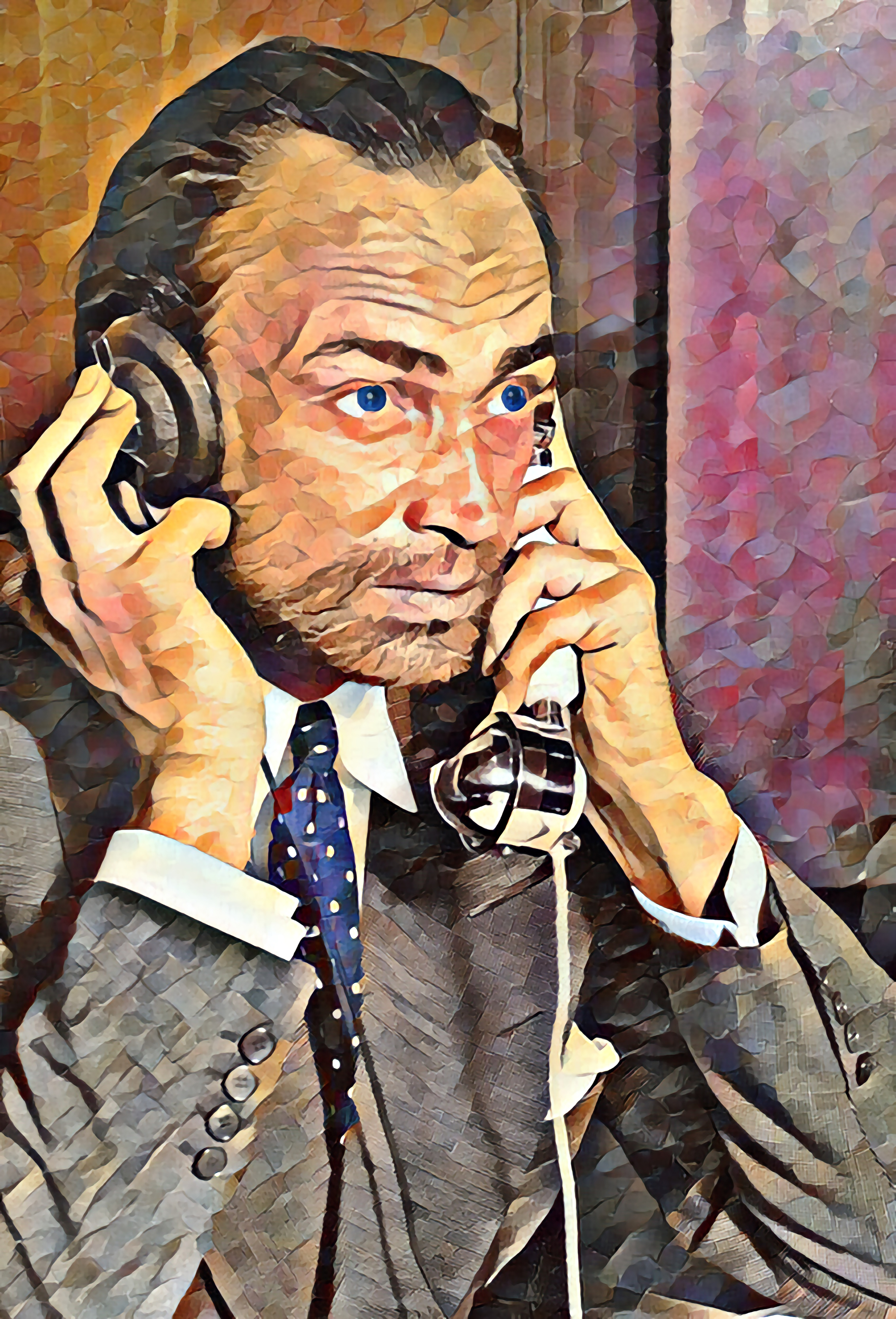
By this point I began thinking that this, whatever you want to call it, may have a future so I decided to encore another interesting image of Conrad Veidt. Here he sports a rather contemporary 2020s beard while reciting his lines from Berlin across a trans-Atlantic telephone hookup with Universal studios in Hollywood. The studio was adding a few “talkie” scenes to his silent, THE LAST PERFORMANCE from 1927, that was being reissued as a “part-talkie” in 1929:
Marion Davies was a Ziegfeld Follies star who became a popular films star in 1917 and was still starring in big films twenty years later. Her long-term relationship with publisher William Randolph Hearst captured the public and long after Marion’s film career ended she was always good copy for the newspapers:
Well, let’s have one more painting of Lon Chaney but this time as himself. We might call this the 1,001st Face:
Perhaps now you’ve been inspired to try your hand – actually to try your PC – and venture into this brave new world of Art. But I feel guilty if I try to sign my name to any of these works. Perhaps I should do what many great authors and artists have done – use a fictious name, sort of a non de plume. I think I’d call myself “Anthony Iaconelli.” Why would I make up a name like that? Simple – I can initial the paintings with that name I would still be truthful. My autograph would read, “AI.”
























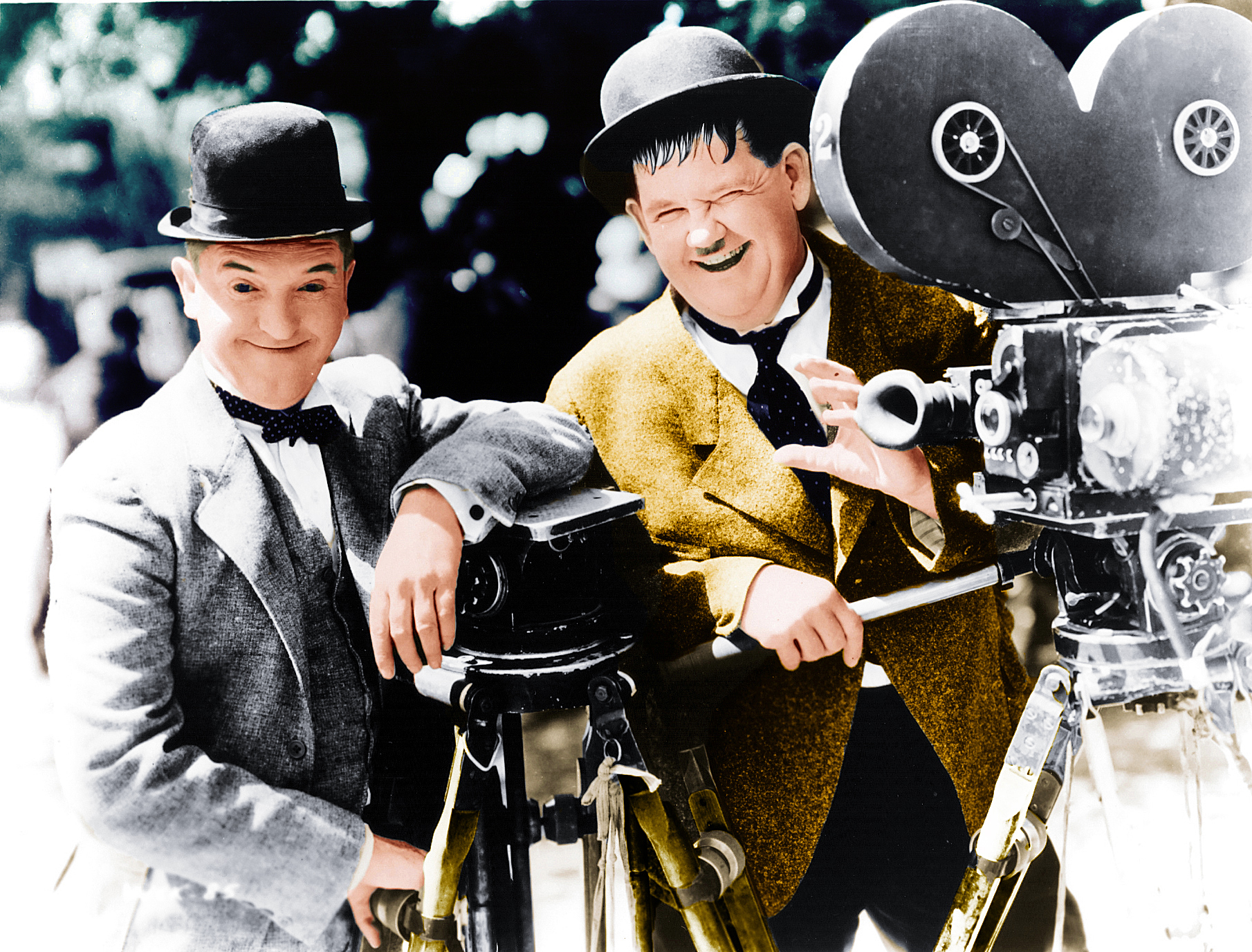
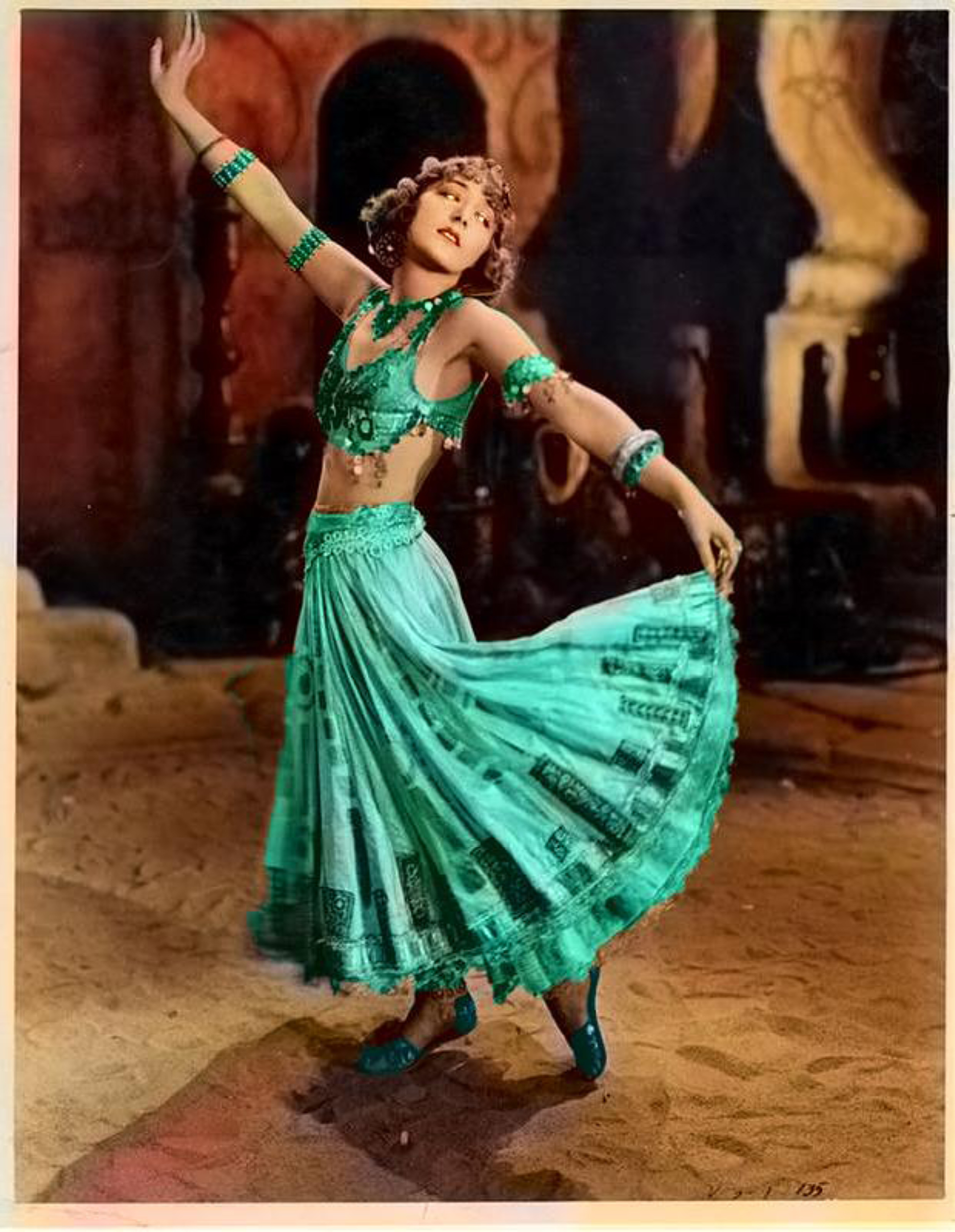

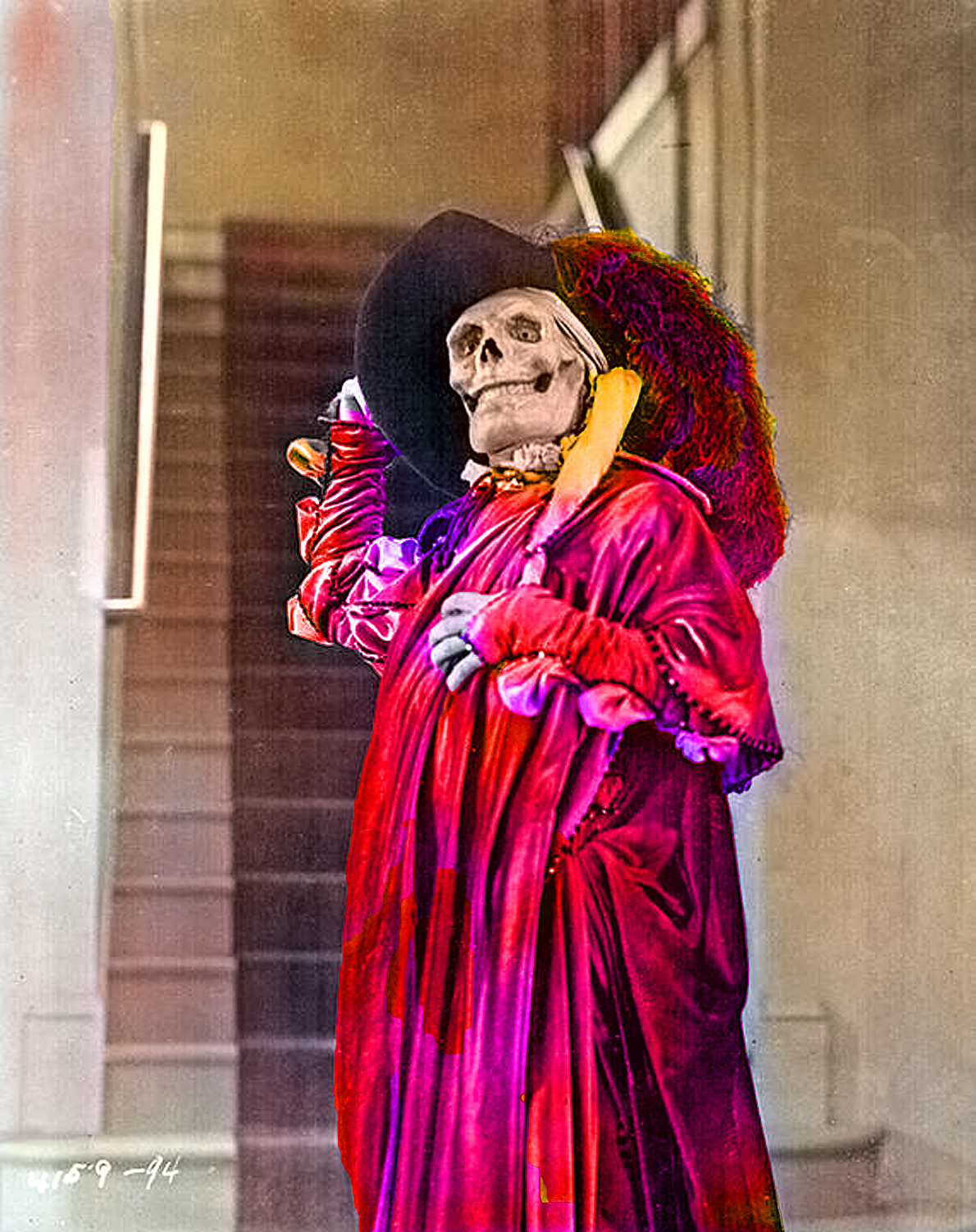


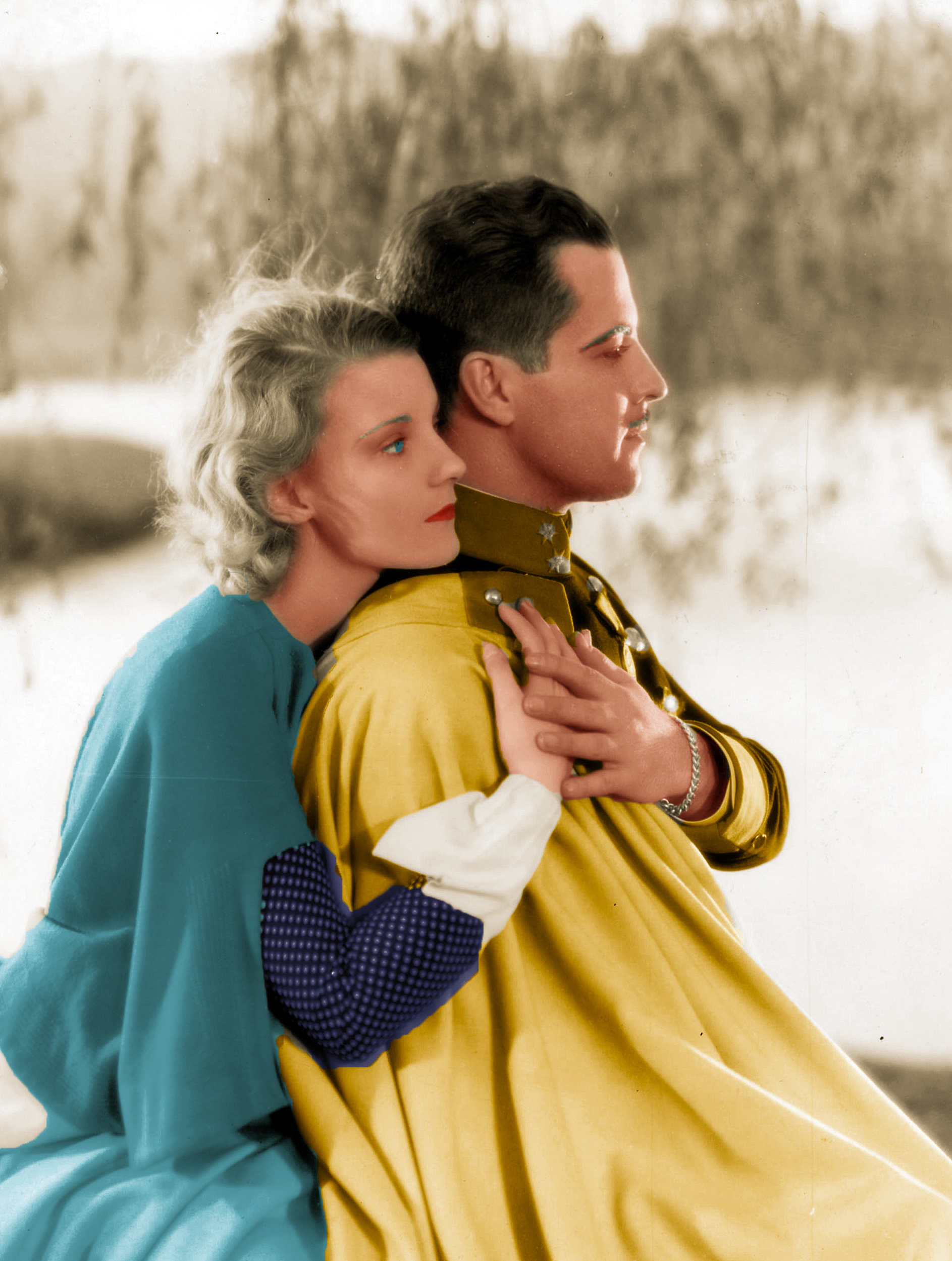
 OLD HOLLYWOOD IN COLOR