On the Set with Al Jolson

This time we turn the spotlight on Al Jolson (1886-1950) who by sheer force of his personality became known as “The World’s Greatest Entertainer.” It’s said that he bestowed the title on himself but the point is that nobody disputed it.
Jolson (3) copy_Final

There were four great male pop singers during the 20th century and in chronological order they were Al Jolson, Bing Crosby, Frank Sinatra, and Elvis Presley. They all excelled in singing love songs but two of them were gentlemen – Crosby and Presley – and two of them were tough guys – Jolson and Sinatra:
Collection014 copy_Final

Al isn’t glaring at the camera in this production shot from WONDER BAR (1934). His scorn is directed towards an off-camera Ricardo Cortez who plays a gigolo in the story:
Jolson029 copy_Final

The New York premiere of THE SINGING KID in April 1936. Al is partially hidden behind the microphone while Mrs. Jack Oakie speaks into it as her husband looks on. On the left is none other than Ruth Roland, the serial queen of the silent screen. After retiring from films, Ruth made a fortune in real estate. No wonder she’s smiling!
Jolson Ruth Roland Jack Oakie_Final Final

Jolson played only one historical role in films – other than himself, that is. Al’s characterization of E.P. Christy, the minstrel man of the 19th century, won critical praises and stole the show. That’s Don Ameche as Stephen Foster and Andrea Leeds as his long-suffering wife in the Technicolor production, SWANEE RIVER (1939):
Jolson S copy_edited-Final

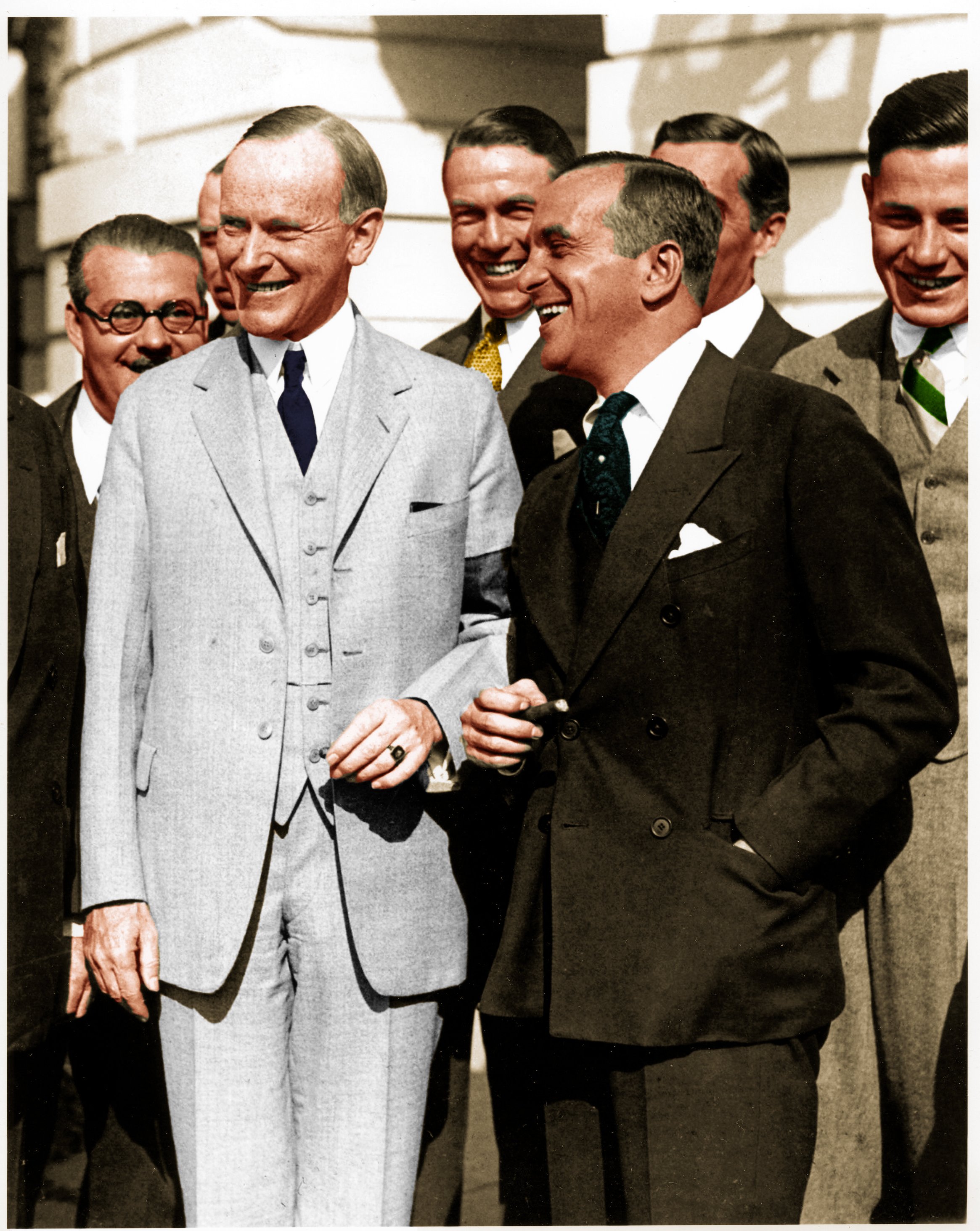
Jolson was active in the Republican Party during the 1920s, campaigning for Warren Harding and even writing a song for him. Here Al visits President Calvin Coolidge at the White House in October 1924:
Coolidge001 copy_Final

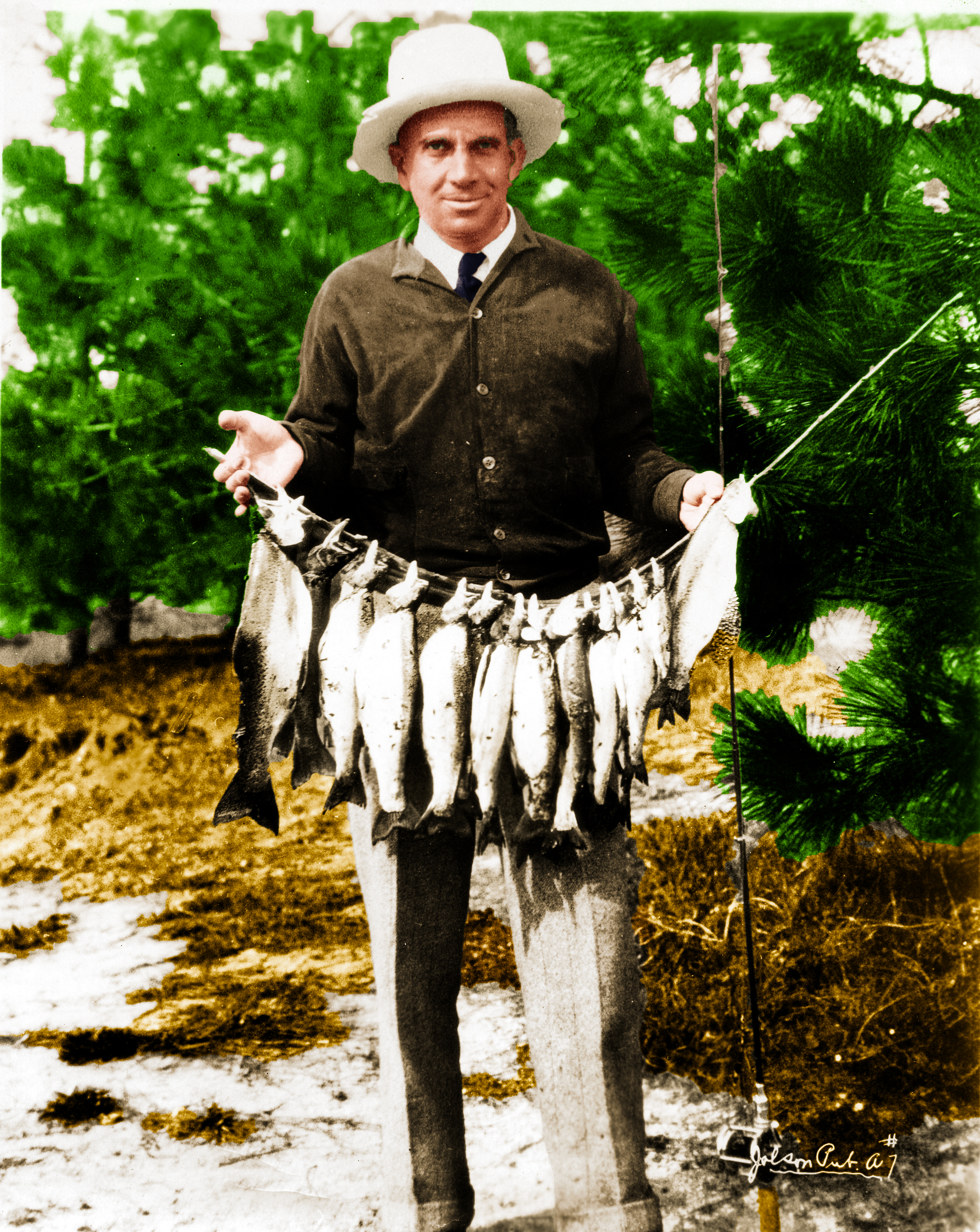
Al was a sportsman and proudly displays his day’s catch:
Fishing001 copy_Final

A deleted scene from ROSE OF WASHINGTON SQUARE (1939), a nostalgic musical of the 1920s, which even in 1939 seemed like a long time ago:
Jolson015_edited-Final

Al and his third wife Ruby Keeler in 1929, singing songs over the air to promote his new film, SAY IT WITH SONGS:
Jolson and Ruby

After Broadway and Hollywood, Jolson became a major radio star during the 1930s and thereafter. But what’s the point in talking about Al – let’s listen to him. Click below to hear the Colgate Tooth Powder Show of January 5, 1943. Right smack in the middle of the Second World War, this show has plenty of jokes to keep up morale in dealing with the wartime challenges of rationing and shortages. Broadcast live from New York City, Al’s guest, Monty Woolley (The Man Who Came To Dinner) was such a hit that he became a regular on the show. Al performs a terrific medley of George Gershwin songs at the end:

All of the Jolson movies mentioned in this post are now available on DVD. Of course, the film that Al is primarily remembered for, THE JAZZ SINGER (1927), is also out on Blu-ray. Check ’em out!

Old Hollywood in 3D Color

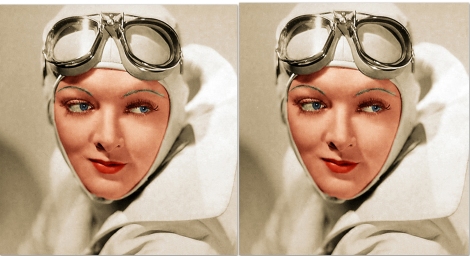
This site was established almost two years ago and dedicated to transforming old b/w photos of Old Hollywood into color by using modern software. Now we’re ready to take the next step by adding computer-generated 3D to our color transfers. Last month we inaugurated this process on our sister site, ArlissArchives.com by unveiling the first-ever 3D images of George Arliss. Similar to the extremely limited use of color photography in Old Hollywood, unfortunately the studios of that era also did not participate in the popularity of 3D or stereoscopic photography. That task is bequeathed to us in the 21st century. Today there are several different 3D processes but here we are using an original low-tech version that dates back to the 19th century. It is based on an optical illusion to trick our brain into believing it is seeing an object from two slightly different perspectives, hence the illusion of depth perception. Let’s start off with a very chic Myrna Loy circa 1935:
Myrna Loy New 3D_edited-1

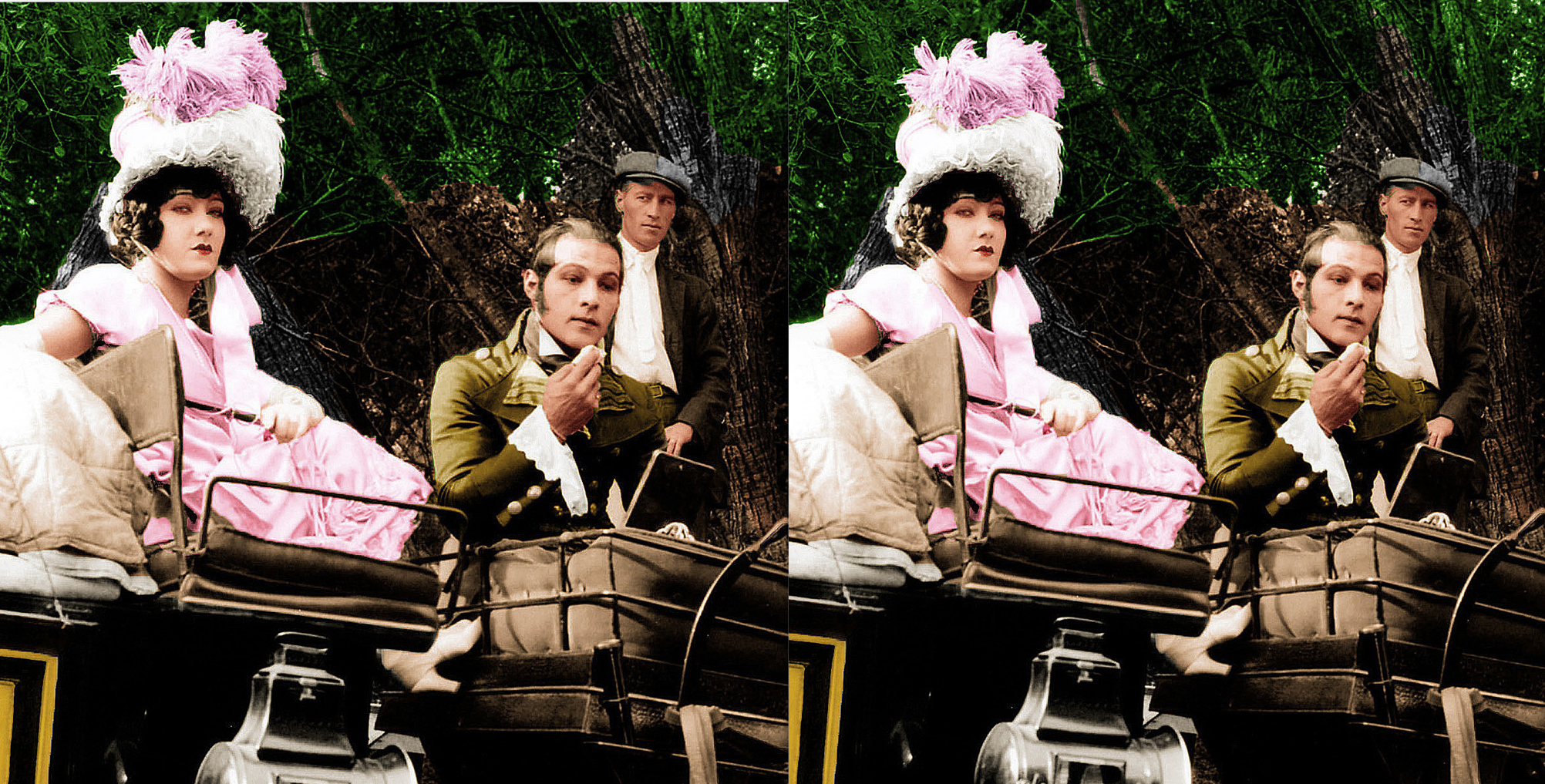
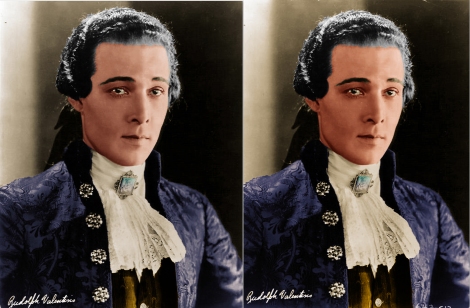
If you see only two identical images of Myrna and no 3D effect, then you either need to use a viewer device or learn the simple knack of “free viewing.” The easiest way to obtain a viewer is to find one of the many books on old stereoscopic slides because these volumes include a simple fold-up plastic or cardboard viewer. Check your public library. Your blogmeister dispenses with using viewers (the “training wheels” of 3D) and relies on the technique of free viewing using only, pardon the expression, my naked eyes. Let’s give the 3D treatment to Rudolph Valentino in MONSIEUR BEAUCAIRE (1924):
Rudy Beaucaire 2 New 3D_edited-1

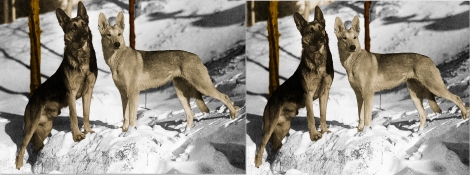
To try free viewing, you need to guide each eye to focus on only one of the two images: the right eye on the right image, the left eye on the left image. At first your eyes won’t cooperate so by using the edge of your hand extended from your forehead to the tip of your nose, your hand will block the right eye from seeing the left image and vice versa with the left eye. A piece of cardboard or a business envelope will work as well as your hand. The next step is to relax and look “through” the images and you will notice (with a little patience) that the images start moving together to form one image. Once they fully merge you’re in 3D. Try it with Myrna and Rudy (each should line up easily) or give Strongheart and Lady Julie below (circa 1925) a try:
Strongheart_Lady Julie New 3D_edited-1

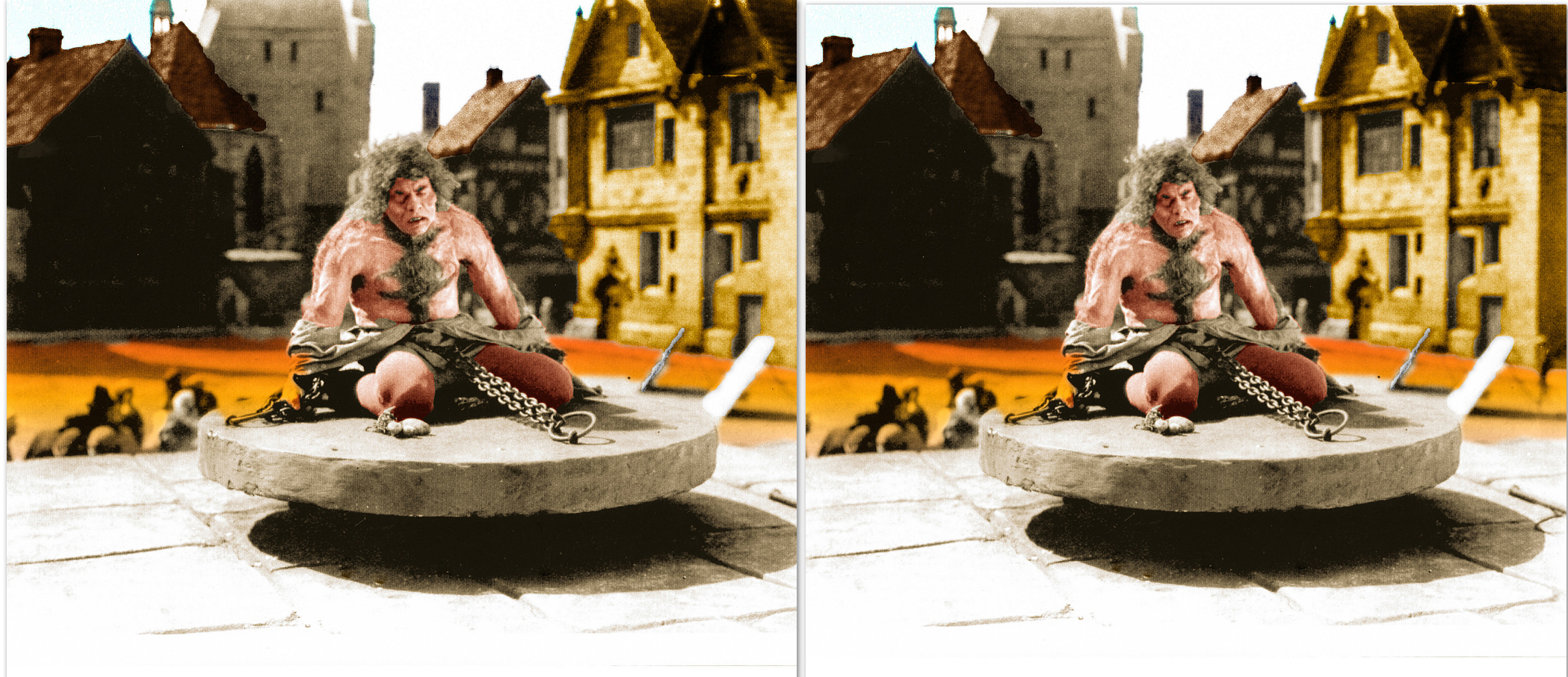
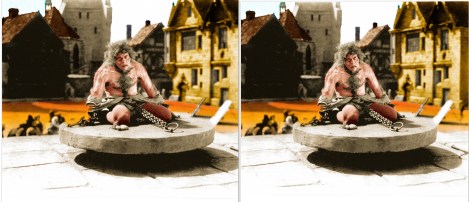
You’ll want to experiment with moving the images, i.e., the screen, anywhere from 9 to 13 inches from your eyes until the images start moving together. Also, smaller image size works easier than larger sizes so you if the images are not fully merging together, adjust your screen to make the images smaller. After a little trial and error, you’ll find a size and a focal length that works for you. Here is a photo that begged for 3D – Lon Chaney Sr. as Quasimodo in THE HUNCHBACK OF NOTRE DAME (1923):
Chaney Hunchback 3D in PSE Free transform_edited-1

Once you’ve experienced the 3D effect of free viewing, you’ll know what to look for and subsequent 3D images will come through faster. Here, the Russian Revolution is about the break out in TEMPEST (1928) but Louis Wolheim (top) and John Barrymore find time to horse around in this photo that seems designed for 3D:
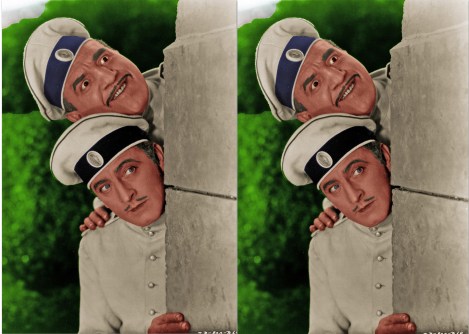
Barrymore Wolheim New 3D_edited-1

This photo has a lovely scenic perspective that enhances a 3D view – June Collyer and George Arliss on the set of ALEXANDER HAMILTON (1931) wait for nightfall to film an outdoor scene:
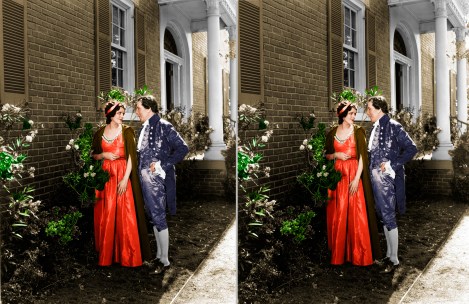
Arliss Hamilton 2 New 3D_edited-1

Since today (April 1st) is Lon Chaney’s birthday (1883), here he is again with Norma Shearer in HE WHO GETS SLAPPED (1924), the very first film produced by the then-newly organized Metro-Goldwyn-Mayer. Shearer and Chaney remained top stars at MGM, Norma until her retirement in 1942, and Lon until his death in 1930:
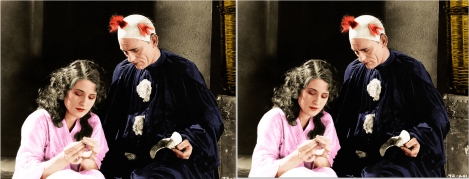
Shearer Chaney New 3D_edited-1

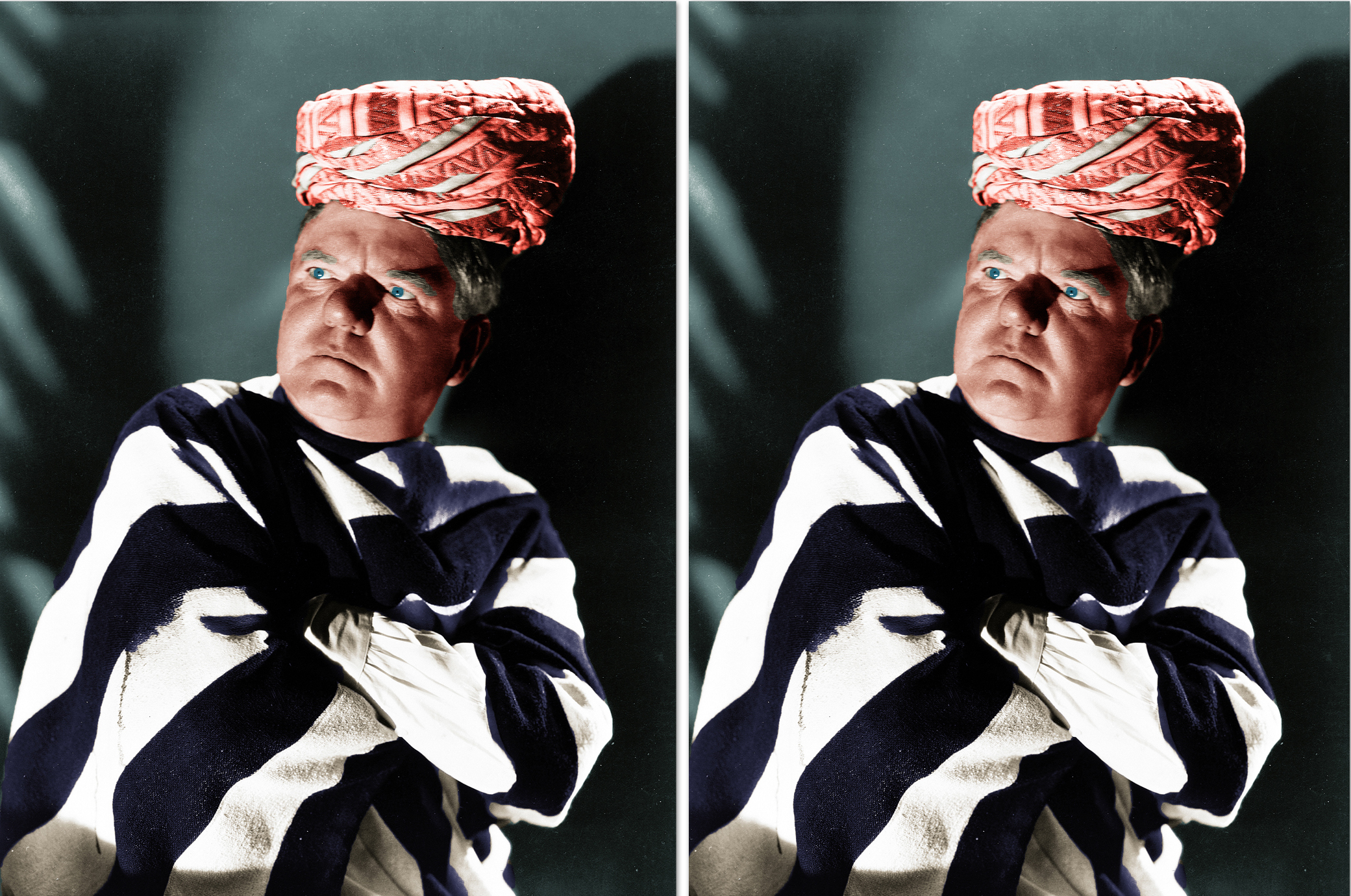
It may be unkind to note that W.C. Fields’ nose always seemed to be in 3D even in 2D photos. At any rate, here’s an unusual portrait of Mr. Fields sporting a middle eastern look:
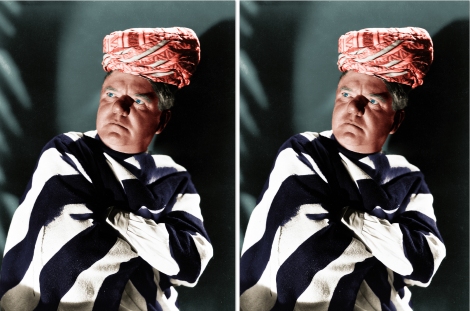
W C Fields New 3D_edited-1

Gloria Swanson and her co-star Rudolph Valentino pause in filming a scene for BEYOND THE ROCKS (1922). This film represents the only pairing of these two iconic stars and was considered a “lost” work for decades until a nearly-complete print turned up in the Netherlands just a few years ago and is now on DVD. Ironically, this scene below was among the missing footage in the rediscovered print:
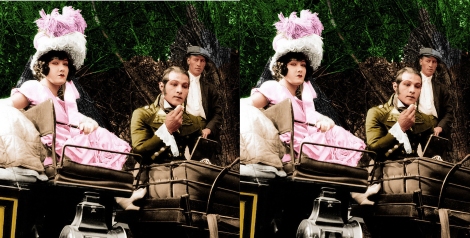
Swanson_Valention Rocks New 3D

This striking portrait of Lon Chaney in character for OUTSIDE THE LAW (1921) seems to anticipate 3D:
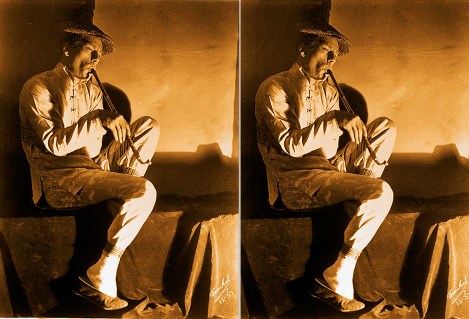
Chaney Shadows 3D_edited-1

Clara Bow personified the “Roaring Twenties” perhaps more than anyone else. She was dubbed the “It Girl” and everybody under 90 knew what that referred to, and maybe people over 90 too. Some of her films were considered risque but her studio, Paramount, cancelled her contract in 1931 – even after her successful transition to talkies – when her private life was found to be racier than her films:
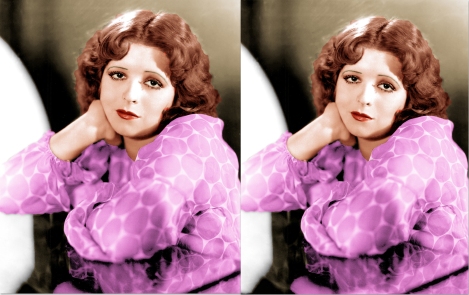
Clara Bow New 3D

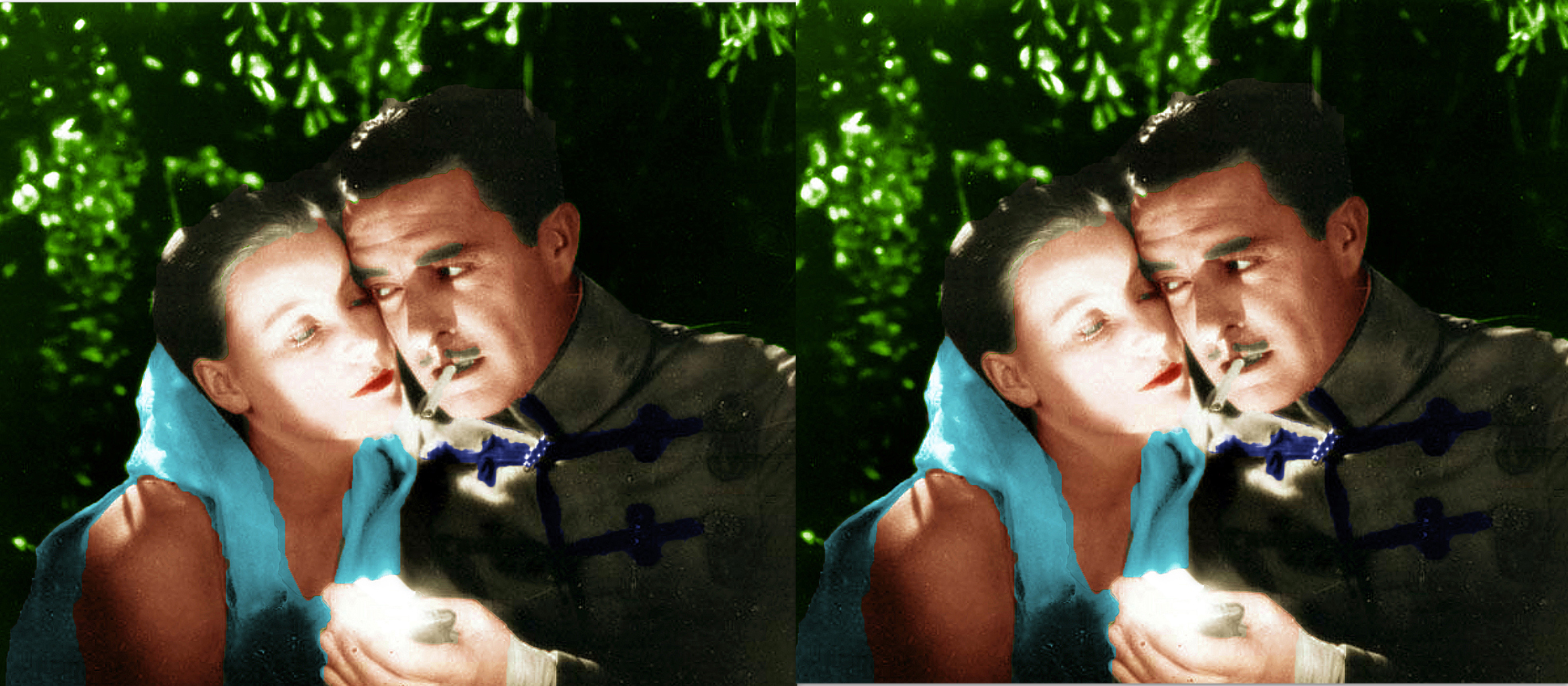
Finally, before Hepburn & Tracy, Lombard & Gable, or Rogers & Astaire, there was Garbo & Gilbert, that is Greta Garbo and John Gilbert. They ignited the screen in films such as FLESH AND THE DEVIL, LOVE (both 1927), A WOMAN OF AFFAIRS (1928), and the talkie QUEEN CHRISTINA (1933). Not surprisingly, they were lovers in real life, at least for a time in the late 1920s. Here is an iconic image of them from FLESH AND THE DEVIL given both the color and the 3D treatment:
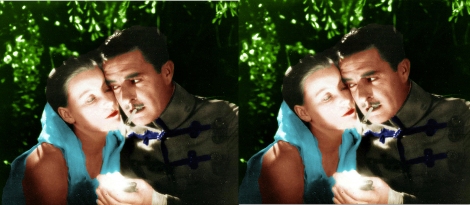
Garbo_Gilbert New 3D

Future posts here will continue to be in color (the raison d’etre for this site) but we’ll be more sparing in using 3D. The stereographic effect is more welcome as a novelty from time to time than as a constant component of photos, or movies for that matter. Perhaps those folks back in Old Hollywood knew this all along.

Silent Screen Stars on Radio: Part 2

Some months ago your blogmeister posted a thread called “Silent Screen Stars on Radio” that proved very popular. I promised a possible sequel so here it is. Radio during the 1930s became a veritable haven for silent screen stars, regardless of whether they were successful in talkies. Let’s start our tour with one the most popular stars of the silent screen, Norma Talmadge. Norma made only two talkies then decided to retire from the screen in 1930 with her wealth intact. Here is Norma in her final film, DUBARRY, WOMAN OF PASSION (1930):
Norma T4_Final
She was married to George Jessel for several years during the ’30s and appeared with him on his weekly variety show, “Thirty Minutes in Hollywood.” Legend claims that Norma left sound films because of a pronounced Brooklyn accent but fortunately her radio work vindicates her vocally. Here Norma co-stars with Gilbert Roland in her first talkie, NEW YORK NIGHTS (1929):
Norma T 3
Let’s listen to an excerpt from the March 6, 1938 broadcast with Jessel and a ten-year singing prodigy, Josephine, who asks Norma about her film career:

Gloria Swanson was one of the greatest stars of the 1920s and her transition to talkies was not only successful but revealed her excellent singing voice. However, times were changing quickly in the early 1930s and the fickle public shifted its attention to newer attractions. La Swanson produced her own films and by 1934 she realized it was time to move on to other pursuits. But she was never gone from the public scene for very long, which may explain her spectacular return to films in SUNSET BLVD. in 1950. Here is Gloria making a very early broadcast circa 1928:
Radio020 Final
Let’s join Gloria as guest on Eddie Cantor’s show on March 9, 1938. This being a live broadcast, the performers keep rolling, mistakes and all:

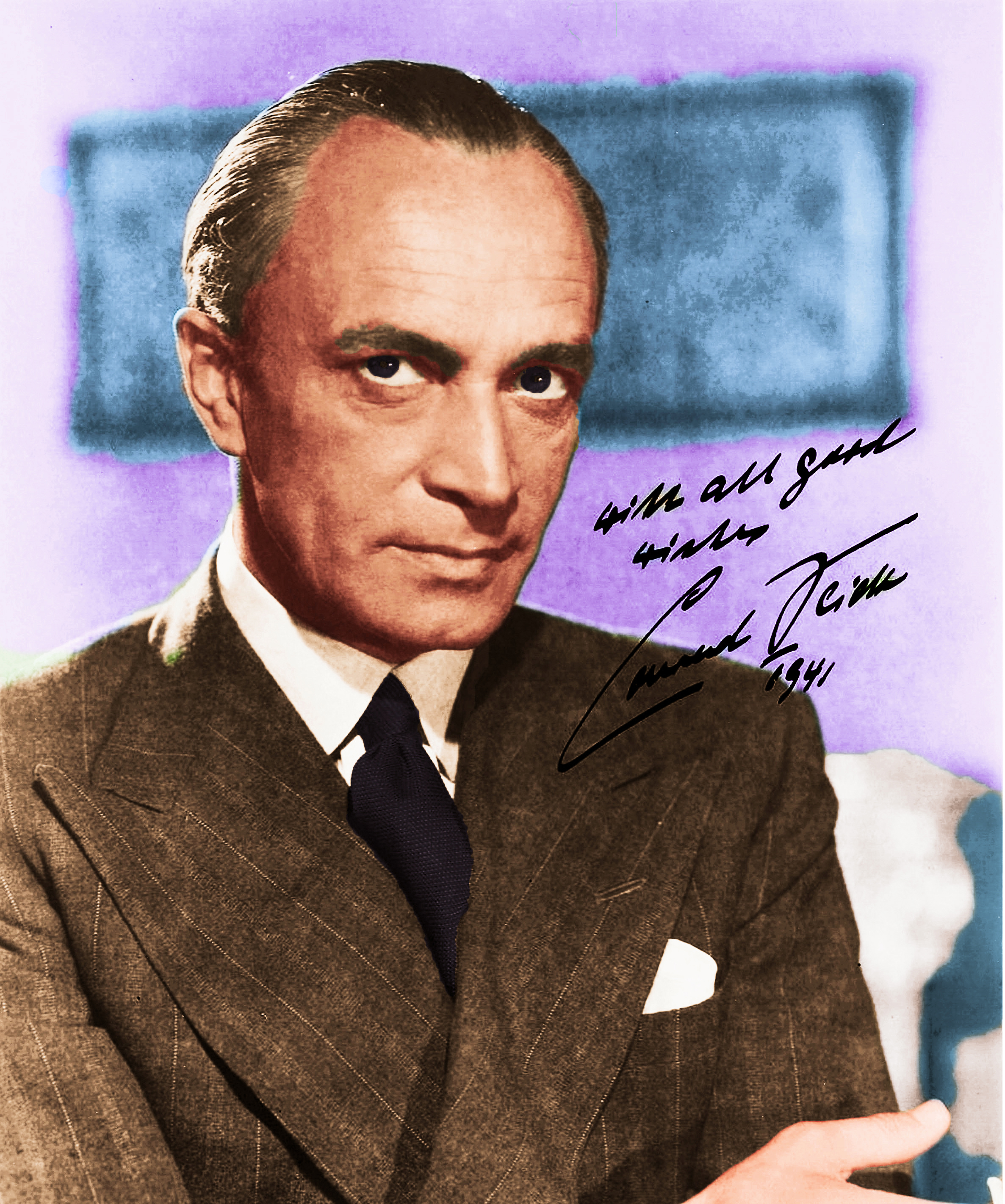
Now for something completely different. Conrad Veidt was one of the most popular international stars during the silent film era, first gaining notice in the groundbreaking THE CABINET OF DR. CALIGARI (1919). Connie, as he was called, traveled from Germany to Hollywood in 1926 at the request of John Barrymore, who wanted him to play the crafty King Louis XI in Barrymore’s new epic, THE BELOVED ROGUE (1927). Here is an original autographed portrait of Connie taken about the same time:
Veidt022 Final_edited-1
Veidt returned to his native Germany in 1929 where he continued his career, by then starring in sound films, until he fled his homeland in 1933 with the rise of Hitler. His career continued uninterrupted in Britain, though he struggled mightily to learn English, and eventually returned to Hollywood in 1940 where he donated most of his earnings to the American and British war effort. One of his most impressive films at that time was A WOMAN’S FACE (1941) with Joan Crawford in the title role:
CV012
Connie said that this film was his favorite, even more so than CALIGARI, and described his role as “Satan in a tuxedo.” The public agreed because he was asked to recreate his film role not once but twice on radio. Here is the first broadcast, a half-hour version from April 19, 1942, with Bette Davis playing the Joan Crawford role, and Bette’s old co-star from her early days at Warner Bros., Warren William. All three stars donated their salaries to the Motion Picture Relief Fund:

The great director D.W. Griffith was rarely heard on radio but made an exception when another great director, Cecil B. DeMille, asked him to appear on DeMille’s show, Lux Radio Theater. The 1930s were a difficult time for Griffith although he was regarded by the film industry as the most influential of the pioneer filmmakers. He was given a special Academy Award but would have much preferred to be given a film to direct instead. No doubt he would have been pleased with this commemorative stamp issued in his honor decades later:
griffith
Let’s join D.W. on June 29, 1936 as Cecil B. DeMille welcomes him:

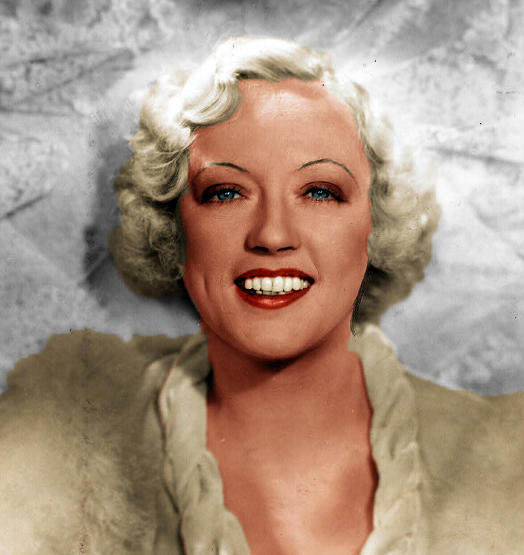
Marion Davies is remembered today as the mistress of publishing tycoon William Randolph Hearst, and as the inspiration for the character of Susan Alexander, the untalented mistress of Orson Welles’ CITIZEN KANE (1941). Welles would spend his later years explaining that he felt Marion Davies was one of the most talented stars of Hollywood, in both silent and sound films, and he made the Susan Alexander character untalented so nobody could claim that she was suppose to be Marion, but alas, it didn’t work out that way.
Marion D_Final
Let’s hear Cecil B. DeMille again as he converses with Marion Davies and Brian Aherne at the conclusion of the November 29, 1937 Lux broadcast of PEG O’ MY HEART that Marion had made as a film in 1931. I believe this broadcast turned out to be her last professional appearance, after having made what proved to be her final film earlier in the year. Also, it was said that Marion spoke with a stammer, something that was never heard in any of her sound films. However, you can hear that she is having some difficulty getting through her scripted remarks:

Finally, we have not one but two Barrymores, John and Lionel. The brothers started making films back in 1912 and possibly earlier, to supplement their theater earnings. By the 1920s, the Barrymore Brothers were starring on the New York stage and in big budget films too, although they worked separately during the silent era. Here is one of their joint stage appearances in 1919 in THE JEST, which F. Scott Fitzgerald immortalized in his first novel, This Side of Paradise.
Barrymore music006
John in one of his spectacular swashbucklers of the silent screen:
Barrymore003 Final_edited-1
The talkies held no fear for either Lionel or John, in fact Lionel directed as well as starred in them. Alas, this talkie comedy from 1930, with John and a very young Loretta Young, is lost:
Barrymore Blankleys copy_Final_edited-1
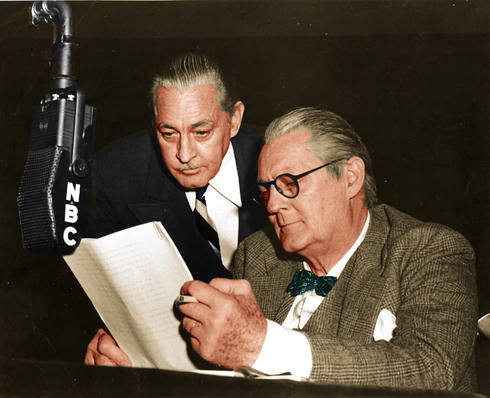
By the early 1940s each of the Barrymore Brothers had his own weekly radio show but Lionel also made guest appearances on John’s Sealtest Show, which headlined Rudy Vallee, who was responsible for hiring John for the show:
Barrymore Bros_Final
The Sealtest Show was a slapstick comedy series where the stars and guests were satirized. But just to let listeners know it was all in fun, John and Lionel took time out to perform a scene from Shakespeare’s RICHARD III. Here Rudy Vallee introduces the scene on the May 1, 1941 broadcast:

I passed over shows with all-but-forgotten silent screen stars such as Bert Lytell and Aileen Pringle but just let your ol’ blogmeister know of any requests. And thanks for stopping by.

On the Set with Warner Oland

Today, the name Warner Oland (1879-1938) is synonymous with Charlie Chan, the fictional Honolulu detective created by Earl Derr Biggers. But Mr. Oland was much more than a talented character actor. He spoke several languages and, with his wife Edith, made the first English language translations of plays by August Strindberg. Born in Sweden, his family emigrated to the United States when Warner was 13 years old. He gravitated from the stage to films in the 1910s and first attracted attention playing the villain in Pearl White’s legendary movie serial, THE PERILS OF PAULINE (1914).
Warner Oland001 new copy_Final

In those days the craft of acting included the ability to credibly portray characters of different nationalities or ethnic origins, and even different races. We are much more parochial today about these things but Warner Oland was the first actor to successfully portray a Chinese hero in American films. How successful? He starred in seventeen Charlie Chan films at 20th Century-Fox from 1931 through 1937 (technically, 18 films if we count an uncompleted one begun in January 1938 but abandoned as Warner’s health deteriorated).

Oland and Karloff_Final
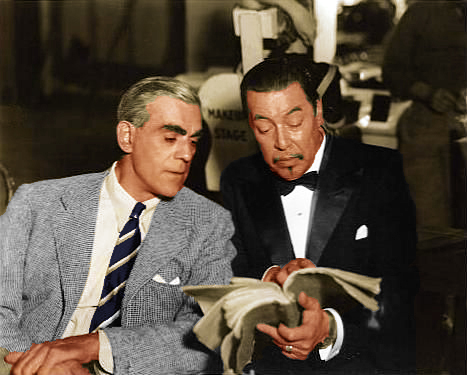
Boris Karloff co-starred with Warner in CHARLIE CHAN AT THE OPERA (1936)

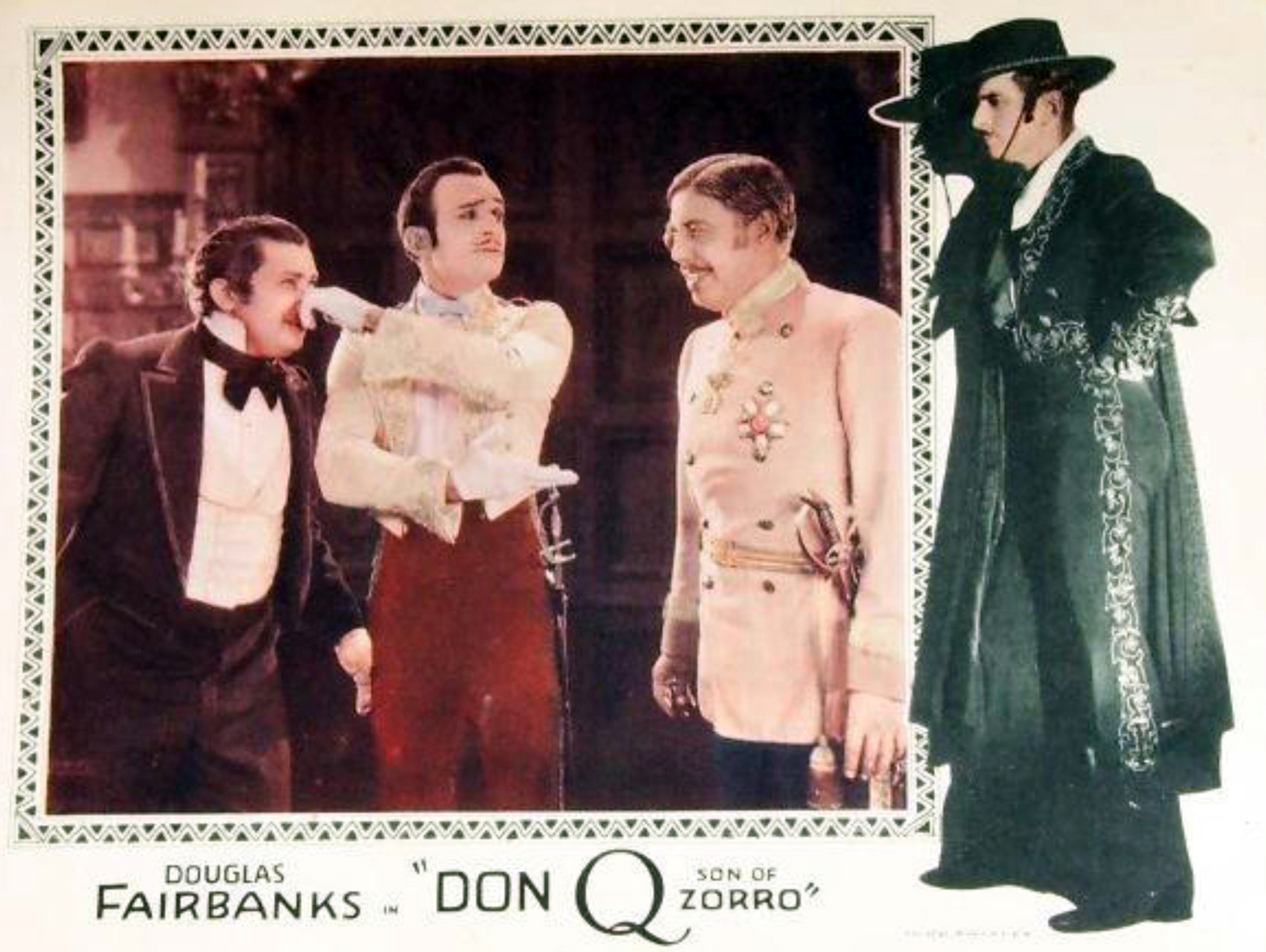
Warner had already established himself in a variety of ethnic roles during the silent film era, most notably as Cantor Rabinowitz in THE JAZZ SINGER (1927). He also impersonated an Austrian Archduke in the lavish DON Q, SON OF ZORRO (1925):
fairbanks don q_edited-2

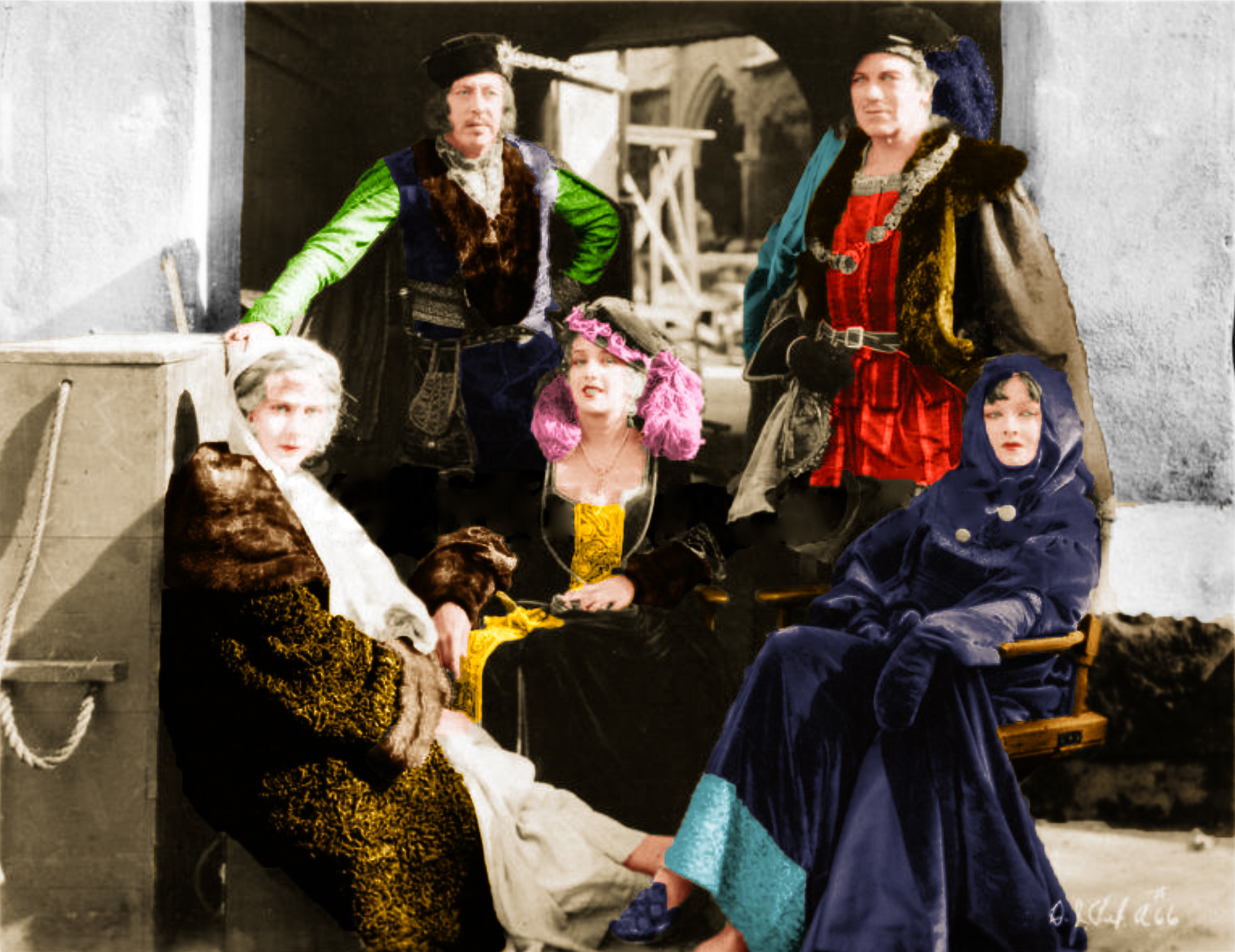
DON JUAN (1926), the first feature film to use synchronized sound, had Warner in the historical role of Cesare Borgia. Here is Warner on the DON JUAN set with Montagu Love on the right, and seated left to right, Helene Costello, Estelle Taylor, and Myrna Loy:
Don juan1_Final

Elaborately costumed as an unscrupulous Frenchman in WHEN A MAN LOVES (1927):
Barrymore Manon_Final_Final_edited-1

By 1929, sound films revealed Warner to have a rich and soulful voice. Here he plays an American gangster in THE MIGHTY (1929) with Raymond Hatton (standing) and George Bancroft:
Oland007_Final_edited-1

By 1931, Warner switched tracks from villain to hero with CHARLIE CHAN CARRIES ON, one of four lost Chans. The film became an unexpected hit and the second film in the series, THE BLACK CAMEL (also 1931), was actually filmed in Hawaii. Here, Warner looks as menacing towards Dorothy Revier as Bela Lugosi in THE BLACK CAMEL:
Lugosi Oland Revier2 1931_Final

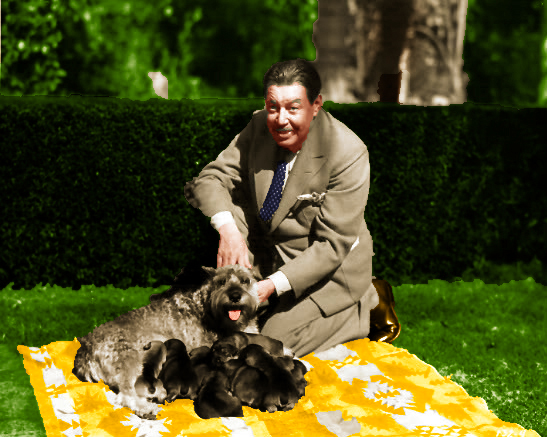
Offscreen, Warner was a doting papa to his schnauzer Raggedy Ann:
Oland and Raggety Ann Final

Back at work, Warner takes time out for a Ouija Board on the set of CHARLIE CHAN’S SECRET (1936), a story that involved spiritualism and seances:
CC Secret_edited-Final

Producer John Stone (left) confers with director H. Bruce Humberstone as Warner and William Demerest listen on the set of CHARLIE CHAN AT THE OPERA (1936):
Chan Opera John Stone producer_edited-1 copy

Two visiting Chinese doctors on their way to Johns Hopkins in Baltimore stop by the set of OPERA to check Warner’s pulse:
Oland018 copy_Final

Author Earl Derr Biggers wrote six Chan novels and based Charlie Chan on a real life Honolulu detective named Chang Apana. Warner met Apana when he was in Hawaii filming THE BLACK CAMEL. It’s worth noting that Warner Oland admired Charlie Chan because the character had many qualities that Warner lacked. Chan was a non-smoker and a teetotler whereas Warner was a heavy smoker and (later) a heavy drinker. Chan had eleven children but Warner, who liked kids, was childless. Eventually, Warner remained in the character of Chan even when not filming and signed his name on legal documents as Chan.

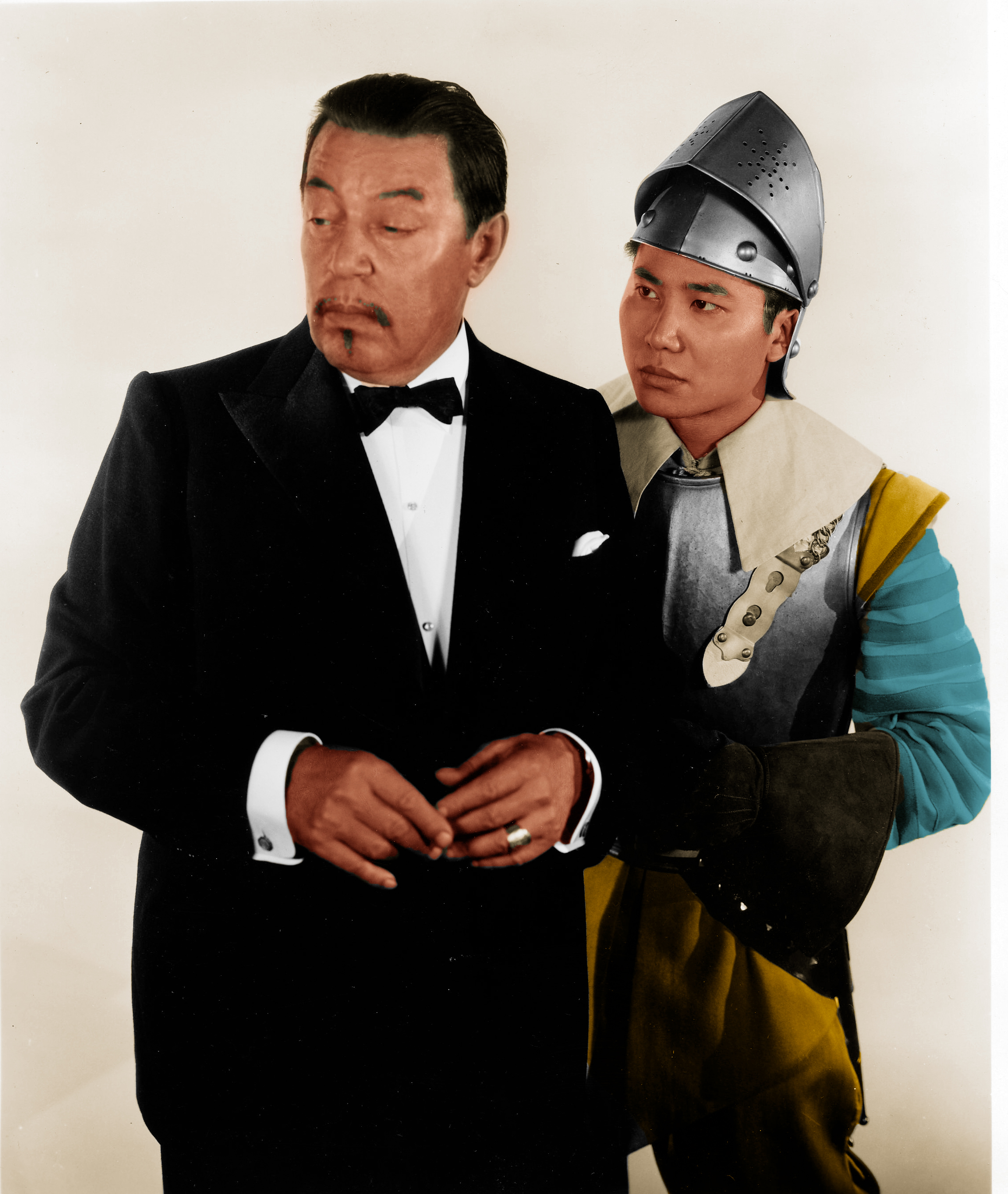
Keye Luke played Chan’s son Lee in several of the later Oland entries in the series, here in OPERA. The two actors became good friends offscreen:
Oland011_edited-1 copy

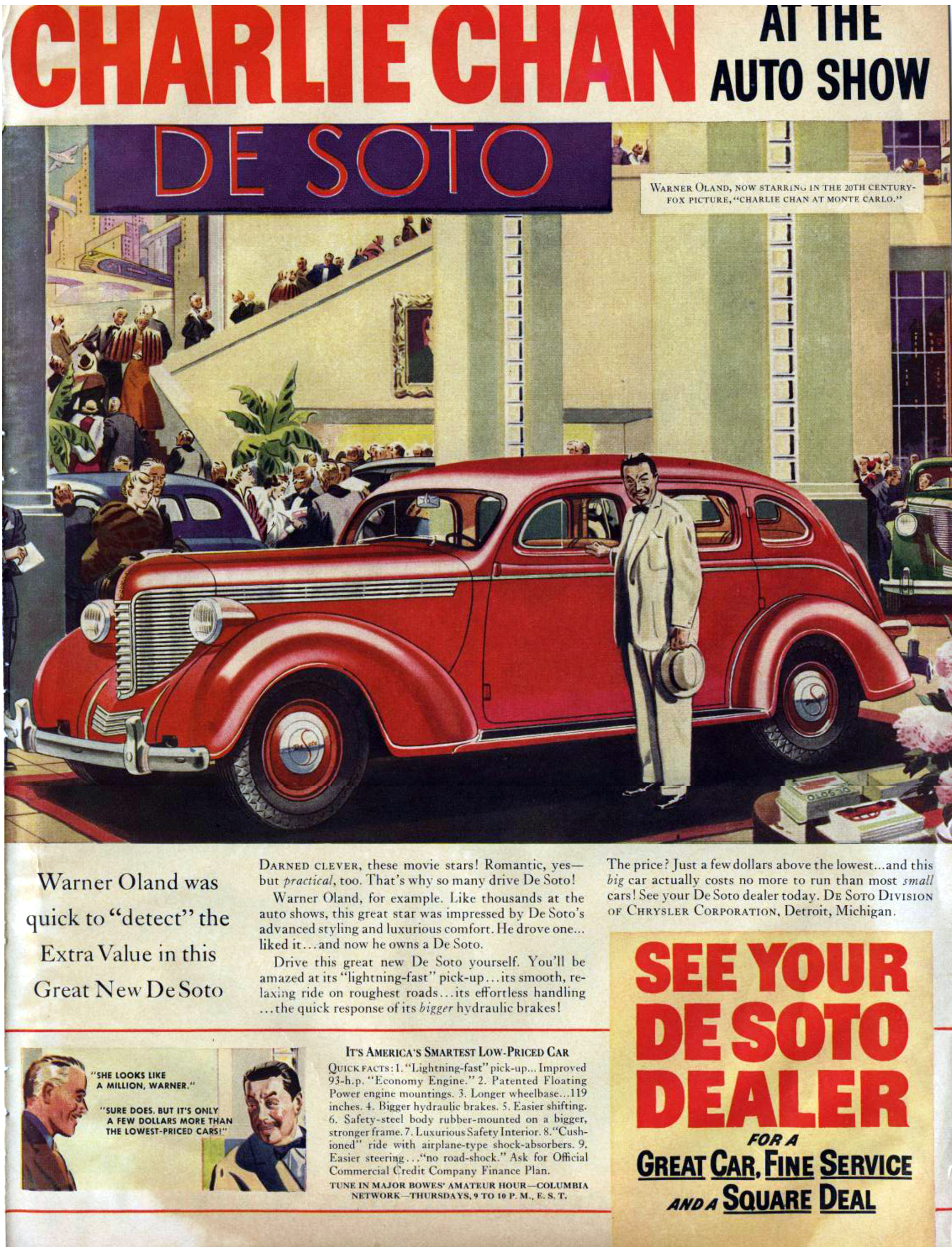
Celebrity-endorsed products are nothing new. Here is Warner and apparently Charlie Chan recommending the new 1938 Desoto:
CC Auto Show

Today, many of Warner’s films, silent and sound, are readily available on DVD including all of his surviving Charlie Chans.

On the Set Again with Karloff & Lugosi: A New Halloween Tribute

Last Halloween and thereafter, we received quite a number of hits on our tribute to those unsurpassed masters of the macabre, Boris Karloff and Bela Lugosi. Since there’s plenty more, we decided to salute our horrific heroes again for this Halloween. Admit it, we know that we’re in the presence of the masters when reciting a single line such as, “I never drink – wine,” from DRACULA (1931), or “I dislike to be touched,” from THE MUMMY (1932), can be more blood curdling than the goriest of chainsaw massacres.

On the DRACULA set, Bela Lugosi greets Horace Liveright who produced the Broadway play version that brought stardom to Lugosi. The film’s director Tod Browning stands to the left of Bela:

Boris Karloff has survived the rigors of makeup and costuming as he checks the script before filming a scene for THE MUMMY (1932):

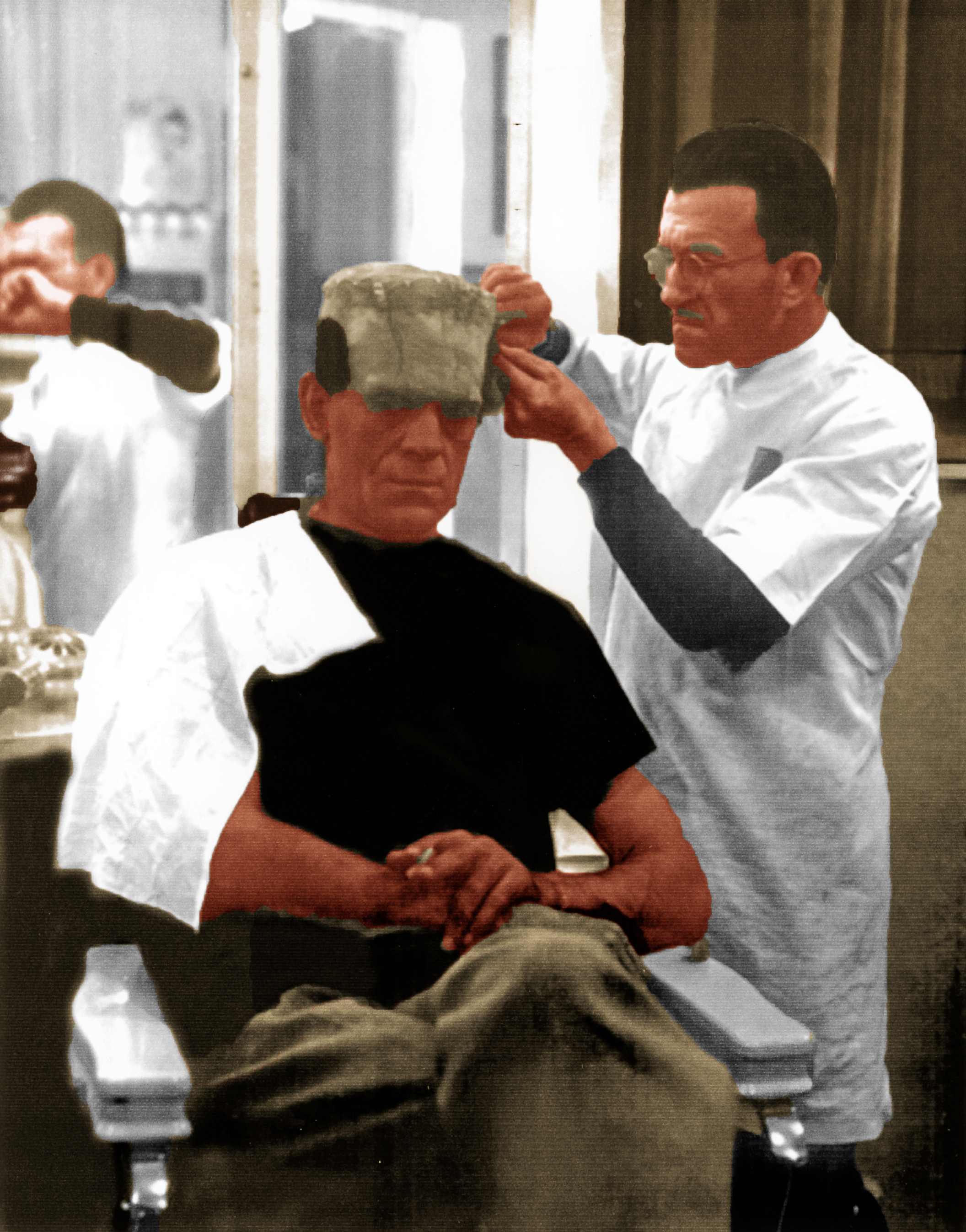
But nothing was as arduous as sitting for hours as makeup artist Jack Pierce literally made a Monster out of Boris. Judging by the status, I’d say they were only at the beginning of the procedure:

By contrast, Bela Lugosi’s greatest makeup challenge as Dracula was to make himself look as handsome as possible:

The boys would vary their horror film appearances with an occasional non-horror movie where they still gave audiences the creeps. Here Bela Lugosi as a medium matches wits with Warner Oland as Charlie Chan in THE BLACK CAMEL (1931), the only Charlie Chan movie filmed on location in Hawaii. Bela and Warner are standing in the lobby of the Royal Hawaiian Hotel:

Boris Karloff plays an anti-Semitic Prussian nobleman whom George Arliss has outwitted in THE HOUSE OF ROTHSCHILD (1934):

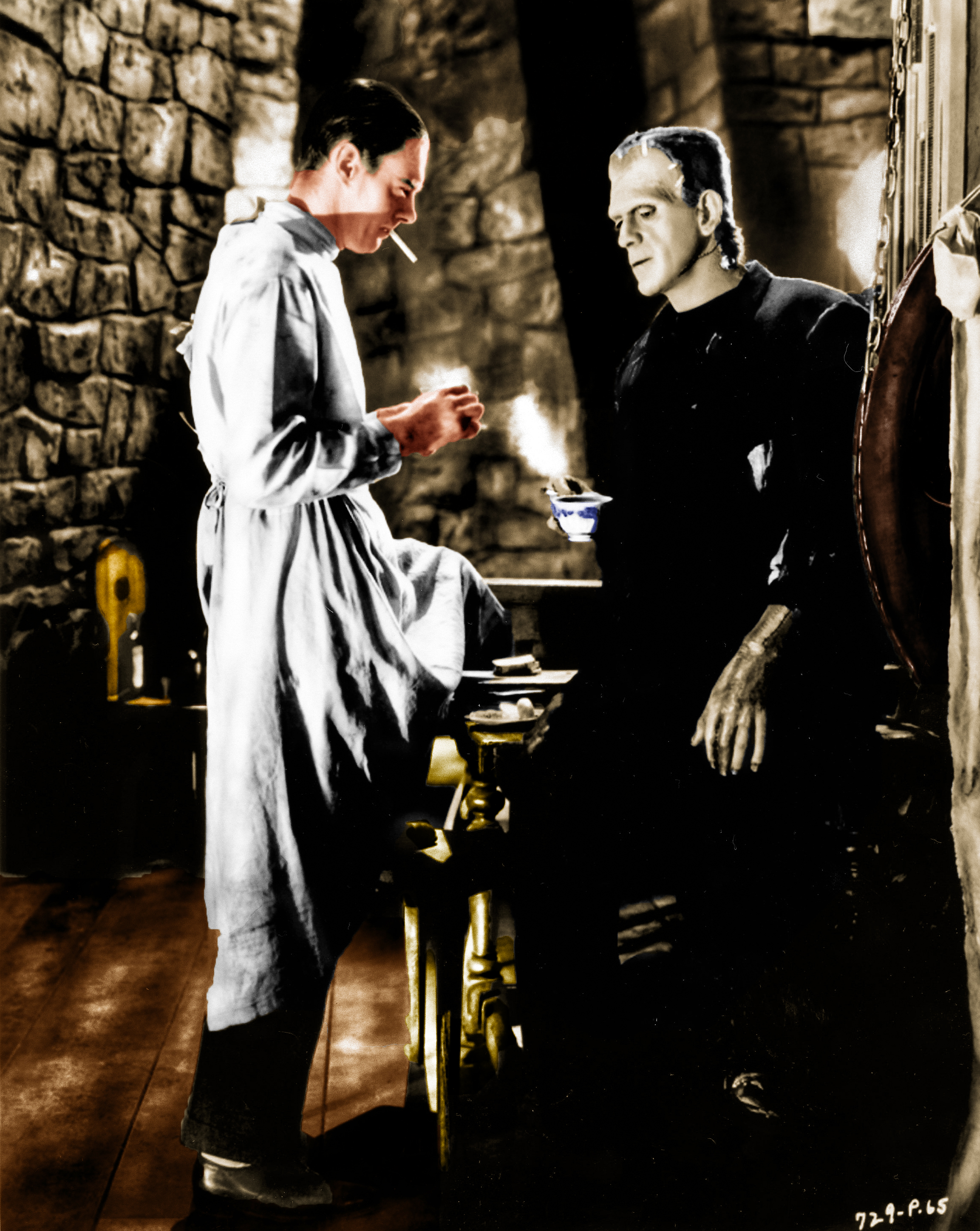
Colin Clive as Dr. Frankenstein shares a tea and cigarette break with Boris on the set of BRIDE OF FRANKENSTEIN (1935):

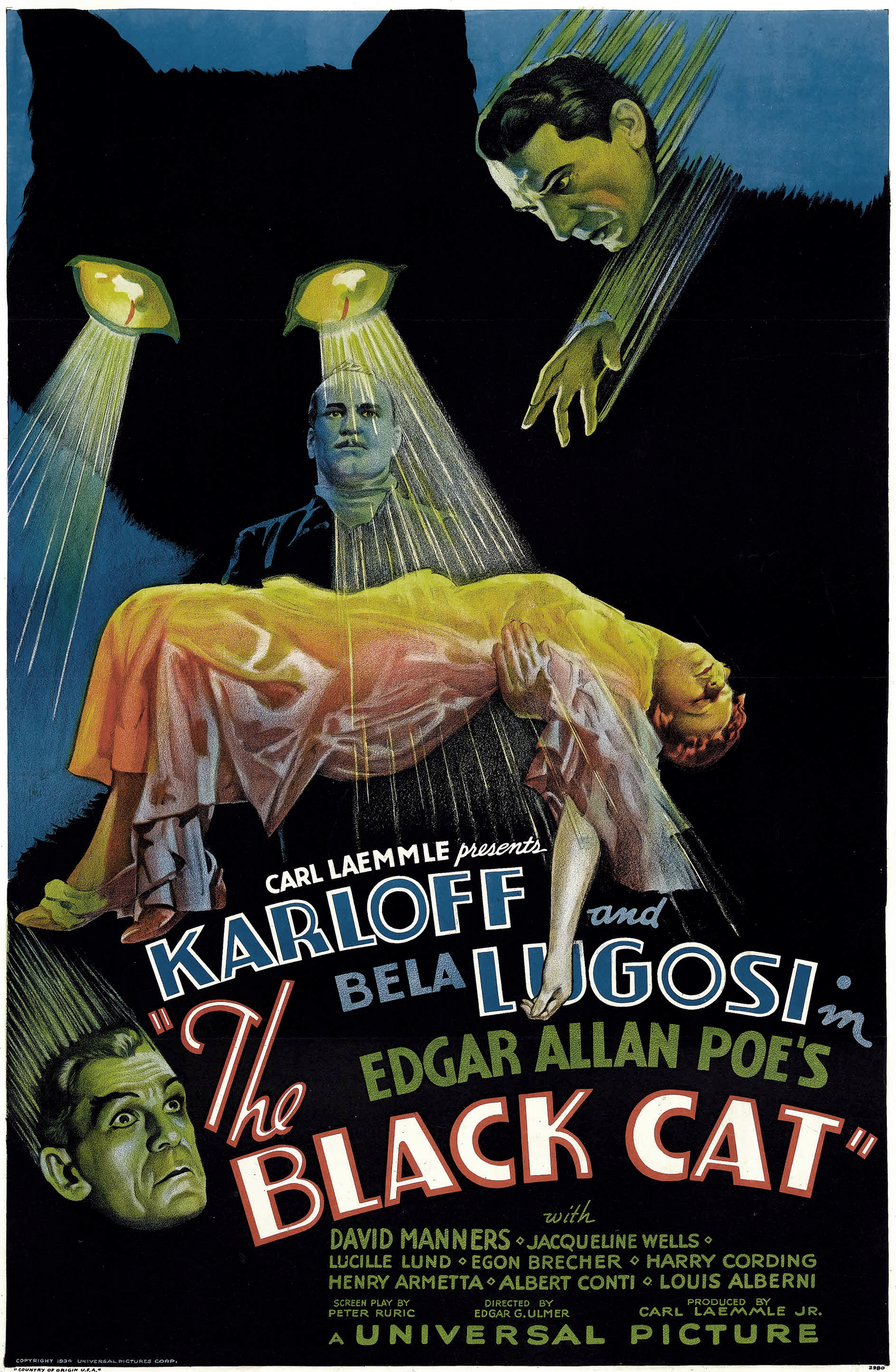
It was inevitable that Boris and Bela would be teamed, but the real surprise is that they worked very well together. The first and arguably the best of their co-starring vehicles is THE BLACK CAT (1934), a film that had nothing to do with Edgar Allan Poe, and almost nothing to do with cats either:

Their third pairing is a personal favorite of your blogmeister, THE INVISIBLE RAY (1936), a stylish sci-fi yarn that seamlessly blended in the Gothic horror elements of their earlier films. Here Dr. Karloff has been poisoned by his discovery of Radium X, and appeals to Dr. Lugosi for help. You just know this will turn out badly:

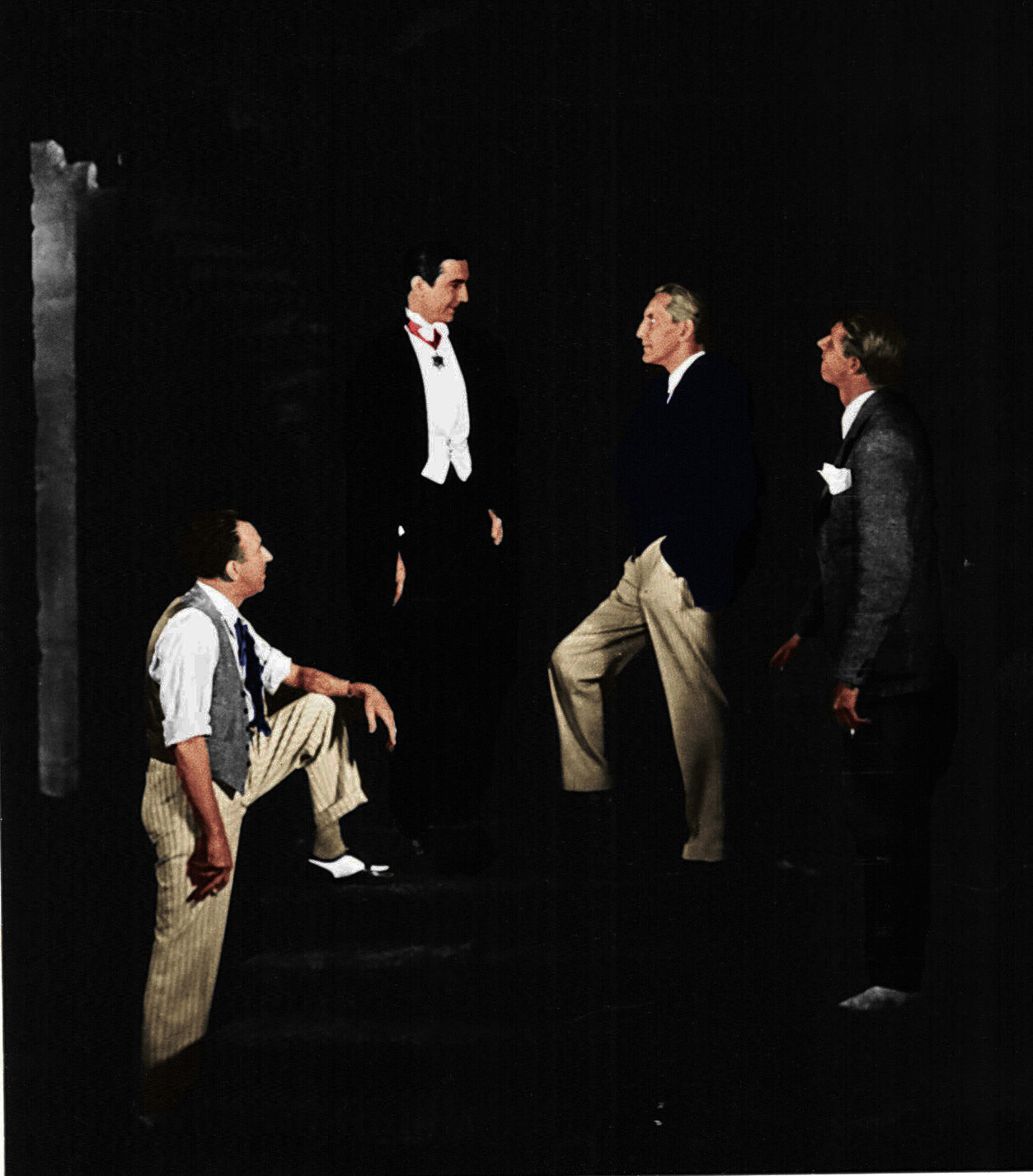
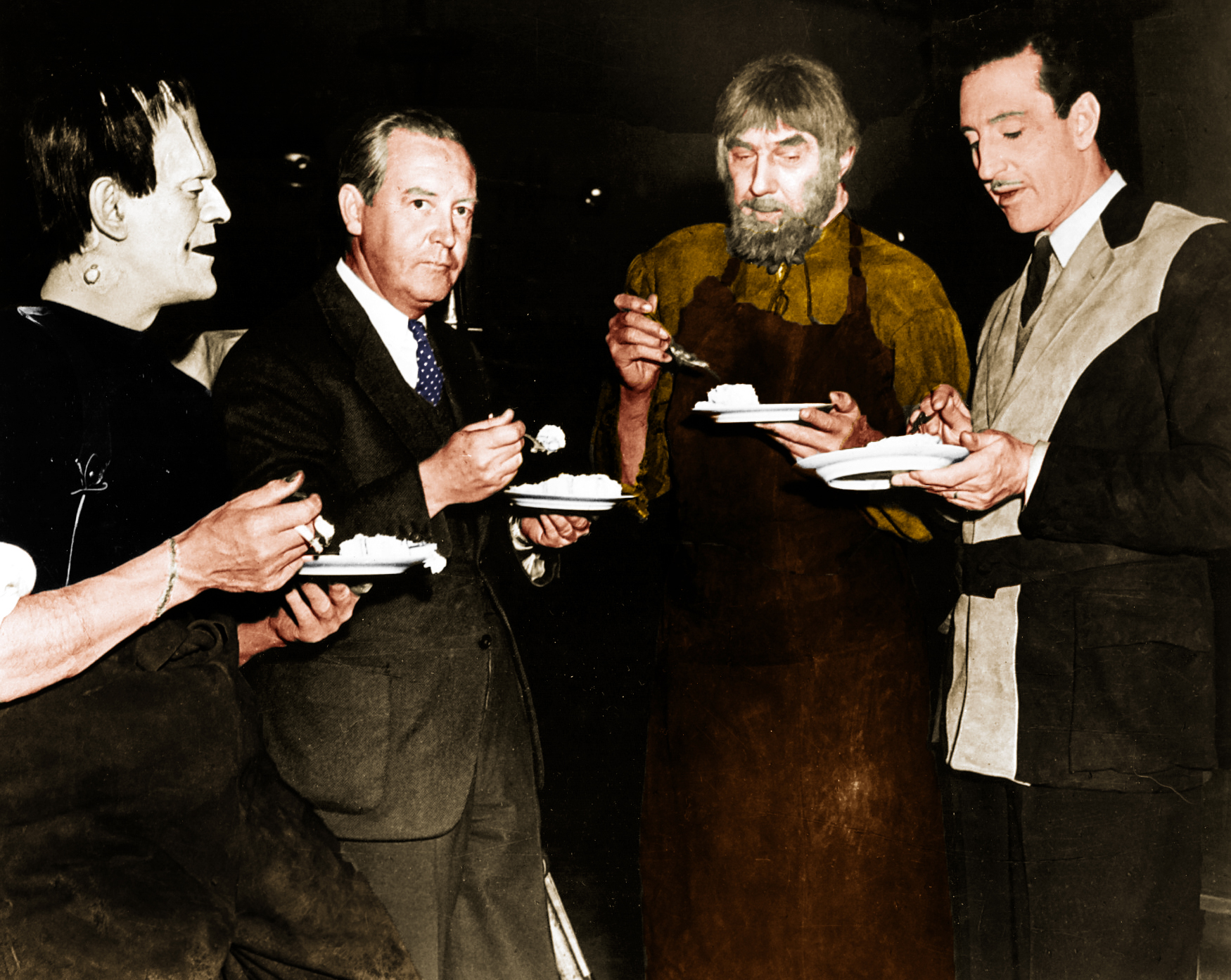
These guys seem to be holding their own Halloween party. On the set of SON OF FRANKENSTEIN (1939) they are really celebrating Boris’ birthday – from left to right, Boris, director Rowland V. Lee, Bela, and Basil Rathbone:

Halloween Bonus! Hear Boris Karloff and John Carradine on INFORMATION PLEASE, a live and unrehearsed radio show exactly as broadcast on February 20, 1942:

Silent Screen Stars on Radio

We’re celebrating the publication of our new book, OLD HOLLYWOOD IN COLOR 3: WHEN SILENT STARS SPOKE, so this seems like a good time to devote a post to this particular topic. There’s a lot of Hollywood mythology surrounding the fate of silent movie stars when they made talkies, and even such hit films such as SINGIN’ IN THE RAIN (1952) only served to reinforce those myths. The fact is that most silent screen stars did just fine in talkies and the ones who stand out because they didn’t do well are a distinct minority. You can read more about it in the book (a shameless plug) but here let’s actually listen to the silent stars themselves when they broadcast on radio.

Let’s take a look at, well, really listen to, three silent stars who never made any talkies: Theda Bara, William S. Hart, and Rudolph Valentino. Strange to say, as talkies supplanted the silents beginning in 1928 and finishing the job by 1929, some stars just walked away from their fame and fortune. Some like Constance Talmadge had become independently wealthy while others married into money or went into business, especially southern California real estate. Perhaps the most famous of early screen stars – we’re referring to the 1910s – was Theda Bara, the movies’ first sex goddess or “Vampire” as they were called then:

Theda’s name is supposedly an anagram for “Arab Death” but I have no idea of its significance. Her real name was Theodosia Goodman and by all accounts, she was nobody’s fool. Here’s an effective study of light and shadow:

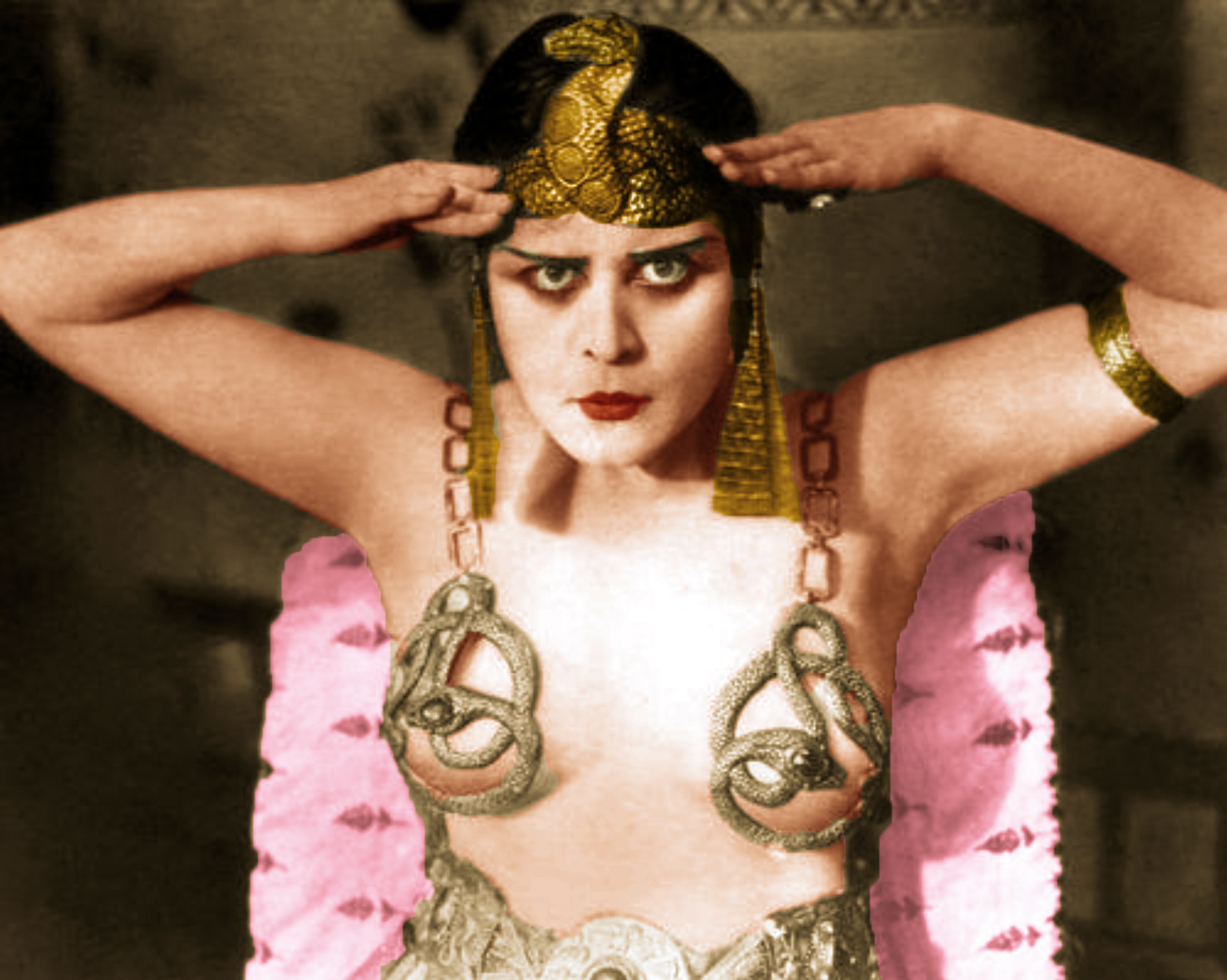
By now you’re probably wondering how Bara came by her reputation, at least based on these two photos. OK, here’s one of the most iconic photos of Theda Bara from the lost film, CLEOPATRA (1917):

Now that we’ve been properly introduced, just click below to hear Theda Bara on the November 9, 1939 broadcast of Texaco Star Theater. You’ll hear host Ken Murray, comedian Irene Ryan (who later played Granny on TV’s “Beverly Hillbillies”), and singer Kenny Baker who asks Theda a very good question:

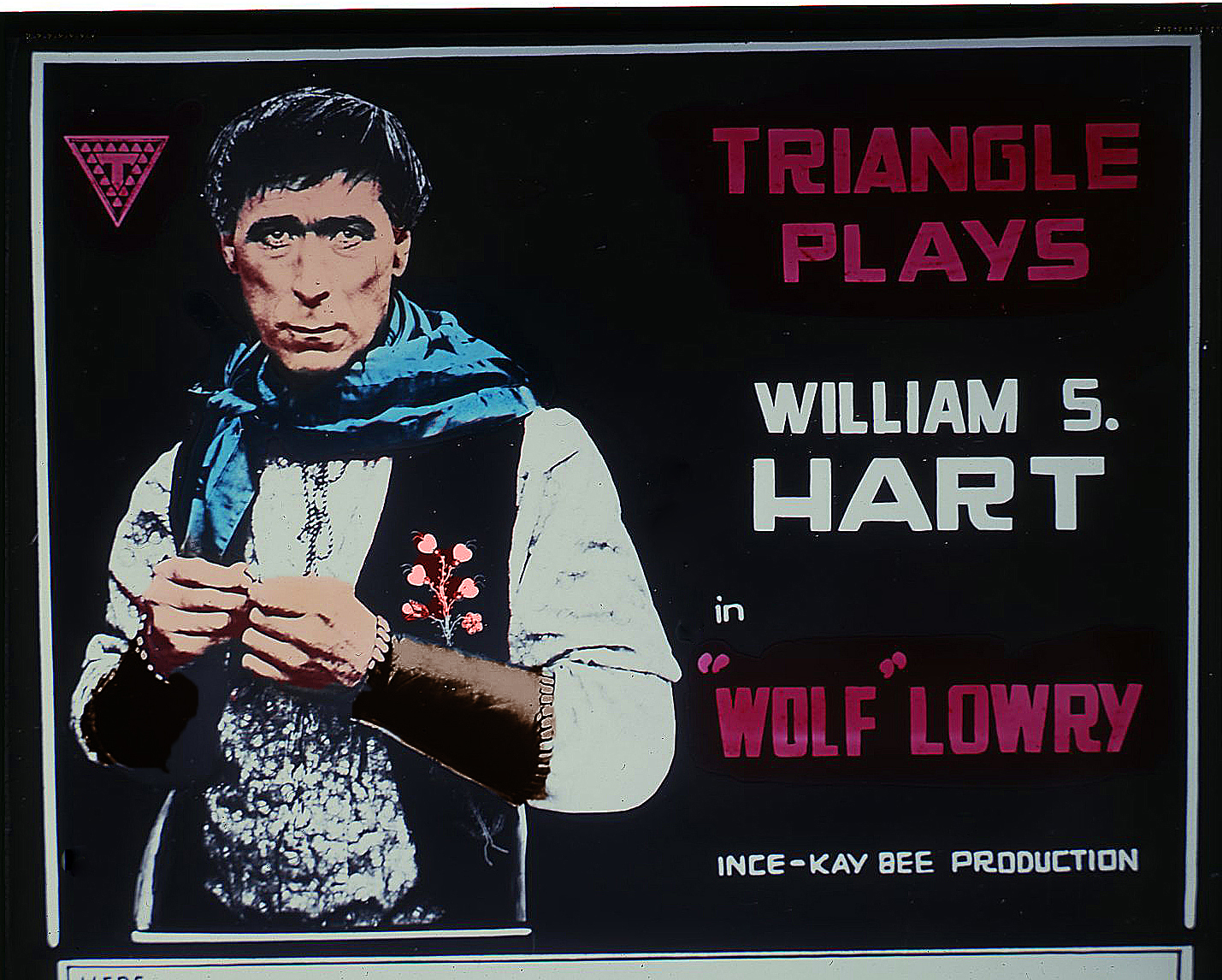
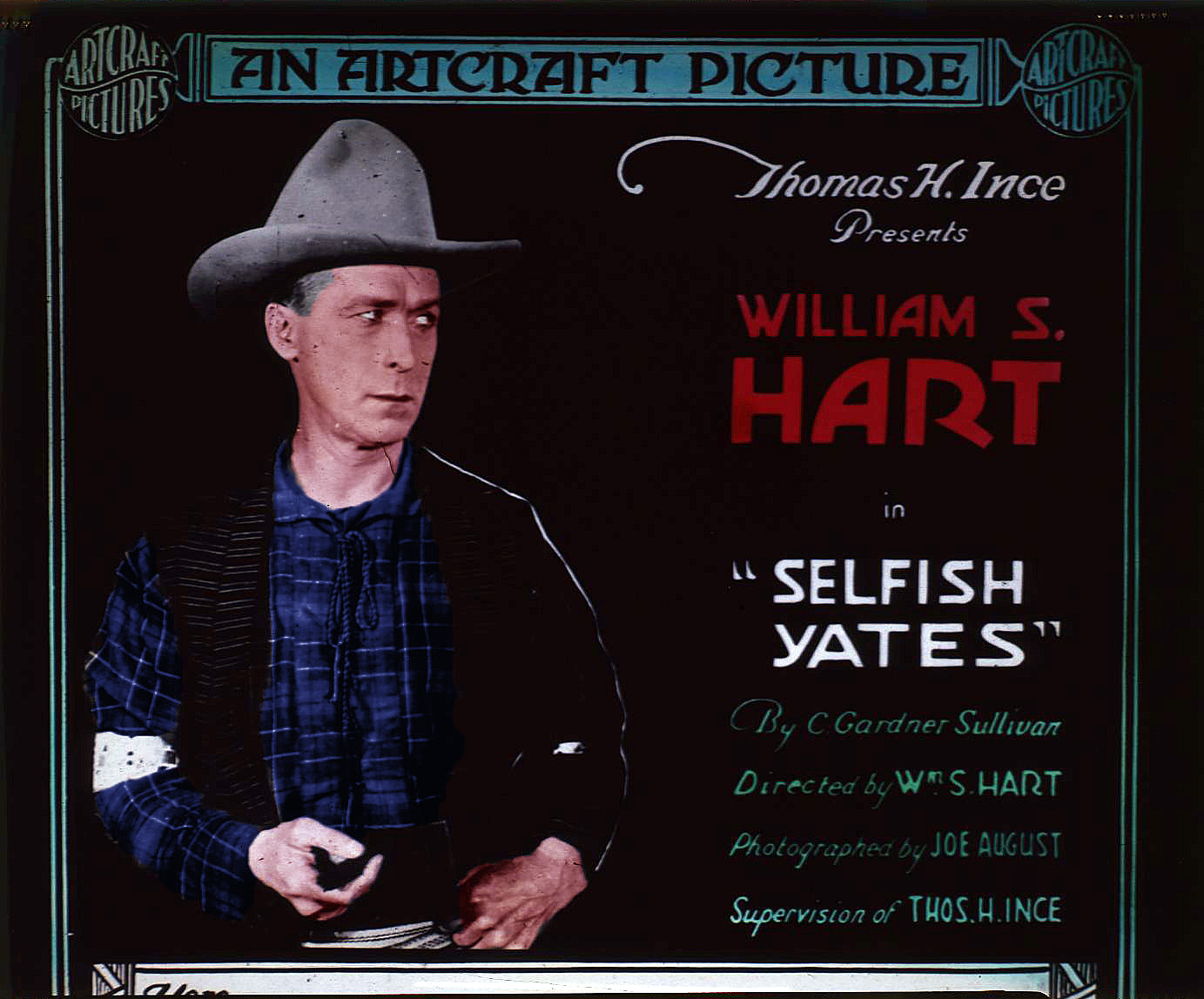
William S. Hart was film’s iconic cowboy star in the 1910s into the early 20s. A New York stage-trained actor – he played Messala in BEN-HUR in 1899 – he transferred his genuine love of the West into a lucrative movie career as a star, writer, producer and director:

Bill Hart retired before talkies came in but he recorded a beautifully spoken prologue to his last film, TUMBLEWEEDS (1926) when he reissued it in 1939.

But Hart occasionally made an appearance on radio in the 1930s to recite his own poem, “Pinto Ben.” Here is Rudy Vallee introducing him on the December 13, 1934 broadcast of the Fleischmann’s Hour:

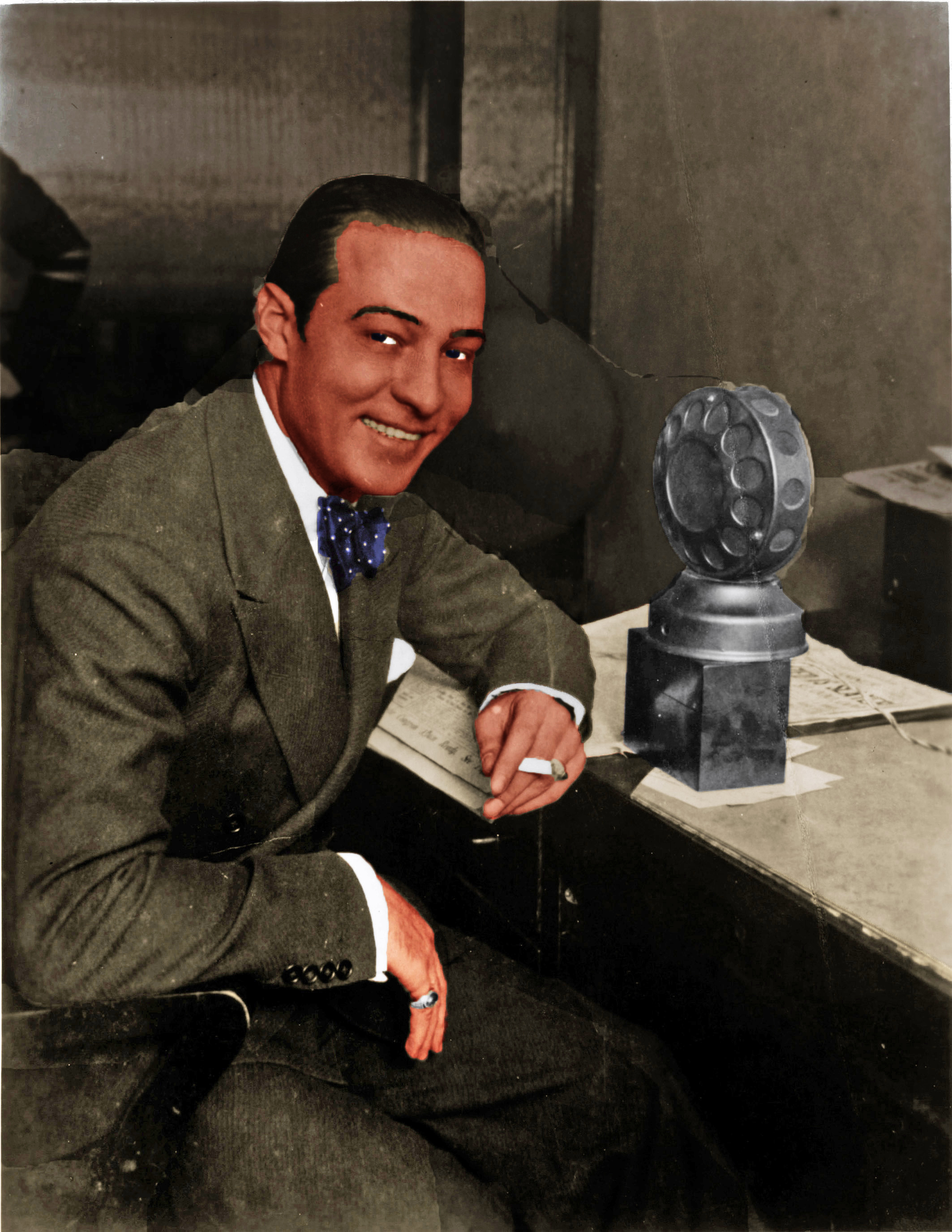
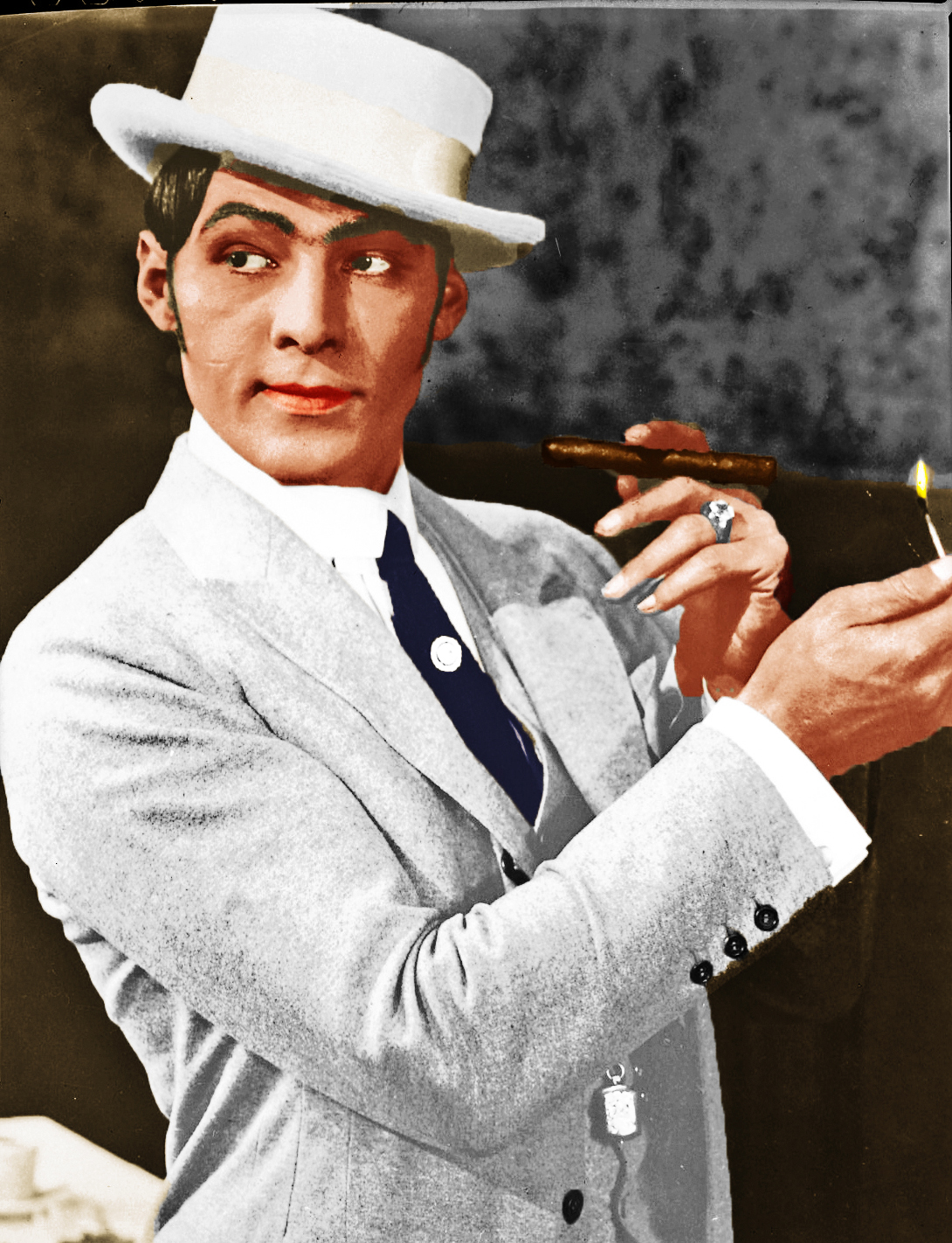
Rudolph Valentino was the super star of such silents as THE SHEIK (1921), BLOOD AND SAND (1922), and MONSIEUR BEAUCAIRE (1924) among many other hits.

Sadly, Rudy didn’t live to make a talkie but he was broadcasting in 1923, long before most of his movie star colleagues were.

None of Rudy’s broadcasts were recorded but he did make two commercial recordings in 1923, thus preserving his singing voice.

At any rate, he carries a nice tune and the timbre of his voice at least suggests that Rudy had a good chance of success in the talkies:

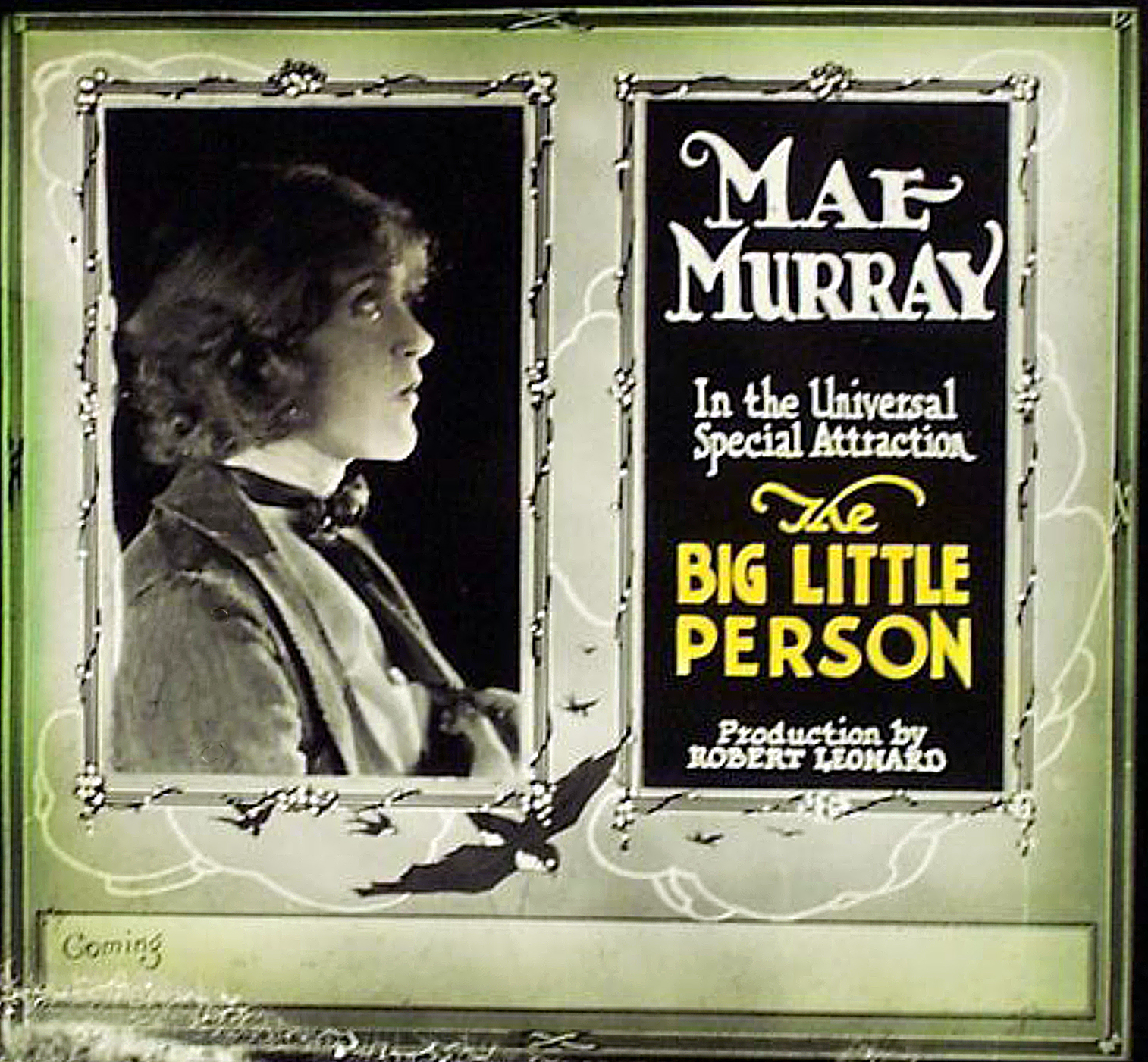
Mae Murray was a Ziegfeld Follies dancer who enjoyed a successful film career from the mid-1910s through the 1920s:

Mae can be easiest described as a successor to Theda Bara although instead of having an exotic sort of mystique like Bara, Mae was a straightforward American gal with a frank sex appeal:

By now you probably want to see one of Mae Murray’s iconic photos to understand her appeal of nearly a century ago:

Unike Theda Bara, Mae did make a few talkies but not successfully. So her appearance on the December 6, 1939 Texaco Star Theater is noteworthy. Host Ken Murray gets in some laughs by the fact that he and Mae have the same last name:

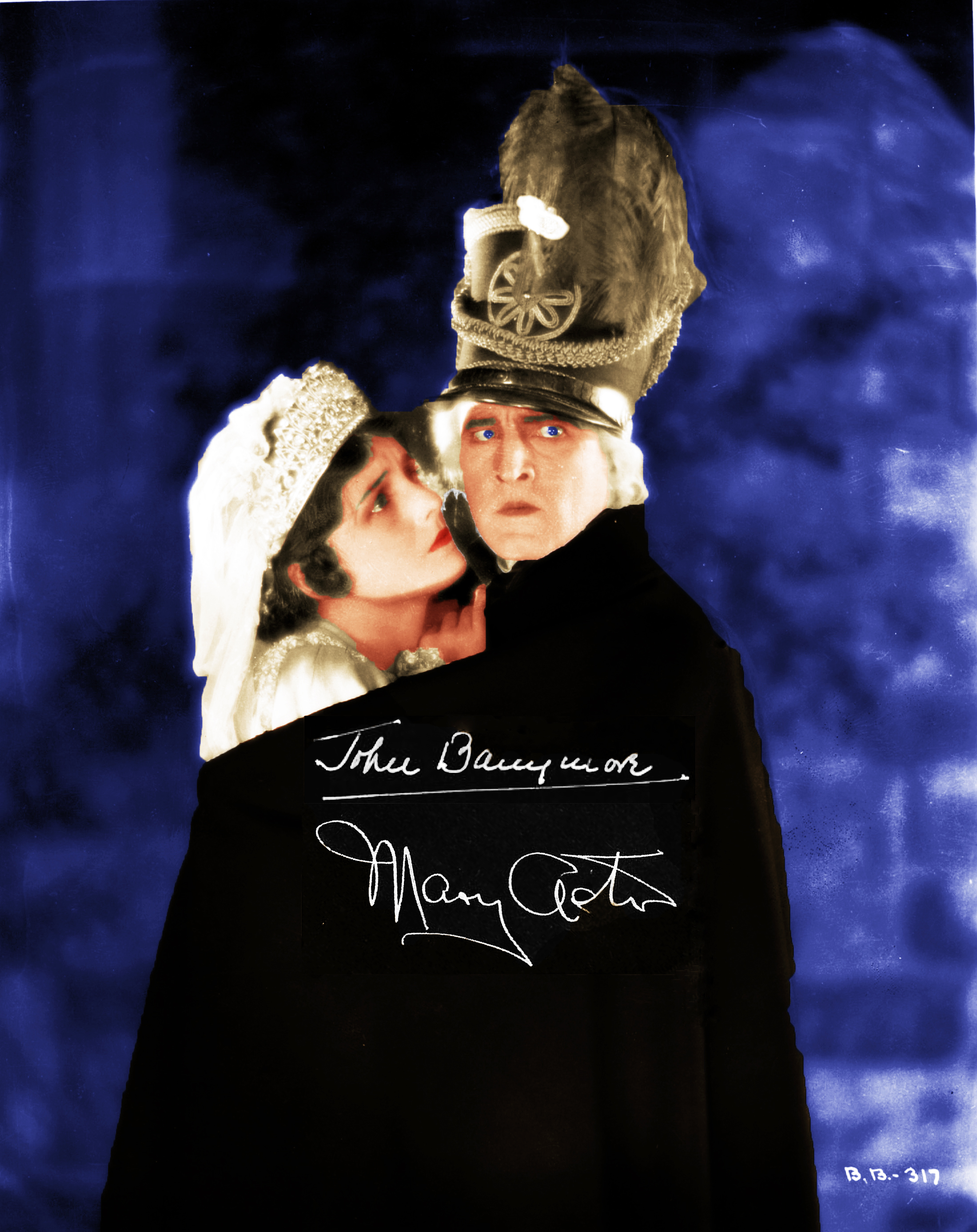
Mary Astor was still in her teens when she played leading lady opposite such celebrities as John Barrymore and Douglas Fairbanks Sr. She is all of 17 here in BEAU BRUMMEL (1924):

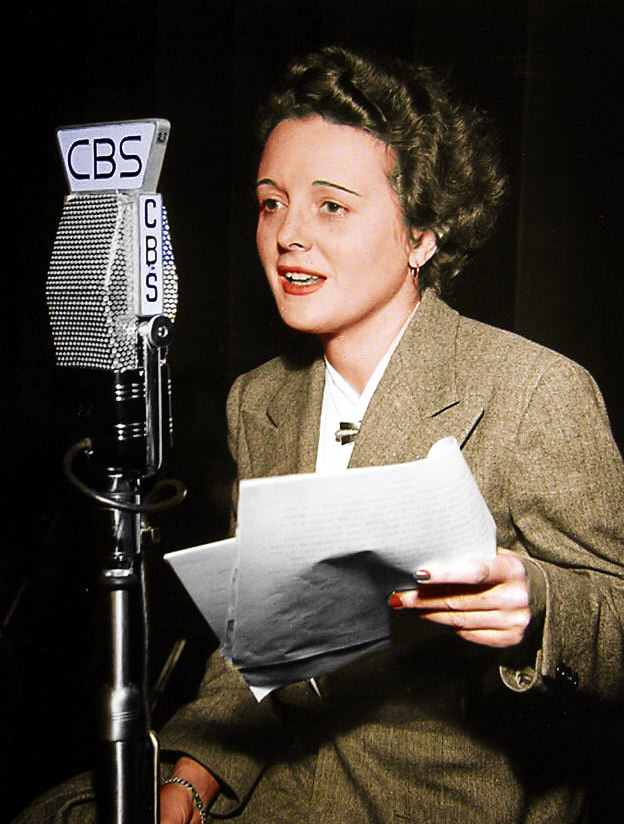
By the 1940s it seemed that Mary Astor had been around forever although she was still a relatively young woman. She transitioned superbly to sound films, so much so that many people would forget that once she was a silent film star. She ably added radio broadcasting to her list of accomplishments:

We’re in luck because next we have a complete performance by Mary in the popular half-hour suspense show called, well, “Suspense” that was broadcast live on February 16, 1943:

Lillian Gish’s career in silent films preceded everyone else listed here, having made her first films in 1912 working for director D.W. Griffith. And she was still starring in films through 1987 with THE WHALES OF AUGUST.

Lillian made her best-remembered films during the 1920s such as WAY DOWN EAST (1920), ORPHANS OF THE STORM (1921), both directed by D.W. Griffith, THE WHITE SISTER (1923), LA BOHEME (1926), THE SCARLET LETTER (1926), and THE WIND (1928), among many others.

Gish made her first talkie in 1930, ONE ROMANTIC NIGHT, but didn’t care for the new medium. She moved to New York where she continued her career in the theater, on radio, and occasionally, in films such as DUEL IN THE SUN (1946), and eventually on television. Among her more unusual broadcast appearances are as a guest panelist on the popular quiz show, “Information Please.” No, Lillian wasn’t slumming because only the brightest and best of celebrities were permitted to appear on the show. Here is Lillian Gish on the October 11, 1938 live broadcast of “Information Please”:

We have barely scratched the surface of exploring silent stars on radio. Perhaps in a future post we can hear from Gloria Swanson, Norma Talmadge, Richard Barthelmess, John Barrymore, Conrad Veidt, and even D.W. Griffith. Do you have any requests?

Humphrey Bogart in Shakespeare’s HENRY IV – Live

As a sort of tribute to this week’s celebration of Queen Elizabeth’s Diamond Jubilee, here at OHIC we are adding a bit of Will Shakespeare to our usual offerings. The summer of 1937 saw the two major radio networks, NBC and CBS, in a dueling Shakespeare competition. NBC offered John Barrymore in “Streamlined Shakespeare” each Monday night during that long-ago summer. Directly conflicting was CBS’s impressive array of Hollywood stars stepping out of their usual screen personas to play famous Shakespearian characters in hour-long adaptation of eight of the Bard’s plays. So join us for a Monday night in late August 1937, when listeners from coast to coast could hear HENRY IV broadcast live from Hollywood, starring Walter Huston in the title role, Brian Aherne as the Prince of Wales (Prince Hal, successor to the throne), Humphrey Bogart as Harry Hotspur (one of the rebels against the King), Walter Connolly as the comical Sir John Falstaff, and Dame May Whitty as Mistress Quickly, the tavern proprietor. She was 71 at the time of this broadcast and appeared in films right up until her death at the age of 82.

Please click the arrow button below and within five seconds you will be transported to August 23, 1937, to hear a celebrated group of Golden Age film stars strut their stuff in HENRY IV. All are quite good but Bogart is clearly the actor that attracts our attention in what appears to be his one and only foray into Shakespeare:

We have not found any photos of this broadcast, but the following images show Bogie as he was in the mid and late 1930s at the time of the HENRY IV broadcast.

Although he had been making movies since 1930, Bogart’s breakthrough film did not occur until 1936 when he and Leslie Howard (pictured here with Bette Davis) repeated their stage roles in the hit film, THE PETRIFIED FOREST. Bogie later repeated his role of escaped bank robber, Duke Mantee, on television in 1955:

Bogie and Bette Davis were also co-starred on radio in the late ’30s:

During those years Bogie played the bad guy in films opposite James Cagney, and also Edward G. Robinson, pictured here in BULLETS OT BALLOTS (1936):

Years later, a sombre Bogart, with Robinson, attend funeral services for his HENRY IV co-star Walter Huston on April 11, 1950:

Another portrait of the youthful Humphrey Bogart in 1937, when his iconic roles in THE MALTESE FALCON (1941) and CASABLANCA (1942) must have seemed a long way off:

DON JUAN – 85th Anniversary of World Premiere – August 6, 1926

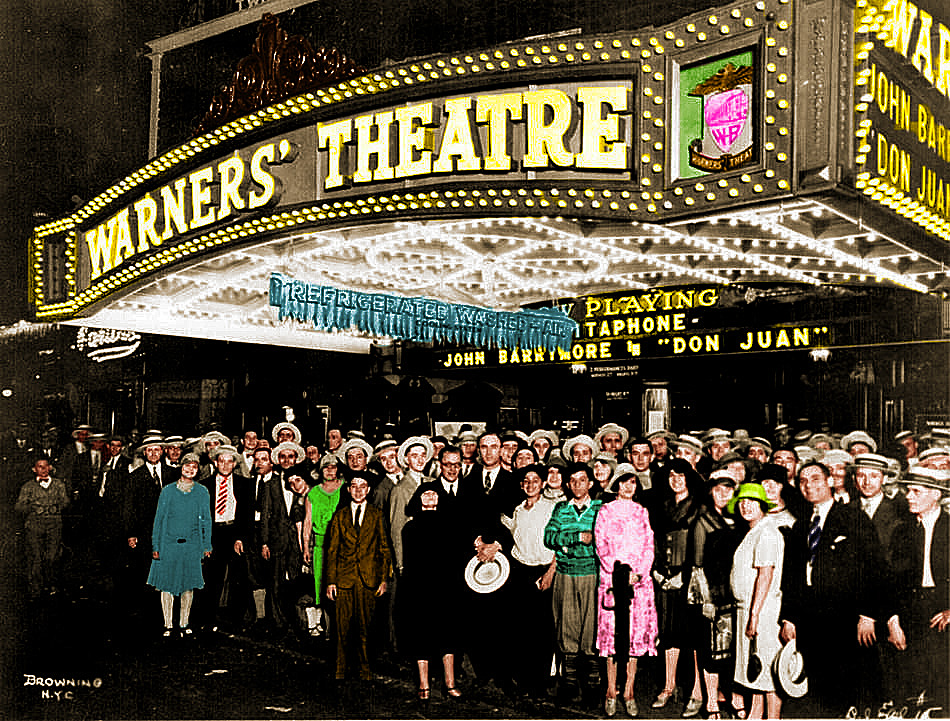
The Dawn of Sound Films arrived, oddly enough, with a silent film on the evening of August 6, 1926, in New York City at the Warner Theater. Musical accompaniment was provided by the 107 members of the New York Philharmonic Orchestra – via recording heard over the theater’s public address system. But a series of short films preceded the main feature in which various performers from the opera, theater, and vaudville spoke, sang, and played instruments. The main feature was DON JUAN, starring a real-life Don Juan – John Barrymore, who had just taken two continents by storm with his modernized version of HAMLET on the stage. The Great Profile, as Barrymore was nicknamed, spoke not an audible word but the audience was captivated by the unerring synchronization of music and action (plus a few sound effects like church bells) through a system called Vitaphone. Nobody suspected it on that night, but the tolling of those church bells turned out to be a funeral dirge for silent film (a beautiful artform, by the way):

It comes as a surprise to 21st century audiences that DON JUAN is one of the best swashbuckler action films EVER – quite apart from its position in film history. In case you’re wondering, DON JUAN can be seen on Turner Classic Movies several times a year and Warners Archives recently issued this film on dvd with all of the Vitaphone shorts from the program on that August 6th, 85 years ago:

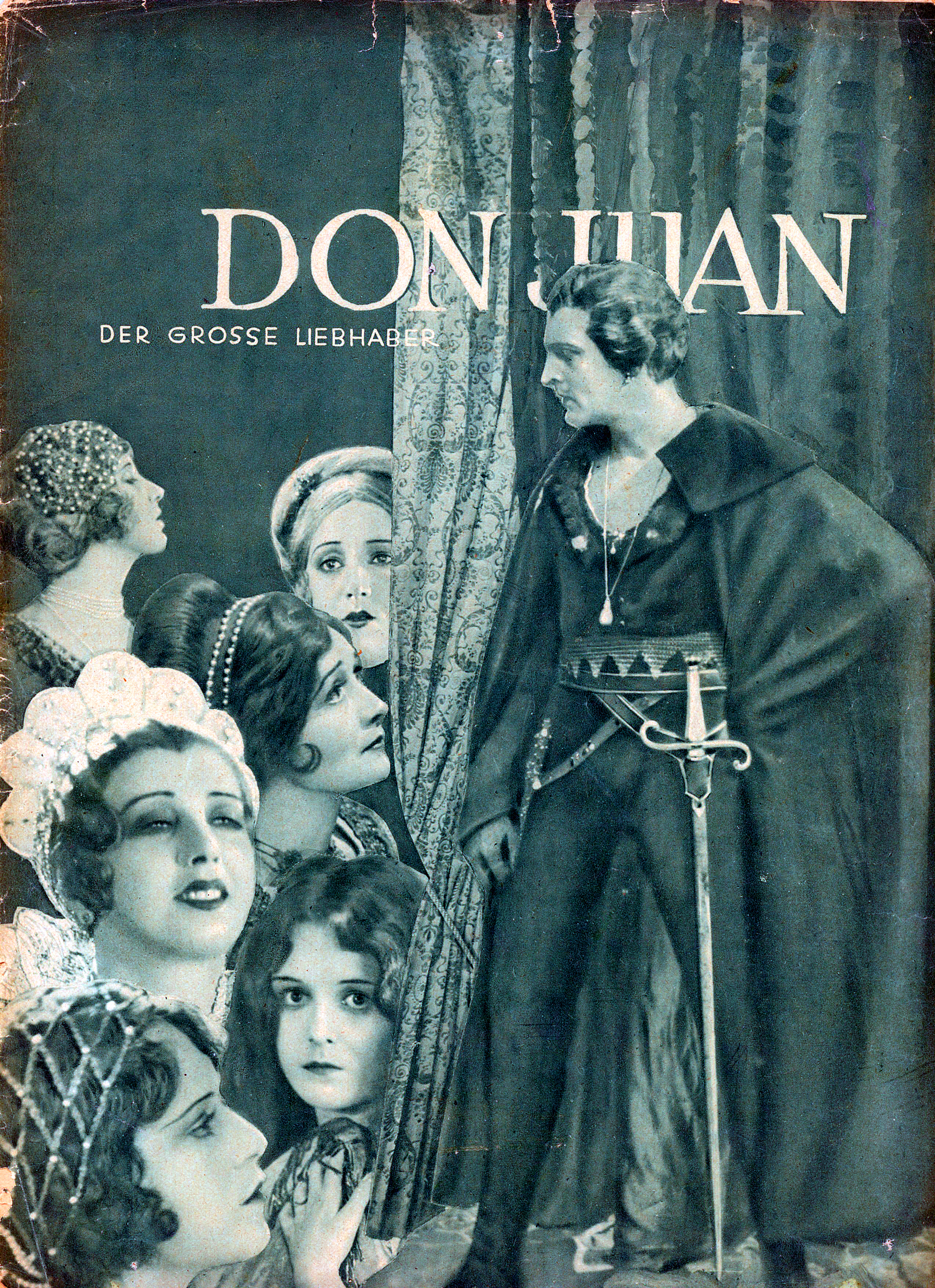
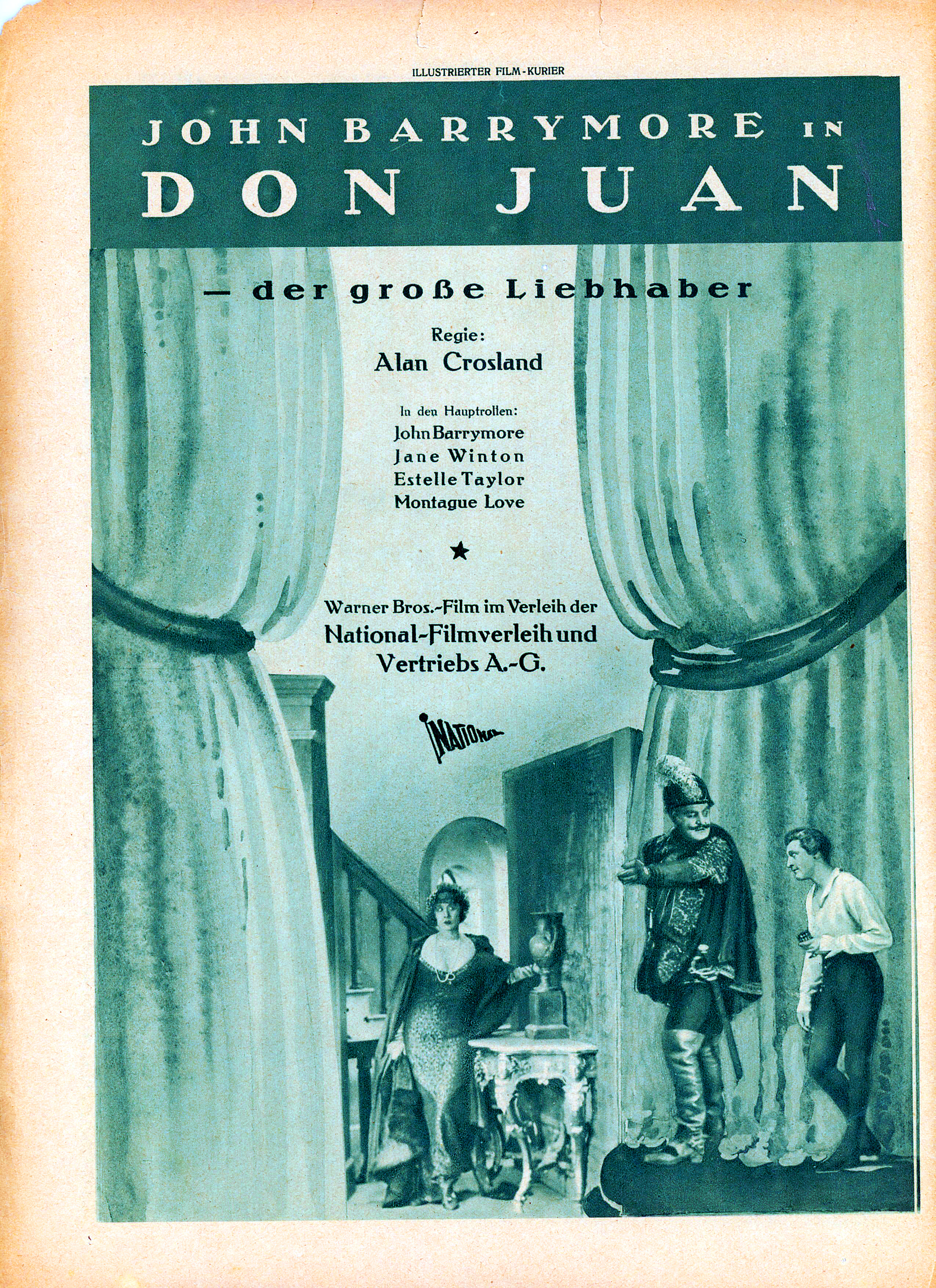
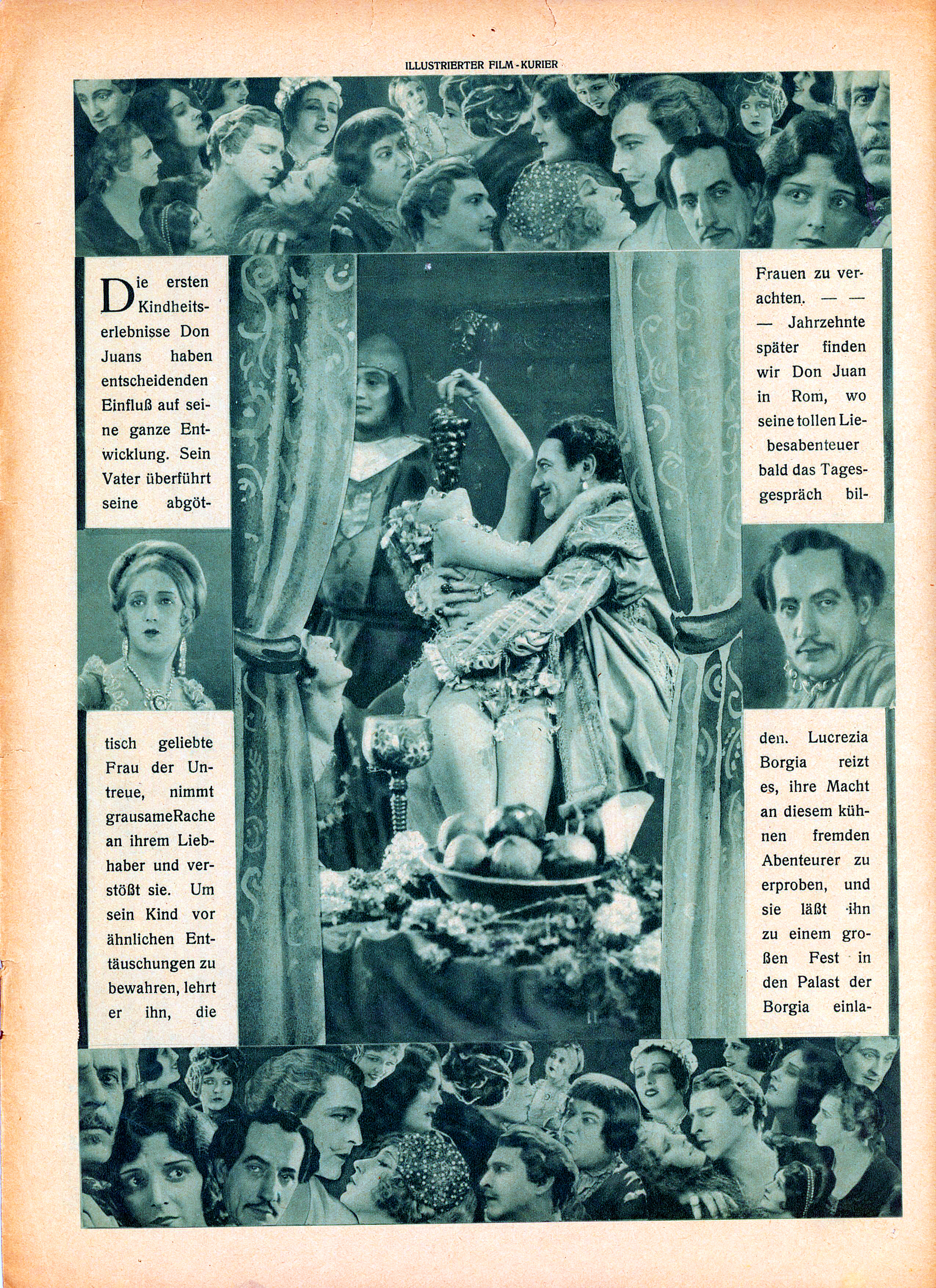
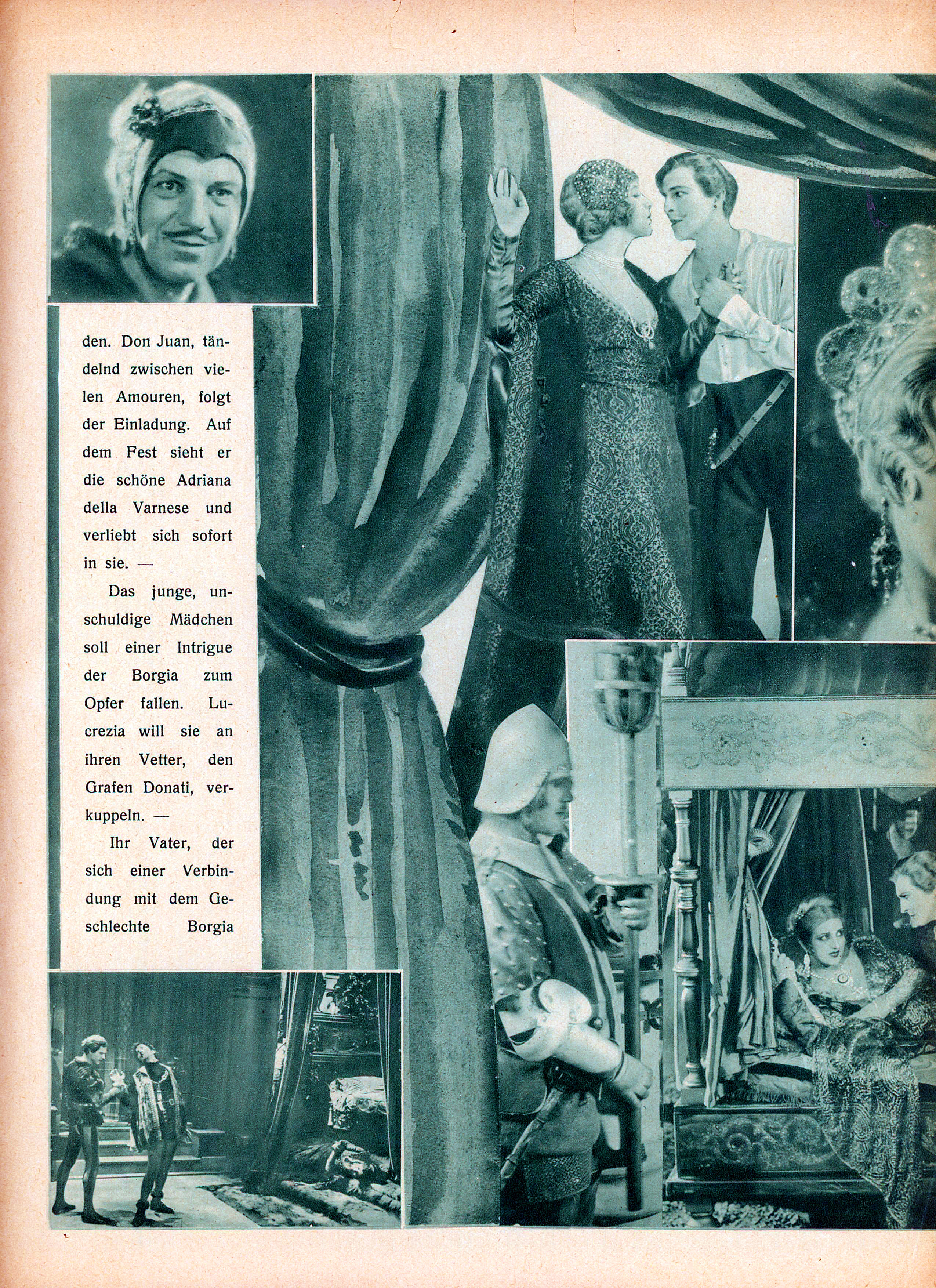
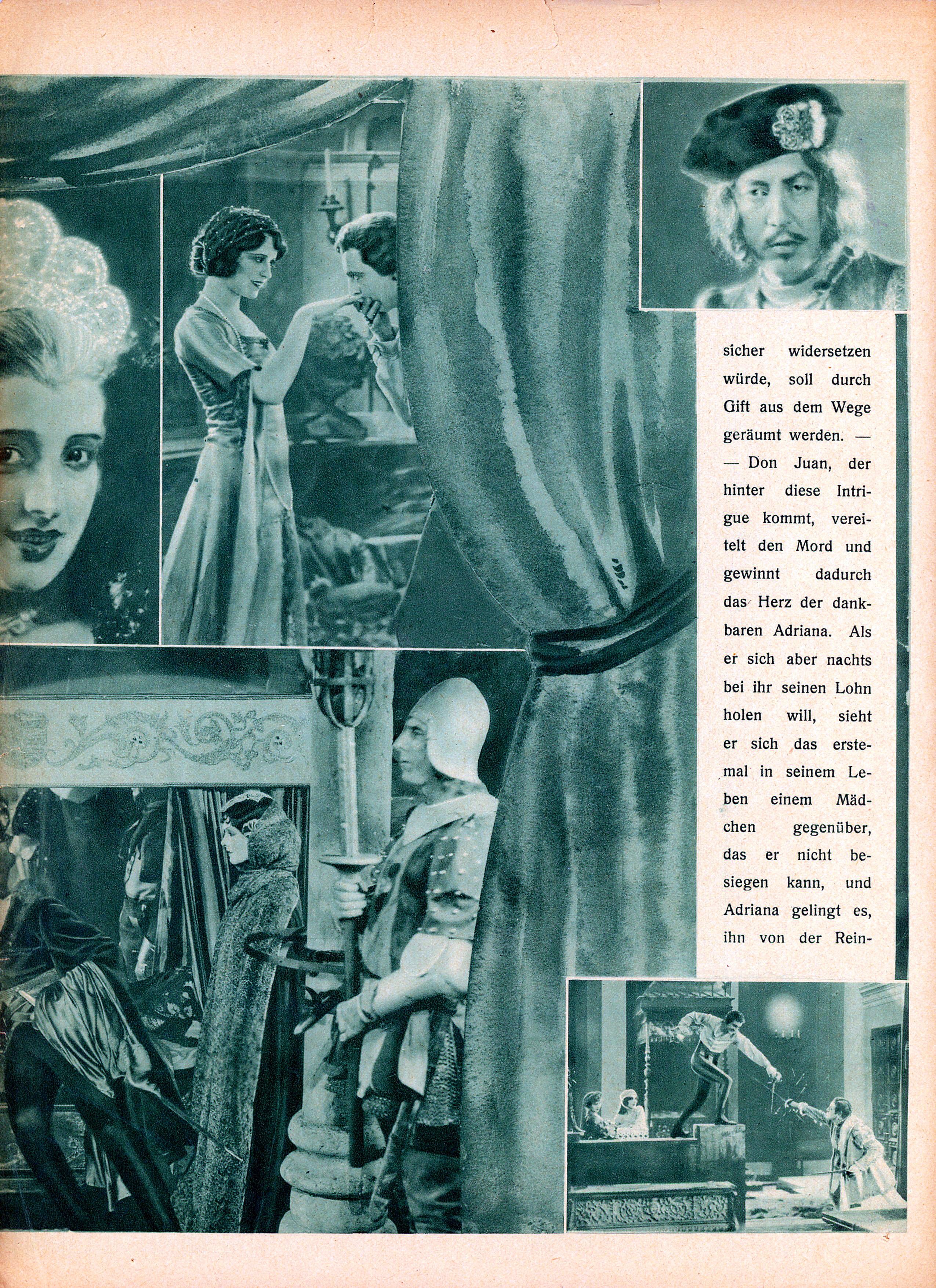
In Germany, this film was known as Don Juan – Der große Liebhaber, and here is the complete German souvenir program as restored by your blogmeister (from a bile green back to cool blue):


Montagu Love, seen below on the upper left, played the villain Count Donati. Love specialized in screen villainy and continued his nefarious schemes well into the sound era as the corrupt Bishop of the Black Cannons in THE ADVENTURES OF ROBIN HOOD (1938) and King Phillip of Spain in THE SEA HAWK (1940), among many other films:

Count Donati was a fictional villain but DON JUAN also featured two historical villains that made Donati look almost like a good guy – Cesare and Lucretia Borgia. Estelle Taylor on the left below played Lucretia and at the time was the wife of boxing champ Jack Dempsey. Warner Oland on the right below played Cesare Borgia but his most enduring role was ahead in the 1930s starring in the popular Charlie Chan detective films:

The film was climaxed by a rousing sword duel between Don Juan and Count Donati. But instead of providing the film’s ending as all Errol Flynn fans would later expect, the sword fight triggers a series of action sequences that have never been equaled these many years:


The back cover of the souvenir program features this rather seductive portrait of Mary Astor, the film’s heroine. Astor and Barrymore had enjoyed, uh, a relationship prior to making DON JUAN that had ended some time earlier. Their pairing in this film proved awkward for both of them. They would not be reteamed until 1939 in the classic romantic comedy, MIDNIGHT – but that’s another story: