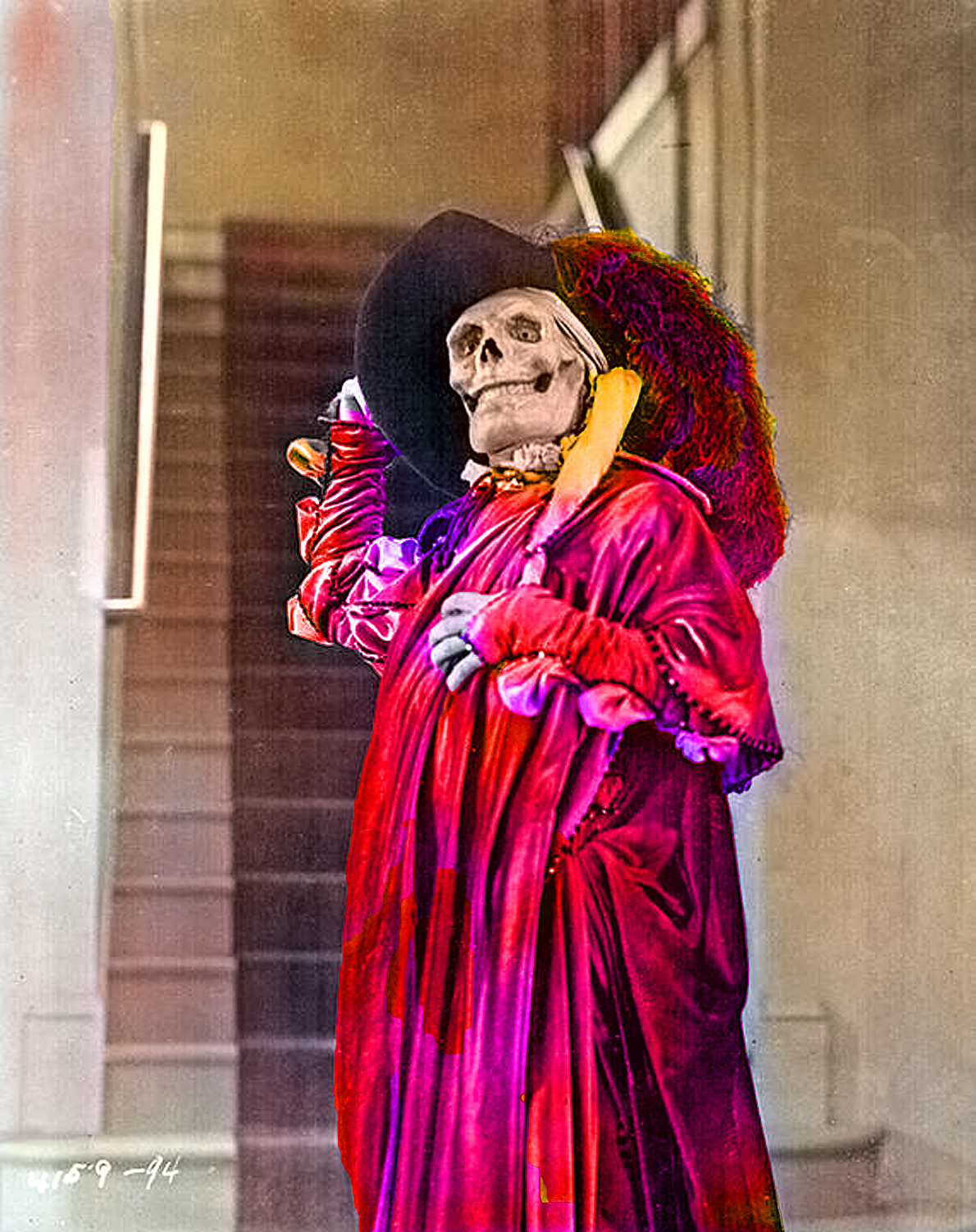
Hollywood Party at Twentieth Century-Fox – 1938 Live!

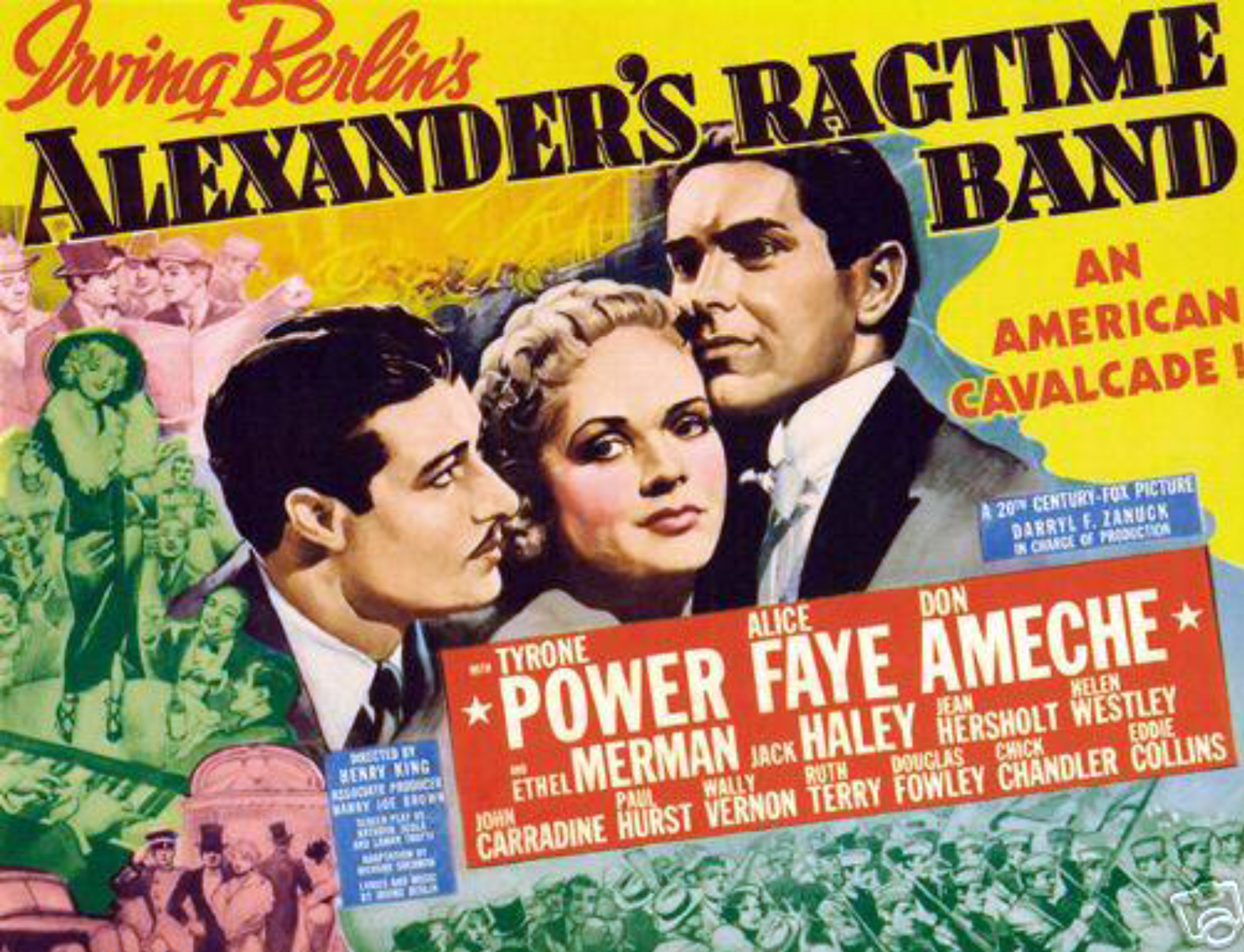
A few weeks ago we visited MGM for a Hollywood Party so now let’s give equal time to one of Metro’s rival studios – the fabulous Twentieth Century-Fox. The “hyphen” in the name acknowledges a merger between the then-recently formed Twentieth Century Pictures (1933) and the more venerable but ailing Fox studio. The occasion of this particular radio party is to launch the new film, ALEXANDER’S RAGTIME BAND, but since all the film’s songs were written by Irving Berlin, the broadcast is called “A Tribute to Irving Berlin,” who not only appears on the show but sings too.

This all-star broadcast is kicked off by newspaper columnist Walter Winchell who turns over the proceedings to master of ceremonies Al Jolson. Among the legendary entertainers you’ll hear are Ethel Merman, Sophie Tucker, Eddie Cantor, Connie Boswell, Paul Whiteman, and Tommy Dorsey. The show then switches gears when movie mogul Darryl Zanuck presents a radio preview of ALEXANDER’S RAGTIME BAND with its stars Tyrone Power, Alice Faye and Ethel Merman. All of this was performed live to millions of listeners on the evening of August 3, 1938, so if you want to join the party just click below and within five seconds you’ll be transported back in time to spend a full hour in Old Hollywood:
The following are thumbnail sketches of some of the celebrities appearing on the broadcast. Irving Berlin and Al Jolson went a long way back. Both became famous by 1911: Al popularized Irving’s songs and Irving’s songs helped make Jolie a star. Here they are golfing in 1929:

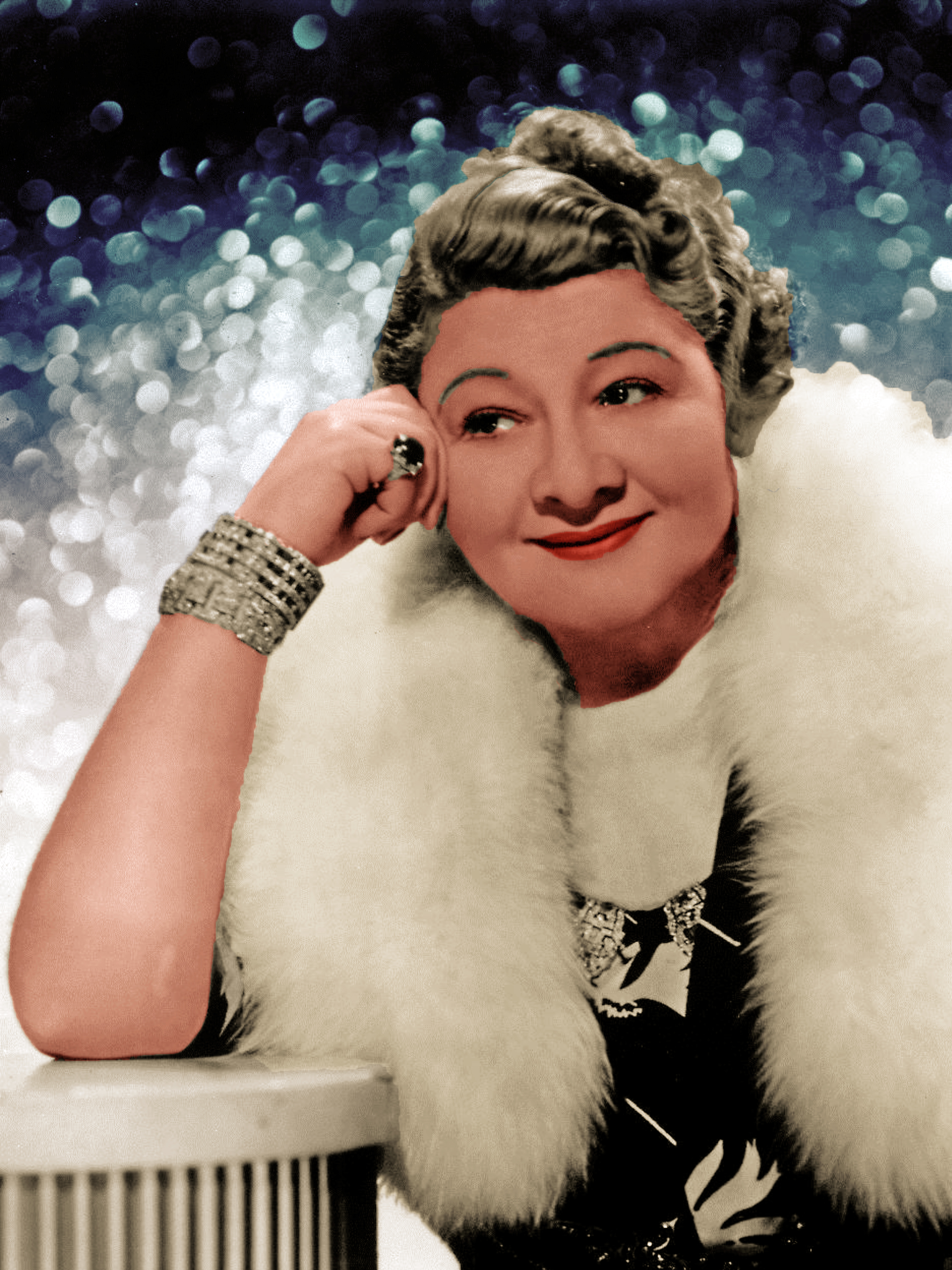
Sophie Tucker was known as “The Last of the Red Hot Mamas” during her career that lasted over a half century and spanned vaudeville to television:
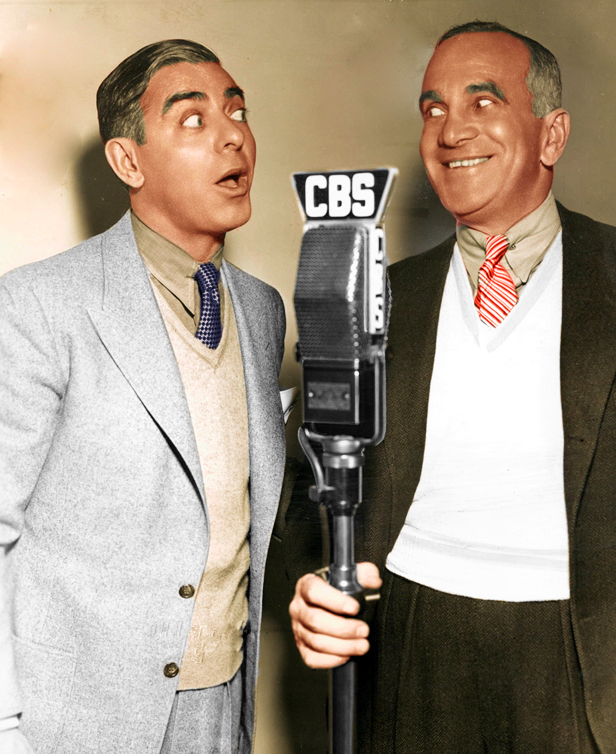
Eddie Cantor and Al Jolson were friendly competitors both professionally and personally, on the stage, in movies, on radio and in vying to be the first to sing Berlin’s new songs. Listen to their ad-lib arguing while singing with Irving Berlin:
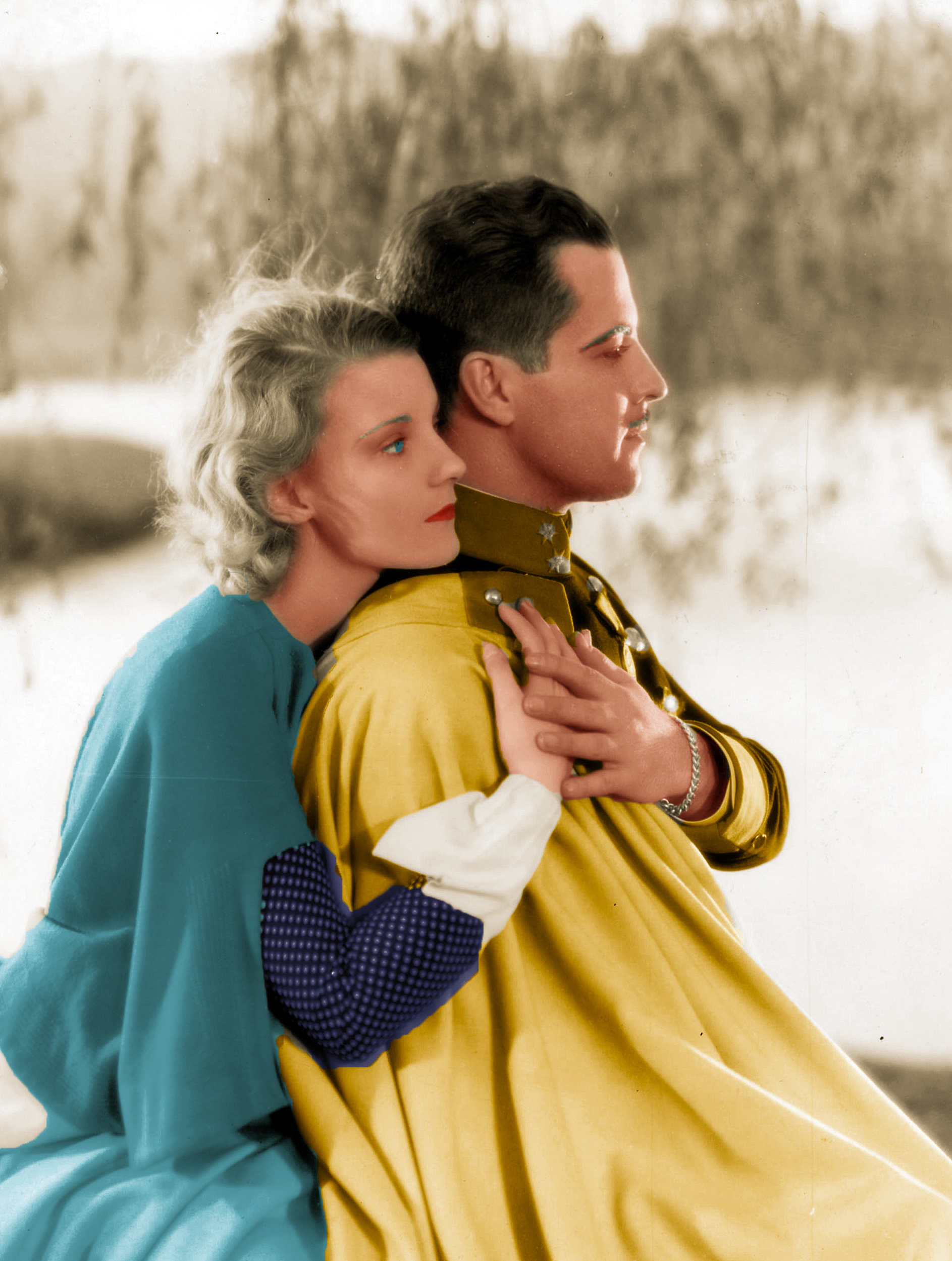
Irving takes the stars of ALEXANDER’S RAGTIME BAND through their paces prior to filming: Alice Faye, Tyrone Power and Don Ameche, who grew a mustache for the film. All three were newly-minted stars with only a couple of hit films behind them. No doubt they are genuinely happy to have the composer onboard their new film:

Sheet music was a popular movie tie-in during the days of Old Hollywood. See the movie, go home and play the songs on your piano – an all but forgotten way of interacting with the film:

Connee Boswell was part of the successful Boswell Sisters but when her two siblings decided to retire in 1936, she continued alone and became one the best female jazz vocalists of her era. Unknown to the public, Connee was wheelchair-bound, not unlike President Franklin Roosevelt. She originally spelled her first name as “Connie” but later changed it to “Connee” because it made signing autographs easier:

Bandleader Paul Whiteman was a big figure, literally and figuratively, in American music during much of the first half of the 20th century. He commissioned George Gershwin to write “Rhapsody in Blue” and Ferde Grofe to compose “Grand Canyon Suite,” championed jazz as a serious form of music when it was commonly dismissed as degenerate, and through his concerts, broadcasts and recordings introduced the public to Bing Crosby, Tommy and Jimmy Dorsey, Red Nichols, Mildred Bailey, Bix Beiderbecke, Hoagy Carmichael, and many others:

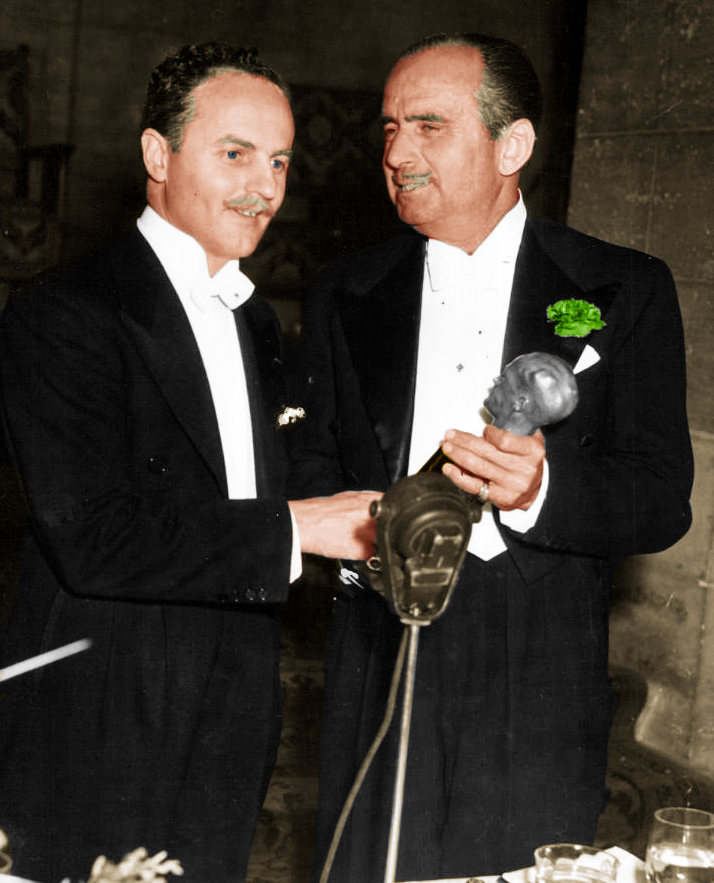
Darryl Zanuck receives the very first Irving G. Thalberg Memorial Award during the Academy Awards ceremony in March 1938. Silent screen star and producer Douglas Fairbanks Sr. is the presenter. This special “Oscar” is still given each year to honor outstanding film executives. The legendary Thalberg had died over a year earlier; Doug Fairbanks would die the following year and Hollywood would never be quite the same:
ALEXANDER’S RAGTIME BAND is readily available on dvd and is one of the most enjoyable musicals of the 1930s.

Bonus: Irving Berlin was inducted into the Friars Club in 1911 and, in lieu of the customary speech, he wrote and sang a very funny song just for the occasion. It was such a hit that Irving was persuaded to privately record the song on January 24, 1914. Here it is performed by the composer himself:

Humphrey Bogart in Shakespeare’s HENRY IV – Live

As a sort of tribute to this week’s celebration of Queen Elizabeth’s Diamond Jubilee, here at OHIC we are adding a bit of Will Shakespeare to our usual offerings. The summer of 1937 saw the two major radio networks, NBC and CBS, in a dueling Shakespeare competition. NBC offered John Barrymore in “Streamlined Shakespeare” each Monday night during that long-ago summer. Directly conflicting was CBS’s impressive array of Hollywood stars stepping out of their usual screen personas to play famous Shakespearian characters in hour-long adaptation of eight of the Bard’s plays. So join us for a Monday night in late August 1937, when listeners from coast to coast could hear HENRY IV broadcast live from Hollywood, starring Walter Huston in the title role, Brian Aherne as the Prince of Wales (Prince Hal, successor to the throne), Humphrey Bogart as Harry Hotspur (one of the rebels against the King), Walter Connolly as the comical Sir John Falstaff, and Dame May Whitty as Mistress Quickly, the tavern proprietor. She was 71 at the time of this broadcast and appeared in films right up until her death at the age of 82.

Please click the arrow button below and within five seconds you will be transported to August 23, 1937, to hear a celebrated group of Golden Age film stars strut their stuff in HENRY IV. All are quite good but Bogart is clearly the actor that attracts our attention in what appears to be his one and only foray into Shakespeare:

We have not found any photos of this broadcast, but the following images show Bogie as he was in the mid and late 1930s at the time of the HENRY IV broadcast.

Although he had been making movies since 1930, Bogart’s breakthrough film did not occur until 1936 when he and Leslie Howard (pictured here with Bette Davis) repeated their stage roles in the hit film, THE PETRIFIED FOREST. Bogie later repeated his role of escaped bank robber, Duke Mantee, on television in 1955:

Bogie and Bette Davis were also co-starred on radio in the late ’30s:

During those years Bogie played the bad guy in films opposite James Cagney, and also Edward G. Robinson, pictured here in BULLETS OT BALLOTS (1936):

Years later, a sombre Bogart, with Robinson, attend funeral services for his HENRY IV co-star Walter Huston on April 11, 1950:

Another portrait of the youthful Humphrey Bogart in 1937, when his iconic roles in THE MALTESE FALCON (1941) and CASABLANCA (1942) must have seemed a long way off:

Jean Harlow – Live!

I suppose the first time any of us hears the name Jean Harlow, we learn two things at once. First, that she was a beautiful blonde movie star of the 1930s, and second, that she died at the age of 26. Thus, Miss Harlow rarely has a chance to be “living” for us, if you know what I mean. After all, Norma Shearer and Greta Garbo (see our previous post) were contemporaries of Harlow who left their screen careers circa 1940 and basically disappeared. Both enjoyed very long lives post-Hollywood, so why couldn’t we have the same expectation for Jean? But no, her name is barely introduced to us and it is embraced by tragedy. Yet, like Rudolph Valentino before her, or Marilyn Monroe after her, through her films Jean Harlow proves to be an endlessly fascinating embodiment of love and mortality. Perhaps to put it more bluntly, an irresistible combination of sex and death.

The Warner Bros. Archives released a terrific dvd set of Jean’s films earlier this year but, after all, films are carefully rehearsed, reshot if there are mistakes, and carefully edited to delete other shortcomings. So while Jean certainly was living when she made her movies, we know there’s no “anything can happen” possibility of a truly live performance. That brings us to our current post on OHIC – a rare, truly live performance by Jean Harlow on the Lux Radio Theater in December 1936 less than six months before her death. Jean did little radio work and this broadcast seems to be the only one that has been preserved. The story is MADAME SANS-GENE, based on a popular 1890s play, turned into a famous opera by Giordano, that Gloria Swanson made into a successful (and now lost) silent film in 1925.

In the 1960s, Sophia Loren starred in a remake of this story of a feisty young woman during the French Revolution who confronts washing laundry and dealing with Napoleon with equal disregard.

This network radio broadcast was heard live by at least 30 million listeners from coast to coast, and by shortwave around the world. The host is Hollywood pioneer director Cecil B. DeMille, and Jean Harlow’s co-star is Robert Taylor. It was no coincidence that their new film, PERSONAL PROPERTY, was just going into movie theaters for the holidays. The imposing-voiced Claude Rains plays Napoleon with the same authority as he did earlier in 1936 in the Marion Davies film, HEARTS DIVIDED.

Here then at just a click of the button below is the complete hour-long live broadcast of MADAME SANS-GENE as heard on December 14, 1936:

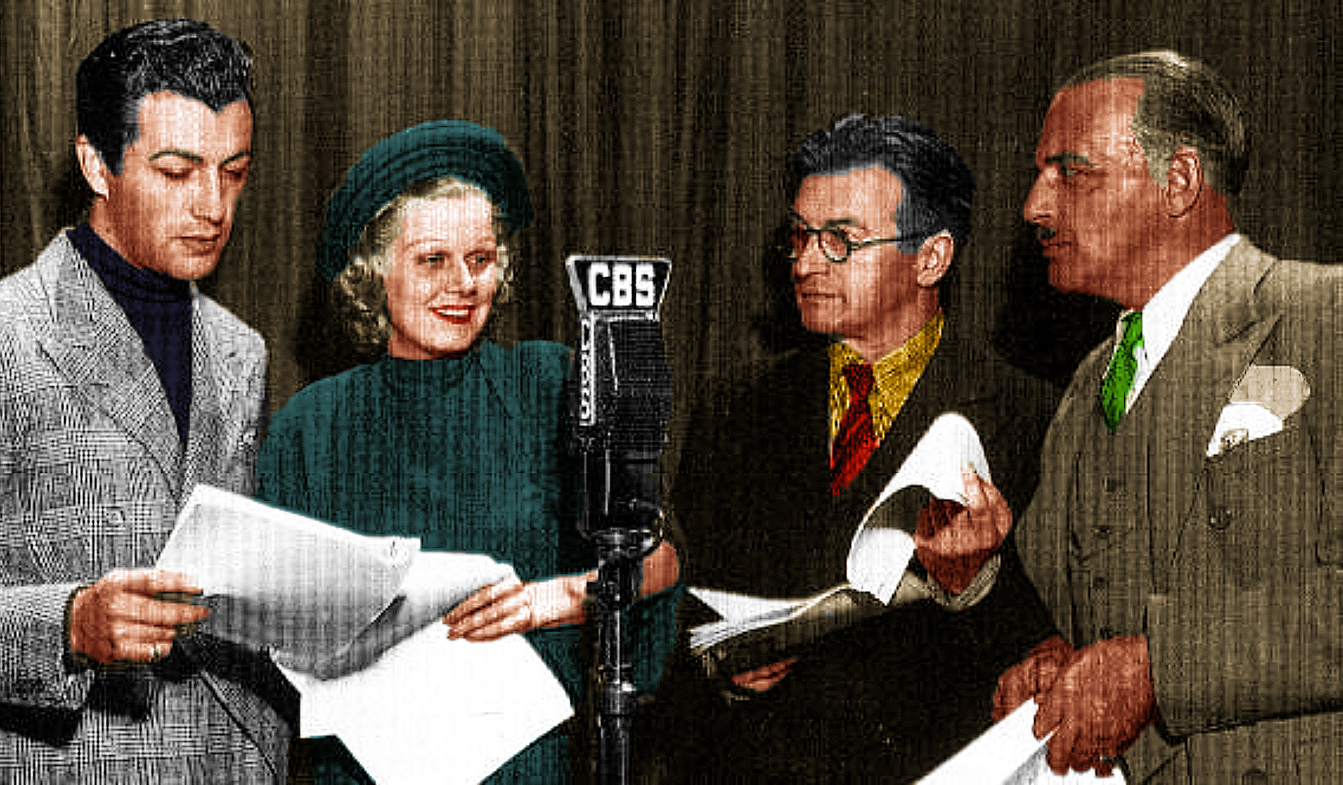
A rare photo of the prinicipal cast rehearsing for the broadcast – from left to right Robert Taylor, Jean Harlow, Claude Rains, and C. Henry Gordon:

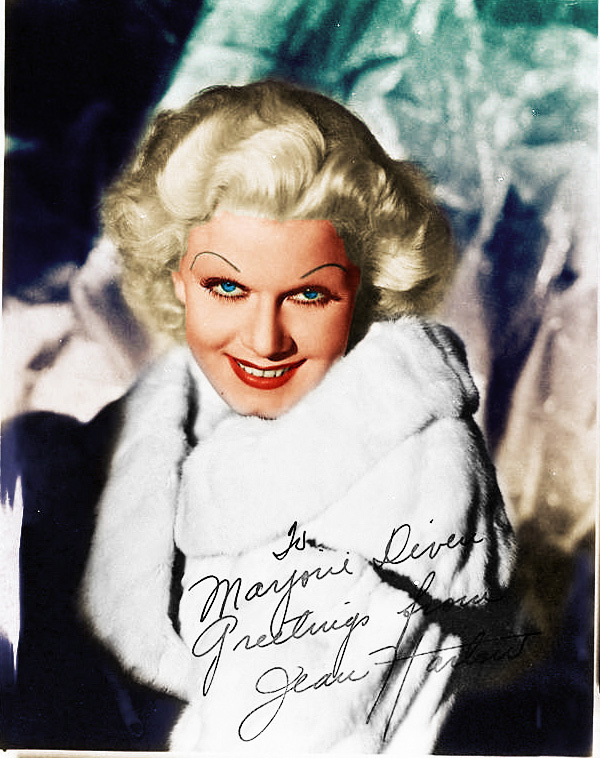
While you’re listening, enjoy some OHIC color transfers of Jean Harlow:

Jean seems more concerned with that overhead microphone than with the famous and feared gossip columnist Louella Parsons:

Later in 1937, Louella Parsons published this souvenir biography:

Jean and Clark Gable heat up the screen in RED DUST (1932), the first of several films they made together. Gable has the strange distinction of starring in the final films of the two most famous “goddesses” in film history: SARATOGA (1937), Harlow’s last film, and THE MISFITS (1961), Marilyn Monroe’s last film. It was also Gable’s last film, in fact he predeceased Marilyn:

Jean seems dressed for playing horse polo here. I can’t place the film but it may be from BLONDE BOMBSHELL (1933), a pre-Code satire on a sexy Hollywood star who looks just like Jean Harlow:

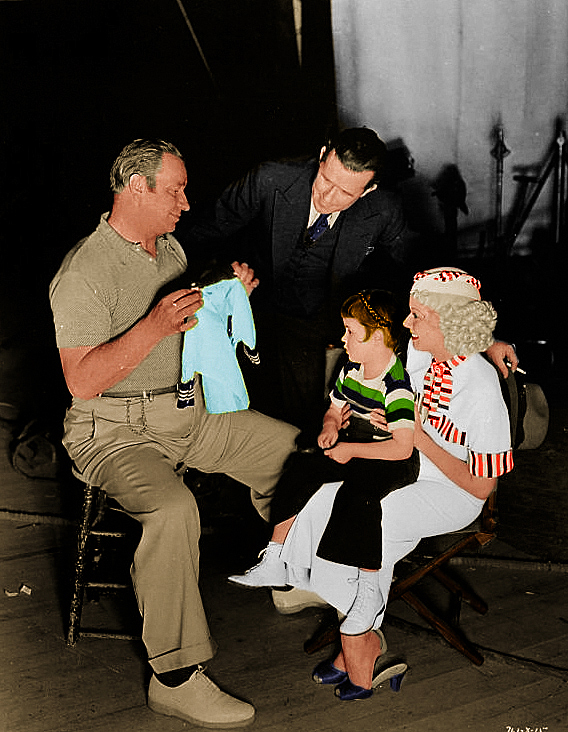
On the set of CHINA SEAS (1935) with co-star Wallace Beery and his daughter, Mary Ann, who had a small part in the film, and director Tay Garnett:

A promotional coin from Popsicles:

Jean Harlow made quite a number of good films during her brief life but legend will always claim first and foremost that her most memorable performance was as the sultry vixen in Howard Hughes’ First World War epic, HELL’S ANGELS (1930). Incidentally, it is the only film with color footage of Jean. Although she was virtually unknown at the time, look who dominates the poster art:

Garbo on the Air – Sort Of

The 1930s and 40s are known collectively as the Golden Age of Radio for several reasons. Among them is the fact that virtually every major Hollywood film star appeared on radio broadcasts. A few, such as Bing Crosby and Edward G. Robinson, starred on their own weekly shows. During the Second World War (1939-1945) even the few holdouts among the movie stars joined in to boost morale. Perhaps the only major star who never broadcast was the reclusive Greta Garbo. Her voice would be heard via radio only when it was lifted from her movie soundtracks and broadcast to promote her films.

Of course, the Divine Garbo never appeared in a color film either, but we can rectify both her colorless image and her absence from radio here at OLD HOLLYWOOD IN COLOR. First, the radio broadcast: “Garbo Laughs” was the ad line on her 1939 hit film, NINOTCHKA, directed by Ernst Lubitsch. The following year, radio’s Screen Guild Theater broadcast an adaptation starring Spencer Tracy in the role played by Melvyn Douglas on the screen, and Rosalind Russell playing Garbo’s role, the title character. Roz Russell was a versatile actress who became even more accomplished in her later years. But tackling a role so recently impressed in everybody’s mind by Garbo herself seemed risky if not foolhardy, even on radio.

But Roz surprised everyone by not merely giving a believable performance as the cynical Soviet operative, but by pulling off a dead-on impersonation of Garbo herself. Anyone tuning in late to the show would have sworn they were listening to Garbo in person. Here then is the closest that OHIC believes we will ever come to hearing the Divine Garbo on radio, courtesy of Rosalind Russell.

Click the Play arrow below to hear the complete half-hour live show, NINOTCHKA, on Screen Guild Theater, exactly as broadcast on April 21, 1940, starring Spencer Tracy and Rosalind Russell as “Garbo.”

While you’re listening, these color transfers may be of interest. Garbo’s first American film was TORRENT (1926) and is available today on dvd:

With Lucy Beaumont

A late 1920s portrait in the then-typical soft focus:

An iconic photo of Garbo and her offscreen lover John Gilbert in FLESH AND THE DEVIL (1927):

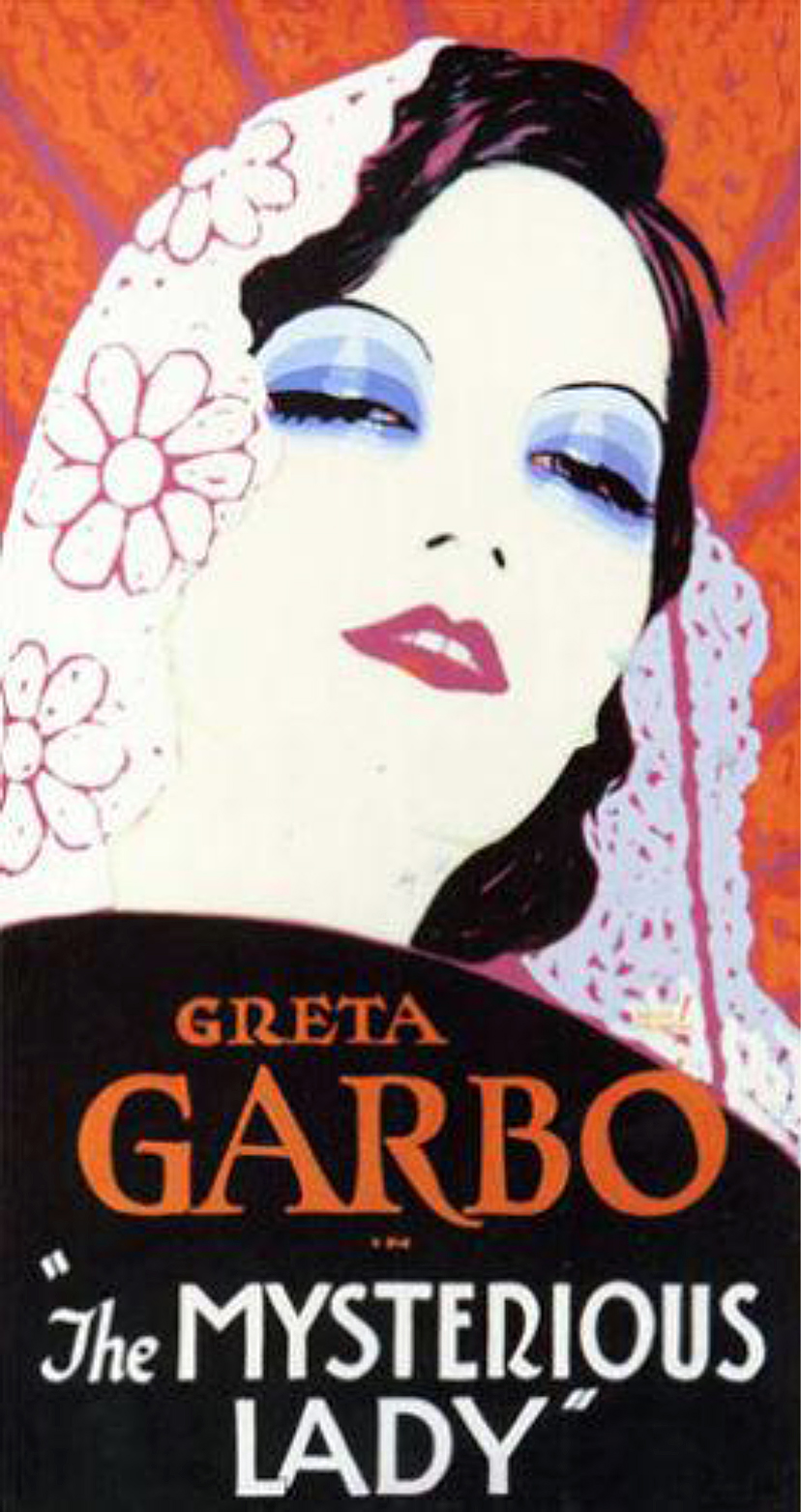
An unusually modernistic poster design for 1928:

An exotic Garbo in Java with Nils Asther in WILD ORCHIDS (1929):

And a decade later in NINOTCHKA (1939):

An original color poster

Spencer Tracy made his first color appearance in the glorious Technicolor outdoors epic of 1940, NORTHWEST PASSAGE. He would not appear in color again until the 1950s:

An original color poster

On the Set with …


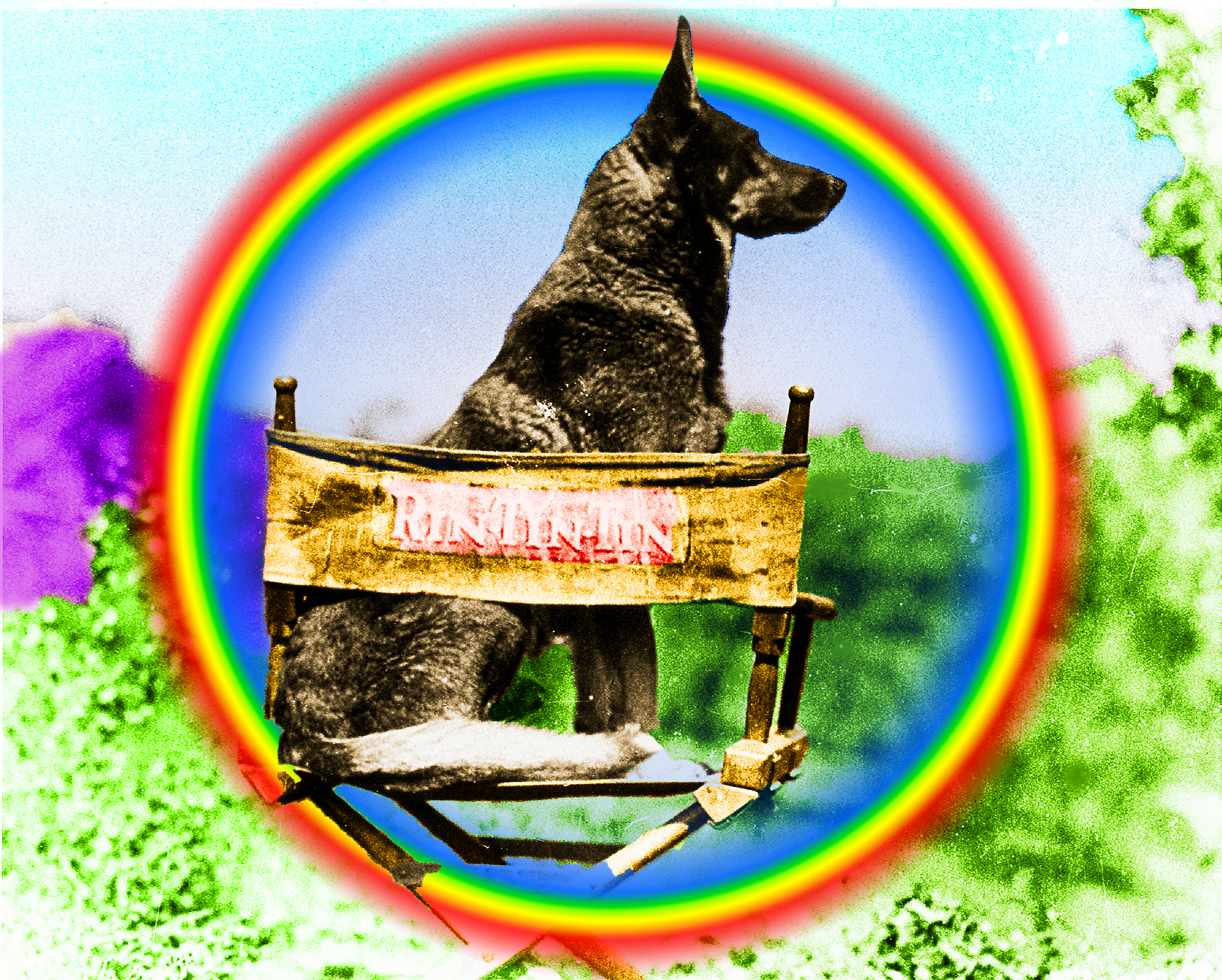
The original Rin Tin Tin (1918-1932) lived a more adventurous life than most people. As a puppy he was found among the rubble of a bombed-out kennel in France in September 1918 by American airman Lee Duncan. After the First World War ended that November, Duncan arranged to bring the pup back to the states when his own deployment ended. Duncan named the German Shepherd after a French clown and was impressed by the dog’s intelligence and his ability to follow complex direction. Hollywood seemed a logical outlet for the talented canine but none of the studios were interested – at first:

Dog films were popular in the early 1920s and no pooch was more popular than Strongheart, another German Shepherd. But anti-German prejudice in the United States ran high due to the war so public relations experts came up with a novel idea – henceforth German Shepherds would be called Police Dogs. Rinty’s big break came in 1922 while Duncan was watching a film crew working with another dog who was supposed to portray a wolf. The dog wouldn’t follow directions so Duncan stepped forward and assured the harried director that Rinty could handle the bit. Legend claims that Rinty was letter-perfect in this first, albeit uncredited, movie role.


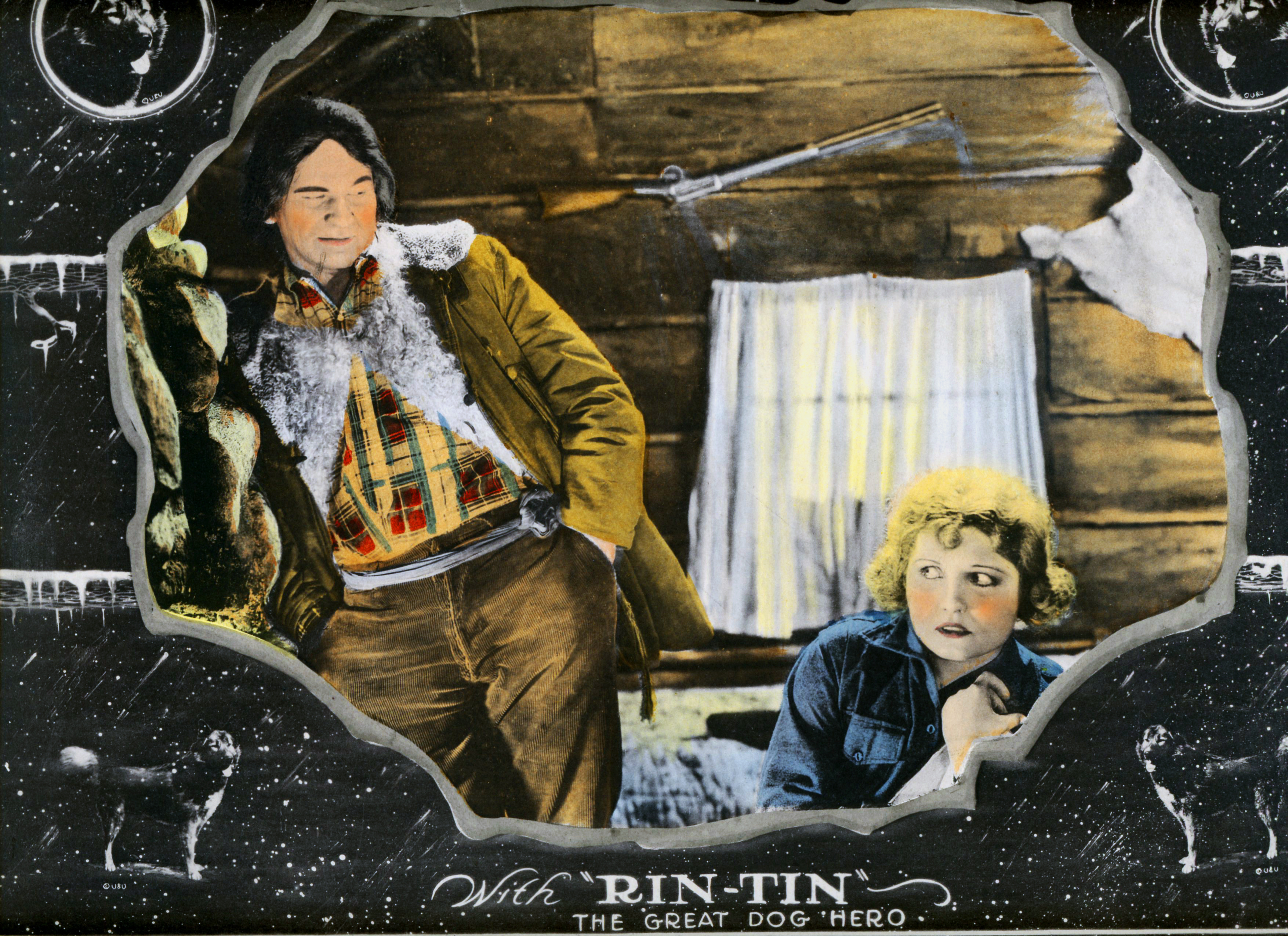
Rin Tin Tin achieved his first screen credit in MAN FROM HELL’S RIVER (1922), in fact he is the only performer credited in the lobby card above.
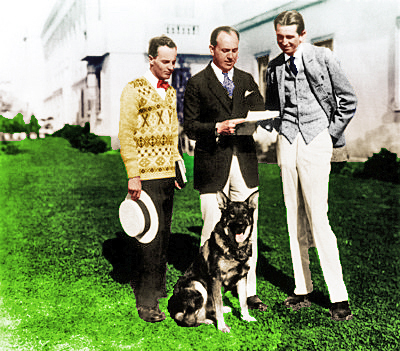
A small but up-and-coming studio, Warner Brothers (later abbreviated to “Bros.”), noted both the popularity of the Strongheart films and the relatively low expense to make them. Here is writer and future movie mogul Darryl Zanuck (note he is holding a book), studio boss Jack Warner (apparently reading a contract), Lee Duncan, and Rinty himself as arrangements are made to star Rinty in his first film:

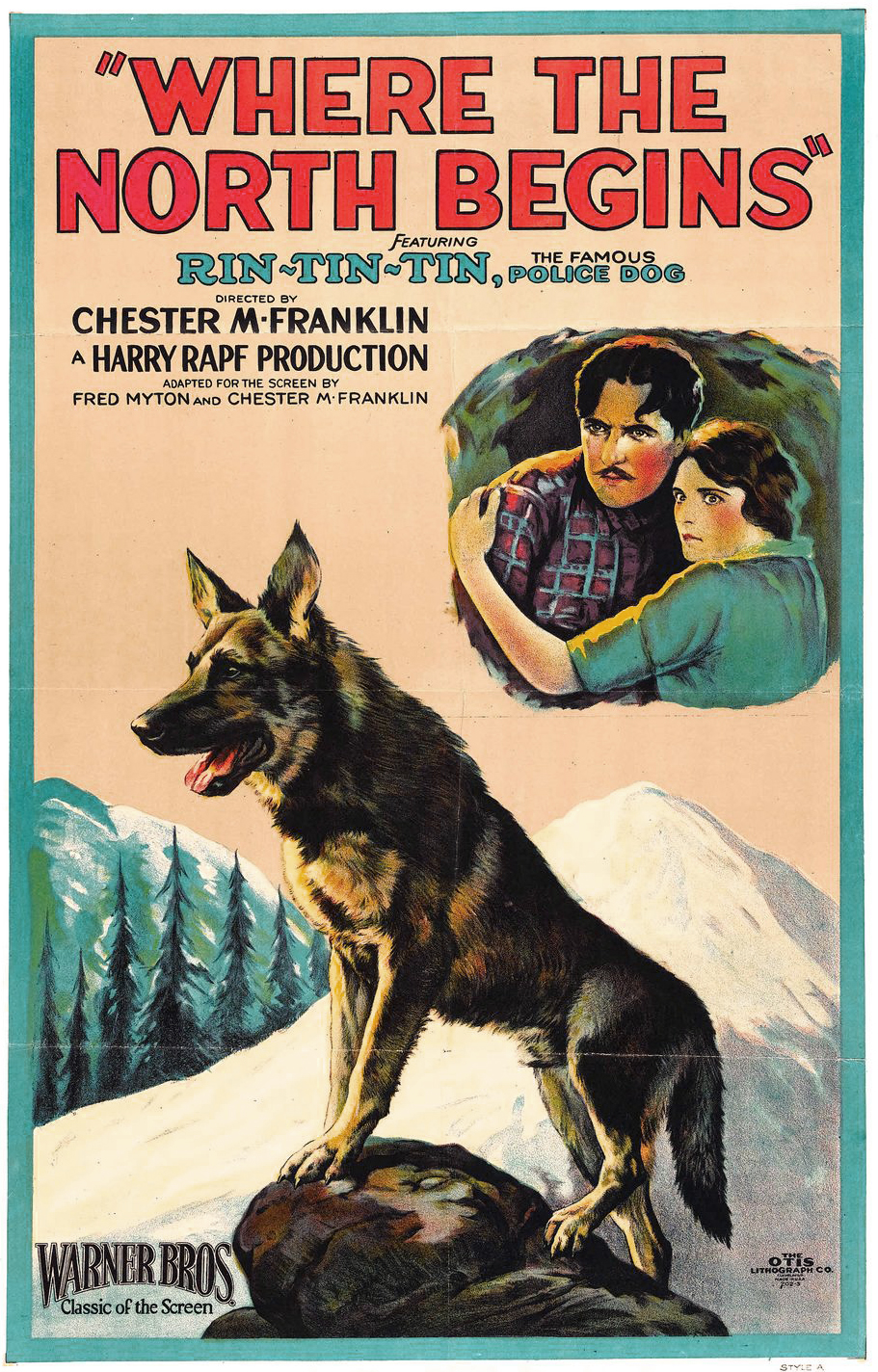
WHERE THE NORTH BEGINS (1923) – Rinty’s first (of twenty-five!) starring feature films also has the distinction of being one of a handful to survive and available on dvd. Note that the human actors continue to appear anonymously in posters:

Rinty’s second starring feature, THE LIGHTHOUSE BY THE SEA (1924) survives in somewhat truncated form but is available on dvd. By now, Warners realized they had their first major box office star. LIGHTHOUSE was followed by the now-lost FIND YOUR MAN (1924):

Above and below, a greatly enlarged “movie herald,” a small flimsy handout used by theaters to promote an upcoming attraction:

Studios provided their big stars with private bungalows on the lot but Rinty was given more practical housing – a large kennel. Here the silent film camera grinds while Lee Duncan supervises Rinty posing with various awards:

A photo of the same session:

This photo even feels cold. Unlike the Lassie films of the 1940s, the silent Rintys are rugged outdoor adventures as this image suggests from the lost TRACKED IN THE SNOW COUNTRY (1925):

Never count Rinty out – a 35mm print of CLASH OF THE WOLVES (1925) was discovered in South Africa about ten years ago and repatriated to the Library of Congress. Now beautifully restored and on dvd, this film has been named to the National Film Registry of significant motion pictures:

The title role in THE NIGHT CRY (1926) was played by a condor, at the time the only one in captivity. Poor Rinty is blamed for the condor’s attacks on livestock but swings into action when the giant bird kidnaps a baby. One of the most exciting of the surviving Rintys:

A premium card to promote Ken-L-Ration, a dog food still sold today:

Another movie herald for another lost film from 1926:


Human actors are now recognized but strictly in support of the star:

Youngsters were encouraged to read about Rinty’s exploits as well as see them on the screen:

Nanette co-starred in several films with Rinty and in the 1930s appeared in films with Rin Tin Tin Jr. The stories often forced Rinty to choose between saving the heroine or saving Nanette. Of course, he chose his mistress but Nanette fended for herself just fine:

Rinty helps the police track down a killer in the Limehouse district of London in this lost film. By now in 1927 Rinty’s silouette alone identified him:

Dorothy Gulliver and Rinty spend an idyllic day as the clouds of World War I gather in the lost A DOG OF THE REGIMENT (1927):

Rinty on the western front where all is far from quiet. During World War II, Duncan and Rin Tin Tin III organized the K-9 Corps for the U.S. Army where they trained over 5,000 dogs for military service:

A surviving Rinty, though somewhat truncated, TRACKED BY THE POLICE (1927) provides non-stop action:

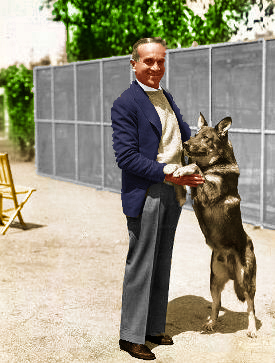
Al Jolson takes time out at Warners from revolutionizing silent films into talkies with THE JAZZ SINGER (1927) by paying a call on Rinty:

With the talkie revolution now underway, Rinty makes his first “barkie” with LAND OF THE SILVER FOX (1928):

Rinty seemed to be born to keep kids out of trouble:

Rin Tin Tin in Palestine. The title in this Hebrew ad is BETWEEN THE SNOWY MOUNTAINS, which may be A HERO OF THE SNOWS or possibly TRACKED IN SNOW COUNTRY. In any event, this Rinty played the Ophir Cinema in Tel Aviv on January 12, 1930:

An enlarged postcard from TIGER ROSE (1929):

Rinty continued making three to four features per year in the 1929-30 sound film era. However, in December 1929 a Warners executive notified Lee Duncan that due to the advent of sound films, Warners would no longer produce the Rin Tin Tin films “because dogs don’t talk.” Here’s a nice portrait of Duncan and what’s-his-name:

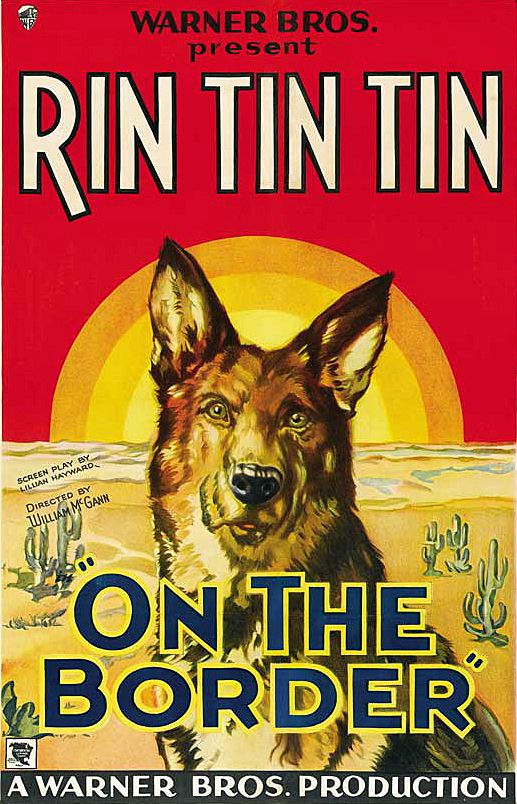
It also seems likely that two other factors were involved: first, Warners now had an impressive roster of stars of the stage and screen, and Rinty may have been an embarrassing reminder of earlier days when a dog kept the studio solvent. Second, by 1930, Rinty was twelve years old, rather elderly for a German Shepherd, and the studio felt it was time for him to retire. A poster from the lost talkie, ON THE BORDER (1930):

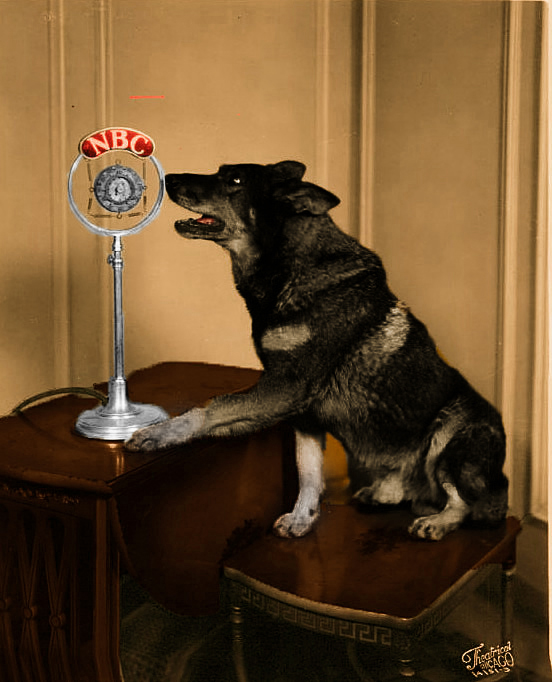
But Rinty kept busy by starring in a twelve chapter serial in 1930, THE LONE DEFENDER, and had his own radio show over NBC called “The Wonder Dog:”

Rinty’s final film was THE LIGHTNING WARRIOR (1931), another twelve chapter serial. Just one month shy of turning 14 (about 90 in German Shepherd years), Rinty died suddenly on the front lawn of his home on August 10, 1932. Legend says that neighbor Jean Harlow (whom Duncan had given one of Rinty’s pups) came running over and cradled Rinty’s head in her arms as he died. But Rinty’s progeny continues to this day, the current heir in a direct line is Rin Tin Tin XII. Meanwhile, the original Rin Tin Tin rests in an honored grave site at the Lile aux Chiens (Cimetiere Des Chiens), Asnieres-sur-seine, Ile-de-France Region, France:

But thanks to films, the original Rin Tin Tin’s exploits can be enjoyed in the 21st century:

On the Set with …

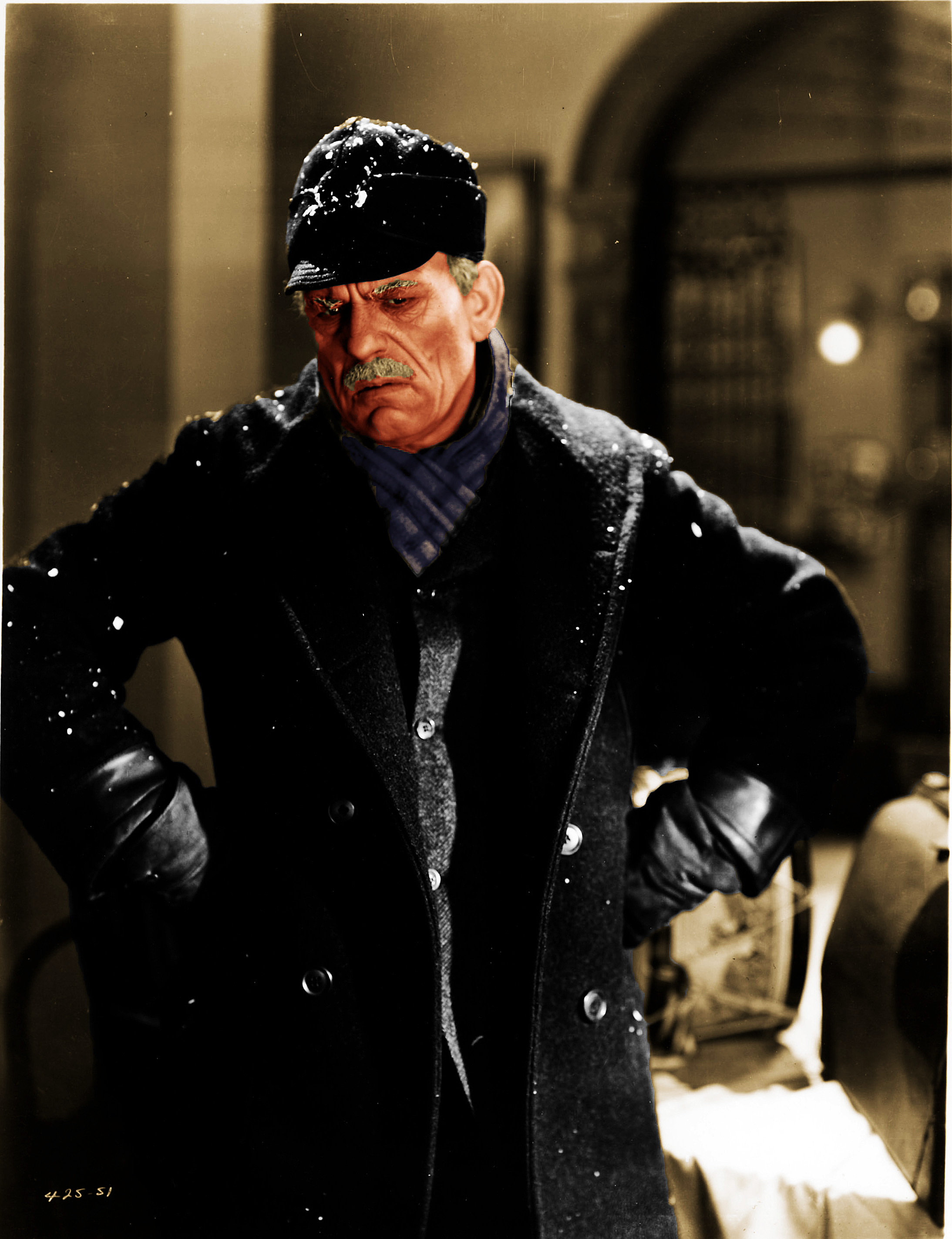
Lon Chaney Sr. was the granddaddy of the Character Actor-Star in American films, and in many ways he single-handedly created the horror film genre. Lon is remembered mainly for two films where he played the grotesques of the title: THE HUNCHBACK OF NOTRE DAME (1923) and THE PHANTOM OF THE OPERA (1925). In fact, almost all his other films were melodramas, bizarre to be sure, but not exactly horror films. Reclusive by nature, the studios publicized him as the “man of mystery.” Chaney worked in silent films before makeup artists entered the field and developed his own makeup so skillfully and could appear so different from film to film that he was eventually dubbed “The Man of A Thousand Faces.”

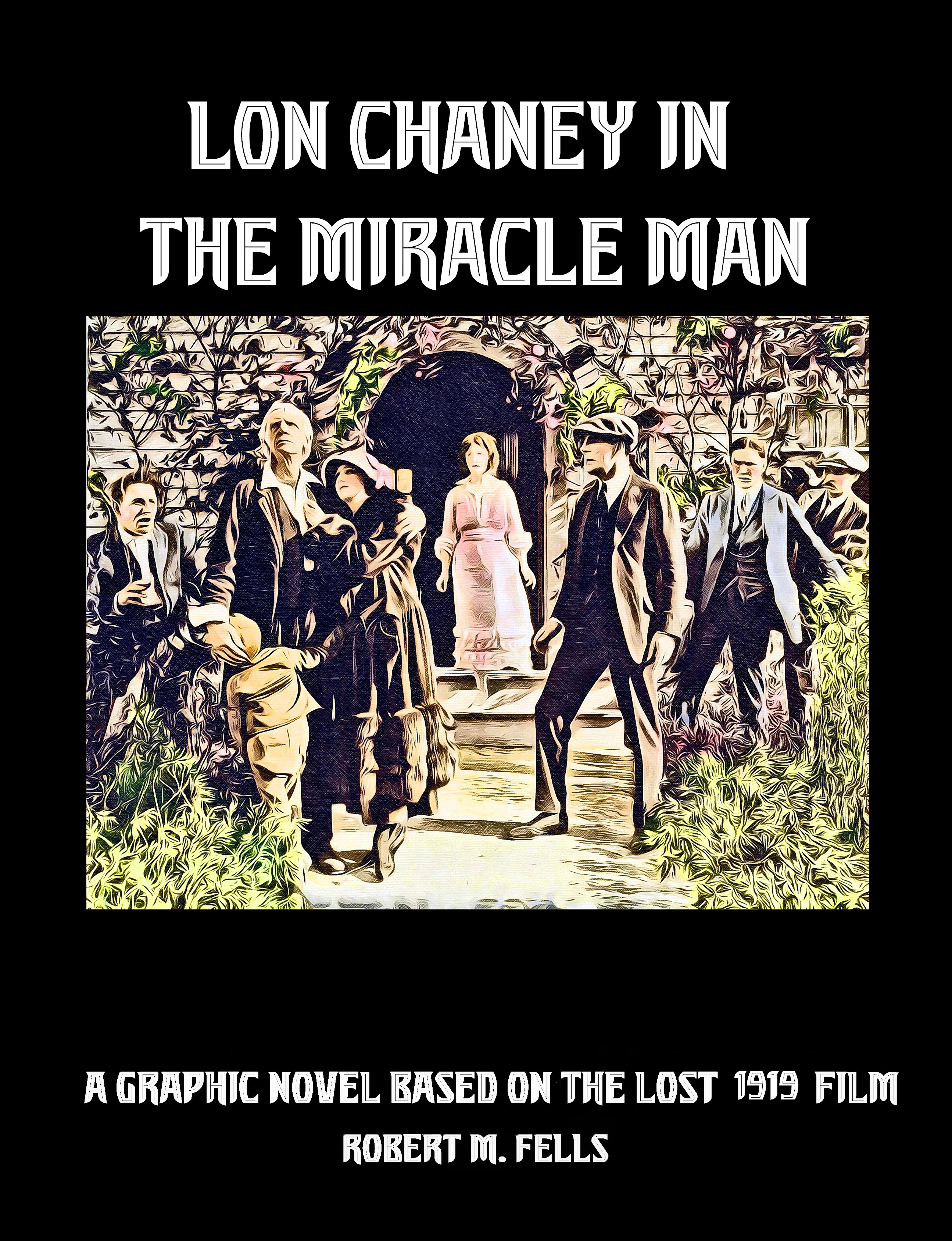
Lon labored in the vineyards of film-making from 1914 on playing in support of some well-remembered stars such as William S. Hart and many forgotten ones. Many of these early works are now lost including his breakthrough film, THE MIRACLE MAN (1919), where he played a phoney paralytic. Here is Chaney as himself (more or less) and in character:

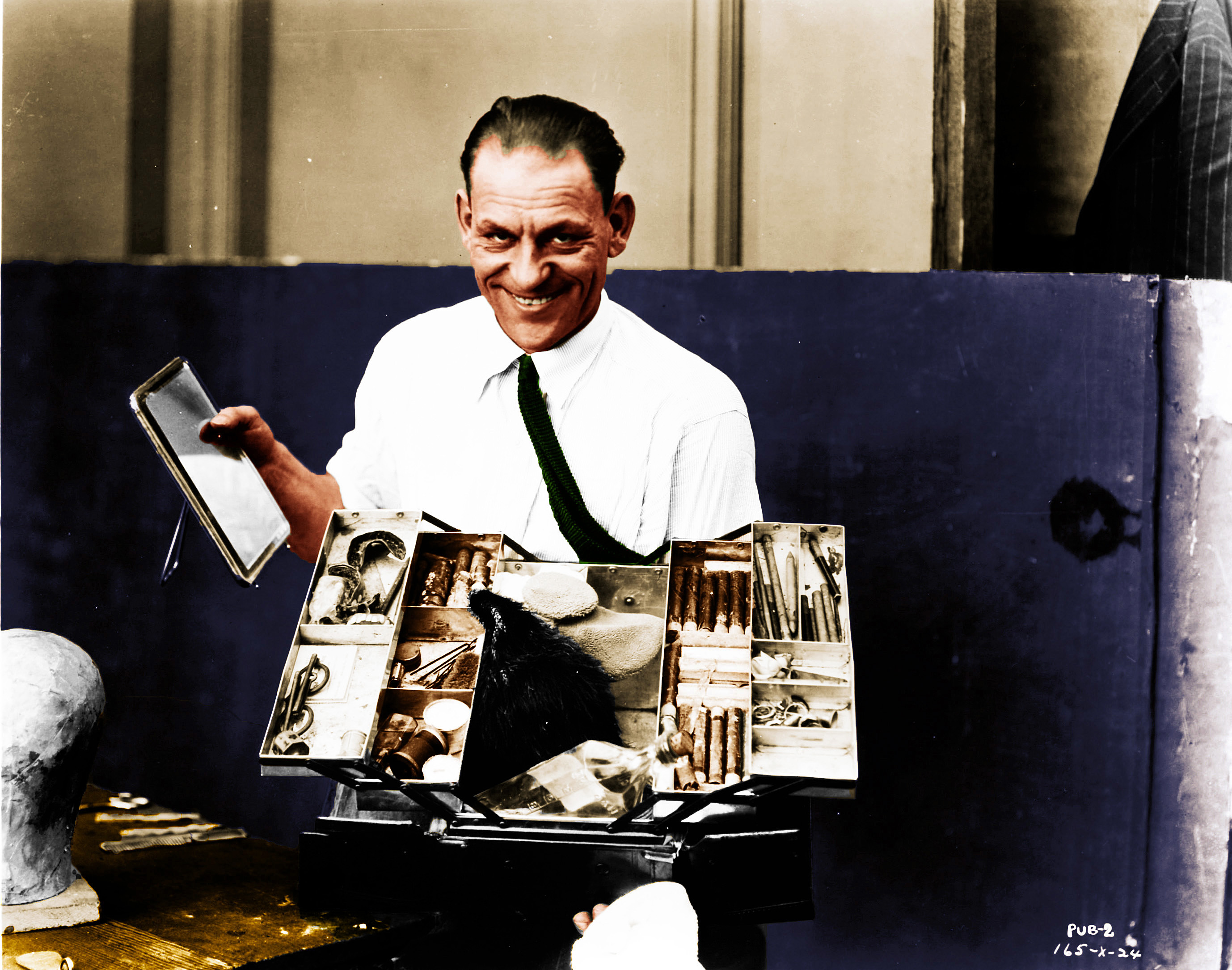
In 1922, Lon appeared in a photo spread displaying his craft in conjunction with the film A BLIND BARGAIN (another lost one). Here he displays his makeup case that can be seen today at the Los Angeles Museum of Natural History:

Lon tries out some fangs in planning the appearance of his “apeman” character in the film. Enlarging this photo shows the time on Chaney’s wrist watch as 2:50:

Lon combs out his apeman wig (the time is now almost 2:55):

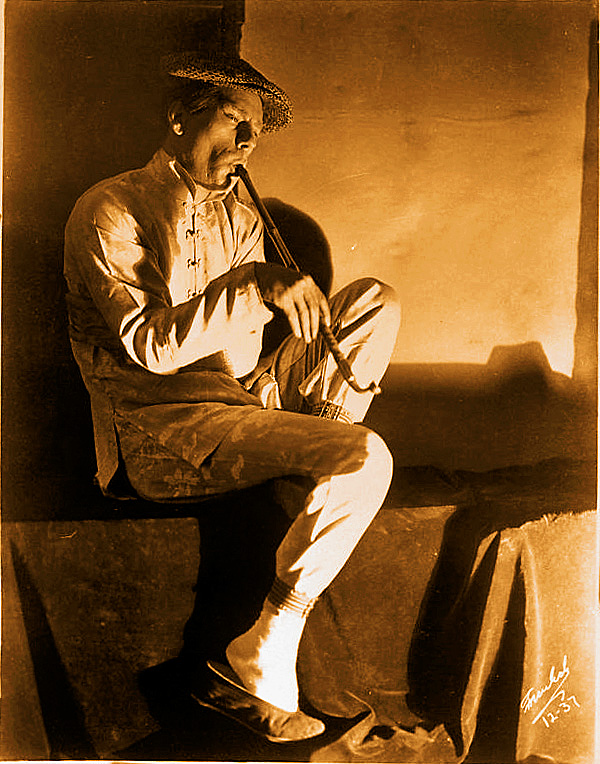
Lon’s Asian characterizations are remarkable. This portrait, scanned directly from a negative, is from OUTSIDE THE LAW (1923), a film that not only survives but is available on dvd. This photo is striking in black & white but if color film were available, the photographer might have attempted a lantern-light effect such as this:

At a time when movie villains were typically handsome and well-dressed, Chaney displayed evil in characters usually portrayed sympathetically such as the disabled. Another photo scanned directly from a negative, here Lon plays a malevolent cripple in THE SHOCK (1923), another film available on dvd:

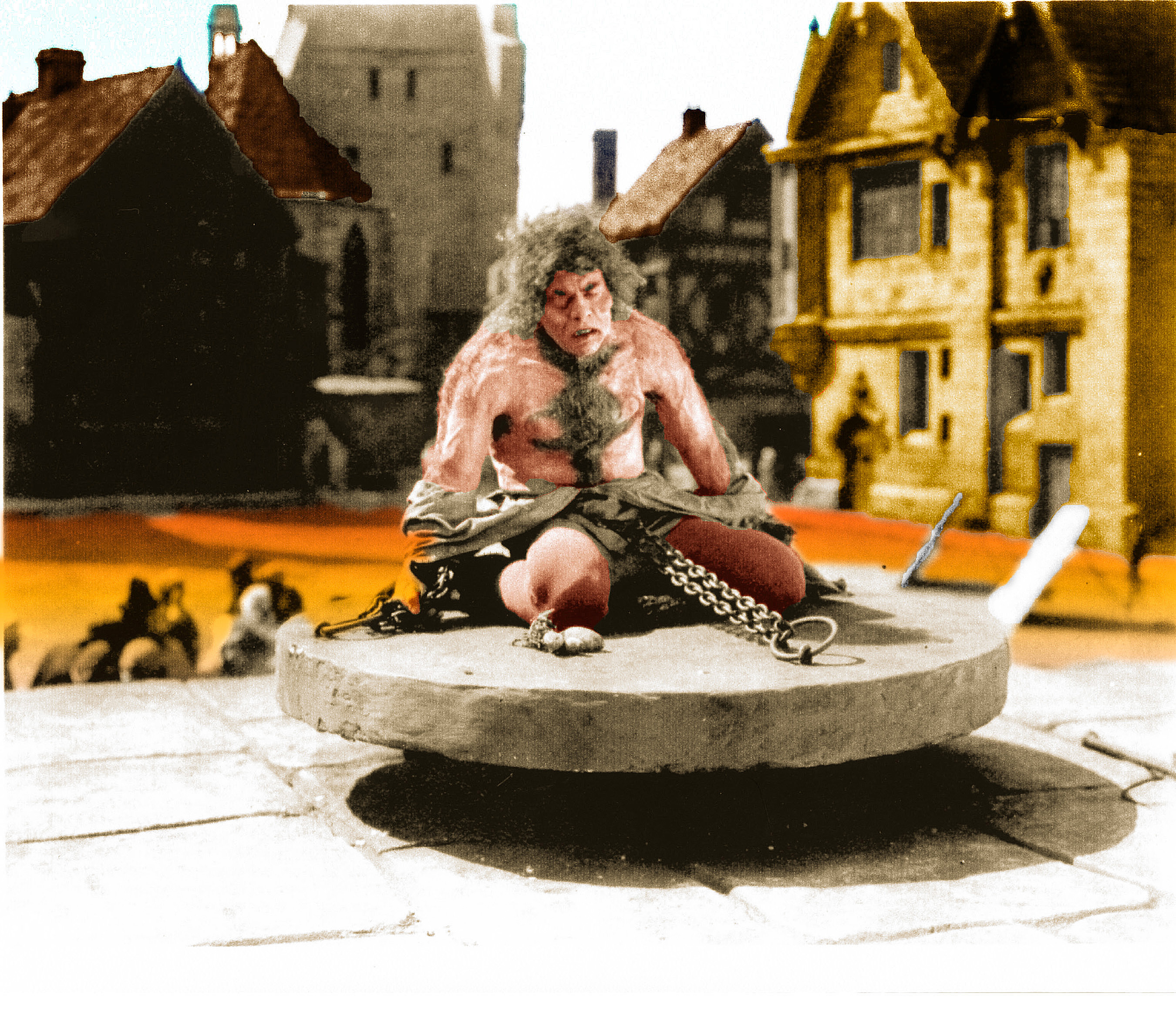
Chaney waits between camera setups in perhaps the most famous scene in THE HUNCHBACK OF NOTRE DAME (1923). Note the two reflectors on the right used to redirect the sunlight to brighten up shadows on the buildings across the plaza:

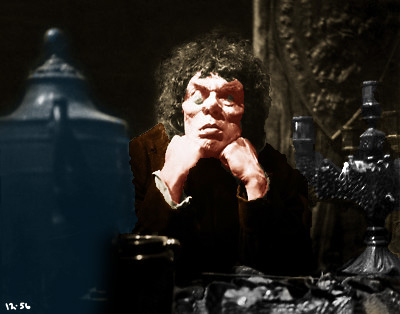
A fine study of Quasimodo from THE HUNCHBACK. In the film Chaney seems unrecognizable under his makeup, but here you can almost see Lon’s face:

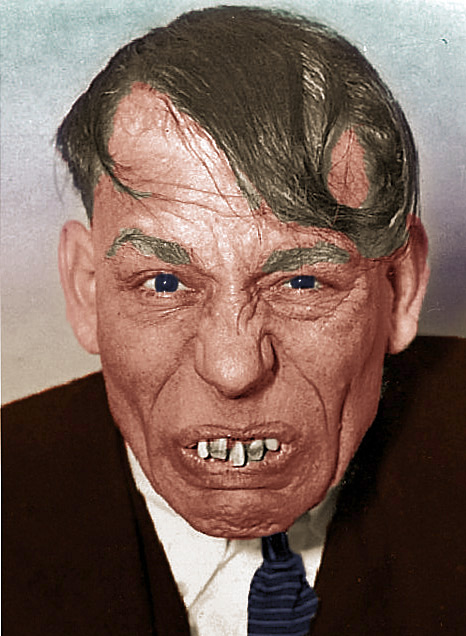
Circa 1923, Lon poses for some “mug shots” to demonstrate how he arranges his features and uses dental appliances to suggest a character:

Lon would apply adhesives to pull his skin taut but here he demonstrates how he developed his characterizations more informally:
Both photos above are scanned directly from negatives.

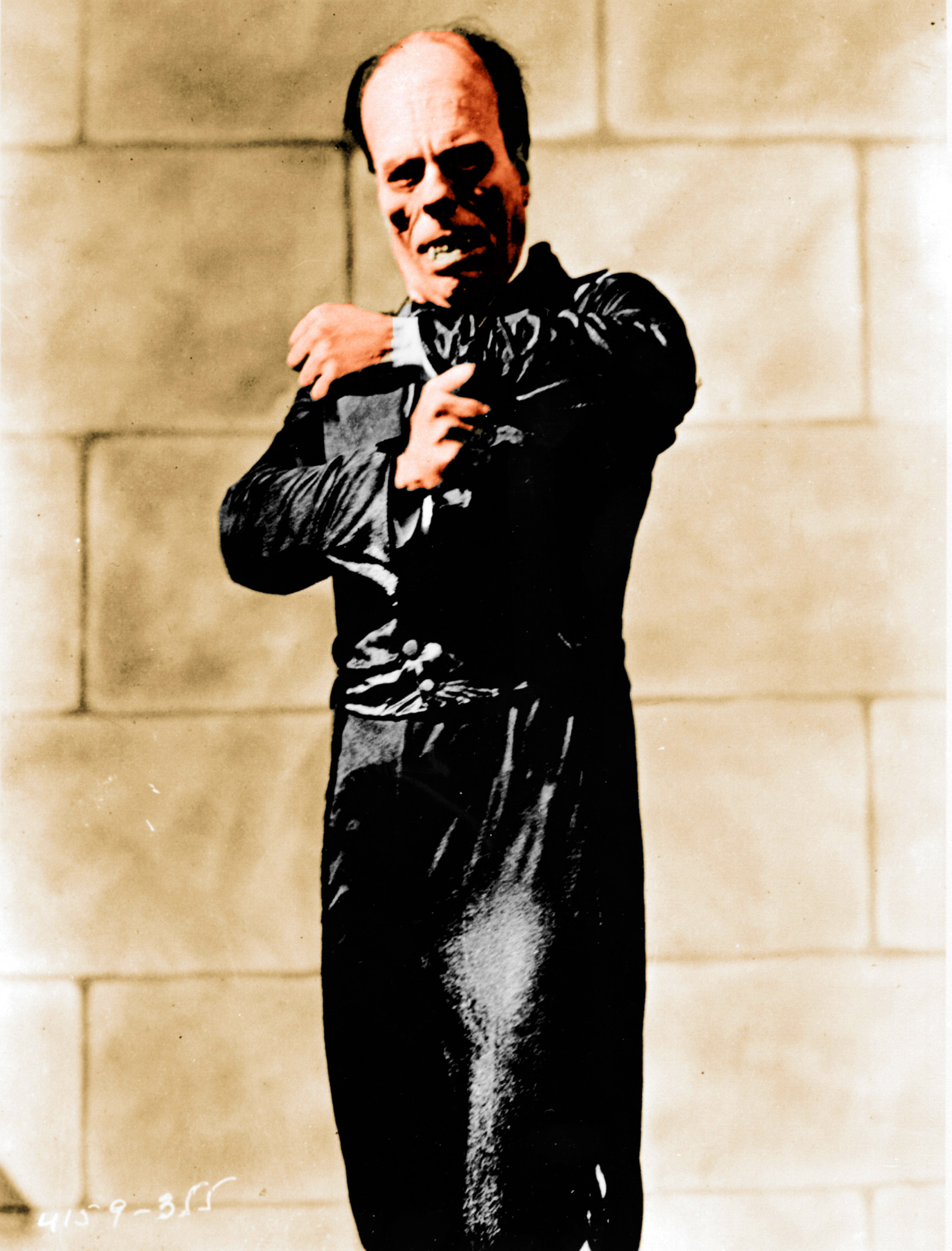
Lon wrings out his sleeve after emerging from the underground lagoon beneath the Paris Opera House in THE PHANTOM OF THE OPERA (1925). Chaney’s makeup design for Erik the Phantom was arduous enough but now it also had to be waterproof:

The Unused Ending – preview audiences rejected this finale where Erik dies of a broken heart and the film went back into production to create a new ending:

THE PHANTOM was not the only big hit Lon had in 1925:

Lon frequently teamed up with director Tod Browning to create a number of macabre masterpieces. One of their best collaborations is THE UNKNOWN (1927) where Chaney portrays a murderer posing as a bogus armless circus performer. To escape detection and impress a woman, he has his arms amputated!

In this publicity photo for THE UNKNOWN, Chaney demonstrates his “skill” at writing with his foot for actress Claire Windsor. Actually, Chaney was doubled in the film where he uses his feet as hands:

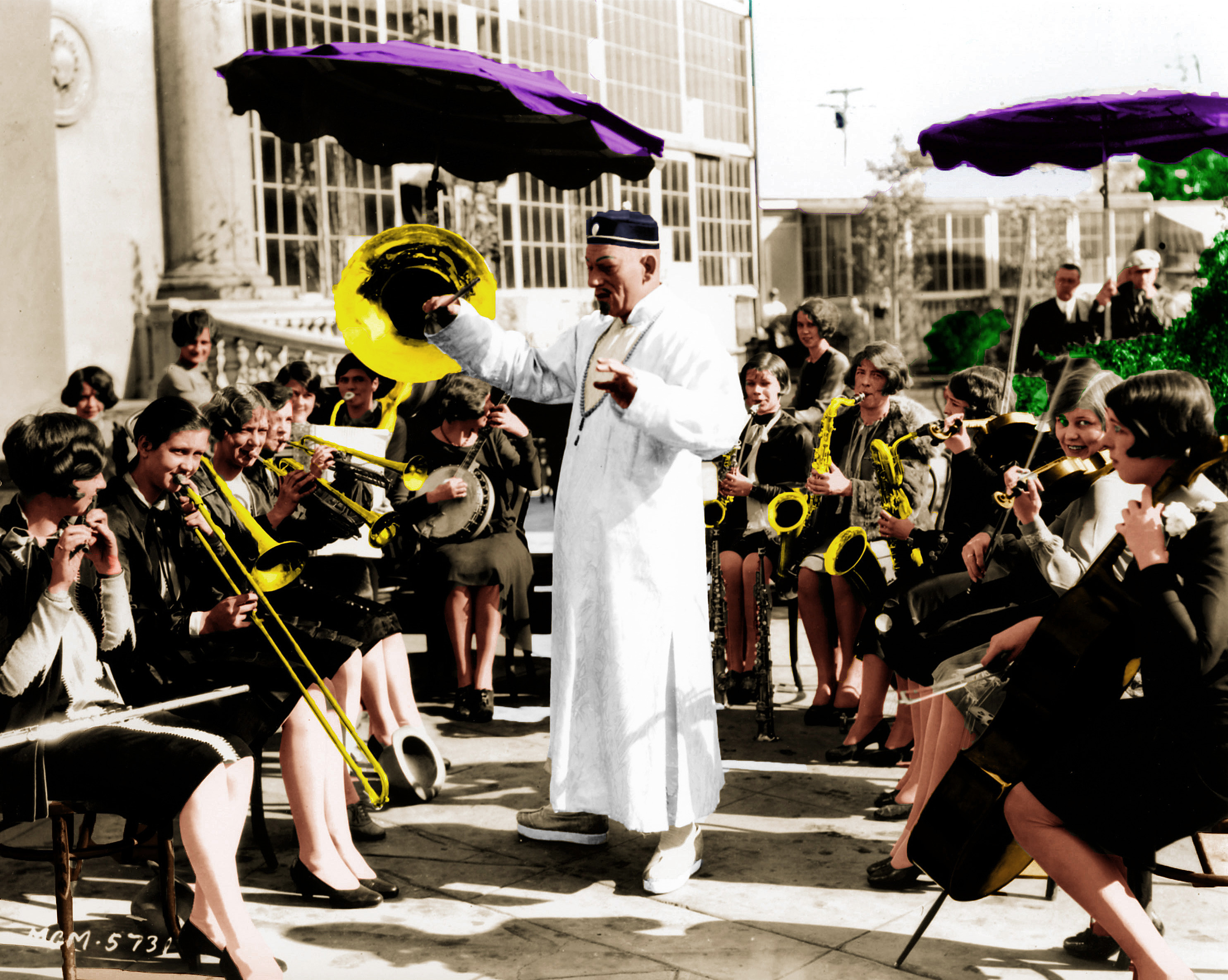
Lon plays three generations of an Asian family in Mr. Wu (1927). Here he takes a break from filming by conducting a student orchestra visiting the MGM studio:

Perhaps the most famous “lost” American film, LONDON AFTER MIDNIGHT (1927) where Lon plays a vampire but only as a ruse (no harm giving away the ending since the film is lost) to expose a murderer:

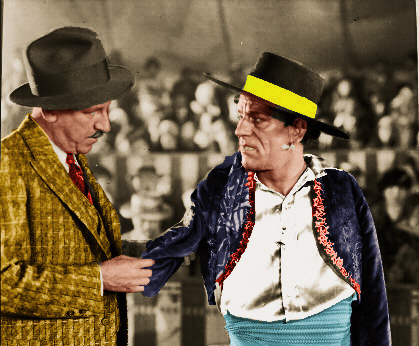
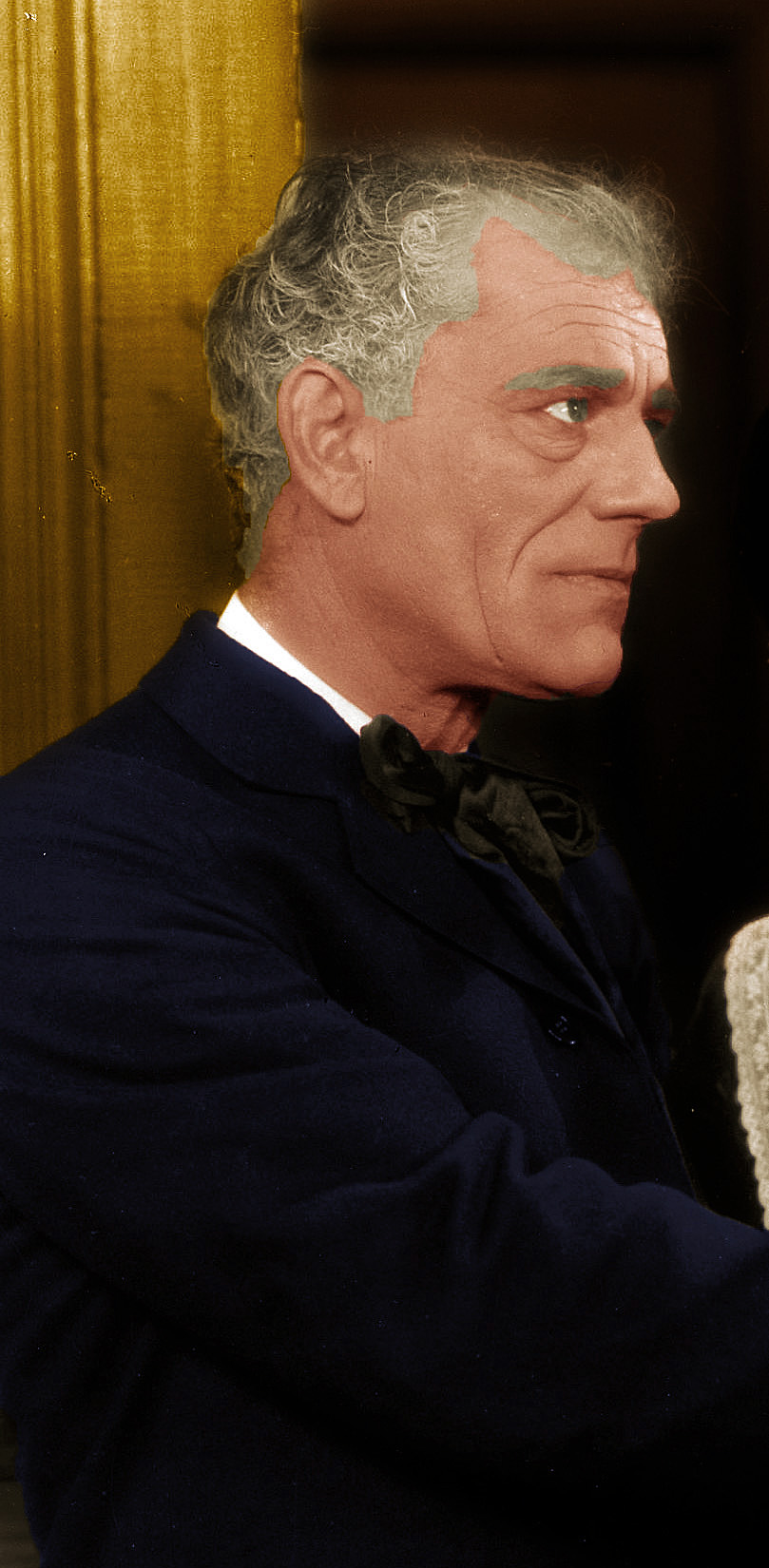
Another direct negative scan, this is one of Lon’s lesser known Thousand Faces from the opening scene in WEST OF ZANZIBAR (1928):

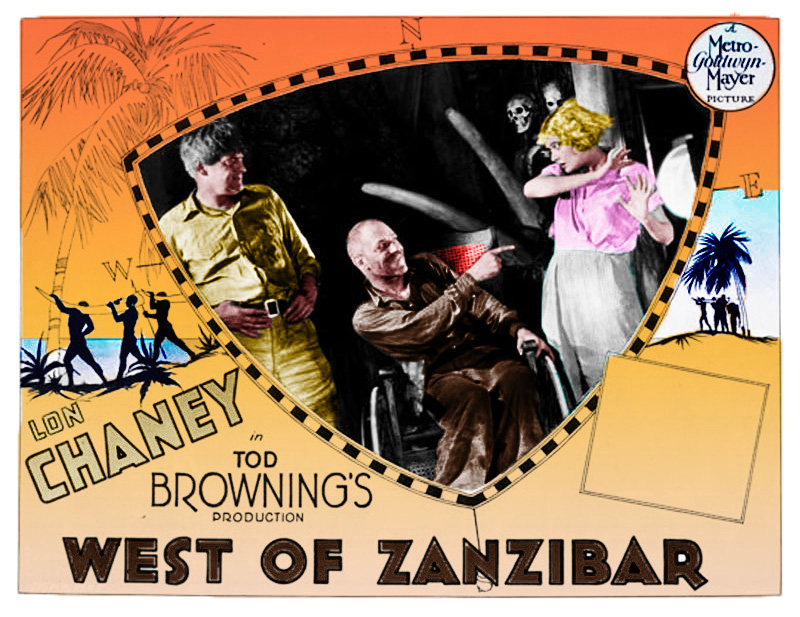
A restored lobby card: pictured are Lionel Barrymore, Lon, and Mary Nolan:

WEST OF ZANZIBAR plays South of the Border:

Another restored lobby card from WHILE THE CITY SLEEPS (1928) where Lon played it straight without resorting to one of his “faces”:

By popular request after we published this post – an original lobby card in original colors:

A detailed study of the subtle makeup used by Chaney to suggest an older character. This photo from LAUGH CLOWN LAUGH (1928) is scanned directly from a negative:

Yet another restored lobby card from 1929, Lon’s next-to-last silent film is the final collaboration between Chaney and director Tod Browning, and featured Lupe Velez and Lloyd Hughes:

A fanciful shot of Chaney as he might have looked in his 60s from his last silent film, a railroad drama titled THUNDER (1929). Alas, only a few minutes survive:

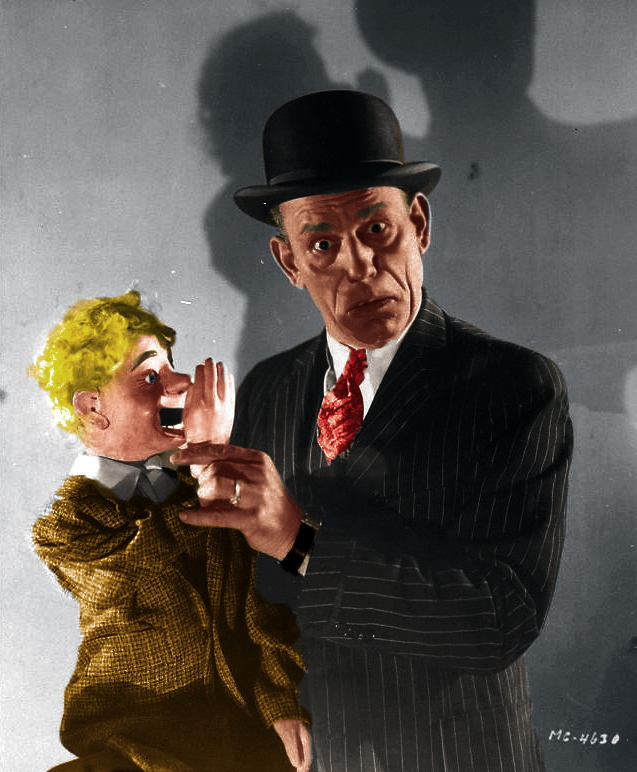
Lon Chaney made only one talkie, the very successful THE UNHOLY THREE (1930), which was a remake of his 1925 hit. Filmed during April 1930, the Man of a Thousand Faces spoke in five different voices, including as an old lady, a parrot, and a ventriloquist’s dummy pictured here in what turned out to be Lon’s final photo session:


Chaney’s death from lung cancer on August 26, 1930, shocked the world. He was only 47. The old story of how Universal wanted Lon for DRACULA (1931) has been discredited but then Universal didn’t want Bela Lugosi either. But that’s another story to be told in our next post (in anticipation of Halloween), On the Set with Bela Lugosi.

DON JUAN – 85th Anniversary of World Premiere – August 6, 1926

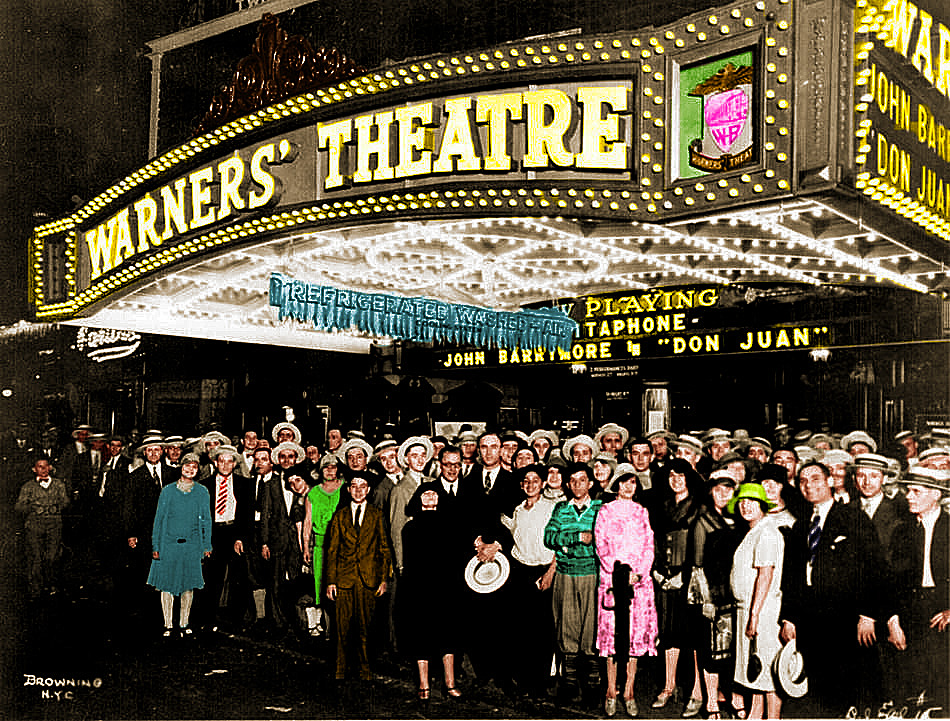
The Dawn of Sound Films arrived, oddly enough, with a silent film on the evening of August 6, 1926, in New York City at the Warner Theater. Musical accompaniment was provided by the 107 members of the New York Philharmonic Orchestra – via recording heard over the theater’s public address system. But a series of short films preceded the main feature in which various performers from the opera, theater, and vaudville spoke, sang, and played instruments. The main feature was DON JUAN, starring a real-life Don Juan – John Barrymore, who had just taken two continents by storm with his modernized version of HAMLET on the stage. The Great Profile, as Barrymore was nicknamed, spoke not an audible word but the audience was captivated by the unerring synchronization of music and action (plus a few sound effects like church bells) through a system called Vitaphone. Nobody suspected it on that night, but the tolling of those church bells turned out to be a funeral dirge for silent film (a beautiful artform, by the way):

It comes as a surprise to 21st century audiences that DON JUAN is one of the best swashbuckler action films EVER – quite apart from its position in film history. In case you’re wondering, DON JUAN can be seen on Turner Classic Movies several times a year and Warners Archives recently issued this film on dvd with all of the Vitaphone shorts from the program on that August 6th, 85 years ago:

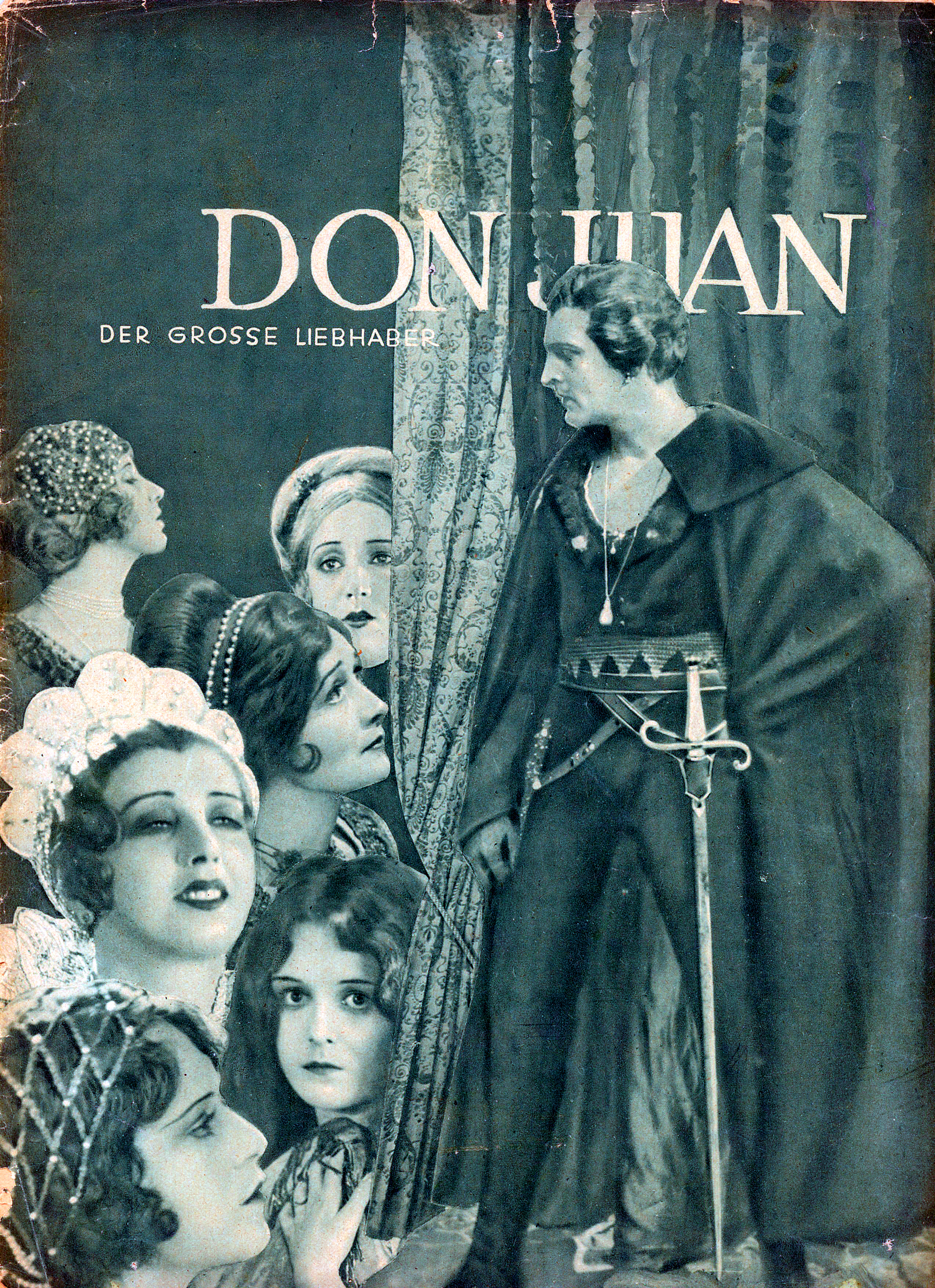
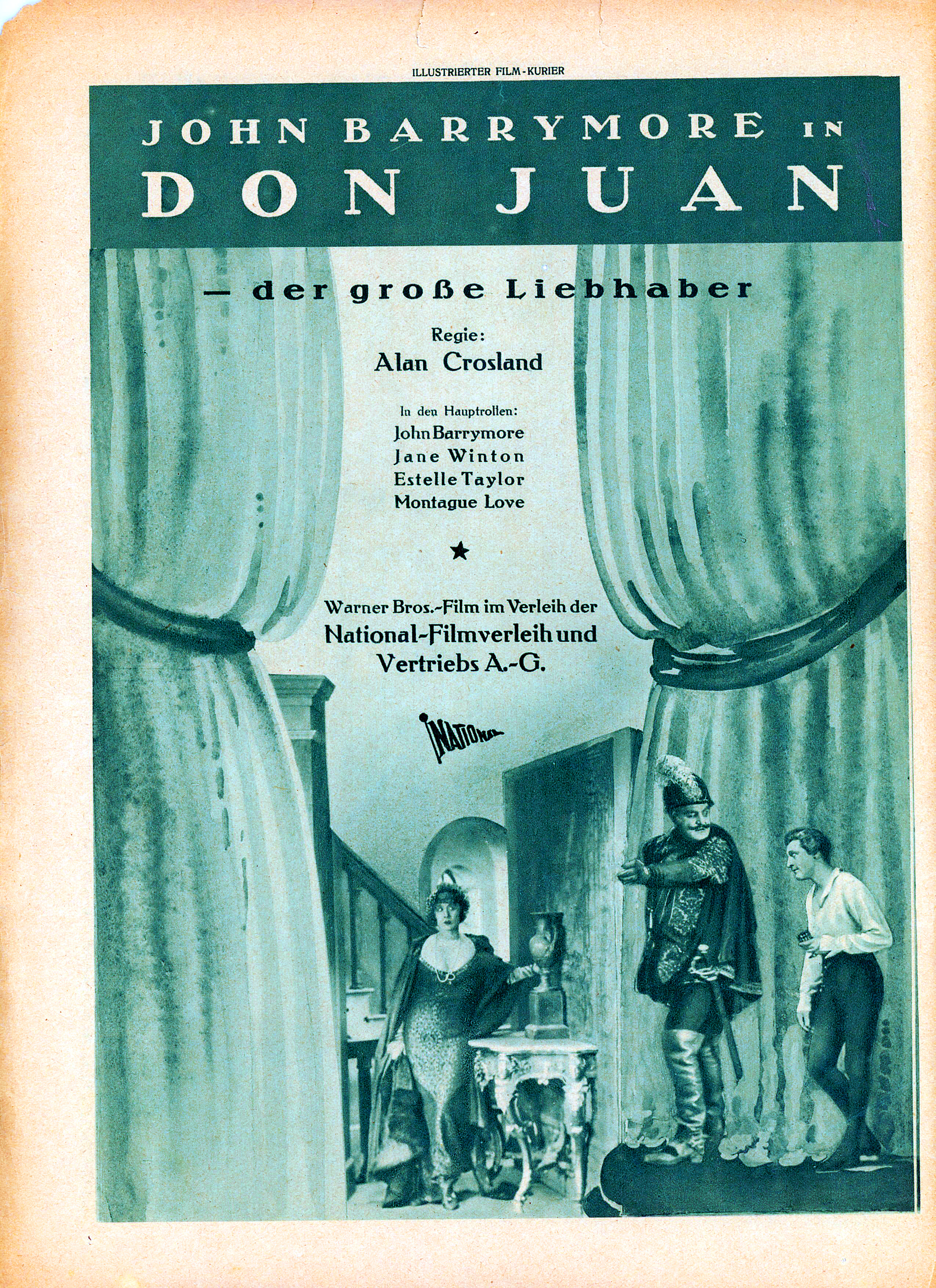
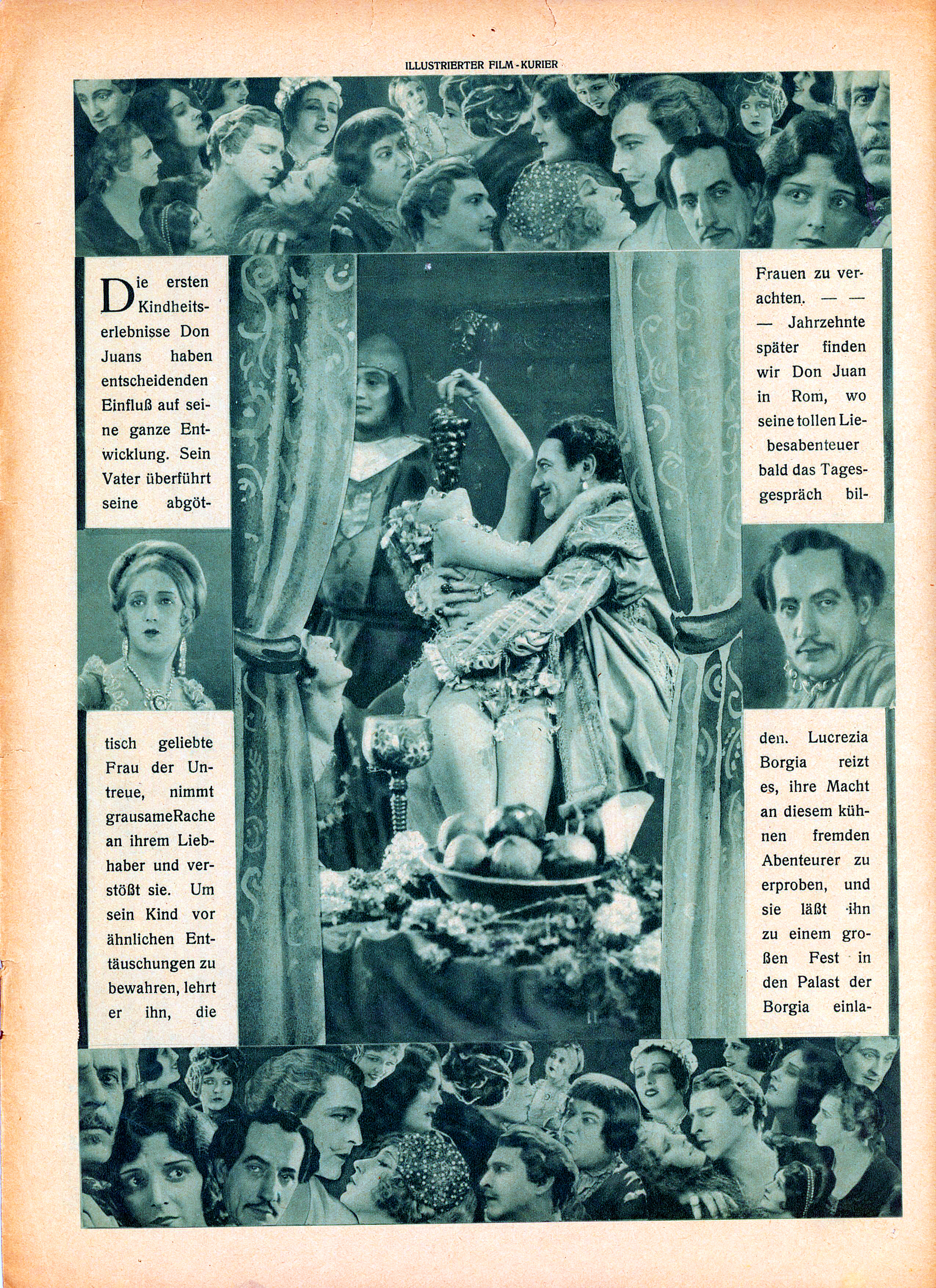
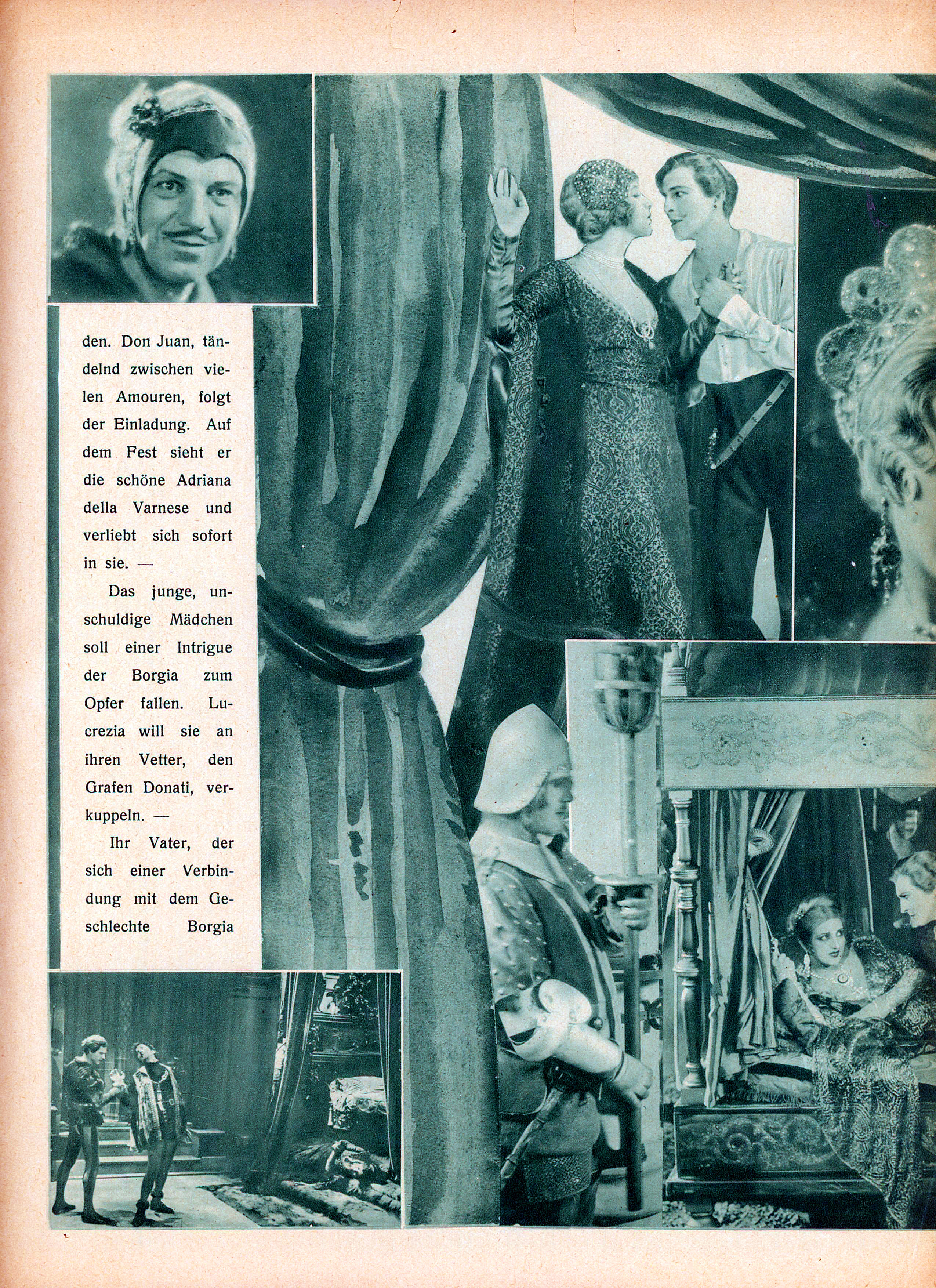
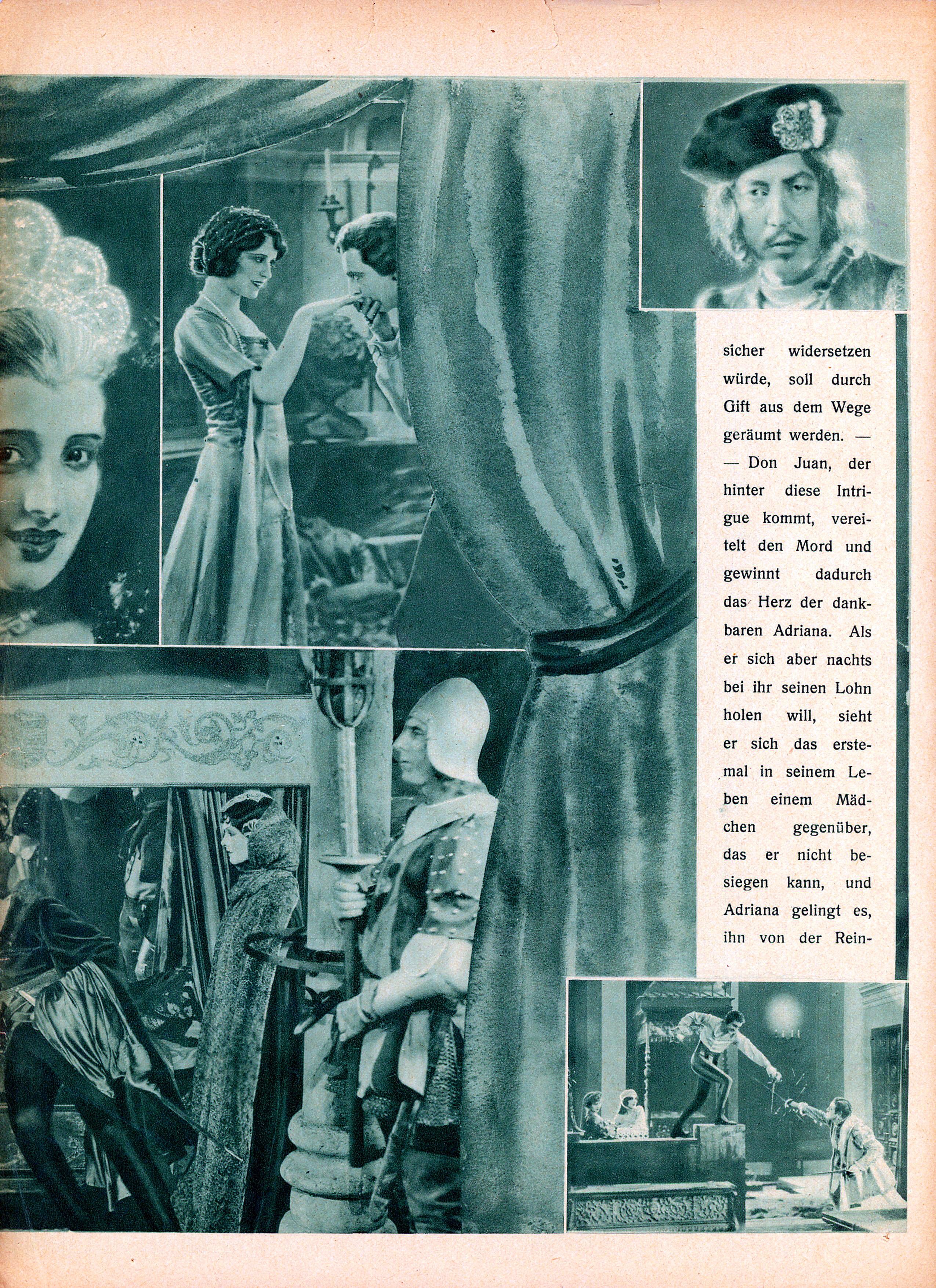
In Germany, this film was known as Don Juan – Der große Liebhaber, and here is the complete German souvenir program as restored by your blogmeister (from a bile green back to cool blue):


Montagu Love, seen below on the upper left, played the villain Count Donati. Love specialized in screen villainy and continued his nefarious schemes well into the sound era as the corrupt Bishop of the Black Cannons in THE ADVENTURES OF ROBIN HOOD (1938) and King Phillip of Spain in THE SEA HAWK (1940), among many other films:

Count Donati was a fictional villain but DON JUAN also featured two historical villains that made Donati look almost like a good guy – Cesare and Lucretia Borgia. Estelle Taylor on the left below played Lucretia and at the time was the wife of boxing champ Jack Dempsey. Warner Oland on the right below played Cesare Borgia but his most enduring role was ahead in the 1930s starring in the popular Charlie Chan detective films:

The film was climaxed by a rousing sword duel between Don Juan and Count Donati. But instead of providing the film’s ending as all Errol Flynn fans would later expect, the sword fight triggers a series of action sequences that have never been equaled these many years:


The back cover of the souvenir program features this rather seductive portrait of Mary Astor, the film’s heroine. Astor and Barrymore had enjoyed, uh, a relationship prior to making DON JUAN that had ended some time earlier. Their pairing in this film proved awkward for both of them. They would not be reteamed until 1939 in the classic romantic comedy, MIDNIGHT – but that’s another story: